If you’re thinking about setting up a golf simulator at home, one question probably stands out: how much ceiling height do you really need? Your swing, your space, and your equipment all depend on it.
Too low, and you might find yourself constantly ducking or adjusting your natural swing—something no golfer wants. But with the right ceiling height, you can enjoy a realistic, unrestricted golfing experience indoors, no matter the weather outside. You’ll discover exactly what ceiling height works best for your golf simulator, how to measure your space correctly, and smart tips to make your setup feel just like the real course.
Ready to perfect your indoor game? Let’s dive in.
Ceiling Height Essentials
Ceiling height is a key factor for any golf simulator setup. It affects how comfortably you can swing your clubs indoors. Having enough vertical space prevents interruptions during your practice sessions.
Choosing the right ceiling height ensures a natural swing. It also helps protect your equipment and surroundings from damage. Understanding the essentials about ceiling height makes your indoor golf experience better.
Minimum Height Requirements
The minimum ceiling height for a golf simulator is usually around 8 feet. This height allows most golfers to swing irons without hitting the ceiling. Taller players may find this height limiting for full swings.
Some simulators can work with lower ceilings but may require swing adjustments. Check your simulator’s specifications before finalizing the space.
Ideal Height For Full Swings
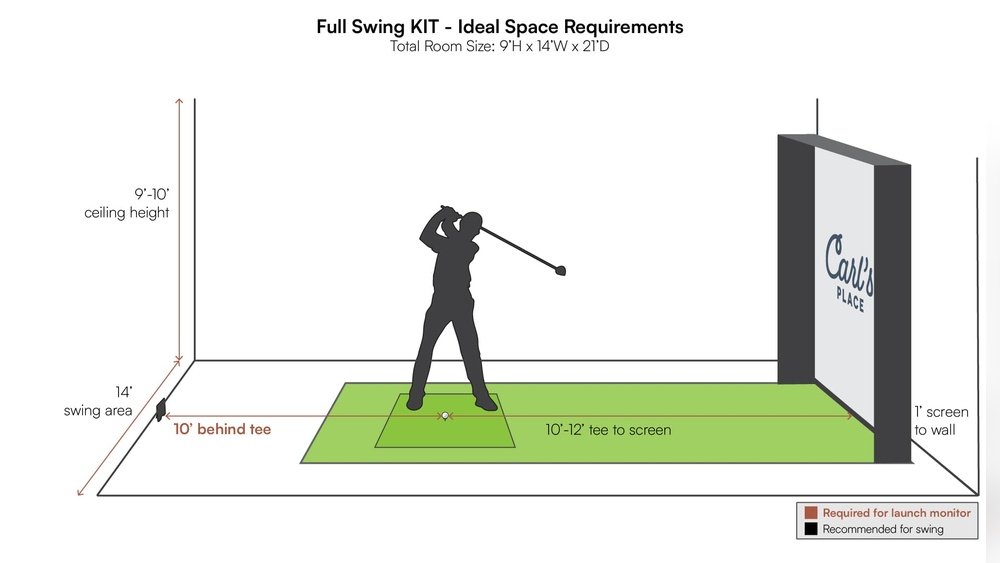
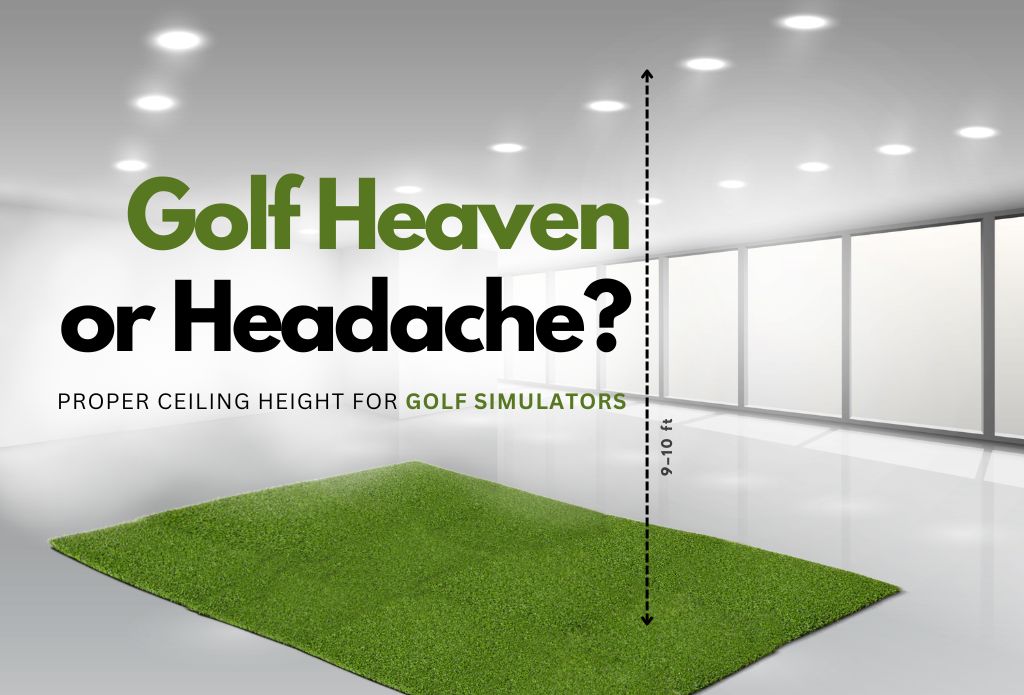
For a full golf swing, an ideal ceiling height is 9 to 10 feet. This range gives enough room for drivers and longer clubs. It allows players to swing naturally without bending or restricting movement.
Higher ceilings also help simulate real outdoor play more accurately. If possible, aim for a ceiling height closer to 10 feet for the best results.
Impact Of Ceiling On Swing Mechanics
Low ceilings can affect your swing mechanics negatively. Players may unconsciously alter their swing plane to avoid hitting the ceiling. This change can lead to bad habits and less effective practice.
Adequate ceiling height supports proper posture and full follow-through. It helps maintain consistent swing mechanics indoors. Avoiding ceiling contact keeps your swings smooth and natural.
Credit: mygaragegolf.com
Measuring Your Space
Measuring your space is the first step in setting up a ceiling height golf simulator. Accurate measurements ensure your simulator fits well and works properly. You avoid damage to your golf clubs and ceiling by knowing the right height. This process helps create a safe and enjoyable golf experience indoors.
Calculating Highest Swing Point
Stand in your golf stance inside the space you plan to use. Hold your golf club and make a slow backswing. Notice the highest point your club reaches during the swing. Measure the distance from the floor to this point. This number is your highest swing point.
Testing With Driver Swings
Next, try swinging a driver in the space. The driver swing usually has the highest club path. Swing slowly at first to avoid hitting the ceiling. Watch for any contact or near misses with the ceiling. Measure the highest part of the driver’s path during the swing.
Adding Clearance For Safety
After finding the highest swing point, add extra height for safety. This clearance prevents damage to your ceiling and clubs. A good rule is to add at least 6 to 12 inches above the highest swing point. This space allows room for follow-through and slight movement errors. Safety clearance keeps your golf practice smooth and worry-free.
Adapting To Low Ceilings
Adapting to low ceilings is a key challenge for many indoor golf simulator users. Low ceilings limit your natural swing space. This restriction can impact your performance and enjoyment. Simple changes can help you play comfortably and improve your skills.
By adjusting your swing and equipment, you can avoid hitting the ceiling. These tips make indoor practice easier and more effective.
Swing Adjustments For Low Height
Shorten your backswing to avoid contact with the ceiling. Focus on a smooth and controlled motion. Keep your arms closer to your body during the swing. Use a more compact swing plane to reduce height.
Practice slower swings to maintain control. This helps prevent accidental ceiling hits. A steady rhythm improves your shot consistency.
Choosing Suitable Clubs
Select clubs that fit better in tight spaces. Irons and hybrids work well in low-ceiling rooms. Avoid using drivers, which need more swing room. Choose shorter clubs or those with a lower loft.
Smaller clubs help you keep a natural swing. They also reduce the chance of damaging your equipment or ceiling.
Avoiding Flat Swing Syndrome
Flat swing syndrome happens when you swing too horizontally. It often occurs to avoid ceiling contact. This swing style can hurt your distance and accuracy.
Focus on keeping your swing natural and balanced. Use a mirror or video to check your form. Practice drills that encourage a full, rounded swing. This prevents bad habits and improves your game.

Credit: www.carlofet.com
Equipment Considerations
Choosing the right equipment is key for a ceiling height golf simulator. The ceiling height limits what gear fits comfortably. Picking gear designed for low ceilings makes the experience better. It prevents hitting the ceiling and allows a natural golf swing.
Low-profile Simulator Designs
Low-profile simulators use smaller frames and slim mats. They fit well in rooms with limited height. These designs reduce the chance of hitting your club on the ceiling. The compact setup keeps your swing natural and free. It also saves space without losing accuracy or fun.
Short-throw Projectors
Short-throw projectors need less distance to create a large image. They work well in rooms with lower ceilings. These projectors sit close to the screen or net. This setup reduces shadows and glare on the hitting area. It creates a bright, clear image without extra space.
Launch Monitor Space Needs
Launch monitors track the ball and club movement. Each model has specific space requirements. Some need more distance behind the golfer or to the side. Check the product details for exact measurements. Proper space helps the monitor capture accurate data. It ensures your practice sessions are realistic and useful.
Room Dimensions Beyond Height
When setting up a ceiling height golf simulator, considering room dimensions beyond just height is vital. Width and length play essential roles in creating a comfortable and functional space. Proper room size ensures natural swings and accurate shots. This section explores key guidelines to help you plan your simulator room effectively.
Width And Length Guidelines
Width should allow free arm movement during swings. A minimum of 10 feet wide is ideal for most players. Length depends on the type of simulator and your swing style. At least 15 feet in length provides enough space for driving and approach shots. Extra room helps avoid feeling cramped and improves play quality.
Optimizing Simulator Setup
Arrange equipment to maximize space use. Place the hitting mat and screen centrally to avoid awkward angles. Keep walkways clear for easy movement around the simulator. Use compact projectors and sensors to reduce clutter. Proper lighting enhances visibility without glare or shadows.
Basement And Garage Solutions
Basements and garages offer popular spaces for simulators. Check for low ceilings and uneven floors. Use ceiling-mounted sensors or shorter swing clubs to adapt to height limits. Seal gaps and add insulation to control temperature and noise. Choose durable flooring to protect your space from golf balls and equipment.
Maximizing Space In Tight Areas
Maximizing space in tight areas is key when setting up a ceiling height golf simulator. Small rooms or low ceilings can limit your options. Clever planning helps create an enjoyable golfing experience without needing a large space. Careful design and smart choices let you fit the simulator into compact areas.
Customizing Room Layout
Adjust the room layout to fit your golf simulator. Place the screen and projector to use the room’s full length. Avoid blocking walkways or doors. Move furniture to the sides to open more space. Position the hitting mat where you have the most height clearance. Use wall space for storage to keep the floor clear.
Using Compact Equipment
Choose golf simulator gear made for small spaces. Low-profile projectors fit closer to the screen. Slim hitting mats take less room but still feel natural. Select launch monitors that need minimal distance for accurate shots. Smaller nets and screens can still provide good visuals. Compact equipment ensures you do not feel cramped.
Creative Ceiling Height Enhancements
Increase usable ceiling height with simple tricks. Remove ceiling tiles or lower hanging lights to gain inches. Use flat or angled ceilings to avoid swing interference. Consider adjustable ceiling mounts for projectors and sensors. Brighten the room with light colors to create an open feel. Even small ceiling changes help improve your swing space.
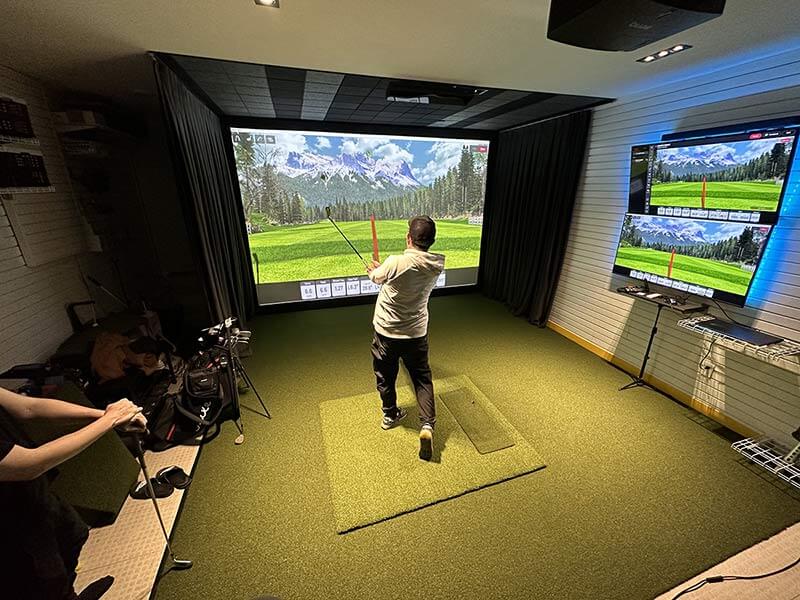
Credit: auxogolf.com
Frequently Asked Questions
How High Should A Ceiling Be For A Golf Simulator?
A ceiling height of at least 9 feet is ideal for a golf simulator. Taller players may require 10 feet for comfortable swings. Ensure enough clearance to avoid swing restrictions and protect equipment.
Can I Build A Golf Simulator With 8 Foot Ceilings?
Yes, you can build a golf simulator with 8-foot ceilings. Use irons or hybrids and a low-profile simulator design. Adjust your swing to avoid hitting the ceiling. Choose a short-throw projector to fit the space. Measure your swing height before setup for safety and comfort.
What Ceiling Height Is Needed For Trackman Golf Simulator?
A minimum ceiling height of 9 feet is recommended for a TrackMan golf simulator to allow a full swing. Taller players may need higher ceilings for comfort.
Is 2.5 M High Enough For Golf Simulator?
A 2. 5 m ceiling can work for a golf simulator with irons or hybrids. Taller players may need a flatter swing to avoid hitting the ceiling. Choose low-profile equipment and test your swing height before setup for the best experience.
Conclusion
Choosing the right ceiling height improves your golf simulator experience. Taller ceilings allow a natural swing and better practice. Low ceilings may limit club choice and force swing changes. Measuring your space carefully helps avoid surprises later. Use your driver to test the highest swing point.
This ensures enough room for a full swing without hitting the ceiling. Proper setup makes indoor golf more fun and effective. Enjoy practicing anytime, regardless of weather or time. A well-planned space brings real golf feel indoors.