Are you curious about how long a cricket match really lasts? Whether you’re new to the game or just trying to plan your day around a match, understanding the duration of cricket can be a bit tricky.
Cricket isn’t like most sports with a fixed time; its length varies depending on the format being played. From quick, action-packed One-Day Internationals to the epic, multi-day Test matches, each style offers a unique experience. Stick with me, and you’ll discover exactly what determines the length of a cricket game, so you can enjoy every moment without any surprises.
Ready to dive in? Let’s break down the duration of cricket matches, one format at a time.
Credit: www.espncricinfo.com
Cricket Formats And Match Lengths
Cricket has several formats, each with a different match length. These formats shape how the game is played and enjoyed. The main types include Test matches, One-Day Internationals, Twenty20 matches, and First-Class cricket. Understanding these helps fans know what to expect during a game.
Test Matches
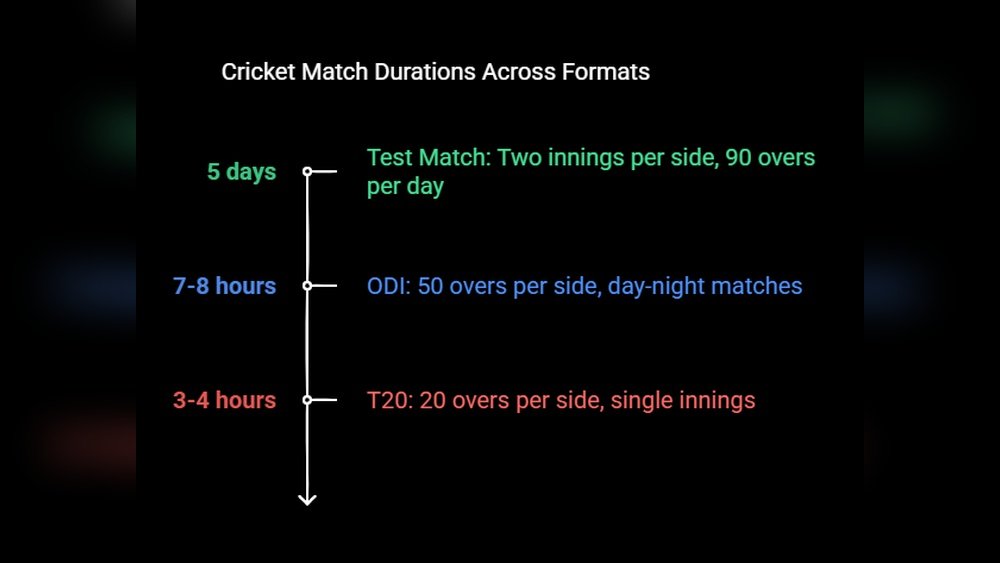
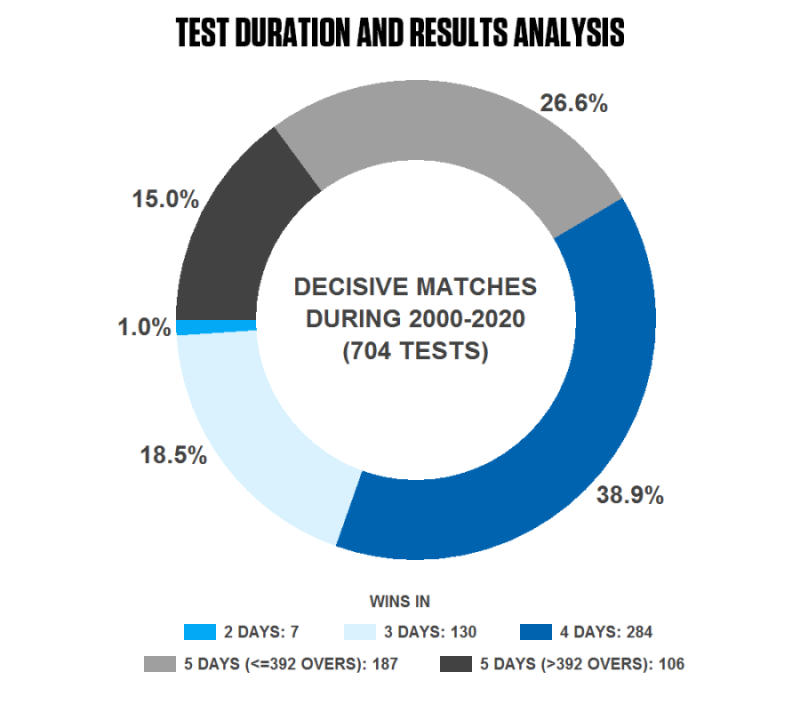
Test matches are the longest cricket format. They last up to five days. Each day has around six hours of play. Teams bat twice, aiming to score the most runs. This format tests players’ skill and endurance over long periods.
One-day Internationals
One-Day Internationals, or ODIs, are shorter than Tests. Each team bats once, with a limit of 50 overs. A match usually lasts about eight hours. This format balances strategy with faster gameplay. Fans enjoy its mix of excitement and skill.
Twenty20 Matches
Twenty20, or T20, is the shortest official format. Each team bats for 20 overs only. Matches last about three hours, similar to other sports. It focuses on quick scoring and big hits. T20 is popular for its fast pace and entertainment.
First-class Cricket
First-Class cricket includes domestic matches lasting three to four days. Like Test matches, teams have two innings. Each day features several hours of play with a set number of overs. This format helps players prepare for international cricket.

Credit: www.zapcricket.com
Test Match Duration Details
One-Day International (ODI) cricket offers an exciting and faster-paced version of the sport. It fits neatly into a single day, making it easy to follow and enjoy. The timing is set to ensure a full game without the need for multiple days. This format balances strategy and speed, attracting fans worldwide.
Match Structure
An ODI match consists of two innings, one per team. Each team bats once and bowls once. The team batting first sets a target score. The second team tries to chase that target within their innings. The match ends when both innings are complete or the target is reached.
Overs Per Side
Each team plays a fixed number of overs. In ODIs, this is usually 50 overs per side. An over has six legal balls bowled by one bowler. The limited overs keep the game moving at a steady pace. This structure encourages aggressive batting and strategic bowling.
Typical Duration
An ODI match typically lasts about 7 to 8 hours. This includes two innings, breaks, and intervals. A lunch break and a short tea break occur between innings. Matches usually start in the morning and finish by evening. This timing suits fans and broadcasters alike.
One-day International Timing
Twenty20 cricket, often called T20, is the shortest official format in professional cricket. It offers fast-paced action and finishes within a few hours. This format suits fans who prefer a quick, exciting match without long breaks.
Understanding the length of a Twenty20 match helps fans plan their viewing time. It also shows how cricket adapts to modern entertainment needs.
Match Format
A Twenty20 match consists of two teams. Each team bats for a maximum of 20 overs. One over has six legal deliveries by the bowler. The team with the most runs wins the game. Matches usually happen in one day, often under lights for evening games.
The format encourages aggressive batting and quick scoring. Bowlers try different strategies to limit runs. Fielding is fast and energetic, adding to the excitement.
Duration Compared To Other Formats
Twenty20 matches last about three hours. This is much shorter than One Day Internationals (ODIs), which take about eight hours. Test matches are the longest, lasting up to five days.
T20 cricket fits well into weekends or evenings. It attracts new fans who find longer formats hard to follow. The shorter duration also allows more matches in tournaments, boosting fan engagement.
Credit: www.theguardian.com
Twenty20 Match Length
The length of a cricket match varies widely. Several factors influence how long a game lasts. These elements affect the flow and final duration of the match. Understanding these factors helps fans and players manage expectations.
Weather Interruptions
Weather can stop play anytime during a cricket match. Rain delays are the most common cause. Bad light or storms also force breaks. These interruptions extend the total match time. Sometimes, entire sessions or days get lost due to weather.
Pace Of Play
How fast the players bowl and bat changes match length. Faster bowling and quick scoring reduce game time. Slow batting or many breaks slow the game down. Umpires also control the pace by enforcing time rules. A steady, quick pace keeps the match on schedule.
Innings Completion
Each team must finish their innings to progress. An innings ends when 10 players are out or overs are completed. Early wickets can shorten innings, ending the game sooner. Strong batting can extend innings, making the match longer. The balance of runs and wickets shapes the game duration.
Follow-on Rule
The follow-on rule applies in multi-day matches. It forces the team batting second to bat again immediately if they lag far behind. This rule can shorten the match by skipping extra innings. It speeds up results in matches with uneven scores. Teams use the follow-on to try and win faster.
Other Cricket Match Types
Cricket stands out for its unique duration compared to many other sports. Its length varies widely by format, from fast-paced matches to multi-day events. Understanding how cricket compares in playing time and endurance helps appreciate its distinct challenges and appeal. Let’s explore how cricket measures up against other popular sports.
Cricket Vs Baseball
Both cricket and baseball involve batting and fielding. Baseball games usually last around three hours. Cricket matches vary greatly: Twenty20 matches last about three hours, similar to baseball. One-Day Internationals take roughly eight hours. Test matches can stretch over five days. Cricket demands more extended focus and strategy than baseball. The pacing in cricket allows for breaks and shifts in momentum. Baseball has a faster, more continuous flow. Cricket’s longer formats add complexity and endurance.
Endurance And Playing Time
Cricket tests players’ endurance more than many sports. Test matches require physical and mental stamina for up to 30 hours of play. Players often spend long hours in the sun, maintaining concentration. Shorter cricket formats still demand intense bursts of energy. Unlike sports with fixed time limits, cricket’s duration depends on overs and innings. This uncertainty challenges players to stay prepared for long periods. Endurance in cricket blends physical fitness with patience and strategy.
Frequently Asked Questions
How Long Is The Cricket Game?
A cricket game’s length varies by format. Test matches last up to five days. One-Day Internationals take about eight hours. Twenty20 games finish in around three hours.
How Many Minutes Is A Game Of Cricket?
A cricket game lasts from about 3 hours for T20 matches to 7-8 hours for One Day Internationals. Test matches span up to 5 days.
Is Test Cricket 100 Overs?
No, Test cricket is not limited to 100 overs. It typically lasts up to five days with unlimited overs. Each day usually features a minimum of 90 overs. The game continues until all innings are completed or time runs out.
Is Test Match 90 Overs?
No, a Test match is not 90 overs. It typically spans five days with a minimum of 90 overs scheduled per day.
Conclusion
Cricket matches vary in length based on their format. Test matches last up to five days, with six hours played daily. One-Day Internationals (ODIs) usually finish within eight hours. T20 games take about three hours, making them the shortest format.
Understanding these differences helps fans enjoy the game better. Each format offers unique excitement and challenges. Knowing match duration sets clear expectations before watching. Cricket’s flexible timing suits different audiences and occasions. This variety keeps the sport interesting worldwide.