
Are you curious about the exact height of a regulation volleyball net? Whether you’re setting up a court in your backyard, coaching a team, or just want to understand the game better, knowing the official net height is essential.
It can affect how you play, practice, and even choose the right equipment. You’ll discover the precise measurements for men’s and women’s volleyball nets, the reasons behind these standards, and tips to make sure your net meets official rules. Keep reading to get all the details that will help you take your volleyball game or setup to the next level!

Credit: www.networldsports.com
Regulation Net Height
The height of a volleyball net is crucial for fair play. It sets the challenge level for players and affects the style of the game.
Different categories have specific net heights. These heights follow official rules from volleyball organizations worldwide.
Men’s Net Height
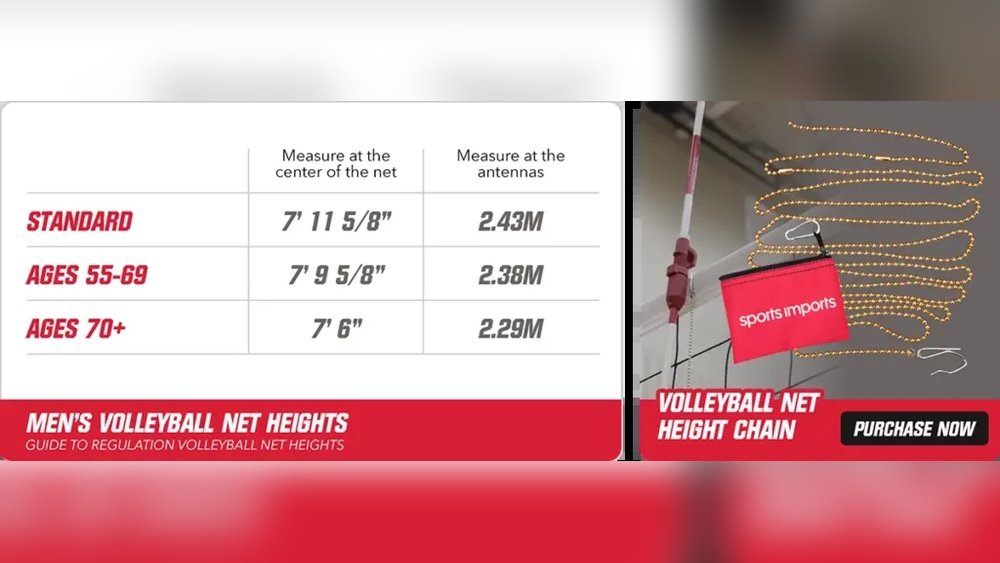
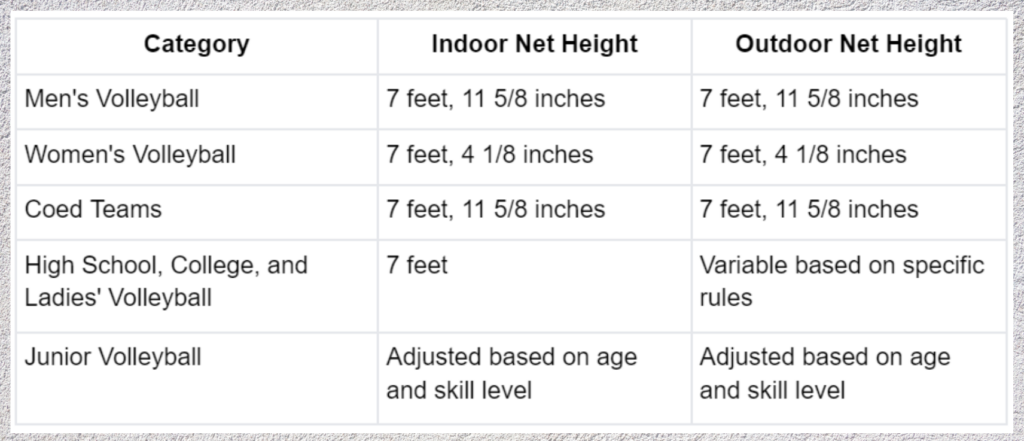
The standard net height for men is 2.43 meters (7 feet 11 5/8 inches). This height is used in professional and amateur men’s volleyball matches.
The taller net increases difficulty and tests players’ jumping and blocking skills. It is consistent in indoor and most outdoor competitions.
Women’s Net Height
For women, the regulation net height is 2.24 meters (7 feet 4 1/8 inches). This height suits the average reach and gameplay style of female players.
It encourages speed and strategic play. Women’s volleyball often features fast rallies and precise ball control at this height.
Youth Net Height
Youth volleyball nets vary based on age and skill level. Common heights range from 1.98 meters (6 feet 6 inches) to 2.13 meters (7 feet).
Lower nets help younger players develop skills comfortably. Adjusting the height supports safe and enjoyable learning experiences.
Measurement Standards
Measurement standards define the exact height and setup of a regulation volleyball net. These rules ensure fairness and consistency in every match. Knowing these standards helps players, coaches, and referees prepare the court correctly. Precise measurements create a level playing field for all competitors.
Center Court Measurement
The net height is measured at the center of the court. For men’s volleyball, the official height is 2.43 meters (7 feet 11 5/8 inches). For women, it is 2.24 meters (7 feet 4 1/8 inches). The measurement must be exact to avoid any advantage. The net should be tight and straight across the entire width.
Net Pole Specifications
Net poles must be sturdy and placed outside the court sidelines. They should stand exactly 1 meter outside each side of the playing area. The poles hold the net at the correct height and tension. Proper padding on poles is required for player safety. Poles must also allow easy adjustment to maintain net height.
Court Dimensions
The court dimensions set the stage for a proper volleyball match. They ensure fair play and consistency worldwide. Knowing these dimensions helps players and organizers prepare the court correctly. The net height is only part of the overall setup. The court’s length, width, and net length also matter. These measurements follow official rules to maintain standard play.
Net Length
The regulation volleyball net length is 32 feet (9.75 meters). This length covers the entire width of the court. It must stretch tightly across the court without sagging. Poles hold the net firmly at each end. The net’s top edge is lined with a white band for visibility. This length suits both indoor and beach volleyball courts.
Court Width And Length
The standard volleyball court measures 59 feet (18 meters) long. It is 29.5 feet (9 meters) wide. These dimensions provide enough space for six players on each side. The court lines are clearly marked to show boundaries. A centerline divides the court into two equal halves. These size rules apply in all official volleyball matches.
Indoor Vs Outdoor Nets
Volleyball nets differ for indoor and outdoor play. Both types meet the regulation height. The difference lies mainly in the materials and durability. Choosing the right net depends on where you play most. Indoor nets suit gym floors and controlled environments. Outdoor nets handle weather and rough surfaces better.
Understanding these differences helps players and organizers pick the best net. It ensures long-lasting use and a fair game experience.
Material Differences
Indoor nets use lightweight materials like nylon or polyester. These fabrics allow for easy handling and quick setup. The mesh size is small to reduce ball penetration. Outdoor nets often have thicker threads and UV-resistant coatings. This protects the net from sun damage and rain. Some outdoor nets use vinyl for extra strength and water resistance. The poles also differ, with outdoor poles made from rust-proof metal.
Durability Factors
Indoor nets last longer in dry, stable conditions. They may wear out quickly if used outdoors. Outdoor nets face sun, wind, rain, and dirt daily. These factors demand stronger and weatherproof materials. Outdoor nets also have reinforced edges and heavy-duty ropes. These features prevent sagging and tearing. Proper care extends net life, such as drying outdoor nets after rain. Regular inspection helps catch damage early.
Net Installation Tips
Installing a regulation volleyball net correctly ensures fair play and safety. Proper setup affects the game’s flow and player experience. Follow these simple net installation tips to get the height and position right every time.
Setting Proper Height
Measure the net height at the center of the court. For men’s play, the net must be 7 feet 11 5/8 inches tall. For women’s play, set it at 7 feet 4 1/8 inches. Use a tape measure or a marked pole for accuracy. Make sure the net is tight and does not sag. Adjust the height after tensioning the net to keep it stable.
Pole Placement
Place poles firmly on both sides of the court’s center line. The poles should be exactly 3 meters (9 feet 10 inches) from the center line on each side. Use sturdy poles that can handle tension without bending. Secure them in the ground or weighted bases for outdoor courts. Check pole alignment to keep the net straight and balanced.
Common Net Height Variations
Volleyball net height varies depending on the level of play and the players’ age or gender. Different leagues follow specific height rules to keep the game fair and fun. These variations help players compete safely and enjoy the sport at their skill level. Below are common net height standards found in schools and recreational settings.
High School Standards
High school volleyball follows official rules that set net heights by gender. For boys, the net stands at 2.43 meters (7 feet 11 5/8 inches). For girls, the height is 2.24 meters (7 feet 4 1/8 inches). These measurements apply to most U.S. high schools and many international competitions. The net height is measured at the court’s center, ensuring consistency.
These standards prepare players for college and professional levels. Coaches focus on these heights for training and matches. This consistency helps players improve skills like serving, blocking, and spiking.
Recreational Play
Recreational volleyball often has flexible net heights to fit players’ ages and abilities. Many local leagues lower the net for younger or mixed-gender groups. Common heights range from 1.8 meters (5 feet 11 inches) to 2.1 meters (6 feet 11 inches).
This flexibility makes volleyball more enjoyable and less challenging for beginners. It encourages participation and helps players build confidence. Recreational nets may also adjust for casual backyard or beach games. The focus is fun, not strict competition.
Net Maintenance
Proper maintenance keeps a regulation volleyball net in great shape. Regular care extends the net’s life and ensures fair play. A clean, well-maintained net looks professional and performs well during matches.
Cleaning And Care
Clean the volleyball net regularly to remove dirt and grime. Use a soft brush or cloth to wipe down the net gently. Mild soap mixed with water works well for cleaning. Avoid harsh chemicals that can damage the net fibers.
After cleaning, allow the net to dry completely before storing. Drying prevents mold and mildew growth. Store the net in a cool, dry place away from direct sunlight. Proper storage stops the net from weakening or fading.
Replacement Guidelines
Check the net often for signs of wear and tear. Look for holes, frayed edges, or loose stitching. Replace the net if damage affects its strength or playability. A damaged net can cause unfair game interruptions.
Replace the net if it no longer meets regulation height or size. Using a net that fits official standards ensures fair competition. Choose a replacement net made of durable materials for long-lasting use. Regular inspections help catch problems early.

Credit: www.networldsports.com
Credit: sterlingvolleyball.com
Frequently Asked Questions
How Many Feet Is A Regulation Volleyball Net?
A regulation volleyball net is 32 feet wide and 7 feet 11 5/8 inches (7. 97 feet) tall for men, 7 feet 4 1/8 inches (7. 34 feet) for women. The height is measured at the center of the court.
Is The Volleyball Net 3 Feet High?
No, a regulation volleyball net is not 3 feet high. It stands 7 feet 11 5/8 inches for women and 8 feet 0 inches for men.
What Is A High School Volleyball Net?
A high school volleyball net stands 7 feet 4 1/8 inches tall at the center. It measures 32 feet wide. This regulation net suits both boys’ and girls’ matches, ensuring fair play and consistent game standards.
How Tall Is High School Volleyball?
The high school volleyball net stands 7 feet 4 1/8 inches (2. 24 meters) tall at the center of the court.
Conclusion
A regulation volleyball net stands 7 feet 11 5/8 inches high for men. For women, the net height is 7 feet 4 1/8 inches. This height is measured at the center of the court. Knowing these measurements helps players and coaches set up courts correctly.
It also ensures fair play in matches. Whether playing indoors or on the beach, the net height stays the same. Keep these numbers in mind to enjoy volleyball the right way. Simple and clear. That’s the key to the game.