Are you curious about the exact height of a standard volleyball net? Whether you’re planning to set up your own volleyball court or just want to understand the game better, knowing the official net height is essential.
The height of the net isn’t the same for everyone—it changes depending on whether men, women, or mixed teams are playing. Getting this right can improve your game, help you follow the rules, and make your volleyball experience more enjoyable.
Keep reading to discover the official volleyball net heights, why they differ, and how you can adjust the net for different players or levels. This simple but crucial detail could be the key to taking your volleyball skills to the next level!
Credit: www.sportsimports.com
Standard Net Heights
The height of a volleyball net plays a crucial role in the sport. It ensures fair play and challenges players according to their skill level. Different categories have specific net heights. These heights follow official rules set by volleyball organizations worldwide.
Setting the correct net height helps maintain the sport’s integrity. It also balances the game for men, women, and mixed teams. Below are the standard net heights used in official and recreational volleyball matches.
Men’s Official Height
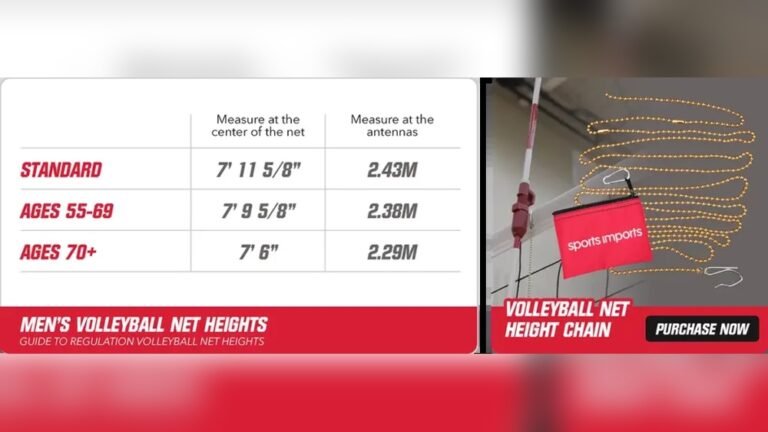
The official net height for men is 2.43 meters (7 feet 11 5/8 inches). This height is used in all professional and international men’s volleyball competitions. It allows men to use their strength and jumping ability effectively. This height challenges players to improve their skills in spiking and blocking.
Women’s Official Height
The official net height for women is 2.24 meters (7 feet 4 1/8 inches). This height is lower than the men’s net to suit average female height and jumping ability. Women’s volleyball matches follow this standard in all official tournaments. The height encourages speed, agility, and teamwork during play.
Co-ed And Recreational Heights
Co-ed and recreational volleyball often use a net height between the men’s and women’s official heights. The common height is 2.35 meters (7 feet 8 1/2 inches). This setting helps create a balanced game for mixed teams. Recreational leagues may adjust the height to fit players’ ages and skill levels. This flexibility makes volleyball fun and accessible for all.
Credit: www.courtdimensions.net
Height Variations By Age
The height of a volleyball net changes based on players’ ages. These adjustments help young athletes play comfortably and safely. Setting the right net height improves skill development and enjoyment. Understanding these height variations is important for coaches and parents.
Youth And Junior Nets
Youth volleyball nets are lower than standard adult nets. This makes it easier for kids to serve and block the ball. For example, the net height for children under 12 is usually around 1.98 meters (6 feet 6 inches). Junior players, aged 13 to 15, use nets that are a bit higher but still below adult standards.
Adjustments For Younger Players
Net heights vary to match players’ physical abilities. Younger players need lower nets to build confidence and skill. For beginners, nets can be as low as 1.5 meters (4 feet 11 inches). Adjusting net height prevents frustration and encourages learning. Coaches often change net height as players grow and improve.
Measurement Units
The height of a standard volleyball net is measured using two common units. These units help players and officials set the net correctly. Understanding these units is important for accurate setup. Measurements vary based on the system used in different countries. The metric system and the imperial system are the main types.
Metric System
The metric system uses meters and centimeters. This system is common worldwide. Official men’s volleyball nets stand at 2.43 meters tall. Women’s nets are set slightly lower at 2.24 meters. Co-ed or recreational nets usually measure 2.35 meters. This system is simple and precise, making it easy to follow rules internationally.
Imperial System
The imperial system uses feet and inches. It is popular in the United States and a few other countries. The official men’s net height is 7 feet 11 and 5/8 inches. Women’s nets are set at 7 feet 4 and 1/8 inches. Recreational or co-ed nets are about 7 feet 8 and 1/2 inches tall. This system can be less precise but remains widely used in some regions.
Regulatory Bodies
Several regulatory bodies set the official height for volleyball nets. These organizations ensure fair play and standardization worldwide. Knowing their guidelines helps players and coaches prepare correctly. The net height varies by gender, age, and competition level. Below are the main regulatory bodies and their net height standards.
Fivb Standards
The International Volleyball Federation (FIVB) governs volleyball globally. For men, the official net height is 2.43 meters (7 feet 11 5/8 inches). Women play with a net set at 2.24 meters (7 feet 4 1/8 inches). These heights apply to all official international competitions. The FIVB also sets rules for net width and antenna placement.
Usav Guidelines
USA Volleyball (USAV) follows FIVB standards but adapts some rules for local play. Men’s net height remains 2.43 meters. Women’s net height is also 2.24 meters. USAV specifies net height for youth divisions, which can be lower. These adjustments help young players develop skills safely and enjoyably.
High School Regulations
High school volleyball rules vary by state but often follow the National Federation of State High School Associations (NFHS). Men’s nets are set at 2.43 meters. Women’s nets are 2.24 meters high. Some states may have specific rules for middle school or junior varsity levels. The goal is to keep competition fair and consistent.
Setting Up The Net
Setting up a volleyball net properly is key for a good match. The net must be at the right height and tightly secured. This section explains how to install the net correctly and what to watch out for.
Proper Installation
Start by choosing strong poles that fit your net. Place them firmly in the ground or stands. Attach the net to the poles using the ropes or straps provided. Raise the net to the correct height: 2.43 meters for men, 2.24 meters for women, and around 2.35 meters for co-ed play. Use a measuring tape to ensure accuracy. Tighten the net so it is flat and without sagging. Check that the top band is level across the whole net. Make sure the side ropes are secure and do not move during play.
Common Mistakes To Avoid
Avoid setting the net too low or too high. This can cause unfair play and safety issues. Don’t leave the net loose or sagging; it affects the ball’s bounce. Do not use weak poles that can bend or fall. Avoid uneven tension on the ropes; it will tilt the net. Check the net height before every game, as it may shift. Avoid using damaged nets that have holes or torn edges. Make sure the net’s top band is clean and clearly visible for players.

Credit: www.networldsports.com
Co-ed Net Height Rules
Co-ed volleyball uses net heights that balance fairness for both genders. These rules ensure players have an equal chance to compete. The net height often falls between the men’s and women’s standards. This approach promotes inclusive and enjoyable play.
Different regions may adopt their own co-ed net height standards. Understanding these variations helps players adapt to local rules and play comfortably.
Regional Differences
Net height for co-ed volleyball varies by region. In the United States, the net usually stands at 2.35 meters (7 feet 8.5 inches). Some local leagues prefer the women’s height of 2.24 meters. Others stick to the men’s height of 2.43 meters. These differences depend on player skill, age, and competitive level. Knowing your area’s standard prevents confusion during matches.
Reverse Co-ed Rules
Reverse co-ed rules change the net height based on player rotation. When men are in front row, the net height is set lower. When women are in front row, the net is higher. This rule balances the advantage of height and jumping ability. It keeps the game fair and fun for all players. Reverse co-ed rules are common in recreational leagues.
Net Equipment Options
Choosing the right volleyball net equipment is key for a good playing experience. Different options suit different needs and places. Understanding these options helps you find the best fit for your game.
Portable Net Systems
Portable volleyball nets are easy to set up and take down. They work well for parks, beaches, or backyards. Most come with poles, a net, and a carrying bag. Some have adjustable heights for men’s, women’s, or co-ed play. Portability means you can play anywhere without fixed courts. These systems are ideal for casual players and beginners.
Materials And Durability
Volleyball nets are made from nylon, polyester, or polyethylene. Nylon nets are strong and resist stretching. Polyester nets dry quickly and stand up to sun damage. Polyethylene nets are lightweight and affordable. Poles often use steel or aluminum for strength and rust resistance. Choosing durable materials ensures your net lasts through many games and weather conditions.
Court Dimensions And Net Placement
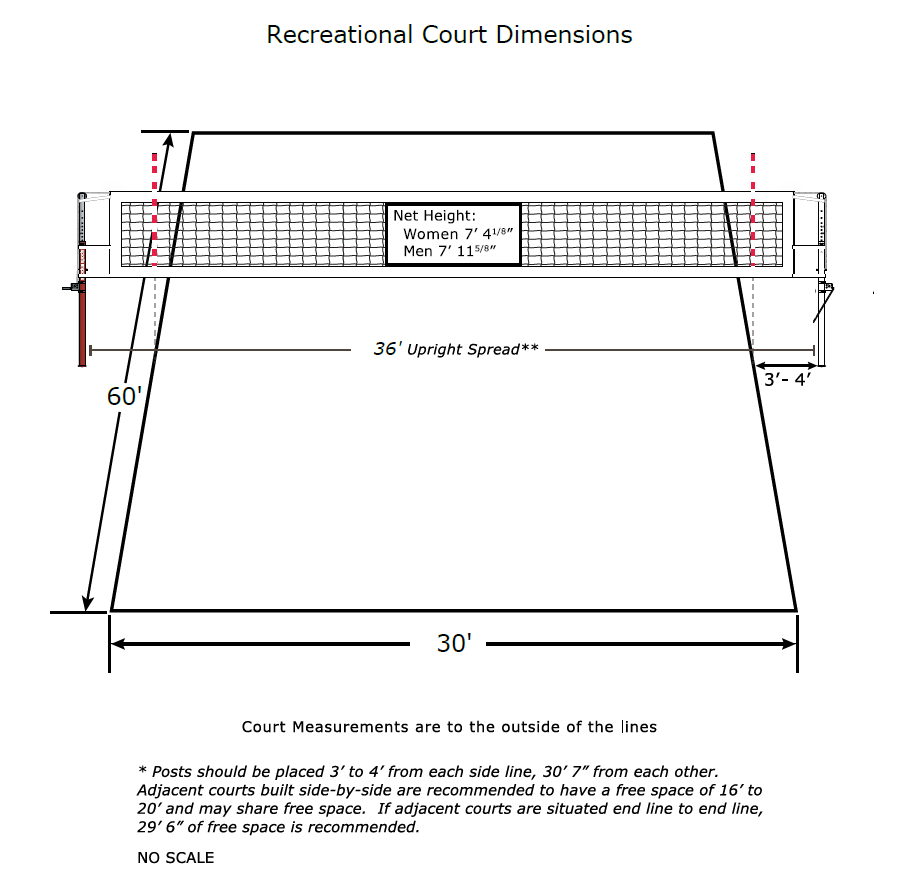
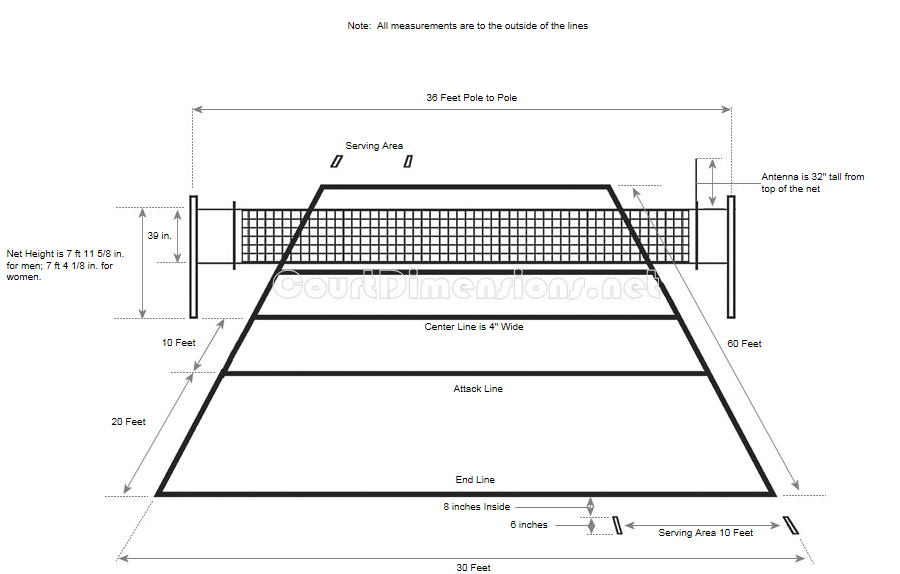
Understanding the court dimensions and net placement is key to playing volleyball correctly. The court is divided into two equal halves by the net. Each half measures 9 meters wide and 9 meters long. The net runs across the middle, creating a clear boundary between the teams.
The net height varies depending on the players’ category. For men, the standard height is 2.43 meters. For women, it is 2.24 meters. Co-ed or recreational play often uses a height around 2.35 meters. Proper net placement ensures fair play and accurate game rules.
Court Division By Net
The net splits the court into two equal parts. Each side is exactly 9 meters by 9 meters. This balance keeps the game fair and organized. The net acts as the central point for all plays and serves. Players must stay on their side to avoid faults.
The boundary lines mark the court edges clearly. The attack line sits 3 meters from the net on each side. This line controls front-row and back-row player actions. The net height and court size combine to shape the game’s flow.
Net Positioning Tips
Set the net poles firmly at the court’s center line. Make sure the net is tight and does not sag. A loose net can cause unfair advantages and disrupt the game. Use the official measurements to check net height before every match.
Use a measuring tape to confirm the net height at the center and edges. Adjust the net so it stays consistent across its length. Ensure the antennae are attached vertically on both net sides. They mark the limits for legal ball crossing.
Clear court markings and precise net placement improve player experience. Proper setup leads to smooth and competitive volleyball matches.
Frequently Asked Questions
What Is A Volleyball Net Height?
The official volleyball net height is 2. 43 meters (7 feet 11 5/8 inches) for men. For women, it is 2. 24 meters (7 feet 4 1/8 inches). Co-ed and recreational nets often set at 2. 35 meters (7 feet 8 1/2 inches).
Heights may vary for youth and different leagues.
How Big Is A Full-size Volleyball Net?
A full-size volleyball net measures 32 feet wide and 3 feet tall. Official heights are 7 feet 11 5/8 inches for men and 7 feet 4 1/8 inches for women. Co-ed nets typically stand at 7 feet 8 1/2 inches tall.
Is The Volleyball Net 3 Feet High?
A standard volleyball net is not 3 feet high. Men’s net height is 7 feet 11 5/8 inches, women’s is 7 feet 4 1/8 inches.
Is Size 5 The Official Volleyball Size?
Yes, size 5 is the official volleyball size used in professional and adult competitions worldwide.
Conclusion
A standard volleyball net height varies by gender and play type. Men’s official nets stand at 2. 43 meters (7 feet 11 5/8 inches). Women’s nets are set lower, at 2. 24 meters (7 feet 4 1/8 inches). Co-ed and recreational nets often measure around 2.
35 meters (7 feet 8 1/2 inches). Knowing these measurements helps players set up courts correctly. It also ensures fair and safe gameplay for everyone. Remember, net height plays a key role in volleyball rules and strategies. Keep these standard heights in mind for your next game or practice.