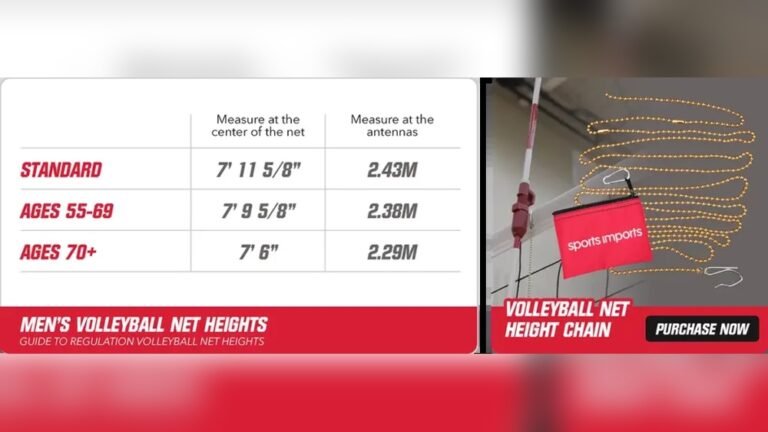
When you step onto the volleyball court, the net is more than just a divider—it’s the challenge you must overcome to score points and win games. But do you know the exact height of the net in men’s volleyball?
Understanding the regulation net height is crucial for improving your skills, preparing your training, and mastering the game. Whether you’re a player, coach, or fan, knowing this key detail can change how you approach every serve, spike, and block. Keep reading to discover the official men’s volleyball net height, why it matters, and how it affects your performance on the court.
Your game is about to reach new heights—literally!
Men’s Net Height Standards
The net height in men’s volleyball plays a vital role in the sport. It affects how players serve, block, and spike the ball. Setting the right net height ensures fair play and proper challenge for athletes.
Understanding the standards helps players and coaches prepare better. It also allows fans to appreciate the skill involved. Below are details on official measurements, differences from women’s net height, and youth variations.
Official Measurements
The official net height for men’s volleyball is 2.43 meters (7 feet 11 5/8 inches). This standard is set by the International Volleyball Federation (FIVB). It applies to all adult male competitions worldwide.
This height tests players’ jumping ability and timing. It balances offense and defense during the game. Maintaining this height is essential for official matches and tournaments.
Comparison With Women’s Net Height
The women’s volleyball net height is lower than the men’s. It measures 2.24 meters (7 feet 4 1/8 inches). This difference accounts for general physical variations between genders.
The lower net allows women to perform powerful plays. It keeps the competition equal and exciting. Both net heights follow strict rules for fair matches.
Youth And High School Variations
Youth volleyball often uses lower net heights to suit young players. For boys under 14, the net is usually set at 2.13 meters (7 feet). This helps develop skills without too much strain.
High school boys’ volleyball mostly uses the official adult height of 2.43 meters. Some leagues adjust the height based on skill levels. These variations support safe and fun play for all ages.
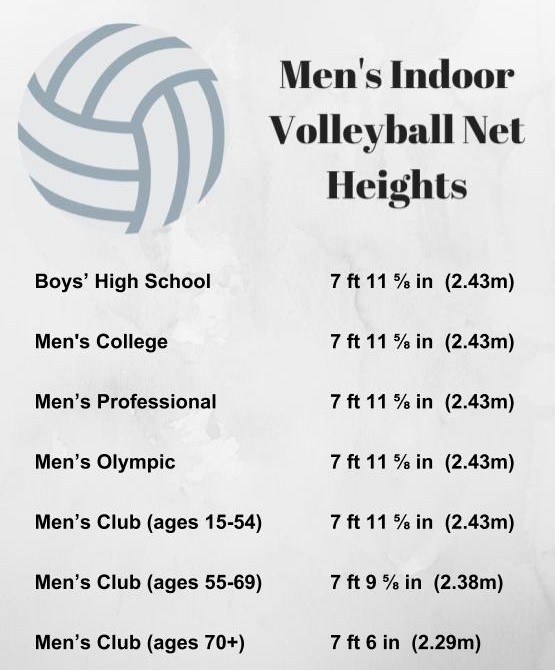
Credit: volleyball-tips.com
Volleyball Court Dimensions
Understanding volleyball court dimensions is essential for playing and coaching the sport correctly. The size and layout vary slightly between indoor and beach volleyball. The net height also plays a key role in the game’s flow and rules. Below, you will find details about court sizes and net placement for men’s volleyball.
Indoor Court Size
The standard indoor volleyball court measures 18 meters long and 9 meters wide. It is divided into two equal halves by the net. The court has attack lines 3 meters from the net on each side. These lines mark the front and back zones for players during the match.
Beach Volleyball Court
The beach volleyball court is smaller than the indoor court. It measures 16 meters long and 8 meters wide. The sand surface affects player movement and game dynamics. There are no attack lines on a beach volleyball court, unlike indoor courts.
Net Placement And Clearance
The net divides the court into two equal parts. For men’s volleyball, the net height is set at 2.43 meters. This height allows for powerful spikes and blocks during play. The net must be tight and have a clearance of at least 7 meters from the playing area sides.
Rules Governing Net Height
The net height in men’s volleyball plays a crucial role in the sport’s dynamics. It affects player performance, game strategy, and overall fairness. Strict rules govern this height to maintain consistency across competitions. Understanding these rules helps players, coaches, and fans appreciate the game’s standards. Different organizations and levels have specific regulations to follow. These rules ensure the net height matches the players’ skill and age groups. Below, explore the main rules governing men’s volleyball net height across various levels.
International Regulations
The International Volleyball Federation (FIVB) sets the official net height for men’s volleyball. The standard height is 2.43 meters, or about 7 feet 11 5/8 inches. This height is used in all major international competitions. It applies to both indoor and beach volleyball at the senior level. The FIVB mandates precise measurements before every match. The net must be taut and stable during play. This standard ensures fairness and consistency worldwide.
High School And College Rules
High school and college volleyball follow slightly different rules depending on the country. In the United States, the net height for men’s volleyball is usually 2.43 meters. Most high school and college leagues adopt this height. Some variations exist in junior or beginner leagues. Officials check net height before matches to meet regulations. Maintaining the proper height prevents unfair advantages. This practice helps players adjust their skills appropriately.
Adjustments For Different Levels
Younger players and beginners often use lower net heights. These adjustments help develop skills without frustration. For example, middle school boys might use a net height around 2.24 meters. Recreational leagues may set nets even lower. These changes promote better learning and participation. Gradually increasing the net height prepares players for higher competition levels. Coaches must follow guidelines to choose the correct height for each group.
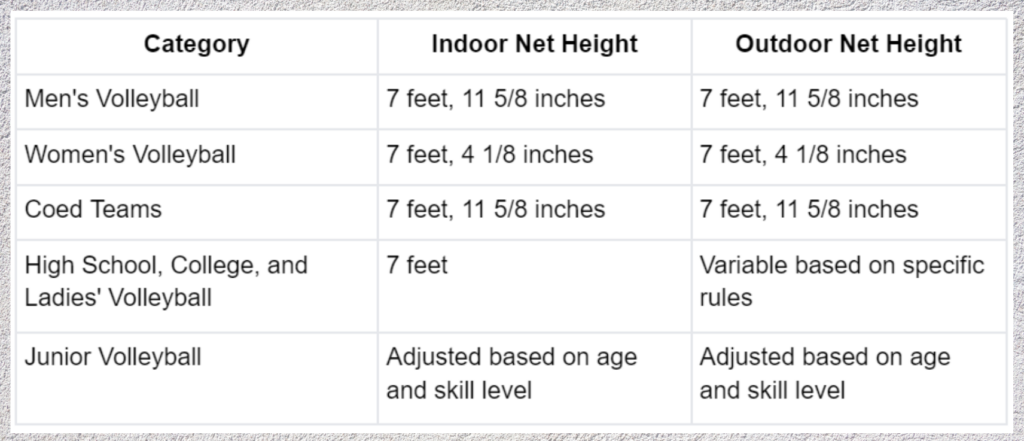
Credit: sterlingvolleyball.com
Impact Of Net Height On Gameplay
The height of the net in men’s volleyball greatly influences how the game is played. It affects the speed, power, and tactics players use during matches. The net height sets a physical challenge that players must overcome in every action they take. Understanding this impact helps players improve their skills and teams build better strategies.
Serving And Spiking
A higher net requires players to adjust their serving techniques. Powerful jump serves help clear the net and put pressure on opponents. Spiking also changes; players must jump higher and time their hits perfectly. The net height demands more strength and precision for successful attacks.
Blocking Strategies
Blocking becomes more challenging with a taller net. Defenders must increase their vertical reach and anticipate the attacker’s moves. Teams often train to improve timing and hand placement. A well-timed block can stop powerful spikes and shift momentum in a match.
Player Positioning
Net height influences where players stand and move on the court. Front-row players stay closer to the net to attack and block effectively. Back-row players focus on defense and setting up attacks. Proper positioning helps teams cover the court and respond to fast plays better.
Setting And Maintaining The Net
Setting and maintaining the net at the correct height is essential for men’s volleyball. The official net height ensures fair play and consistent game rules. Proper installation and regular checks keep the net stable and at the right height throughout matches and practices.
It also prevents disputes about measurements and helps players perform at their best. Simple tools and techniques make the process easier for coaches and officials. Understanding common issues helps fix problems quickly and avoid delays during games.
Proper Installation Techniques
Start by securing the net posts firmly into the ground or court anchors. Stretch the net tightly between the posts to avoid sagging. Adjust the top cable so the net height matches the official standard of 2.43 meters (7 feet 11 5/8 inches) for men.
Use side straps or tension cords to keep the net taut and stable. Check for any twists or loose parts that may affect net height or position. Ensure the antennae are attached vertically above the sidelines for proper play boundaries.
Common Measurement Tools
A tape measure is the most basic and reliable tool for measuring net height. Use a standard measuring tape with clear markings in meters or feet. A net height gauge or volleyball net pole with built-in measurement marks can speed up the process.
Laser distance meters provide quick and precise readings but are less common. A level tool can help ensure that the net is perfectly horizontal. Always measure at the center of the net for accuracy.
Troubleshooting Height Issues
Check the net tension if the height seems off. A loose net can sag and reduce effective height. Tighten cables or straps to restore proper tension. Inspect the posts for stability; unstable posts can tilt and lower the net.
Measure multiple times during setup to avoid errors. If the net is too high, lower the top cable or adjust the post height if possible. Replace worn or stretched cables and straps to maintain consistent height.
Training Tips For Men’s Volleyball Net Play
Training for men’s volleyball net play requires focus on key skills. The net height challenges players to improve strength, timing, and technique. Practice helps players become more effective at blocking, attacking, and controlling the net area. Below are essential training tips to enhance net play performance.
Improving Vertical Jump
A strong vertical jump boosts net play success. Exercises like squats, calf raises, and plyometrics build leg power. Jumping drills with a focus on height increase explosiveness. Consistent training helps players reach higher over the net. This advantage is crucial for both blocking and spiking.
Timing And Approach
Precise timing is key at the net. Players should practice jumping at the right moment. An effective approach with quick footwork sets up better jumps. Counting steps and watching the ball’s trajectory improve timing. Good timing makes blocks and attacks more effective and harder to defend.
Drills Focused On Net Skills
Specific drills sharpen net skills. Blocking drills improve hand positioning and reaction speed. Spiking drills enhance arm swing and ball control. Partner drills simulate real game situations. Repetition builds confidence and skill around the net area. Regular practice strengthens net presence on the court.
Equipment And Gear Considerations
Choosing the right equipment and gear is essential for men’s net height volleyball. Proper gear ensures safety and improves performance. The net and its supporting gear must be durable and meet official standards. Players also need suitable protective gear for playing near the net. This section covers key points about net materials, posts, anchors, and protective gear.
Net Materials And Quality
Volleyball nets must be strong and weather-resistant. Common materials include nylon and polyethylene. Nylon nets offer durability and good tension. Polyethylene nets resist water and sunlight well. The net mesh size should be uniform for fair play. High-quality nets maintain shape and height during intense matches. Choose nets that meet official men’s volleyball height standards for best results.
Posts And Anchors
Posts hold the net securely in place. They must be sturdy and stable to avoid movement. Metal posts are common for indoor courts. Outdoor courts often use fiberglass or aluminum posts to resist rust. Anchors keep posts fixed to the ground. Ground sleeves or weighted bases provide strong support. Proper anchoring prevents net sagging or tilting during play.
Protective Gear For Net Play
Playing near the net involves quick movements and jumps. Protective gear helps reduce injury risks. Knee pads protect knees from hard falls. Ankle braces support joints during sudden landings. Some players use finger tape for extra grip and protection. Wearing appropriate shoes improves traction and stability on the court. Safety gear boosts confidence and helps players focus on the game.
Variations In Net Height By Volleyball Type
The height of a men’s volleyball net changes depending on the type of volleyball played. Different environments and player groups require varied net heights. Understanding these differences helps players prepare better and enjoy the sport more. Below are the main variations in net height by volleyball type.
Indoor Vs. Beach Volleyball
Indoor men’s volleyball nets are set at 2.43 meters (7 feet 11 5/8 inches). This height is standard for official indoor competitions worldwide.
Beach volleyball uses the same net height for men, 2.43 meters. However, wind and outdoor conditions make the game feel different despite the same net height.
Coed And Recreational Levels
Coed volleyball often uses a lower net height to balance skill differences between men and women. The net is usually set around 2.24 meters (7 feet 4 1/8 inches).
Recreational leagues may adjust net heights to fit player skill and age. Some use the standard height; others lower it for fun and inclusivity.
Adaptive Volleyball Net Heights
Adaptive volleyball allows people with disabilities to play. Net heights vary widely depending on the player’s needs.
Some leagues set nets lower than 2 meters to allow easier play. Others adjust court size along with net height for comfort and safety.
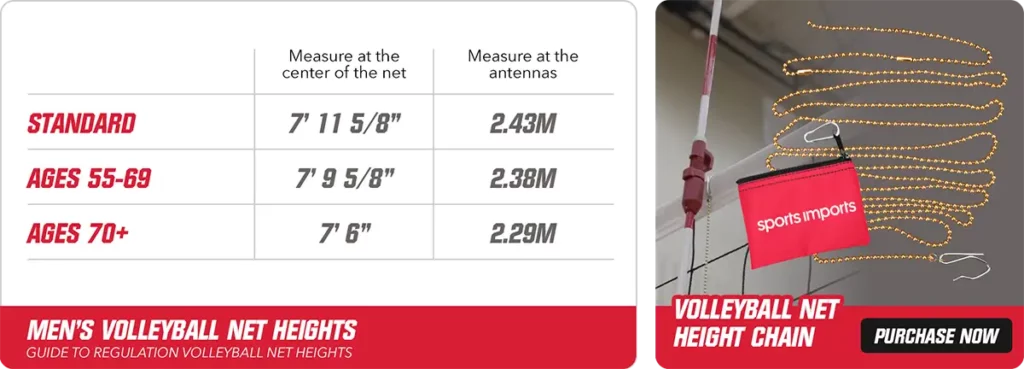
Credit: www.sportsimports.com
Frequently Asked Questions
How High Is The Net In Men’s Volleyball?
The net height in men’s volleyball is 7 feet 11 5/8 inches (2. 43 meters). This standard applies to indoor play.
Does Net Height Differ For Men’s Volleyball?
Yes, men’s volleyball net height is higher than women’s. It measures 7 feet 11 5/8 inches (2. 43 meters).
What Is The Height For Men’s Volleyball?
The official net height for men’s volleyball is 2. 43 meters (7 feet 11 5/8 inches). This height applies to indoor men’s competitions worldwide.
How Tall Is A Man’s Net?
A men’s volleyball net stands 7 feet 11 5/8 inches (2. 43 meters) tall. This height is standard in official matches.
Conclusion
Men’s volleyball net height plays a crucial role in the sport’s dynamics. It sets the challenge level for players and influences gameplay strategies. At 7 feet 11 5/8 inches, the net height demands strong jumping and precise timing. Knowing this standard helps players train better and enjoy the game more.
Whether playing indoors or on the beach, understanding net height keeps the matches fair and exciting. Remember, practice and focus improve skills over time. Keep these facts in mind to appreciate men’s volleyball fully.