Are you curious about the official height of a volleyball net and why it matters for your game? Whether you’re just starting out, playing for fun, or competing seriously, knowing the exact net height can change how you serve, spike, and block.
The height isn’t just a random number—it’s carefully set to match different levels and categories of play, like men’s, women’s, and co-ed games. You’ll discover the official measurements, the reasons behind them, and how understanding these details can improve your skills on the court.
Ready to get the facts straight and take your volleyball game to the next level? Let’s dive in!
Credit: volleyball-tips.com
Net Heights By Category
The height of a volleyball net varies by category. Different groups use specific net heights to fit their needs. This ensures fair play and safety. Below are the official net heights for men, women, co-ed, and youth categories. Each height suits the players’ skill levels and physical abilities.
Men’s Net Height
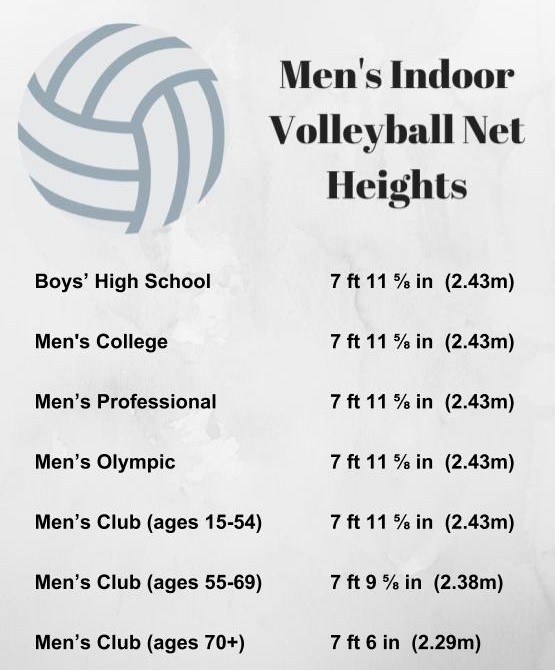
The official net height for men is 2.43 meters (7 feet 11 5/8 inches). This height challenges male athletes to jump higher and use more strength. It is standard in all professional and international men’s volleyball games. Men’s net height promotes fast-paced and powerful play.
Women’s Net Height
The official net height for women is 2.24 meters (7 feet 4 1/8 inches). This height suits female players’ average reach and jumping ability. It balances competition and skill development. Women’s volleyball uses this net height in all official matches worldwide.
Co-ed And Recreational Heights
Co-ed games often use a net height of 2.35 meters (7 feet 8 1/2 inches). This height is between men’s and women’s official heights. It creates a fair playing field for mixed teams. Recreational leagues might adjust net height based on players’ preferences or skill levels.
Youth And Junior Net Sizes
Youth volleyball nets are lower to match younger players’ abilities. Net heights usually range from 1.98 to 2.24 meters (6 feet 6 inches to 7 feet 4 1/8 inches). These sizes help kids learn skills safely and comfortably. Junior leagues follow these standards to promote growth and fun.
Measurement Standards
The official height of a volleyball net follows strict measurement standards. These standards ensure fairness and consistency in every match. Different countries and organizations may use various units and slight variations. Understanding these details helps players and coaches prepare properly.
Metric Vs Imperial Units
Volleyball net height is measured in meters and feet. Most international rules use the metric system. The men’s net height is 2.43 meters. The women’s net height is 2.24 meters. In the United States, the imperial system is common. Here, net heights are given in feet and inches. For example, 2.43 meters equals 7 feet 11 5/8 inches. Knowing both units helps in setting up the net correctly.
Tolerance And Variations
Net height must be within a small tolerance range. Slight differences are allowed due to measurement tools and setup. Typically, a variance of plus or minus 1 centimeter is accepted. This ensures fairness without causing disputes. Recreational or co-ed games may have different heights. These heights often vary to suit players’ skill levels and ages.
Fivb Regulations
The International Volleyball Federation (FIVB) sets the official net heights. For men, the net must be exactly 2.43 meters. For women, the height is 2.24 meters. FIVB rules apply to all international competitions. The net must be tightly secured and clearly marked. Referees check the net height before each match to maintain standards.
National Governing Bodies
National volleyball organizations follow FIVB guidelines closely. Some may adjust rules for local leagues or youth levels. For example, USA Volleyball sets specific heights for different age groups. These bodies ensure equipment meets safety and quality standards. Coaches and players should check their national rules to confirm the correct net height.
Court Dimensions Impact
The official height of a volleyball net changes how the game plays out. Court size and net height together define player movement and strategies. Different volleyball types have unique court dimensions. These affect net placement and boundary lines. Understanding these details helps players and fans appreciate the sport more.
Indoor Court Size
Indoor volleyball courts measure 18 meters long and 9 meters wide. The net stands at 2.43 meters for men and 2.24 meters for women. The smaller court allows for fast-paced rallies and quick attacks. Court lines mark the attack zone and service areas. These dimensions keep the game organized and fair.
Beach Volleyball Courts
Beach volleyball courts are slightly smaller at 16 by 8 meters. The net height is the same as indoor volleyball. Sand affects player movement and ball bounce. The open-air setting adds wind and sun factors. These differences create unique challenges for beach players.
Net Placement And Boundary Lines
The net divides the court into two equal halves. It must be placed exactly at the center line. Boundary lines show the playing area limits. Players must keep the ball inside these lines. The net height and court markings ensure all players follow the rules.

Credit: www.dimensions.com
Reasons For Different Heights
The official height of a volleyball net varies across different categories. These differences are not random. They exist to suit players’ physical abilities and the style of play. Adjusting net height helps keep the game fair and enjoyable for all. It supports skill growth and balances competition between genders and age groups.
Physiological Differences
Men and women have different average heights and jumping abilities. The net height reflects these differences to keep the game competitive. For example, men’s nets are higher to match their typical strength and reach. Women’s nets are lower to suit their average physical capabilities. This adjustment helps both genders play effectively and safely.
Gameplay Dynamics
Different net heights change how the game flows. A higher net makes spiking and blocking more challenging. It encourages powerful and strategic plays. A lower net allows faster rallies and quicker moves. Changing the net height alters the pace and style of the match. This keeps the game interesting for players and fans alike.
Skill Development Considerations
Youth and beginner players use lower nets to build confidence. Easier net heights help players practice hitting and serving. They learn correct techniques without frustration. As skills improve, net height increases to match their growth. This gradual change promotes steady development and long-term success in volleyball.
Adjusting Net Height
Adjusting the height of a volleyball net is crucial for fair play. Different categories require different net heights. Men, women, and co-ed games each have official measurements. Proper adjustment ensures the game runs smoothly and safely.
Changing the net height can be quick with the right knowledge and tools. It is important to follow official guidelines to meet tournament standards. Setting the net too high or too low affects player performance and game fairness.
Equipment For Height Adjustment
Use a net height gauge or measuring tape to check the net height. Most volleyball poles have built-in height markers for easy adjustment. Some nets come with adjustable straps or ratchets to change the height precisely. A level tool can help ensure the net is even across its length.
Setting Up For Tournaments
Confirm the correct net height before the tournament starts. Men’s net height is 2.43 meters (7 feet 11 5/8 inches). Women’s net height is 2.24 meters (7 feet 4 1/8 inches). Co-ed and recreational games usually use 2.35 meters (7 feet 8 1/2 inches). Double-check measurements on both sides of the net for accuracy.
Common Mistakes To Avoid
Don’t guess the net height; always measure it. Avoid adjusting the net height without checking official rules. Make sure the net is tight and not sagging after height adjustment. Never forget to secure the net tightly to poles to prevent it from slipping during play.
Choosing The Right Net
Choosing the right volleyball net is key to enjoying the sport fully. The net must fit your needs and match the official height standards. This choice affects play quality, safety, and durability.
Several factors help decide the best net for your games. Consider materials, portability, and budget. These points guide you toward a net that performs well and lasts long.
Materials And Durability
Look for nets made from strong, weather-resistant materials. Nylon and polyethylene are common choices. They withstand sun, rain, and wind. Quality nets have reinforced edges and tight mesh. This prevents sagging and tears during play.
Portability Features
Choose nets that are easy to carry and set up. Lightweight nets with carrying bags save time and effort. Adjustable poles and quick-release mechanisms add convenience. Portable nets suit players who play indoors and outdoors.
Budget Vs Quality
Balance cost with net quality. Cheap nets may wear out fast and break rules. Investing in a mid-range net gives better durability and performance. Remember, a good net improves your game experience and safety.
Rules Affecting Net Height
The height of a volleyball net changes based on the rules of the league or organization. These rules ensure fair play and proper competition. Different groups set their net heights according to the players’ age, gender, and skill level. Understanding these rules helps players and coaches prepare correctly for matches.
Fivb Rules
The International Volleyball Federation (FIVB) sets the official net heights for international games. For men, the net height is 2.43 meters (7 feet 11 5/8 inches). For women, the net is lower at 2.24 meters (7 feet 4 1/8 inches). These heights are standard for all official FIVB competitions worldwide.
FIVB rules also cover adjustments for younger age groups. These changes help younger players develop skills safely. The rules ensure a balanced and competitive game for all players.
Ncaa And College Standards
College volleyball in the United States follows NCAA guidelines. The net height matches the FIVB standards. Men’s net height is 2.43 meters, and women’s net height is 2.24 meters.
These standards apply to all college-level volleyball games. Coaches must set nets according to these rules before every match. This consistency helps players compete fairly at the college level.
Recreational League Guidelines
Recreational leagues often set their own net heights. These can vary depending on the league’s goals and player levels. Co-ed leagues may use a net height between men’s and women’s official heights.
Some youth leagues lower the net to make the game easier for younger players. Recreational rules focus on fun and learning. This flexibility encourages more people to enjoy volleyball.

Credit: www.networldsports.com
Tips For Players
Understanding the official height of a volleyball net helps players improve their skills. Practicing with the right net height prepares you for real matches. Adjusting your training and techniques to different net heights boosts your agility and timing. Safety should always be a top priority during practice and play. The following tips help players train smart and stay safe.
Training With Different Net Heights
Practice under nets set at various heights. This trains your body to adapt and react quickly. Start with the official height for your category, then try higher or lower nets. Changing net heights improves your jumping and hitting skills. It also helps you learn how to adjust your reach and timing. Use this method to build confidence and control.
Adjusting Techniques
Focus on refining your approach and jump depending on the net height. Lower nets require faster arm swings and quicker footwork. Higher nets demand more power and higher jumps. Practice different hitting angles to clear the net cleanly. Work on blocking skills by timing your jump with the ball’s path. Small changes in technique make a big difference in performance.
Safety Considerations
Always warm up before training or playing. Use proper shoes to avoid slipping. Check the net and poles for stability before starting. Avoid diving on hard or rough surfaces to reduce injury risk. Keep hydrated and take breaks to prevent exhaustion. Playing safely helps you enjoy volleyball longer and perform better.
Frequently Asked Questions
What Is A Volleyball Net Height?
The official volleyball net height is 2. 43 meters (7 feet 11 5/8 inches) for men and 2. 24 meters (7 feet 4 1/8 inches) for women. Co-ed and recreational nets typically measure around 2. 35 meters (7 feet 8 1/2 inches).
Is The Volleyball Net 3 Feet High?
No, a volleyball net is not 3 feet high. Official heights are 7 feet 11 5/8 inches for men and 7 feet 4 1/8 inches for women. Recreational and coed nets vary but remain around 7 to 8 feet tall.
How Tall Is The Ncaa Net?
The NCAA volleyball net height is 7 feet 11 5/8 inches (2. 43 meters) for men and 7 feet 4 1/8 inches (2. 24 meters) for women.
Is Size 5 The Official Volleyball Size?
Yes, size 5 is the official volleyball size used in professional and international matches. It measures about 65-67 cm in circumference and weighs 260-280 grams.
Conclusion
The official height of a volleyball net varies by category. Men’s nets stand at 2. 43 meters (7 feet 11 5/8 inches). Women’s nets are set lower at 2. 24 meters (7 feet 4 1/8 inches). Co-ed or recreational nets usually measure around 2.
35 meters (7 feet 8 1/2 inches). Knowing these heights helps players follow the rules correctly. It also ensures fair play during matches. Whether you play indoors or on the beach, these standards apply. Remembering the correct net height improves your volleyball experience.
Practice with the right net height to enjoy the sport fully.