
When you step onto a volleyball court, one of the first things you notice is the net—it’s the heart of every game. But have you ever wondered what makes a volleyball net official?
What are the exact measurements that separate a casual setup from a regulation one? Knowing the official size of a volleyball net isn’t just for referees or coaches; it’s essential for players like you who want to play by the rules and improve your game.
You’ll discover the precise dimensions that define an official volleyball net, why these standards matter, and how getting the size right can elevate your playing experience. Ready to serve up some knowledge? Let’s dive in!
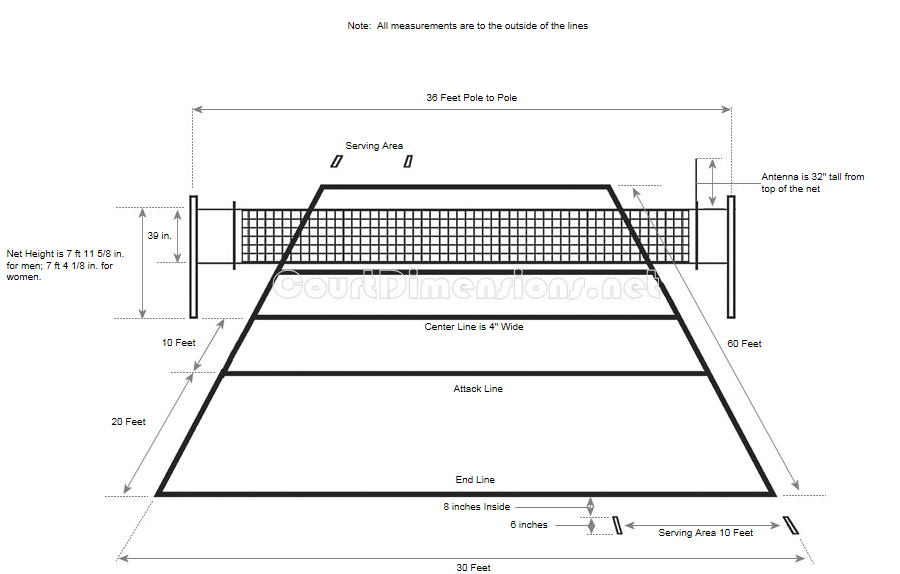
Credit: www.courtdimensions.net
Net Dimensions
The net is a key part of volleyball. Its size affects how the game is played. Knowing the official net dimensions helps players and organizers set up correctly. Net dimensions include height, length, and width. These measurements vary by gender and age group.
Standard Height By Gender
The official net height differs for men and women. For men, the net stands at 2.43 meters (7 feet 11 5/8 inches). For women, it is slightly lower at 2.24 meters (7 feet 4 1/8 inches). These heights are used in most official indoor volleyball games worldwide. The height ensures fair play and proper challenge for each gender.
Net Length And Width
The net length is always 9.5 to 10 meters (31 feet 2 inches to 32 feet 9 7/8 inches). This length covers the width of the volleyball court. The net width is 1 meter (3 feet 3 inches). It must be tight and flat to avoid sagging. Proper length and width help keep the ball in play and fair for both teams.
Junior And Youth Sizes
Junior volleyball nets are smaller to fit younger players. For children under 14, net height ranges from 2.13 to 2.24 meters (7 to 7 feet 4 inches). Youth nets also have shorter lengths, usually around 8.5 meters (27 feet 11 inches). These sizes help kids learn skills safely and enjoy the game. Adjusting net size aids development and fun in volleyball.
Material And Construction
The material and construction of a volleyball net play a vital role in its performance and lifespan. A well-built net ensures fair play and withstands tough conditions. Different materials affect the net’s strength, weight, and resistance to weather. Understanding these aspects helps players and organizers choose the right net for their needs.
Common Materials Used
Volleyball nets commonly use nylon, polyethylene, or polyester fibers. Nylon nets are strong and flexible. Polyethylene is lighter and resistant to moisture. Polyester offers durability and good resistance to sun damage. The choice depends on the playing environment and budget.
Durability And Weather Resistance
Durability is crucial for nets used outdoors. Nets made from UV-resistant fibers last longer under sunlight. Water-resistant materials prevent rotting and mold. Reinforced edges and double stitching add strength. These features help the net hold up against wind and rain.
Padding And Safety Features
Safety is important near the net posts and cables. Padding covers hard metal or wood parts to prevent injuries. Soft foam or vinyl padding is common. Bright colors improve visibility, reducing accidents. Proper safety features create a safer playing environment for all players.
Indoor Vs Outdoor Nets
The official size of volleyball nets varies slightly between indoor and outdoor play. Both types follow standard height and length rules but differ in material and design. Understanding these differences helps players choose the right net for their game environment. Below, we explore key contrasts between indoor and outdoor volleyball nets.
Design Differences
Indoor nets usually have tighter mesh and stronger cables. They resist stretching and provide consistent tension. Outdoor nets use thicker, weather-resistant materials. Their mesh size is often larger to reduce wind resistance. Outdoor nets also include UV protection to prevent sun damage.
Setup And Portability
Indoor nets are heavier and designed for permanent or semi-permanent setups. They often require fixed posts or sturdy poles. Outdoor nets are lighter and easier to move. Many come with portable poles and carry bags. This makes outdoor nets ideal for beaches, parks, and casual play.
Maintenance Tips
Indoor nets need regular inspection for wear and tear from use. Cleaning with a damp cloth removes dust and sweat. Outdoor nets require more care due to exposure to weather. Rinse off salt, dirt, and debris after use. Store nets in dry places to avoid mildew and damage.
Regulations And Standards
The official size of a volleyball net follows strict regulations and standards. These rules ensure fair play and consistency worldwide. Understanding these standards helps players, coaches, and enthusiasts maintain the correct setup for games.
Different organizations and leagues may have slight variations. Historical changes have also shaped the current regulations. Let’s explore the main guidelines and how they apply today.
Fivb Official Guidelines
The International Volleyball Federation (FIVB) sets the global rules for volleyball nets. The official net length is 9.5 to 10 meters (31 feet to 32 feet 9.5 inches). The net height is 2.43 meters (7 feet 11 5/8 inches) for men’s volleyball. For women, the height is 2.24 meters (7 feet 4 1/8 inches).
The net must be 1 meter wide. It should have a white band at the top and bottom. The mesh size is 10 centimeters (4 inches) square. These standards apply to all international competitions under FIVB jurisdiction.
Variations By League And Level
Younger players often use nets set lower than official heights. School leagues may adjust the net height for safety and skill development. For example, middle school boys’ nets might be set at 2.13 meters (7 feet).
Beach volleyball nets have similar length but slightly different heights. Men’s beach nets are 2.43 meters, while women’s are 2.24 meters, matching indoor rules. Recreational leagues may also use modified net sizes to suit their needs.
Historical Changes In Size
The volleyball net size has evolved since the sport’s creation in 1895. Early nets were shorter and had no standardized height. Over time, official rules developed to create uniformity.
The FIVB standardized the net length and height in the mid-20th century. Adjustments were made to accommodate men’s and women’s play. These changes improved gameplay and fairness across all levels.
Choosing The Right Net
Choosing the right volleyball net is essential for a great playing experience. The net must fit the official size standards and suit your needs. Different factors affect the best choice for your volleyball setup.
Consider your skill level, budget, and preferred brands. Each element helps find a net that works well for you. Quality and durability also play key roles in your decision.
Skill Level Considerations
Beginners benefit from nets that are easy to set up and adjust. Lightweight nets work well for casual play. Advanced players need competition-grade nets. These nets meet official size and tension standards. A proper net improves game quality and fairness.
Budget And Quality
Set a budget before buying a volleyball net. Low-cost nets are fine for backyard fun. Higher-priced nets offer better materials and durability. Look for UV-resistant and weatherproof features. These nets last longer outdoors and keep their shape.
Brands And Where To Buy
Choose brands known for volleyball equipment quality. Popular options include Senoh, Sports Imports, and Court Action. Check sports stores and online shops like Amazon and VolleyballUSA. Read customer reviews to ensure satisfaction. Buying from trusted sellers reduces risk of defects.

Credit: www.youtube.com
Installation And Setup
Installing and setting up a volleyball net correctly is crucial for fair play and safety. The net must follow official size rules and be securely mounted. Proper tension and height adjustments ensure a good match experience. Avoiding common setup mistakes saves time and frustration.
Mounting Methods
Volleyball nets can be mounted using poles or wall brackets. Poles are common for outdoor courts and allow easy height adjustment. Wall brackets suit indoor courts with limited space. Ensure the poles or brackets are strong and stable. Use anchors or heavy bases to prevent movement during play.
Tension And Height Adjustments
The official net height is 2.43 meters for men and 2.24 meters for women. Use a measuring tape to set the correct height. Adjust the tension so the net is tight but not overstretched. Proper tension stops the net from sagging or shaking. Check the height and tension before each game.
Common Setup Mistakes
One mistake is setting the net too low or too high. This breaks official rules and affects gameplay. Another error is loose tension causing the net to sag. Avoid weak mounting that lets poles move. Forgetting to check height and tension often leads to problems. Always double-check your setup for a smooth game.
Care And Maintenance
Proper care and maintenance of your volleyball net help extend its life. A well-kept net stays strong and looks good for many games. Simple routines prevent damage and keep the net ready for play.
Cleaning Techniques
Remove dirt and dust with a soft brush or cloth. Use mild soap mixed with water for tough stains. Avoid harsh chemicals that can weaken the net fibers. Rinse thoroughly with clean water and let it air dry completely before storage. Clean the net regularly to prevent buildup and odors.
Storage Recommendations
Store the volleyball net in a dry, cool place away from sunlight. Fold it gently to avoid creases or tears. Use a storage bag or container to protect it from dust and pests. Avoid leaving the net outside for long periods when not in use. Proper storage prevents mold, mildew, and damage from weather.
Repair And Replacement
Inspect the net for holes, frays, or loose knots often. Small holes can be fixed with strong thread or a net repair kit. Replace broken cables or straps to keep the net taut and safe. Replace the net entirely if damage is extensive or affects play. Timely repairs maintain performance and safety during matches.

Credit: www.networldsports.com
Frequently Asked Questions
What Is The Official Size For A Volleyball Net?
The official volleyball net size is 32 feet long and 3 feet wide. Men’s net height is 7 feet 11 5/8 inches. Women’s net height is 7 feet 4 1/8 inches.
Is Size 5 The Official Volleyball Size?
Size 5 is the official volleyball size for adults in professional and amateur play. It measures about 65-67 cm in circumference and weighs 260-280 grams. Smaller sizes exist for youth players to aid skill development.
What Were The Original Dimensions Of The Volleyball Net?
The original volleyball net measured 30 feet long and 3 feet wide. It stood 6 feet 6 inches high for men and 6 feet for women. These dimensions set the standard for official volleyball play worldwide.
What Is The Correct Measurement Of The Net In Volleyball?
The official volleyball net measures 32 feet (9. 75 meters) wide and 3 feet (0. 914 meters) high. For men, the net height is 7 feet 11 5/8 inches (2. 43 meters). For women, it is 7 feet 4 1/8 inches (2.
24 meters).
Conclusion
The official size of a volleyball net matters for fair play. It ensures all players compete under the same rules. The standard net height is 2. 43 meters for men and 2. 24 meters for women. The net length is 9.
5 to 10 meters, spanning the court width. Using the correct size helps players improve skills and enjoy the game fully. Always check net dimensions before matches or practice. Knowing these details supports better volleyball experiences everywhere.