
Are you ready to elevate your volleyball game but unsure about the right net size? Whether you’re setting up for a friendly match in your backyard or preparing for a competitive tournament, knowing the correct volleyball net dimensions is crucial.
Getting the net height and length just right can make all the difference in how you play and enjoy the game. You’ll discover everything you need to know about volleyball net size—from official measurements to variations for different age groups and skill levels.
Keep reading to ensure your setup is spot-on and your game is unstoppable!
Official Net Height
The official net height in volleyball plays a key role in fair play and competition. It sets the challenge level and keeps matches consistent worldwide. Each category has its own standard height to match players’ abilities and age.
Net height impacts how the game flows. It affects serving, spiking, and blocking strategies. Understanding official net heights helps players, coaches, and event organizers prepare properly.
Men’s Standard Height
The official net height for men’s volleyball is 2.43 meters (7 feet 11 5/8 inches). This height is used in all major men’s competitions, including professional and international matches. It demands strong jumping and precise timing from players.
Women’s Standard Height
The standard net height for women’s volleyball is 2.24 meters (7 feet 4 1/8 inches). This height suits women’s average reach and jumping ability. It ensures the game remains competitive and enjoyable for female players.
Youth And Junior Heights
Youth volleyball nets vary in height depending on age and skill level. Common heights range from 1.98 meters (6 feet 6 inches) to 2.13 meters (7 feet). These lower nets help young players develop technique and confidence before moving to adult heights.
Net Length And Width
The size of a volleyball net matters a lot in the sport. Net length and width define the playing area. These measurements vary by the type of volleyball and competition level. Knowing these sizes helps players and organizers set up the game correctly.
Indoor Volleyball Nets
Indoor volleyball nets are usually 9.5 to 10 meters long. The width is standard at 1 meter. The net stretches across the court’s center line. It must be tight and stable to keep the ball in play. This size fits the official indoor volleyball court dimensions.
Beach Volleyball Nets
Beach volleyball nets are similar in length but may be slightly shorter. The usual length is 8.5 to 9.5 meters. The width remains around 1 meter. The net must handle outdoor conditions like wind and sun. It is lighter and easier to set up on sand.
Variations By Competition Level
Younger players use smaller nets for easier play. Junior and youth nets are shorter and lower. This helps players develop skills without difficulty. Professional and adult competitions use official regulation sizes. Different leagues may have slight changes to net length and width.
Material And Construction
The material and construction of a volleyball net play a key role in its performance and longevity. A well-made net ensures fair play and withstands the rigors of intense games. Understanding the types of fabrics, cords, and overall durability helps you choose the best net for your needs.
Net Fabric Types
Volleyball nets use different fabrics depending on use and quality. Nylon is common for its strength and light weight. Polyester offers high resistance to weather and wear. Some nets use polyethylene for outdoor play because it resists moisture well. The fabric must allow good airflow while stopping the ball effectively.
Cord And Mesh Specifications
The cords shape the net and hold the mesh tightly. Nets have either braided or twisted cords. Braided cords are stronger and last longer. Mesh size usually measures about 10 cm by 10 cm squares. This size prevents the ball from passing while keeping the net flexible. The top and bottom cords are thicker for extra support.
Durability Considerations
Durability depends on fabric quality and cord strength. Outdoor nets need UV protection to avoid sun damage. Reinforced edges prevent fraying and tearing. Water-resistant materials stop mold and mildew growth. Regular maintenance also extends a net’s life. Choose nets designed to handle harsh weather for long use.

Credit: www.dimensions.com
Regulation Differences
Volleyball nets vary in size depending on the level of play. Different organizations set rules that affect net height and width. These rules ensure fair play and safety for all players. Understanding these differences helps players and coaches prepare properly.
Fivb Standards
The International Volleyball Federation (FIVB) sets global rules. For men, the net height is 2.43 meters (7 feet 11 5/8 inches). For women, it is 2.24 meters (7 feet 4 1/8 inches). The net length is 9.5 to 10 meters. The net width is 1 meter. The FIVB also specifies the net’s mesh size and materials.
High School Regulations
High school volleyball uses slightly different rules. In the United States, the net height for boys is 2.43 meters. For girls, it is 2.24 meters, matching FIVB standards. The net length is usually 9.5 meters. These standards promote competitive but safe play for teenagers. Some states may adjust sizes for younger players.
Recreational And Training Nets
Recreational and training nets are more flexible in size. They often come in adjustable heights to suit different ages. These nets are lighter and easier to move. Net length may be shorter, around 8 to 9 meters. The focus is on fun and skill development. These nets suit casual players and beginners best.
Measuring And Setting Up
Setting up a volleyball net requires accuracy and attention to detail. Proper measurement ensures fair play and safety during the match. The net must be the right size and height according to the official standards. This section covers the tools you need, how to install the net correctly, and common mistakes to avoid.
Tools Needed
You will need a tape measure to check the net height and length. A level helps keep the net straight and even. Poles or posts are essential to hold the net firmly in place. Rope or cable secures the net to the poles. A wrench or pliers may be necessary to tighten any bolts or clamps.
Correct Installation Techniques
Start by measuring the court to mark the pole positions. Attach the net to the poles at the correct height. Use a level to ensure the net is horizontal. Tighten the ropes or cables to avoid sagging. Double-check measurements before finalizing the setup. Make sure the net is taut but not overstretched.
Common Setup Mistakes
Do not place poles too close or too far apart. Avoid setting the net height too low or too high. Do not leave the net loose or uneven. Forgetting to check the level can cause an unfair game. Using wrong tools may damage the net or poles. Always verify measurements after installation to prevent errors.

Credit: www.networldsports.com
Choosing The Right Net
Choosing the right volleyball net is key for a great playing experience. The net size affects gameplay, safety, and enjoyment. Different settings and players need different nets. Consider the use, competition level, and player age when selecting a net.
The following sections explain how to pick the best net for your needs.
Indoor Vs Outdoor Use
Indoor nets are designed for gym floors and controlled environments. They often have lighter materials and tighter mesh. Outdoor nets must resist weather conditions like sun, rain, and wind. Outdoor nets use stronger, weatherproof materials and may have thicker mesh. Choose a net based on where you plan to play most.
Competition Vs Practice Nets
Competition nets follow official size and quality rules. They provide consistent tension and proper height. Practice nets might be less strict on measurements and materials. They are usually more affordable and durable for daily use. Select competition nets for official matches. Practice nets work well for training and casual play.
Sizing For Different Age Groups
Net height changes with player age and skill. Youth nets are lower to help younger players learn. Junior nets are smaller and lighter to fit smaller hands. Adult nets follow standard heights: 2.43 meters for men, 2.24 meters for women. Always check age and league rules to pick the right net size.
Maintenance Tips
Proper maintenance keeps your volleyball net strong and ready for play. Regular care extends its life and maintains good tension. Follow these tips to protect your net from wear and tear.
Cleaning Methods
Use a soft brush to remove dirt and dust from the net. Wash it gently with mild soap and water. Avoid harsh chemicals that can damage the fibers. Rinse well and let it dry completely before storing.
Storage Recommendations
Store the net in a cool, dry place away from sunlight. Fold it neatly to prevent tangles and creases. Avoid placing heavy objects on top to keep the net’s shape intact. Use a storage bag for extra protection.
Repairing Damage
Check the net regularly for holes or frayed areas. Repair small tears promptly with strong nylon thread or net repair kits. Replace broken cables or tension ropes to keep the net stable. Quick repairs prevent bigger damage later.
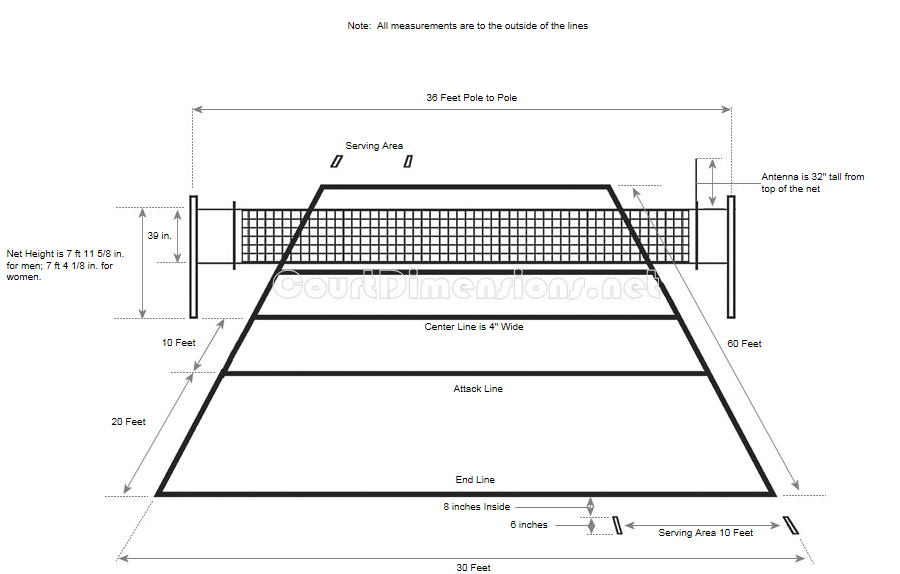
Credit: www.courtdimensions.net
Frequently Asked Questions
What Size Is A Normal Volleyball Net?
A standard indoor volleyball net is 32 feet long and 7 feet 11 5/8 inches high for men. For women, the height is 7 feet 4 1/8 inches. Beach volleyball nets are 31 feet long and 7 feet 11 5/8 inches high for men, slightly lower for women.
What Is A High School Volleyball Net?
A high school volleyball net measures 7 feet 4 1/8 inches tall for boys and 7 feet 0 inches for girls. It spans 32 feet wide and 3 feet high. This regulation size ensures fair play during matches.
Is Size 5 The Official Volleyball Size?
Yes, size 5 is the official volleyball size used in professional and international competitions. It measures about 65-67 cm in circumference.
How Tall Is The Net For High School?
The high school volleyball net height is 7 feet 4 1/8 inches (2. 24 meters) for girls and 7 feet 11 5/8 inches (2. 43 meters) for boys.
Conclusion
Volleyball net size matters for fair and fun play. Standard nets help players compete equally. Different heights suit men, women, and youth players. Knowing correct net size improves your game setup. Always check official rules before playing or buying. This ensures a safe and enjoyable volleyball experience.
Keep these facts in mind for your next match. Play smart, play fair, and enjoy the sport!