Are you setting up a volleyball court and wondering about the right pole height? Getting your volleyball poles to the correct height is crucial for a fair and enjoyable game.
Whether you’re playing indoors, outdoors, or coaching young players, knowing the standard volleyball pole height can make all the difference. You’ll discover exactly what the official pole heights are, how they vary by age and gender, and tips to choose the perfect poles for your needs.
Keep reading to ensure your volleyball setup is spot on and ready for action!

Credit: www.dimensions.com
Standard Pole Heights
The height of volleyball poles plays a key role in the sport. It sets the level of challenge for players. Different groups use different standard pole heights. These heights follow official rules and help keep the game fair and fun. Understanding these standards helps players and coaches prepare well.
Men’s Regulation Height
The official pole height for men’s volleyball is 2.43 meters. This is about 7 feet 11 5/8 inches. It suits the strength and skill level of adult male players. This height is used in most indoor and professional men’s competitions worldwide. It ensures the game stays challenging and competitive.
Women’s Regulation Height
For women, the standard pole height is 2.24 meters. This equals roughly 7 feet 4 1/8 inches. This height fits the average playing ability of female athletes. Women’s volleyball games use this standard in schools, colleges, and international matches. It helps keep the play balanced and fair.
Youth And Junior Heights
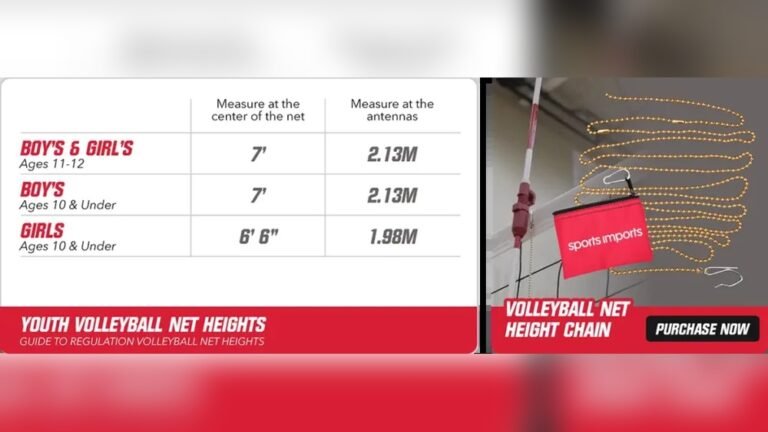
Younger players use lower pole heights to match their growing skills. For example, youth volleyball poles often measure 2.13 meters or less. This is about 7 feet. Some junior levels even use heights near 1.98 meters, roughly 6 feet 6 inches. These adjustments help kids learn and enjoy the game safely.
Types Of Volleyball Poles
Volleyball poles are essential for setting up a proper volleyball net. They come in different materials, each offering unique benefits. Choosing the right type depends on factors like durability, weight, and cost. Understanding the common types helps players and organizers make informed decisions.
Aluminum Poles
Aluminum poles are lightweight and easy to carry. They resist rust and require little maintenance. These poles are perfect for quick setups and frequent moves. Aluminum offers good strength without adding much weight.
Steel Poles
Steel poles are heavy but very strong and durable. They withstand harsh weather and rough use. These poles are ideal for permanent or long-term volleyball courts. Steel needs protection from rust to last longer.
Carbon Fiber Poles
Carbon fiber poles combine strength with light weight. They are more expensive than aluminum or steel. These poles provide excellent stability and easy handling. Carbon fiber is a popular choice for professional and high-level play.
Adjustable Pole Systems
Adjustable pole systems play a vital role in volleyball setups. They allow quick changes in pole height for different game levels. These systems make it easy to switch between youth, women’s, and men’s net heights. A good adjustable pole system provides stability and convenience during play.
Manual Adjustment Mechanisms
Manual adjustment mechanisms use simple tools or hand cranks. Players or coaches turn a crank or loosen a bolt to raise or lower the pole. These systems are cost-effective and easy to maintain. They require physical effort but offer precise height control. Most outdoor and indoor volleyball poles use manual adjustments.
Automatic Height Settings
Automatic height settings use motors or electronic controls. Users press a button to change the pole height quickly. These systems save time during games and practices. They reduce human error in setting exact net heights. Automatic systems are popular in professional and high-level sports facilities.
Safety Features
Safety features prevent accidents during pole adjustment. Locks secure the pole firmly at the chosen height. Some systems include anti-slip grips for steady handling. Automatic systems often have sensors to stop movement if an obstacle is detected. Safety features protect players and equipment from damage.

Credit: www.youtube.com
Choosing The Right Pole
Choosing the right volleyball pole is essential for a safe and enjoyable game. The pole height must match official standards for the players’ age and skill level. Poles also need to fit the playing environment to ensure stability and ease of use. This guide helps you pick the best volleyball pole by focusing on key factors like indoor and outdoor use, weight, and portability.
Considerations For Indoor Use
Indoor volleyball poles should be sturdy and stable. Look for poles with a strong base that can fit on gym floors without damaging them. Adjustable height is important for different player levels. Poles with padding protect players during close contact. Choose poles made of materials that resist sweat and moisture inside the gym.
Considerations For Outdoor Use
Outdoor poles must handle wind and weather changes. Look for rust-resistant materials like galvanized steel or aluminum. The base should be heavy or anchored to the ground for extra stability. Poles with a weatherproof coating last longer outside. Adjustable height remains important for youth or adult play. Portability also matters for moving the poles on different surfaces.
Weight And Portability
Lightweight poles are easier to carry and set up. Aluminum poles offer a good balance of strength and weight. Heavier steel poles provide durability but can be hard to move. Consider how often you will transport the poles. Collapsible or telescoping poles save space during storage. A carrying case adds convenience for travel and storage.
Installation Tips
Installing volleyball poles correctly is crucial for safe play and long-lasting use. Proper setup ensures the net stays stable and maintains the right height throughout the game. Follow these simple tips to install your volleyball poles effectively.
Proper Ground Anchoring
Secure the poles firmly into the ground to prevent movement during play. Use concrete or heavy-duty anchors designed for volleyball poles. Check that the base is level before the concrete sets to keep poles steady.
Ensuring Vertical Alignment
Make sure the poles are perfectly vertical for the net to hang straight. Use a spirit level or plumb line to check alignment. Adjust the poles as needed before finalizing installation.
Net Tension And Sag Reduction
Tighten the net evenly on both sides to reduce sagging. Use tensioning devices or ropes to keep the net taut. Regularly check and adjust tension to maintain the correct net height during games.
Common Measurement Units
Volleyball pole height is measured using common units worldwide. Understanding these units helps players, coaches, and organizers set up the net correctly. Two main measurement systems are used: feet and inches, and meters and centimeters. Both units ensure precise height settings for different volleyball levels.
Feet And Inches
Feet and inches are widely used in the United States and some other countries. Volleyball poles here often list height in feet and inches. For example, the men’s net height is usually 7 feet 11 5/8 inches. Women’s net height is set at 7 feet 4 1/8 inches. Using feet and inches makes it easy for local teams to measure and adjust the poles.
Meters And Centimeters
Meters and centimeters are common in most countries around the world. These units belong to the metric system. The men’s net height is typically 2.43 meters, which equals 243 centimeters. Women’s net height is 2.24 meters or 224 centimeters. Metric units provide a simple and universal way to set volleyball pole height, especially for international competitions.
Regulation Net Heights By Level
The height of a volleyball net varies by the level of play. Setting the net at the correct height ensures fair competition and safety. Each level has clear rules about the net height for men’s and women’s games. Understanding these standards helps players and coaches prepare properly.
High School Standards
For high school volleyball, the net height differs for boys and girls. Boys’ nets are set at 7 feet 11 5/8 inches (2.43 meters). Girls’ nets stand slightly lower at 7 feet 4 1/8 inches (2.24 meters). These measurements follow the official rules used across most states.
Younger players or middle school teams often use lower nets. This adjustment helps develop skills without strain. Schools follow these heights to maintain consistency in competitions.
Collegiate Standards
College volleyball uses similar net heights to high school but follows NCAA rules. Men’s nets are set at 7 feet 11 5/8 inches (2.43 meters). Women’s nets stand at 7 feet 4 1/8 inches (2.24 meters). These heights apply in both indoor and outdoor collegiate matches.
The NCAA enforces strict net height rules during official games. Coaches and officials check net measurements before matches. Maintaining these standards keeps the game fair and competitive.
Professional And Olympic Standards
Professional volleyball and the Olympics use the same net heights as collegiate play. Men’s net height is 7 feet 11 5/8 inches (2.43 meters). Women’s net height is 7 feet 4 1/8 inches (2.24 meters). These measurements are set by the Fédération Internationale de Volleyball (FIVB).
The FIVB regulates net height for all international events. Consistent net height ensures players compete under equal conditions. This standardization helps maintain the sport’s integrity worldwide.
Maintenance And Safety
Maintaining volleyball poles is key for safe play and long-lasting use. Regular care prevents accidents and keeps equipment in top shape. This section covers essential maintenance tips and safety checks.
Regular Inspection
Check poles often for cracks, rust, or loose bolts. Look at the base and the pole’s height adjustment parts. Tighten any loose nuts or screws immediately. Inspect the net attachment points for wear or damage. Early problem detection stops bigger issues.
Weatherproofing
Apply a protective coating to poles exposed to rain or sun. Use rust-resistant paint or sealant to prevent corrosion. Cover poles during harsh weather when not in use. Weatherproofing extends the pole’s life and keeps it safe.
Replacing Worn Parts
Replace damaged parts like clamps, bolts, and padding promptly. Use manufacturer-approved components for best fit and safety. Worn parts can cause the pole to fail during play. Keep spare parts ready for quick replacements.
Popular Brands And Models
Choosing the right volleyball pole height is important for a good game. Many brands offer poles with different features and prices. Some models fit small budgets. Others provide premium quality and durability. Some even come with customizable options to meet specific needs.
This section highlights popular brands and models of volleyball poles. It helps you understand what each type offers. Knowing these options makes it easier to pick the right pole.
Budget-friendly Options
Budget-friendly volleyball poles are perfect for beginners and casual players. Brands like ProCourt and Park & Sun offer affordable poles. These poles are lightweight and easy to set up. They still maintain good stability and meet standard height requirements. Many models come with adjustable heights for youth and adult games. These poles are a great value for the price.
Premium Poles
Premium volleyball poles focus on durability and performance. Brands such as Wilson and Bison Sports lead in this category. Their poles use heavy-duty steel or aluminum. They resist wear and weather damage. These poles often include features like quick-release mechanisms. They are suitable for schools, clubs, and serious players. Premium poles provide long-lasting stability and meet official competition standards.
Customizable Features
Some volleyball poles offer customizable features for specific needs. Brands like Sportime and Jaypro provide adjustable net height settings. Poles with removable padding increase safety during play. Some models allow customization of pole color and branding. This suits teams and organizations wanting a unique look. Custom features improve comfort, safety, and style on any court.

Credit: maiamidwifery.com
Frequently Asked Questions
What Is Volleyball Pole Height?
The standard volleyball pole height is 7 feet 11 5/8 inches (2. 43 meters) for men. For women, it is 7 feet 4 1/8 inches (2. 24 meters). Youth volleyball poles are typically set lower, around 6 feet 6 inches (1.
98 meters). Poles are adjustable for different age groups.
What Is The Standard Height For Volleyball?
The standard volleyball net height is 2. 43 meters (7 feet 11 5/8 inches) for men and 2. 24 meters (7 feet 4 1/8 inches) for women. Youth players use lower heights, typically 2. 13 meters (7 feet) or less, depending on age groups.
How Do You Choose A Volleyball Pole?
Choose a volleyball pole based on material, height adjustability, durability, and ease of setup. Aluminum is lightweight; steel offers strength; carbon balances both but costs more. Ensure the pole suits standard net heights for your age group and playing level.
Does Volleyball Pole Height Vary By Age?
Yes, volleyball pole height varies by age. Youth nets are lower, typically around 6 feet 6 inches to 7 feet, while adult nets are higher. Men’s net height is 7 feet 11 5/8 inches, and women’s is 7 feet 4 1/8 inches.
Adjustments suit players’ age and skill level.
Conclusion
Volleyball pole height affects how you play the sport. Different levels and ages require different pole heights. For men, the standard is higher than for women and youth players. Adjusting the pole height ensures a fair and fun game. Knowing the right height helps players practice better and compete safely.
Always check the rules before setting up your volleyball net. This simple step keeps the game enjoyable for everyone involved.