
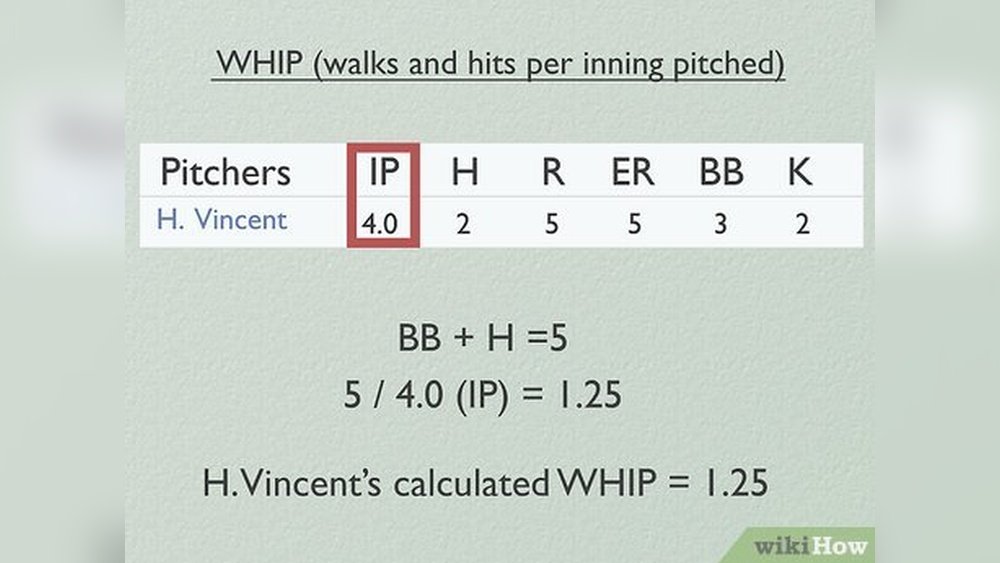
If you’re diving into baseball stats, you’ve probably come across the term WHIP and wondered, “What does WHIP mean in baseball statistics?” Understanding WHIP is key to evaluating a pitcher’s performance, but it’s not always clear at first glance. This simple yet powerful stat tells you how many baserunners a pitcher allows on average per inning, combining walks and hits into one easy number.
Knowing your pitcher’s WHIP can give you a clearer picture of their control and effectiveness on the mound. Keep reading to discover exactly how WHIP works, why it matters, and what numbers you should look for to spot a truly dominant pitcher.
Your baseball knowledge is about to level up!
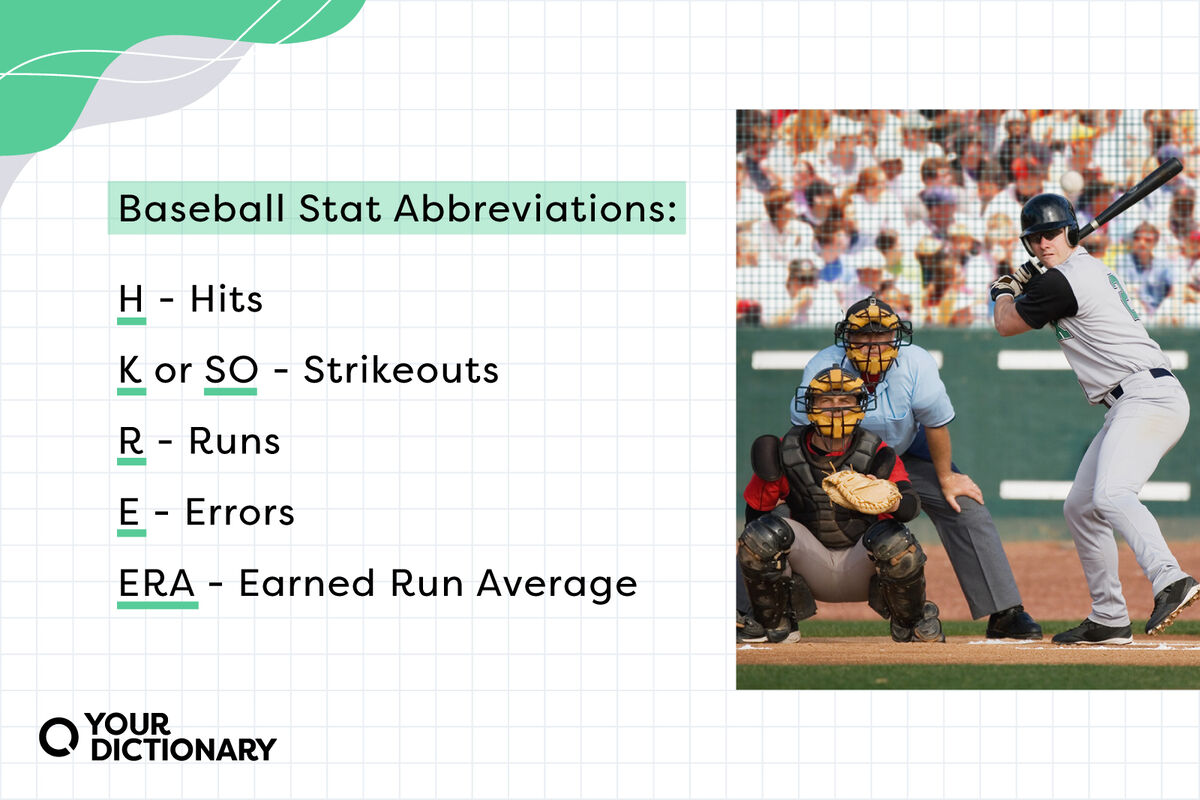
Credit: www.yourdictionary.com
Whip Basics
Understanding WHIP is important for anyone interested in baseball statistics. It gives a clear picture of a pitcher’s performance. WHIP stands for Walks plus Hits per Inning Pitched. This stat helps show how many base runners a pitcher allows on average per inning.
WHIP is simple but powerful. It focuses on a pitcher’s ability to keep runners off base. This is key in preventing the opposing team from scoring runs.
Meaning Of Whip
WHIP measures the number of walks and hits a pitcher gives up per inning. It is calculated by adding walks and hits allowed, then dividing by innings pitched. The lower the WHIP, the better the pitcher is at controlling base runners. A WHIP around 1.00 is considered excellent. Higher numbers indicate more base runners and more chances for opponents to score.
Importance In Pitching
WHIP shows how well a pitcher limits opponents from reaching base. Fewer base runners mean fewer scoring chances for the other team. Coaches and fans use WHIP to evaluate pitching effectiveness quickly. It is a reliable measure to compare pitchers across different games and seasons. A low WHIP often correlates with strong overall pitching and better chances of winning games.

Credit: www.youtube.com
Calculating Whip
Calculating WHIP is a key step to understanding a pitcher’s performance. WHIP stands for Walks plus Hits per Inning Pitched. It shows how many base runners a pitcher allows on average each inning. This helps fans and coaches see how effective a pitcher is at keeping runners off base.
WHIP is easy to calculate with the right numbers. You need the total walks, hits allowed, and innings pitched. These three stats give you a clear picture of a pitcher’s control and ability to prevent scoring chances.
Formula Breakdown
The WHIP formula adds the walks and hits allowed. Then it divides that sum by innings pitched. The formula looks like this:
WHIP = (Walks + Hits) ÷ Innings Pitched
This number tells how many base runners reach per inning. A lower WHIP means fewer runners on base, which is better for the pitcher’s team.
Example Calculation
Imagine a pitcher allowed 40 walks and 100 hits over 150 innings. To find the WHIP:
First, add walks and hits: 40 + 100 = 140
Next, divide by innings pitched: 140 ÷ 150 = 0.93
The WHIP is 0.93. This means the pitcher allows less than one base runner per inning, indicating strong performance.
Whip Ratings
WHIP ratings help measure a pitcher’s effectiveness in baseball. WHIP stands for Walks plus Hits per Inning Pitched. It shows how many base runners a pitcher allows per inning. Lower WHIP means fewer runners, which is better. Let’s explore different WHIP rating levels and what they mean.
Exceptional And Elite
Pitchers with a WHIP between 1.00 and 1.25 are exceptional. They allow very few base runners per inning. These pitchers keep their teams in strong positions to win. Elite WHIP ratings show great control and skill.
Good And Above Average
A WHIP from 1.25 to 1.30 is good or above average. These pitchers allow a moderate number of base runners. They perform well and help their teams stay competitive. Many reliable starters fall into this range.
Average And Poor
WHIP ratings above 1.30 are average or poor. These pitchers let too many runners reach base. It often leads to more runs scored against them. Teams usually look for improvement in pitchers with high WHIP.
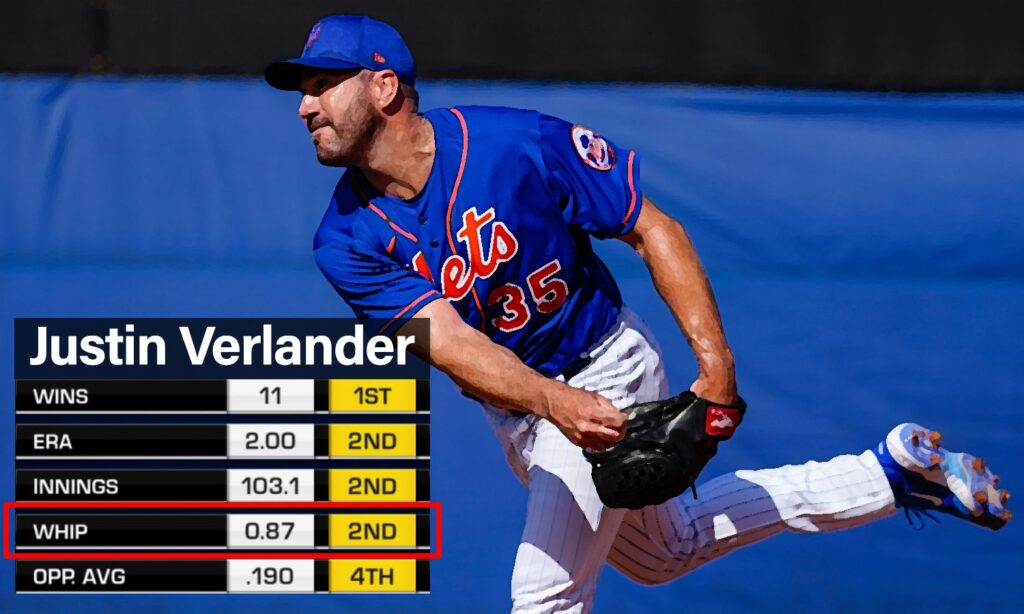
Credit: www.gaimday.com
Whip In Mlb History
WHIP, or Walks plus Hits per Inning Pitched, is a key pitching statistic in Major League Baseball (MLB). It measures how many base runners a pitcher allows per inning. Lower WHIP numbers mean better performance. Over the years, many pitchers have set remarkable WHIP records. These records show the best in controlling hitters and limiting base runners. Understanding WHIP in MLB history helps fans appreciate great pitching achievements.
Lowest Whip Records
The lowest WHIP ever recorded in MLB history is under 0.90. Few pitchers have achieved this feat. One of the all-time best WHIP seasons belongs to Pedro Martinez. In 2000, he posted a WHIP of 0.737. This is one of the lowest single-season WHIPs ever. Another legendary pitcher, Clayton Kershaw, has also kept his WHIP below 1.00 in multiple seasons. These records highlight exceptional control and skill.
Notable Pitchers
Several pitchers stand out for their career WHIP achievements. Greg Maddux holds a career WHIP around 1.14. He was known for his control and precision. Mariano Rivera, a great closer, has a career WHIP of about 1.00. His ability to limit walks and hits was key. Other notable pitchers include Sandy Koufax and Randy Johnson. Their low WHIP numbers reflect dominance on the mound.
Whip Vs Other Stats
WHIP, or Walks plus Hits per Inning Pitched, is a key pitching stat. It shows how many base runners a pitcher allows each inning. Comparing WHIP with other stats helps understand a pitcher’s overall performance better. Different stats measure different aspects of pitching. WHIP focuses on base runners, while others like ERA and Batting Average Against show different angles.
Whip And Era
ERA stands for Earned Run Average. It measures how many runs a pitcher allows per nine innings. WHIP and ERA often relate but tell different stories. WHIP shows how many batters reach base. ERA shows how many runs score from those base runners. A pitcher can have a low WHIP but a high ERA if runners score often. Conversely, a pitcher might allow many base runners but limit runs well, having a high WHIP and low ERA. Both stats together give a fuller view of pitching success.
Whip And Batting Average Against
Batting Average Against (BAA) shows how often batters get hits off a pitcher. WHIP counts both hits and walks, so it covers more ways batters reach base. A pitcher may have a low BAA but a higher WHIP due to many walks. WHIP gives a more complete look at how many players reach base. BAA focuses only on hits. Comparing both helps see if a pitcher controls walks well or struggles with hits. This helps evaluate a pitcher’s control and effectiveness.
Improving Whip
Improving WHIP is a key goal for pitchers aiming to reduce the number of baserunners they allow. A lower WHIP means fewer walks and hits per inning, which leads to better control over the game. Pitchers focus on strategies and skills that limit opposing batters’ success. These efforts help keep the pitcher’s WHIP low and boost overall performance.
Pitching Strategies
Pitchers use specific tactics to lower their WHIP. Mixing pitch types keeps hitters guessing. Fastballs, sliders, and changeups work well together. Pitchers aim to throw strikes early in the count. This puts pressure on batters to swing at tough pitches.
Another strategy is pitching to weak spots. Targeting the edges of the strike zone reduces solid contact. Pitchers also study hitters’ habits to exploit weaknesses. This leads to fewer hits and walks.
Control And Command Tips
Control means throwing strikes consistently. Command means placing the ball where the pitcher wants. Both skills help reduce WHIP. Pitchers practice throwing to precise locations. This lowers free passes and extra hits.
Good mechanics improve control and reduce mistakes. Staying calm during pressure moments helps maintain focus. Consistent repetition builds muscle memory for accurate throws. These tips help pitchers keep runners off base and improve their WHIP.
Whip Limitations
WHIP is a popular baseball stat, but it has limits. It measures walks and hits allowed per inning pitched. This gives a quick look at a pitcher’s control and effectiveness. Still, it does not tell the whole story. Some important factors can affect WHIP’s accuracy and usefulness. Understanding these limits helps fans and analysts use WHIP better.
Contextual Factors
WHIP does not account for the game situation or field conditions. A pitcher in a hitter-friendly park may have a higher WHIP. Defensive skill behind the pitcher also changes results. Strong defense can lower hits allowed, improving WHIP. Weather and ballpark size impact how many hits and walks happen. WHIP alone cannot adjust for these external factors.
It also ignores the timing of walks and hits. A pitcher may allow many hits but in less harmful moments. Another pitcher may allow fewer hits but in critical scoring situations. WHIP treats both the same, missing this key context. Thus, WHIP may mislead about a pitcher’s true impact.
Complementary Metrics
WHIP works best when used with other stats. Earned Run Average (ERA) shows runs allowed, adding a scoring perspective. Strikeout-to-walk ratio reveals control beyond walks. Fielding Independent Pitching (FIP) estimates pitching skill without defense influence. Combining these helps create a fuller picture of performance. No single stat, including WHIP, tells the entire story.
Using multiple metrics also helps compare pitchers across different teams and leagues. It balances out each stat’s weaknesses. This approach gives fans, coaches, and analysts better insights into pitching ability and value.
Frequently Asked Questions
What Is A Good Whip Rate In Baseball?
A good WHIP rate in baseball ranges from 1. 00 to 1. 25, indicating exceptional pitching. Rates between 1. 25 and 1. 30 are solid. A WHIP above 1. 30 suggests average or below performance. Lower WHIP values show better control and fewer baserunners allowed.
Who Has The Lowest Whip In Mlb History?
Addie Joss holds the lowest WHIP in MLB history with an exceptional 0. 9678. This record highlights his outstanding pitching control.
What Is A Good Whip To Have In Baseball?
A good WHIP in baseball ranges from 1. 00 to 1. 25, indicating exceptional or elite pitching performance. WHIP between 1. 25 and 1. 30 is solid, while above 1. 30 suggests average or below-average effectiveness. Lower WHIP values show better control and fewer baserunners allowed.
What Is Slugging In Baseball?
Slugging in baseball measures a player’s power hitting by calculating total bases per at-bat. It values extra-base hits like doubles, triples, and home runs more than singles. A higher slugging percentage indicates stronger offensive performance and more impactful hits.
Conclusion
WHIP helps measure a pitcher’s control and effectiveness. A lower WHIP means fewer runners allowed. It shows how well a pitcher limits hits and walks. Knowing WHIP can improve your baseball understanding. It’s a simple yet powerful stat to watch.
Keep an eye on WHIP to see pitcher performance. This stat adds depth to baseball analysis and discussions.