
Are you curious about how high the volleyball net should be when women take the court? Whether you’re a player, coach, or fan, knowing the exact net height can make a big difference in how you understand the game and improve your skills.
The net height for women’s volleyball isn’t just a random number—it’s set to challenge your jumping, timing, and teamwork in the best way possible. You’ll discover the regulation net height for women’s volleyball, why it’s set at that level, and how it compares to men’s volleyball.
Keep reading to unlock the key details that every volleyball enthusiast should know!
Standard Net Heights
The height of a volleyball net plays a crucial role in the sport’s fairness and playability. Different categories of players use nets set at specific heights. These heights follow official regulations to match players’ skill levels and physical abilities. Understanding these standard net heights helps coaches, players, and fans appreciate the game better.
Women’s Regulation Height
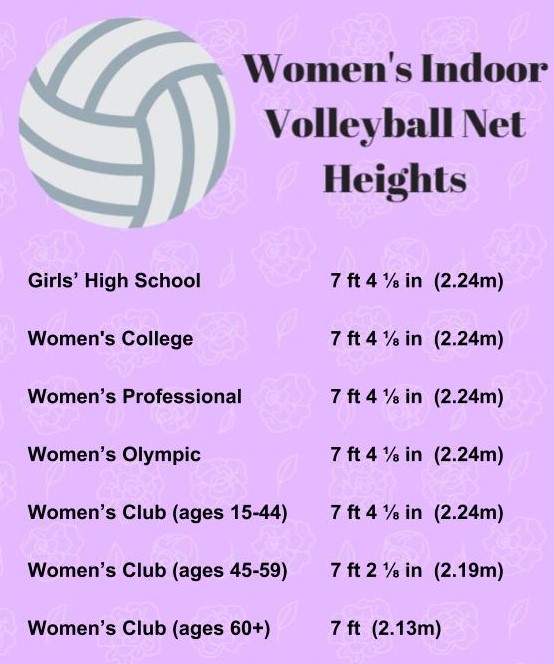
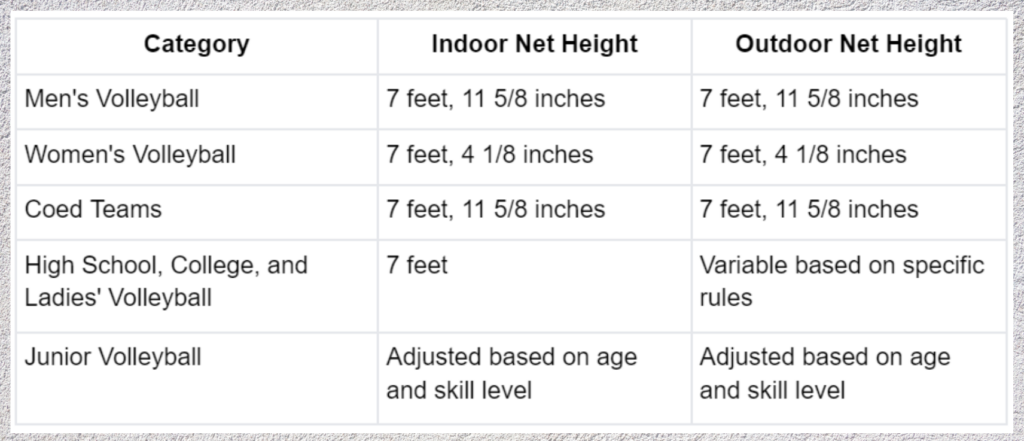
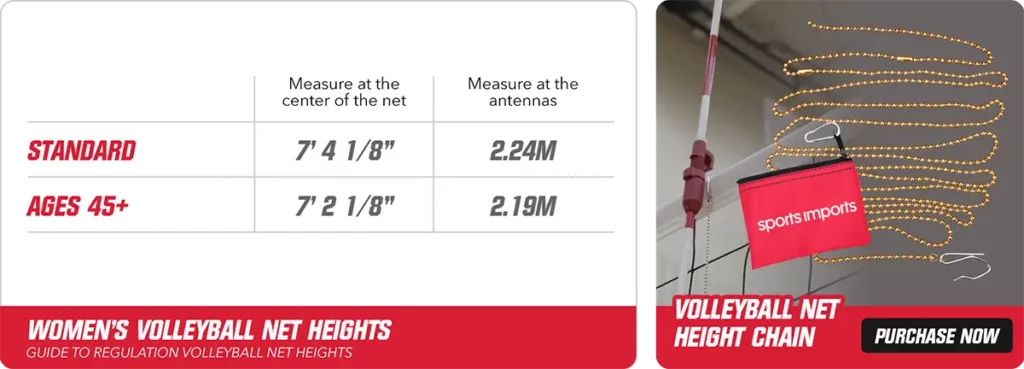
The official net height for women’s volleyball is 2.24 meters (7 feet 4 1/8 inches). This height applies to most women’s competitions worldwide. It suits players’ average height and jumping ability. It ensures a balanced and competitive match at all levels, from college to professional.
Men’s Regulation Height
Men’s volleyball nets stand higher than women’s. The standard height is 2.43 meters (7 feet 11 5/8 inches). This height reflects the generally taller stature and jumping power of male players. It challenges their skills and makes matches more exciting and dynamic.
Youth And Junior Variations
Younger players use lower nets to match their growing skills and size. Net heights vary by age group and league rules. For example, under-12 players often use nets around 1.83 meters (6 feet). As players grow older, net heights gradually increase until they reach adult standards. These variations help children learn and enjoy volleyball safely.
Credit: volleyball-tips.com
Court Dimensions And Net Setup
The court dimensions and net setup are essential for playing women’s volleyball properly. The size of the court and the height of the net affect how players move and play. Understanding these measurements ensures a fair and enjoyable game. Here, we explain the key details about indoor and beach volleyball courts and tips for setting up the net correctly.
Indoor Court Measurements
The standard indoor volleyball court measures 18 meters long and 9 meters wide. This size is divided into two equal halves by the net. Each side measures 9 by 9 meters. The free zone around the court must be at least 3 meters wide on all sides. The ceiling height should be at least 7 meters to allow high serves and spikes.
The net height for women’s indoor volleyball is set at 2.24 meters (7 feet 4 1/8 inches). This height is used in most competitions, including college and professional levels. The net length is 9.5 meters, allowing it to stretch across the full width of the court with some overhang on the sides.
Beach Volleyball Differences
Beach volleyball courts are smaller than indoor courts, measuring 16 by 8 meters. The sand surface affects player movement and game dynamics. The free zone around the court is also smaller, usually 3 meters wide.
The net height for women in beach volleyball remains the same as indoor: 2.24 meters. The net length is slightly shorter, about 8.5 meters. This setup suits outdoor conditions and the smaller playing area.
Net Installation Tips
Set the net height accurately using a measuring tape or a net gauge. Check the height at the center and both sides of the net. Make sure the net is tight and does not sag. A loose net affects play and can cause disputes.
Use sturdy poles that are firmly anchored. Check the tension regularly during play. Adjust the net height to 2.24 meters for women’s volleyball. Mark the poles clearly to avoid mistakes. Proper setup improves the game and player safety.
Rules And Governing Bodies
The rules for women’s volleyball net height are set by several official organizations. These groups ensure fair play and uniform standards worldwide. Understanding their regulations helps players and coaches prepare properly for matches.
Each governing body sets specific net height rules depending on the level of play. These rules maintain consistency across competitions. They also reflect the skill and physical ability expected at each level.
Fivb Standards
The International Volleyball Federation (FIVB) sets global rules for volleyball. For women, the official net height is 2.24 meters (7 feet 4 1/8 inches). This standard applies to all international competitions. The FIVB regularly reviews these rules to keep the sport safe and fair.
Usa Volleyball Regulations
USA Volleyball follows FIVB’s net height standards for most events. The net height for women remains at 2.24 meters. USA Volleyball uses these rules for national tournaments and youth competitions. They provide detailed guidelines on net setup and court dimensions.
Collegiate And Club Rules
Collegiate volleyball in the United States also uses a 2.24-meter net height. The NCAA enforces this rule for women’s teams across divisions. Club volleyball leagues typically match this height too. Some youth leagues may adjust the height for younger players.
Reasons For Height Differences
Volleyball net height varies between men and women for specific reasons. These differences help balance the sport. They ensure fair play and challenge for all players. Understanding these reasons gives insight into the sport’s design.
Physical Strength Considerations
On average, men have more upper body strength than women. This difference affects how high they can hit and block the ball. A higher net for men matches their strength level. It prevents the game from becoming too easy or too hard. For women, a slightly lower net keeps the game competitive and enjoyable.
Jumping Ability Impact
Jumping ability is key to volleyball success. Men typically jump higher than women due to muscle mass and training differences. The net height reflects these jumping differences. Lower net height for women helps balance the advantage of vertical reach. It allows women to perform spikes and blocks effectively.
Game Dynamics And Fairness
Net height affects how the game flows and feels. Different heights keep the sport fair across genders. It encourages strategic plays and team coordination. Adjusting the net height creates equal chances to score. This balance keeps players motivated and games exciting for all.
Adjusting Net Height For Skill Levels
Adjusting net height is essential to match players’ skill levels in volleyball. It helps improve the game experience and encourages skill development. Different groups need different net heights. This ensures safety and fair play. Coaches and organizers should know how to adjust the net for each group.
Youth And Beginner Adjustments
Younger and beginner players benefit from lower net heights. This makes it easier to practice basic skills like serving and spiking. For example, nets for children aged 11-12 are set lower than adult nets. Lower nets build confidence and reduce frustration. They allow players to focus on technique rather than strength or height.
Senior And Adaptive Play
Seniors and adaptive players may need the net height adjusted for comfort and safety. A slightly lower net helps reduce strain on joints. It also allows players to enjoy the game longer. Adaptive volleyball programs often modify net height to suit individual needs. This adjustment helps keep the game inclusive and accessible for all ages and abilities.
Training And Practice Settings
Training nets can be set at variable heights depending on practice goals. Lower nets help players work on speed and accuracy. Higher nets focus on jump and power training. Coaches often adjust net height to challenge players progressively. This method supports steady improvement in volleyball skills.
Common Measurement Units
Understanding the common measurement units for women’s volleyball net height helps players and coaches worldwide. Different regions use different systems. Some prefer feet and inches, while others use meters and centimeters. Knowing both makes it easier to follow rules and set up the net correctly.
Feet And Inches
The standard net height for women’s volleyball is 7 feet 4 1/8 inches. This unit is popular in the United States and other countries using the imperial system. Using feet and inches makes it easy to visualize the net height on courts in these areas. Players and referees often measure the net using a tape measure marked in these units.
Meters And Centimeters
Many countries use the metric system for volleyball net height. The official height for women’s volleyball nets is 2.24 meters. This equals 224 centimeters. The metric system is common in Europe, Asia, and most of the world. Using meters and centimeters helps keep measurements simple and precise.
Converting Between Systems
Converting net height between feet/inches and meters/centimeters is easy with simple math. One foot equals 0.3048 meters. One inch equals 2.54 centimeters. To convert feet and inches to meters, multiply feet by 0.3048 and inches by 0.0254, then add the results. To convert meters to feet, divide meters by 0.3048. Understanding conversions helps players and coaches adjust nets anywhere.
Choosing The Right Net
Choosing the right volleyball net is essential for a great match. The net affects play quality and player experience. Selecting a net with the proper height and features can improve the game for women volleyball players. Focus on material, size, and type to find the best fit for your needs.
Material And Durability
Volleyball nets come in various materials. Nylon and polyethylene are common choices. Nylon nets offer good strength and flexibility. Polyethylene nets resist weather damage and last longer outdoors. Check the stitching and border for extra durability. A durable net withstands frequent use and rough conditions. Choose a material that suits your playing environment.
Size And Length Specifications
The official net height for women’s volleyball is 2.24 meters (7 feet 4 1/8 inches). The standard net length is 9.5 to 10 meters (31 to 32.8 feet). Make sure the net matches these dimensions for regulation play. Size affects how the ball moves and players interact. A net too short or too tall can cause unfair play. Always confirm the net’s measurements before use.
Portable Vs Permanent Nets
Portable nets are easy to set up and take down. They are ideal for temporary courts or outdoor games. Permanent nets are fixed and stable. They suit gymnasiums or dedicated volleyball courts. Consider where you will play most often. Portable nets offer flexibility but may lack stability. Permanent nets provide reliability but limit mobility.
Credit: sterlingvolleyball.com
Credit: www.sportsimports.com
Frequently Asked Questions
What Is The Net Height For Women’s Volleyball?
The net height for women’s volleyball is 2. 24 meters (7 feet 4 1/8 inches). This standard applies to professional and collegiate play.
What Is The Difference Between Men’s And Women’s Volleyball Nets?
Men’s volleyball nets are set at 2. 43 meters (7 feet 11 5/8 inches). Women’s nets are lower, at 2. 24 meters (7 feet 4 1/8 inches). This difference reflects average physical strength and jumping ability between genders.
How Tall Is An Olympic Size Volleyball Net?
An Olympic women’s volleyball net stands 2. 24 meters (7 feet 4. 25 inches) tall. The men’s net height is 2. 43 meters (7 feet 11. 75 inches). These heights meet international competition standards.
What Is The Height Of The Usav Girls Volleyball Net?
The USAV girls volleyball net height is 7 feet 4 1/8 inches (2. 24 meters). This standard suits most female competitions.
Conclusion
The standard net height for women’s volleyball is 7 feet 4 and 1/8 inches. This height suits most levels, from college to professional play. It balances fairness and challenge, considering average player height. Knowing the exact net height helps players train and compete properly.
Coaches and players should always check net measurements before games. Playing with the correct net height improves skill and enjoyment. Understanding net height differences also clarifies rules between men’s and women’s volleyball. Keep this fact in mind when setting up or watching matches.