Are you curious about the official net height for women’s volleyball and why it matters so much in the game? Whether you’re a player, coach, or fan, knowing the exact net height can change how you train, play, and enjoy volleyball.
The right net height affects everything—from your jump timing to your spike power. You’ll discover the regulation measurements for women’s volleyball nets, how they compare to men’s, and what these numbers mean for your performance on the court. Keep reading to unlock the secrets behind the perfect net height and take your volleyball knowledge—and game—to the next level!
Net Height Standards
The net height in women’s volleyball is a key rule that shapes the sport. It sets the stage for every serve, spike, and block. The height must follow official standards to keep the game fair. Different competitions use the same net height to ensure consistency. Understanding these standards helps players and fans appreciate the game better.
Official Measurements
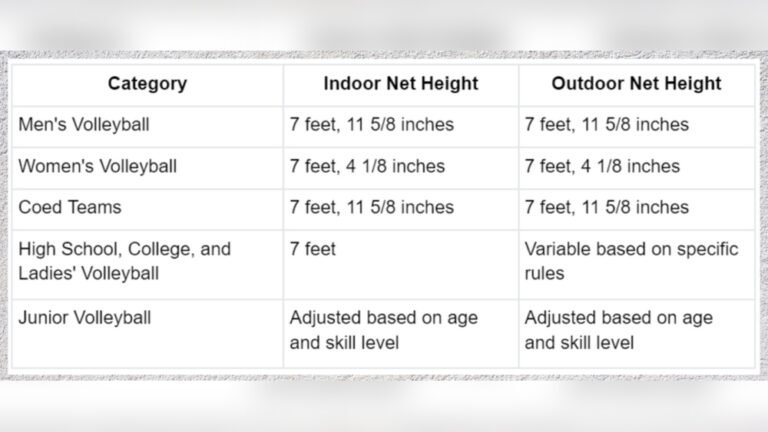
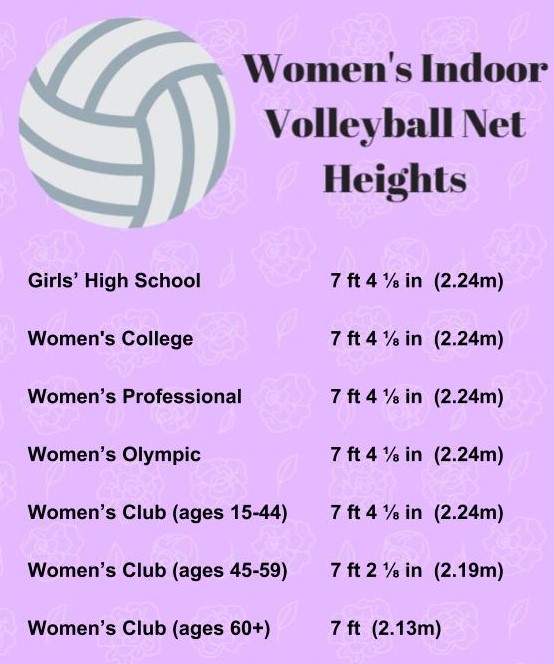
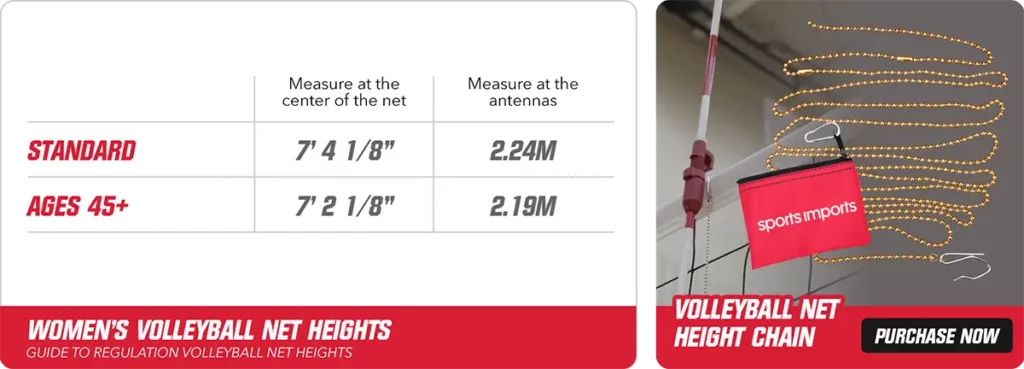
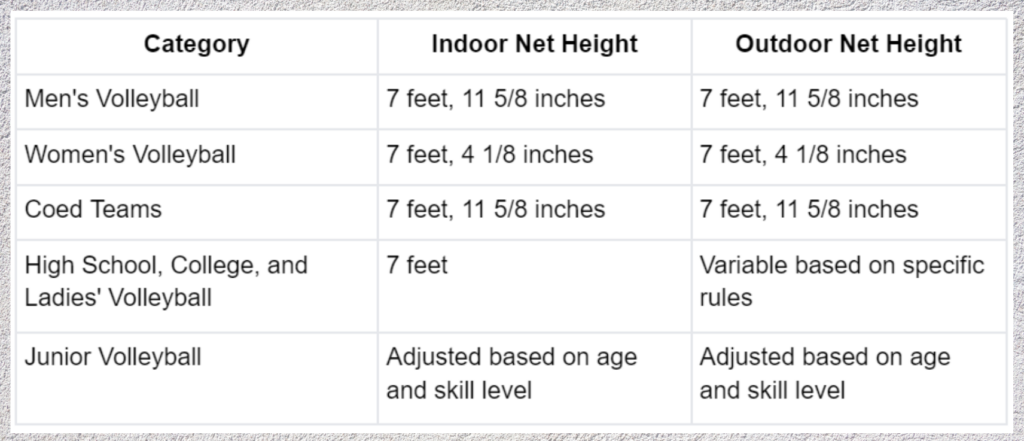
The official net height for women’s volleyball is 2.24 meters. This equals 7 feet 4 inches. This height is set by the International Volleyball Federation (FIVB). It applies to most adult competitions worldwide. The net must be tight and fixed at this height during matches. This standard keeps play fair and balanced.
Comparison With Men’s Net Height
The men’s net height is taller than the women’s. Men’s nets measure 2.43 meters or 7 feet 11 5/8 inches. This difference matches the average height and strength differences between genders. The lower net for women allows for faster rallies and more skillful plays. Both heights create unique challenges for players.
Variations By Age Group
Youth volleyball uses different net heights for safety and skill levels. Girls under 14 may use nets set at 2.13 meters or 7 feet. Younger age groups use even lower nets to build confidence. These variations help young players develop proper technique. As players grow, the net height increases to official adult standards.
Court Dimensions
The court dimensions in women’s volleyball follow specific measurements. These rules ensure fair play and consistency in every match. Understanding the court layout helps players position themselves correctly.
Court Size For Women’s Volleyball
The standard volleyball court is 18 meters long and 9 meters wide. This size is the same for both men’s and women’s volleyball. The court is divided into two equal halves by the net.
Boundary And Attack Lines
The boundary lines mark the edges of the court. The attack line sits 3 meters from the net on each side. Players use this line to know where front-row players can attack the ball.
Net Placement On Court
The net runs across the center line, dividing the court into two equal parts. For women’s volleyball, the net height is 2.24 meters. This height challenges players to jump and block effectively.
Regulations For Net Setup
The net setup in women’s volleyball follows strict regulations to ensure fair play. The net height and structure must meet official standards. This guarantees consistency in every match. Proper net setup affects the quality of the game and player safety. Understanding these rules helps coaches and players prepare correctly.
Net Tension And Stability
The volleyball net must be tight and stable during play. Loose nets can interfere with the ball and cause unfair points. The tension should keep the net firm but not overly stretched. Proper stability prevents the net from moving when players hit the ball. Referees check the net before the match starts.
Post And Antenna Requirements
Posts must be strong and placed outside the court boundaries. They support the net and keep it at the right height. Antennas attach to the net’s edges and extend above it. These markers show the ball’s crossing area. Antennas must be flexible and visible to both teams and referees.
Allowed Net Materials
The net must be made of durable and safe materials. Usually, nylon or polyethylene is used. The mesh size should be uniform and small enough to stop the ball. Materials must resist weather conditions for outdoor games. Using approved materials ensures the net lasts long and stays safe.
Credit: volleyball-tips.com
Rules Impacting Net Play
Net play is a key part of women’s volleyball. The rules here ensure fair and safe action near the net. They affect how players attack, block, and serve. Understanding these rules helps players avoid penalties and play effectively.
Net Contact Violations
Players must not touch the net during play. Any contact with the net is a violation. It disrupts the opponent’s play and can cause injury. Even accidental touches count as faults. Players should keep their hands and body clear from the net.
Blocking And Reaching Over The Net
Blocking is allowed close to the net but with limits. Players cannot reach far over to the opponent’s side. They may cross the net only after the opponent hits the ball. This prevents interference with the opponent’s attack. Proper timing and position are important to avoid faults.
Serving Rules Related To Net Height
The serve must clear the net without touching it illegally. If the ball hits the net but goes over, it is legal. Players must serve behind the end line. The net height affects how the ball travels during a serve. Good control helps players serve successfully over the net.
Adjustments For Different Levels
Volleyball net height for women varies by competition level. Different levels set specific rules to match players’ skills and ages. These adjustments keep the game fair and competitive. Understanding these rules helps players and coaches prepare properly.
High School Regulations
High school women’s volleyball nets are set at 7 feet 4 1/8 inches. This height suits teenage players’ average reach and skill. The rule aims to balance challenge and playability. Schools follow state or national guidelines for uniformity.
Collegiate Standards
College women’s volleyball uses the same net height as high school. The standard remains 7 feet 4 1/8 inches. This consistency helps players transition smoothly between levels. Colleges also emphasize official rules for tournaments.
Professional And International Rules
Professional and international women’s volleyball nets also stand at 7 feet 4 1/8 inches. This is the official height set by the FIVB, the sport’s global body. Maintaining one height worldwide supports fair international competition. Players train to meet this standard at the highest level.
Credit: www.sportsimports.com
Common Challenges And Solutions
Playing women’s volleyball means working with a net set at the official height. Challenges arise in setting and maintaining the net correctly. Fixing these issues helps ensure fair play and better matches. Below are common problems and easy ways to solve them.
Setting The Net Correctly
The official women’s net height is 7 feet 4 inches (2.24 meters). Use a measuring tape for accuracy. Check both poles to ensure the net is level. Adjust the tension on each side evenly. This keeps the net stable and at the right height. Always measure before each game or practice.
Dealing With Net Sagging
Net sagging affects gameplay and fairness. Tighten the net using the built-in tension straps or ropes. Inspect the net for worn-out cords or damage regularly. Replace any broken parts immediately. A tight net creates a clear boundary and consistent play conditions. Keep equipment maintained to avoid sagging during matches.
Ensuring Consistency Across Venues
Different courts may have slight net height differences. Bring your own measuring tape and tools. Verify the net height at every venue. Communicate with event organizers about the official height rule. Consistent net height ensures fair competition. Players can focus on skill instead of adjusting to new setups.
Equipment And Accessories
The right equipment shapes every volleyball match. Nets and accessories must meet set standards. This ensures fair play and proper competition. For women’s volleyball, net height and quality matter most. Choosing the correct gear helps players perform well and stay safe.
Types Of Volleyball Nets
Volleyball nets come in various types. Indoor nets are lighter and more flexible. Outdoor nets resist weather and sunlight damage. Competition nets follow official size and height rules. Training nets may be adjustable for different skill levels. Each net serves a purpose depending on the play area.
Net Height Measuring Tools
Measuring net height accurately is crucial. Tape measures help check net height against standards. Telescoping poles provide height reference points. Some use digital devices for precise measurement. Proper tools ensure the net stays at the correct height. This supports consistent and fair gameplay.
Maintenance Tips
Keep volleyball nets clean and dry. Store nets in cool, shaded areas after use. Check for tears or loose threads regularly. Repair small damages to avoid bigger problems. Tighten net cords to maintain proper tension. Good maintenance extends the life of nets and keeps games smooth.
Trends And Future Changes
The world of women’s volleyball is evolving with new ideas and changes. These trends affect how players perform near the net. Understanding these shifts helps players, coaches, and fans stay updated.
Changes to the net height could reshape the sport. Adjusting the net could make the game more dynamic. Innovations in rules and equipment also influence play styles and strategies. Technology improvements promise better net systems for fairness and safety.
Proposals For Net Height Adjustments
Some experts suggest lowering the net slightly. This change aims to increase rallies and scoring. Others propose raising the net to challenge players more. These ideas seek to balance skill and excitement. Trials and feedback will guide future net height decisions.
Impact Of Rule Changes On Net Play
Rule changes can alter how players attack and block. New rules may allow more aggressive net moves. Some rules focus on reducing faults and disputes. This leads to smoother, faster gameplay. Coaches must adapt training to new net regulations.
Innovations In Net Technology
Modern nets use stronger, lighter materials. Sensors can now detect net touches precisely. These tools help referees make accurate calls. Some nets include tension control for consistent height. Technology enhances fairness and player safety during matches.
Credit: sterlingvolleyball.com
Frequently Asked Questions
What Is The Net Height For Women’s Volleyball?
The net height for women’s volleyball is 7 feet 4 1/8 inches (2. 24 meters). This standard applies to all official competitions.
What Is The Difference Between Men’s And Women’s Volleyball Nets?
Men’s volleyball nets stand 2. 43 meters (7 feet 11 5/8 inches) high. Women’s nets are 2. 24 meters (7 feet 4 1/8 inches) tall. The height difference suits physical differences and game style. Both nets share the same length and width.
How Tall Is A Proper Volleyball Net?
A proper volleyball net height is 7 feet 4 inches (2. 24 meters) for women and 7 feet 11 5/8 inches (2. 43 meters) for men. This regulation height applies in official adult competitions. Youth and recreational nets may vary slightly.
Is Volleyball Net Height Different For Pros?
Yes, professional volleyball net heights differ by gender. Men’s nets stand at 2. 43 meters, women’s at 2. 24 meters. These standards ensure fair play at all levels.
Conclusion
The women’s volleyball net height plays a key role in the sport’s fairness. It ensures balanced play and challenges players’ skills. Setting the net at the right height helps improve training and competition. Players can focus on strategy and teamwork with consistent rules.
Understanding these measurements supports better game experiences. Coaches and players benefit from knowing the exact net height. This knowledge helps everyone enjoy volleyball more fully. Keep these standards in mind for every match. This keeps the sport fair and fun for all.