
Are you curious about the exact length of a volleyball net and why it matters for your game? Whether you’re setting up a court in your backyard, joining a local league, or just want to understand the sport better, knowing the right net length can make all the difference.
A volleyball net isn’t just a simple divider—it’s a key part of the game that affects every serve, spike, and rally. You’ll discover the official measurements for volleyball nets, how they differ for indoor and beach volleyball, and tips to choose the perfect net for your needs.
Keep reading to ensure your next volleyball game is set up just right!
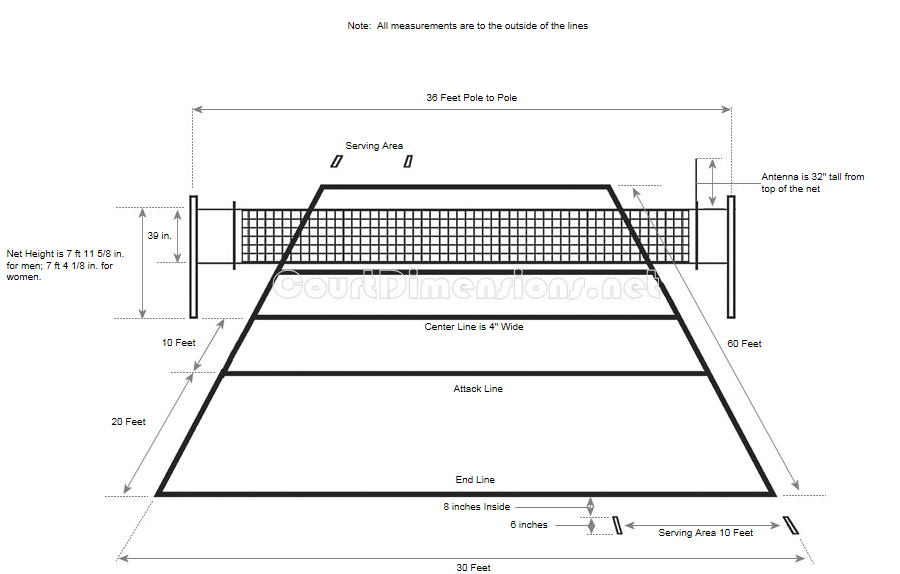
Credit: www.courtdimensions.net
Official Net Length
The official net length in volleyball is a key element in setting up the court. It ensures fairness and consistency across all matches. The length is standardized by international volleyball organizations. This length applies to different types of volleyball, including indoor and beach volleyball. Understanding the official net length helps players and organizers prepare properly.
Indoor Volleyball Nets
Indoor volleyball nets have a fixed official length of 9.5 meters (31 feet 2 inches). This length fits the width of the indoor volleyball court. The net stretches from one side post to the other, covering the entire court width. It must be taut and well secured for stable play. The net height varies by gender and age group but the length remains the same.
Beach Volleyball Nets
Beach volleyball nets also measure 8.5 meters (27 feet 10 inches) in length. This length matches the smaller width of the beach volleyball court. The net is usually made of durable, weather-resistant material. It must stay tight despite wind and outdoor conditions. The net height differs for men’s and women’s competitions but the length is constant.
Variations By Competition Level
Net length remains consistent across most competition levels. Official tournaments follow the same rules for net length. Recreational and youth leagues may use smaller or adjustable nets. These variations help accommodate skill levels and age groups. Always check competition rules before setting up the net length.
Net Height Standards
The height of a volleyball net is a key factor in the sport. It affects how players serve, block, and spike the ball. Different groups follow specific standards for net height. These standards make sure the game is fair and fun for everyone.
Net height changes based on age and gender. These rules help players compete at the right level. Below are the common standards used in volleyball today.
Men’s Net Height
The official net height for men is 2.43 meters (7 feet 11 5/8 inches). This height is used in most adult men’s volleyball leagues worldwide. It challenges players to jump higher and improves the game’s speed.
Women’s Net Height
Women play with a net set at 2.24 meters (7 feet 4 1/8 inches). This height suits the average female player’s reach and strength. It keeps matches competitive and exciting across all skill levels.
Youth And High School Levels
Youth and high school volleyball use lower net heights. For boys under 15, the net is usually 2.24 meters. Girls in the same group use a net at 2.13 meters (7 feet). These heights help young players develop skills gradually.
Net Width And Mesh Size
The net width and mesh size are key parts of a volleyball net’s design. These elements affect how the net looks and plays. Understanding them helps players and organizers choose the right net. The width ensures proper coverage across the court. The mesh size influences visibility and ball interaction.
Standard Width Dimensions
The official volleyball net width is 32 feet, or about 9.75 meters. This width fits the standard court size perfectly. Both indoor and beach volleyball nets follow this rule. The net stretches tightly between two poles on each side. A uniform width keeps the game fair for all players.
Mesh Size Specifications
Mesh size usually measures around 4 inches square, or 10 centimeters. The mesh is made from nylon or similar strong fibers. This size stops the ball from passing through the net. It also lets players see the action on the other side. Proper mesh size balances strength and visibility well.
Impact On Gameplay
The net width covers the entire playing area. It stops balls from slipping outside the court easily. The mesh size affects how the ball rebounds off the net. Smaller mesh can slow the ball slightly. Larger mesh may cause more unpredictable bounces. Both factors influence player strategy and timing.

Credit: www.dimensions.com
Materials And Construction
The materials and construction of a volleyball net play a key role in its performance. Nets must be strong and stable to handle play intensity. Choosing the right materials ensures the net lasts longer and meets competition standards.
Different types of nets use various materials. Some focus on durability, while others emphasize lightness. Understanding these differences helps players and organizers pick the best net for their needs.
Common Net Materials
Most volleyball nets use polyethylene or nylon threads. These materials resist weather and wear. Nylon offers a softer feel but may absorb moisture. Polyethylene is tougher and dries quickly. Some nets include reinforced edges made of canvas or vinyl. These provide extra strength and help hold the net’s shape.
Durability Factors
Exposure to sun and rain affects net durability. UV-resistant coatings protect nets from fading and cracking. Thicker threads last longer under heavy use. Tight stitching and strong knots prevent fraying. Nets with reinforced borders resist tearing during intense games. Proper maintenance also extends net life. Drying nets after use and storing them indoors helps keep them in good condition.
Professional Vs Recreational Nets
Professional volleyball nets follow strict guidelines for size and material. They use high-grade polyethylene with strong borders. These nets are built to withstand long tournaments and tough play. Recreational nets often use lighter materials for easy setup. They may not have reinforced edges or UV protection. These nets work well for casual games and practice but wear out faster. Choosing the right net depends on how often and where you play.
Setting Up The Net
Setting up a volleyball net correctly is key to a fair and fun game. The net must be tight, secure, and at the right height. This ensures players can compete safely and enjoy the match. Below are important steps for proper net setup.
Proper Tensioning
The net should be stretched tight across the court. Loose nets cause unfair play and can distract players. Use the tension ropes or straps to pull the net firm. Check that the net does not sag in the middle. Proper tension keeps the net straight and stable during play.
Pole Placement
Poles must be placed exactly at the court’s sidelines. The volleyball net length is usually 32 feet (9.75 meters) for official games. The poles should stand upright and be firmly fixed in the ground. Proper pole placement holds the net at the right length and height throughout the game.
Safety Considerations
Ensure poles and net ropes do not create tripping hazards. Padding on poles helps prevent injuries. Clear the area around the net from obstacles. Check that the net’s top cable and side ropes are secure and not loose. Safety measures protect players and allow smooth gameplay.

Credit: www.networldsports.com
Common Measurement Mistakes
Measuring a volleyball net correctly is crucial for fair play and safety. Many make common mistakes that affect the net’s length and height. These errors can lead to problems during matches. Understanding these errors helps avoid issues and ensures the net meets standards.
Incorrect Height Checks
One frequent error is checking the net height at the wrong points. The net must be measured at the center and posts. Sometimes, people measure only one side or the middle, missing height variations. This mistake causes an uneven net height. Players may find it harder to play with a net that is too high or too low.
Misjudging Net Length
Another common mistake is misjudging the net length. The standard volleyball net length is 32 feet (9.75 meters). Some measure only the visible netting, ignoring the side bands and attachments. This leads to a net shorter than the required length. A shorter net affects game rules and player positions. Accurate length measurement must include the entire net, from end to end.
Ensuring Regulation Compliance
Ensuring the net meets official regulations is vital for all play levels. Different leagues may have slight variations in net size. Always check the rulebook for the correct net length and height. Use a tape measure and level tool for precise measurement. Regularly inspect the net to maintain compliance. This practice prevents disqualification or game delays during tournaments.
Adjusting Net Size For Different Levels
Adjusting the volleyball net size is important for different skill levels and ages. The net length usually stays the same, but the height changes. This helps players enjoy the game and develop skills safely. Different leagues follow specific rules for net height to suit their players. Understanding these adjustments improves the playing experience for everyone.
Youth Leagues
Youth volleyball uses lower net heights than adult leagues. This helps younger players reach the ball more easily. The net length stays standard, about 32 feet (9.75 meters). Lower nets build confidence and allow better control of the ball. Coaches often use adjustable nets to fit various age groups.
Amateur Play
Amateur leagues usually follow official net height rules. Men’s nets are set at 7 feet 11 5/8 inches (2.43 meters). Women’s nets are 7 feet 4 1/8 inches (2.24 meters). The standard net length remains at 32 feet (9.75 meters). This size challenges players while keeping the game fair. Many local clubs and schools use these measurements.
Professional Tournaments
Professional volleyball uses strict net size regulations. The net length is always 32 feet (9.75 meters). Men’s net height is 7 feet 11 5/8 inches (2.43 meters). Women’s net height is 7 feet 4 1/8 inches (2.24 meters). These measurements meet international standards set by the FIVB. Proper net size ensures fair and competitive matches worldwide.
Net Maintenance Tips
Proper care keeps your volleyball net in top shape for longer. Regular maintenance prevents damage and ensures consistent play quality. Follow simple steps to clean, store, and repair your net.
Cleaning And Storage
Clean your net after each use to remove dirt and sweat. Use a soft brush and mild soap with water. Rinse thoroughly and let it dry completely before storing. Store the net in a cool, dry place away from direct sunlight. Avoid folding the net tightly to prevent creases and damage.
Repairing Tears
Inspect the net regularly for holes or tears. Small tears should be fixed immediately to stop them from growing. Use strong nylon thread or a patch kit designed for nets. Sew carefully around the damaged area for a secure repair. Replace the net if damage is too large to fix safely.
Extending Net Lifespan
Use the net only for volleyball play to avoid unnecessary wear. Avoid pulling or stretching the net beyond its limits. Protect it from harsh weather, especially strong sun and rain. Regular maintenance and gentle handling extend the net’s life. Investing time in upkeep saves money on replacements.
Frequently Asked Questions
What Is The Length Of A Volleyball Net?
A standard volleyball net measures 32 feet (9. 75 meters) in length. This size fits official indoor and beach courts.
How Tall Is The Net For High School?
The high school volleyball net height is 7 feet 4 1/8 inches (2. 24 meters) for boys. For girls, it is 7 feet 0 1/4 inches (2. 13 meters).
What Is A High School Volleyball Net?
A high school volleyball net is 32 feet long and stands 7 feet 4 1/8 inches tall for girls, 7 feet 11 5/8 inches for boys. It meets official regulations for school competitions.
What Is The Official Size For High School Volleyball?
The official high school volleyball court measures 30 feet wide by 60 feet long. The net height is 7 feet 4 1/8 inches for girls and 7 feet 11 5/8 inches for boys.
Conclusion
The length of a volleyball net plays a key role in the sport’s rules. Official nets measure 9. 5 meters (about 31 feet) across. This size fits both indoor and beach volleyball courts. Knowing the correct net length helps players and coaches prepare properly.
It also ensures fair play during matches. Whether you play casually or competitively, the right net size matters. Keep this fact in mind when setting up your volleyball game. It supports better practice and enjoyable play.