Are you ready to take your volleyball game to the next level? One key detail that can make all the difference is understanding the men’s net height in volleyball.
Whether you’re playing competitively or just for fun, knowing the exact net height helps you improve your skills and strategy. This isn’t just a number—it’s the challenge you face with every serve, spike, and block. You’ll discover the official men’s volleyball net height, how it compares to other levels, and why it matters for your performance.
Keep reading to master the rules and boost your game like a pro!
Men’s Net Height Standards
The standard net height is a key factor in men’s volleyball. It sets the level for competition and skill. Knowing the official net height helps players train properly and compete fairly. Different leagues and age groups may have variations in net height. This section explains those standards clearly.
Official Measurements
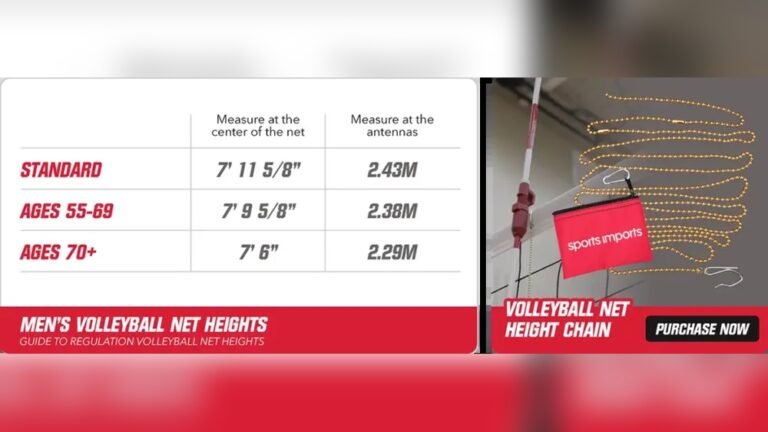
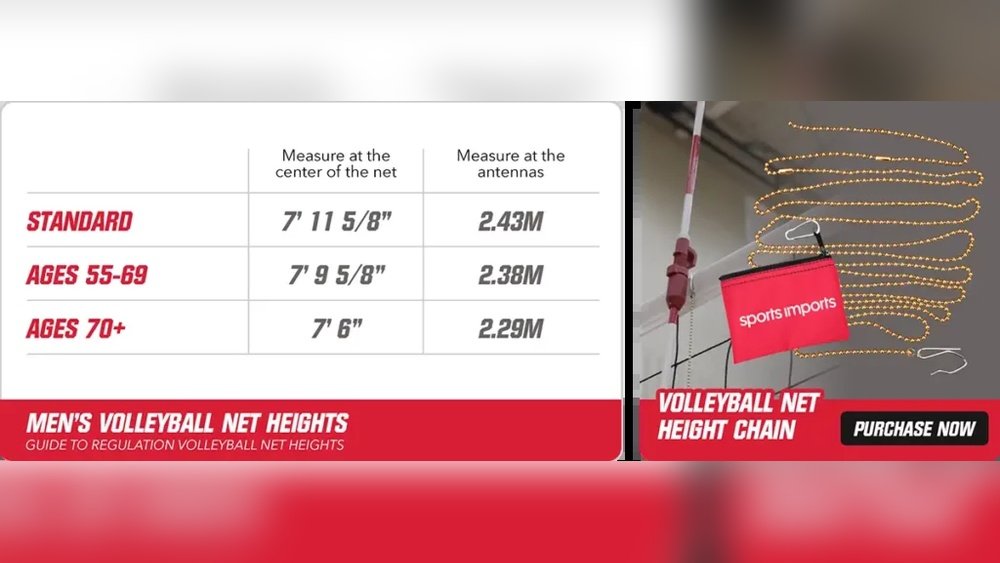
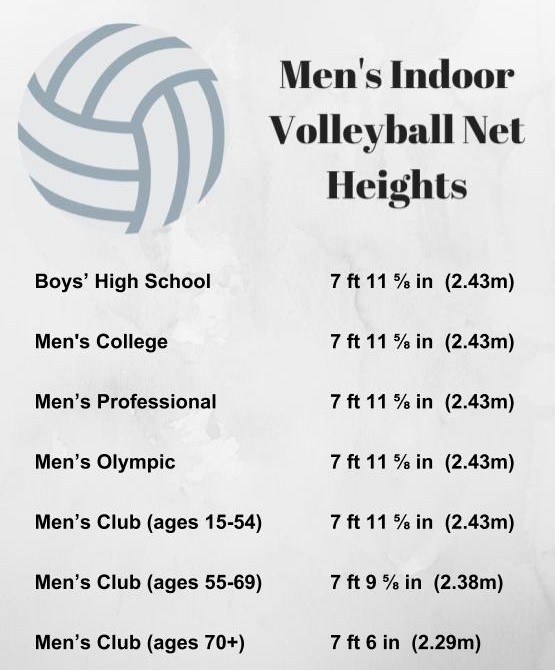
The official net height for men’s volleyball is 2.43 meters (7 feet 11 5/8 inches). This is the standard used by the International Volleyball Federation (FIVB). Most professional and adult men’s leagues follow this height. It ensures consistency across national and international competitions.
Age-based Adjustments
Younger players use lower net heights to match their skill and size. For example, boys under 14 often play with nets set at 2.24 meters (7 feet 4 1/4 inches). This helps them develop proper technique without struggling against an adult-height net. As players grow older, the net height gradually increases to the official 2.43 meters.
Variations Across Leagues
Some leagues adjust net height for specific groups. Senior men’s leagues sometimes lower the net to 2.29 meters (7 feet 6 inches). This change makes the game more accessible and enjoyable for older players. Recreational and coed leagues may also use different heights to balance play. Knowing these variations helps players prepare for different game settings.

Credit: www.networldsports.com
Differences In Net Heights
The height of a volleyball net changes depending on the players’ level and gender. Net height affects the style and difficulty of play. Knowing these differences helps players train better and enjoy the sport more.
Men Vs Women
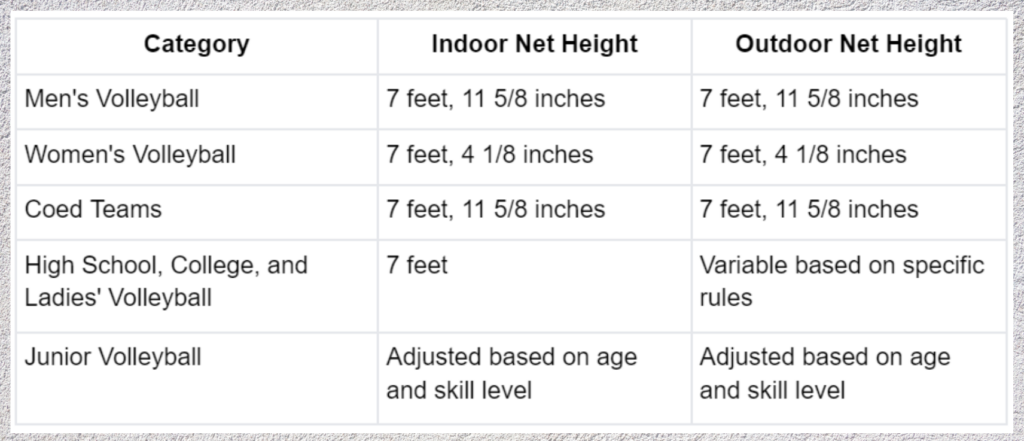
Men’s volleyball nets stand taller than women’s nets. The official height for men is 2.43 meters (7 feet 11 5/8 inches). Women’s nets are set at 2.24 meters (7 feet 4 1/8 inches). This difference allows men to use their greater average height and jumping ability. Women’s net height suits their average physical build for balanced competition.
Youth And Junior Levels
Youth volleyball uses lower nets to match players’ age and size. Younger players often use nets around 2.13 meters (7 feet). As players grow older, net heights increase gradually. This adjustment helps kids learn skills safely and enjoy the game. Junior leagues focus on fun and development rather than strict height rules.
Coed Volleyball Nets
Coed volleyball nets usually sit between men’s and women’s heights. A common coed net height is 2.35 meters (7 feet 8 1/2 inches). This compromise allows mixed teams to play fairly. Some leagues adjust net height depending on players’ preferences or skill levels. Coed nets promote inclusive play and teamwork across genders.
Regulatory Bodies And Rules
The rules and regulations of men’s volleyball net height are set by several governing bodies. These organizations ensure consistency and fairness in the sport worldwide. Understanding their standards helps players, coaches, and fans know what to expect in official games.
Fivb Standards
The International Volleyball Federation (FIVB) sets the global rules for volleyball. For men’s volleyball, the official net height is 2.43 meters (7 feet 11 5/8 inches). This height applies to all international competitions and professional matches.
The FIVB also defines the net width, antenna position, and court dimensions. Their rules focus on maintaining uniformity across all countries. Referees at international events follow FIVB guidelines strictly.
Usav And Avp Regulations
The USA Volleyball (USAV) governs amateur volleyball in the United States. USAV adopts the FIVB net height of 2.43 meters for men’s indoor volleyball. They also manage youth and adult leagues with slight variations.
The Association of Volleyball Professionals (AVP) oversees professional beach volleyball in the U.S. The AVP uses a slightly lower net height of 2.43 meters for men, matching FIVB rules. Their competitions follow strict regulations for court and net setup.
Local And Recreational League Rules
Local and recreational leagues often modify net height for different skill levels. Older adult leagues may lower the net to 2.29 meters (7 feet 6 inches) for easier play. Youth leagues use various heights based on age groups.
Recreational rules aim to keep the game fun and accessible. These leagues allow flexibility in net height to encourage participation. Always check specific league rules before playing to know the exact net height used.
Impact Of Net Height On Gameplay
The height of the men’s volleyball net plays a crucial role in how the game unfolds. At 2.43 meters (7 feet 11 5/8 inches), this regulation height challenges players to adjust their techniques and strategies. The net height affects every action on the court, from serving to blocking. It demands power, precision, and timing, shaping the flow of the match.
Players must develop skills that suit this height to compete effectively. The net height influences the speed and angle of attacks. It also changes defensive tactics. Understanding these impacts helps players and coaches focus their training and game plans.
Serving And Spiking
The net height demands strong and accurate serves. Players need to clear the net while aiming for difficult spots. Powerful jump serves often help in gaining an advantage.
Spiking requires a high vertical jump and timing. The attacker must hit the ball sharply over or around blockers. The net height forces players to use technique and strength to score points.
Blocking Techniques
Blocking at this height requires quick reflexes and timing. Players must jump high and reach over the net to stop attacks. Proper hand positioning and footwork are essential to form an effective block.
Teams often train to coordinate blocks with other defenders. This teamwork helps close gaps and reduce scoring chances for the opponent.
Player Positioning
The net height affects where players stand during play. Front-row players stay close to the net for blocking and attacking. Back-row players position themselves to defend against spikes and serves.
Players also adjust their stance and movement based on the opponent’s strengths. Good positioning helps cover the court and respond quickly to attacks.
Adjusting Net Height For Accessibility
Adjusting the net height in men’s volleyball improves accessibility for all players. Different groups need varied net heights to enjoy the sport comfortably. This approach helps players develop skills and participate fully. Adjustments also reduce injury risk and increase game fairness.
Senior Leagues
Senior leagues often lower net heights to fit older players’ needs. This change helps players maintain agility and enjoy longer playtime. Lower nets allow better reaction times and reduce strain on joints. It keeps the game competitive and fun for seniors.
Adaptive Volleyball
Adaptive volleyball uses adjustable nets for players with physical challenges. These nets support different heights based on ability levels. Players can focus on skill and teamwork without barriers. It encourages inclusion and broadens volleyball participation.
Youth Training Nets
Youth training nets come in various heights for different age groups. Younger players use lower nets to build confidence and technique. Gradually raising nets matches players’ growing skills and strength. This method creates a smooth learning curve for kids.
Credit: sterlingvolleyball.com
Measuring And Setting The Net
Setting the correct net height is vital for men’s volleyball. The official net height impacts fair play and player performance. Measuring and adjusting the net properly ensures the game meets standard rules. This section explains how to measure and set the net accurately.
Proper Measurement Techniques
Use a tape measure to check the net height from the floor. Measure at the center of the net for accuracy. The official height for men’s volleyball is 2.43 meters (7 feet 11 5/8 inches). Ensure the net is tight and straight before measuring. Double-check measurements to avoid errors during play.
Tools And Equipment
A reliable tape measure or measuring stick is essential. Use a level to confirm the net is horizontal. Poles must be sturdy and firmly fixed to hold the net at correct height. Markings on poles help set the net quickly and consistently. Carry a ladder for adjustments on taller poles.
Common Setup Mistakes
Setting the net too low or too high disrupts the game flow. Failing to tighten the net causes it to sag and affects play. Measuring from the wrong spot leads to incorrect height. Ignoring pole stability can cause the net to fall during matches. Always verify the net height before each game.
Court Dimensions And Net Placement
The court dimensions and net placement define the playing area and the challenge level in men’s volleyball. Clear, precise measurements ensure fair play and proper competition. Understanding these details helps players and coaches prepare effectively.
Standard Court Size
The official court size for men’s volleyball is 18 meters long and 9 meters wide. The court is divided into two equal halves by the net. Each side measures 9 by 9 meters. Boundary lines mark the edges of the court. The attack line is 3 meters from the net on each side. This line separates the front and back zones for players.
Net Positioning Rules
The net height for men’s volleyball is set at 2.43 meters (7 feet 11 5/8 inches). The net stretches across the center of the court. It must be taut and stable during play. Antennas extend 80 centimeters above the net on each side. They mark the sidelines for the ball crossing. The net’s top band and bottom band keep it firm and visible.
Indoor Vs Outdoor Settings
Indoor volleyball courts use hard surfaces like wood or synthetic materials. Outdoor courts usually have sand or grass surfaces. The net height remains the same for both settings in men’s volleyball. Outdoor conditions like wind may affect net tension and ball control. Players adapt their strategies based on the playing surface and environment.
Future Trends In Net Height Standards
The standards for men’s volleyball net height are evolving. Changes aim to improve fairness and accessibility. Future trends will shape the sport worldwide. Innovations and technology play key roles. Rules are also adapting for more inclusivity. Below are some important trends to watch.
Innovations In Net Design
New net materials improve durability and safety. Lightweight, stronger fibers reduce net sagging during play. Adjustable nets allow quick height changes for different levels. These designs help venues host multiple age groups easily. Enhanced visibility nets make tracking the ball simpler for players and referees.
Changing Rules For Inclusivity
Leagues lower net heights for older and younger players. Mixed-gender games adopt flexible net heights for balance. Some competitions experiment with gradual height adjustments during matches. These changes encourage more players to join and enjoy the sport. Inclusivity drives updates to traditional net height rules.
Impact Of Technology On Standards
Smart sensors monitor net height accuracy in real time. Video review systems ensure compliance during official matches. Data analytics help set optimal net heights for player safety and skill. Digital tools assist coaches in training with precise net settings. Technology fosters fair play and consistent net height enforcement.
Credit: volleyball-tips.com
Frequently Asked Questions
What Is Men’s Volleyball Net Height?
The men’s volleyball net height is 2. 43 meters (7 feet 11 5/8 inches). This is the official regulation height. Some leagues may adjust it slightly for age or skill level.
Does Net Height Differ For Men’s Volleyball?
Yes, men’s volleyball net height is higher than women’s. It measures 2. 43 meters (7 feet 11 5/8 inches) in official play.
How Tall Is A Man’s Net?
A men’s volleyball net height is 2. 43 meters (7 feet 11 5/8 inches) at the center.
How Tall Are Coed Nets?
Coed volleyball nets typically stand at 7 feet 4 1/8 inches (2. 24 meters) high. Some leagues use 7 feet 11 5/8 inches (2. 43 meters) depending on rules. Net height varies by age and competition level. Always check specific league regulations for exact measurements.
Conclusion
Men’s net height in volleyball stands at 7 feet 11 5/8 inches (2. 43 meters). This height challenges players to jump higher and improve skills. Different leagues adjust the net for age and skill levels. Youth players use lower nets to build confidence and technique.
Understanding net height helps players prepare better for matches. It also ensures fair play in competitions. Keep practicing with the correct net height to enhance your game. Knowing the rules supports teamwork and enjoyment on the court. Stay consistent, and your volleyball skills will grow steadily.