Are you setting up your volleyball court and wondering what the correct net height for men’s volleyball is? Getting the net height just right can make a huge difference in how you play, practice, and enjoy the game.
Whether you’re a player, coach, or organizer, knowing the standard measurement helps you train effectively and compete on a level playing field. You’ll discover the official volleyball net height for male players, why it’s set that way, and how it compares to other leagues.
Keep reading to master the key details that will elevate your volleyball experience!
Credit: www.youtube.com
Official Net Height For Men
The official net height for men’s volleyball is a key factor in the sport. It sets the standard for competitive play at all levels. Knowing the exact height helps players train properly and compete fairly.
The net height affects how players serve, block, and spike. It challenges their skills and athleticism. The official height remains consistent worldwide to keep the game uniform and fair.
Standard Measurement
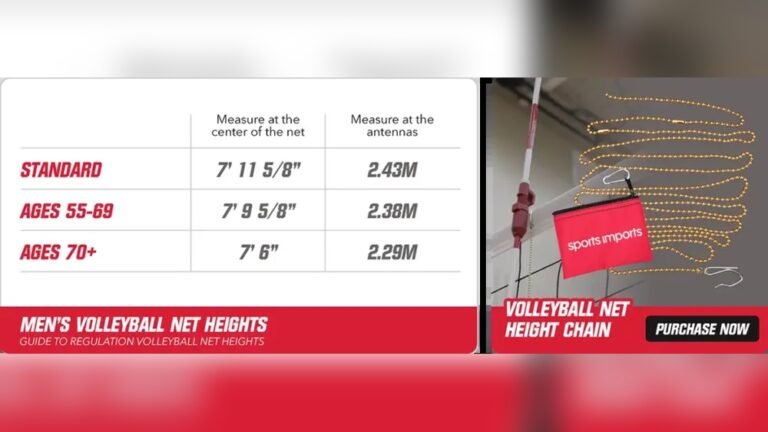
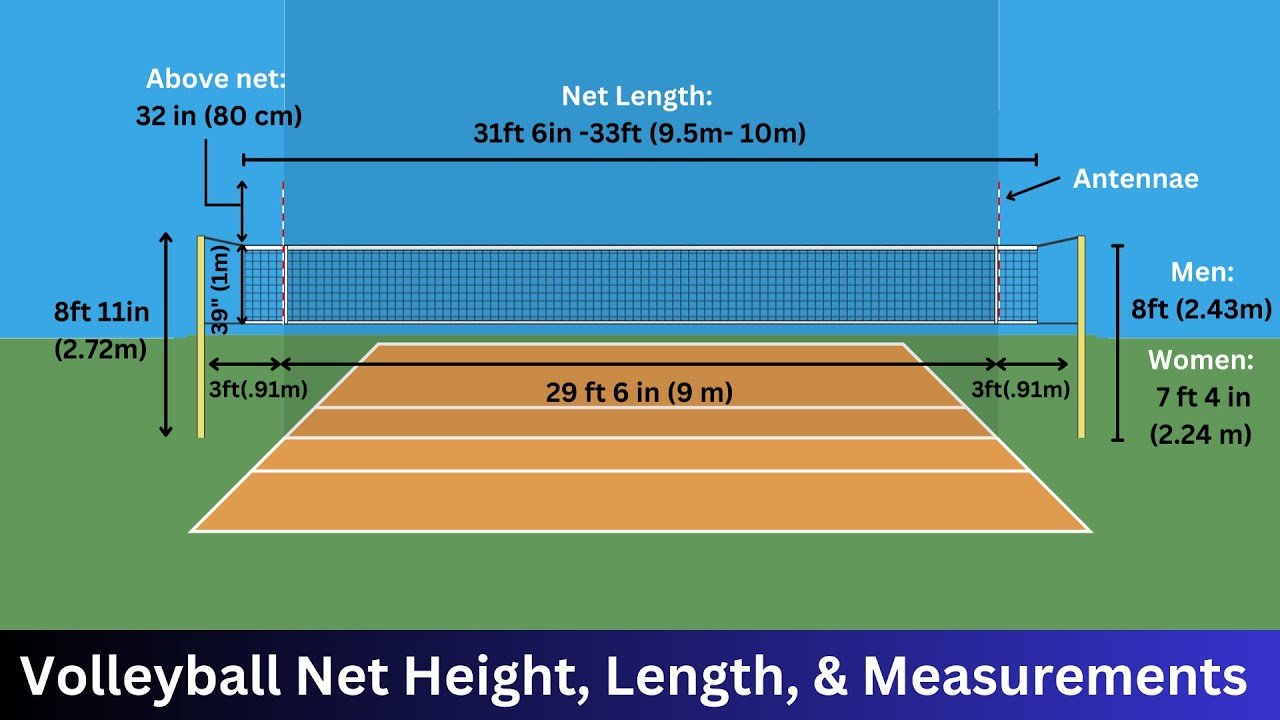
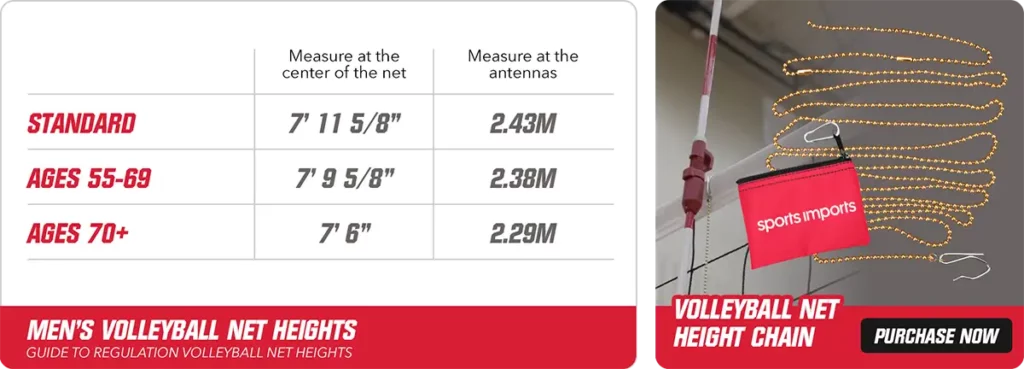
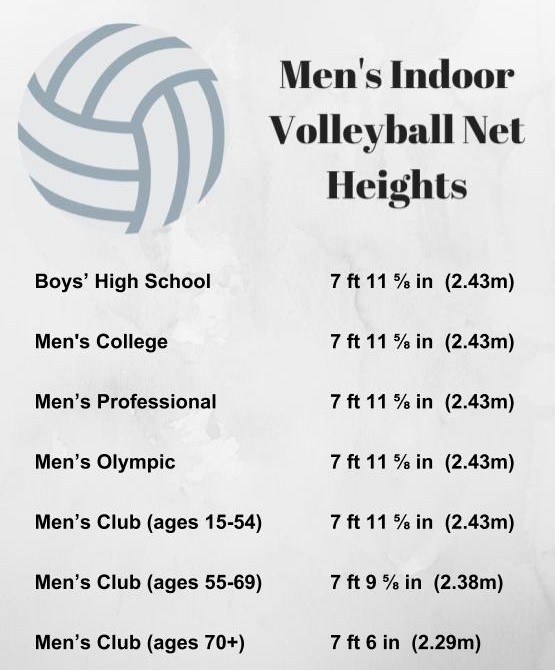
The standard net height for men is 2.43 meters or 7 feet 11 5/8 inches. This measurement is taken from the center of the court to the top of the net. The net should be taut and even across its length.
This height applies to indoor and official outdoor volleyball matches. The posts supporting the net must be placed outside the court boundaries. The net’s height may be adjusted slightly for different age groups or levels.
Governing Bodies’ Specifications
The International Volleyball Federation (FIVB) sets the official net height rules globally. Their guidelines are followed in Olympic and professional tournaments. USA Volleyball (USAV) also adheres to these standards for national competitions.
Other organizations like the NCAA use the same height for men’s volleyball. Beach volleyball nets are set at the same height as indoor nets for men. Rules ensure fair play and consistency across all official matches.
Net Height Variations
The height of a volleyball net changes depending on the level of play and the age of players. These variations ensure fairness and safety. They also help players enjoy the game more. Understanding these differences is key for coaches, players, and fans.
Senior Leagues Adjustments
In senior male leagues, the standard net height is 2.43 meters (7 feet 11 5/8 inches). Older players sometimes face physical challenges. To keep the game competitive and fun, some leagues lower the net height. This adjustment makes it easier to serve, block, and spike. It helps players stay active longer and reduces injury risks.
Youth League Differences
Youth volleyball uses lower net heights to match players’ developing skills. For boys under 12, the net height is usually around 2.13 meters (7 feet). As players grow older, the net height increases gradually. This approach builds confidence and improves technique step by step. It encourages young players to learn without frustration. Different age groups have specific height rules to balance challenge and ability.
Men’s Vs Women’s Net Height
The height of a volleyball net changes between men’s and women’s games. This difference affects how players serve, block, and spike. Understanding these variations helps players and fans appreciate the sport better. It also highlights how volleyball adapts to physical differences in athletes.
Height Comparison
The official net height for men’s volleyball is 2.43 meters (7 feet 11 5/8 inches). For women, the net stands at 2.24 meters (7 feet 4 1/8 inches). This means the men’s net is 19 centimeters higher than the women’s net. The higher net in men’s volleyball demands stronger jumps and more powerful attacks.
Physical Factors Behind Differences
Men generally have greater height and jumping ability than women. This physical advantage allows men to play with a taller net. Women’s net height is lower to match average reach and jumping skills. Adjusting net height ensures fair and competitive play for both genders. It balances the challenge and enjoyment across men’s and women’s volleyball.
Indoor Vs Beach Volleyball Nets
Volleyball nets differ for indoor and beach play, adapting to unique conditions and styles. Indoor volleyball happens in controlled environments, so net setup follows strict rules. Beach volleyball needs nets that suit outdoor elements like wind and sand. Understanding these differences helps players prepare and compete better.
Height Standards For Indoor Play
The official net height for men’s indoor volleyball is 2.43 meters (7 feet 11 5/8 inches). This standard applies to most adult male competitions worldwide. The net must be taut and fixed firmly to poles on each side. Net height can be adjusted slightly for younger or older players. Indoor courts have fixed boundaries and smooth floors, influencing net setup and play style.
Beach Volleyball Net Heights
Men’s beach volleyball nets are set at the same height as indoor nets, 2.43 meters. The outdoor setting requires nets that withstand wind and weather. Poles are usually anchored in the sand and may be more flexible. Beach volleyball courts are smaller, which affects net tension and player movement. Despite these differences, net height remains consistent to keep fairness across game types.
Setting Up The Net
Setting up the volleyball net correctly is essential for a fair and enjoyable match. The net height for male players must follow official standards to ensure proper gameplay. Precise installation keeps the net stable and at the right height throughout the game.
Proper setup helps players perform better and reduces disputes about net faults. Below are key tips and common mistakes to avoid during net installation.
Proper Installation Tips
Start by measuring the net height from the court surface. For men’s volleyball, the net should be exactly 2.43 meters (7 feet 11 5/8 inches) high. Use a reliable tape measure or a net height gauge for accuracy.
Attach the net tightly to poles on both sides. The net should be taut with no sagging in the middle. Adjust the tension using the ropes or cables provided.
Make sure the antennae are fixed correctly on each side of the net. These help judge if the ball crosses legally. The antennae should extend above the net by about 80 centimeters.
Check the net height at the center and at the poles to confirm uniform height. Use a level or a measuring stick for consistency. Re-tighten if needed before the match starts.
Common Setup Mistakes
One frequent mistake is setting the net too low or too high. This causes unfair advantages and may lead to penalties. Always double-check the measurement before the game.
Another error is leaving the net loose. A loose net sags and changes the ball’s trajectory. This affects gameplay and player safety.
Failing to secure the antennae properly is also common. If antennae are missing or loose, referees may find it hard to make calls about balls crossing the net boundary.
Ignoring court markings can lead to incorrect pole placement. The net poles must align with the sidelines. This ensures the net covers the entire width of the court.
Impact Of Net Height On Gameplay
The height of the volleyball net for male players directly shapes the flow and challenge of the game. A standard net height forces players to develop strong jumping skills and precise timing. It also affects the speed and style of attacks and defenses. Changes in net height can shift the balance between offense and defense, making gameplay more dynamic.
Influence On Player Performance
Net height impacts how players jump and hit the ball. Taller nets require higher jumps, testing leg strength and timing. Players must adjust their approach to spikes and blocks. A higher net demands better coordination and power. It also influences serving techniques, as players aim for different angles. Overall, it pushes athletes to improve their physical skills and timing.
Tactical Considerations
Teams plan their strategies based on net height. A higher net makes quick attacks harder but favors strong blockers. Players must choose when to use powerful spikes or softer shots over the net. Defenders adjust their positioning to cover tips and deep attacks. Coaches design plays that exploit opponents’ weaknesses related to net height. This leads to varied and thoughtful gameplay.
Adjusting Net Height For Different Age Groups
Adjusting the volleyball net height is important for players of different ages. It helps improve their skills and enjoyment of the game. Changing the net height also reduces injury risks and matches players’ physical abilities. This section explains net height adjustments for youth and senior players.
Youth Categories
Younger players use lower nets to match their height and strength. For kids under 12, the net height is usually set around 7 feet or less. This height helps them learn basic skills like serving and spiking. As players grow older, the net height increases gradually. Teen players often use the standard men’s net height of 7 feet 11 5/8 inches. Lower nets encourage confidence and better control during play.
Masters And Senior Players
Senior players often face physical challenges like joint pain or reduced agility. Many leagues lower the net height for players over 50 years old. The net may be set between 7 feet 6 inches and 7 feet 9 inches. This change helps keep the game competitive and safe. Adjusting the net also allows senior players to enjoy volleyball longer. It promotes fair play and reduces strain on the body.
Credit: www.sportsimports.com
Measuring And Maintaining Net Height
Measuring and maintaining the correct volleyball net height is essential for fair play and safety. The official net height for men’s volleyball is 7 feet 11 5/8 inches (2.43 meters). Keeping the net at this exact height ensures the game follows standard rules and players can perform at their best.
Proper measurement and regular maintenance prevent issues like uneven nets or incorrect heights. These problems can affect gameplay and cause disputes. Understanding the tools and techniques to measure net height and performing routine checks helps maintain the right standards on the court.
Tools And Techniques
Use a measuring tape or a net gauge for accurate height checks. Measure from the center of the court to avoid errors caused by sagging. The tape should extend from the floor to the top of the net’s center. Confirm measurements at both ends of the net to ensure it is level. Adjust the net tension if needed to keep it tight and straight. Proper use of tools makes measuring quick and reliable.
Routine Checks
Check the net height before every match or practice session. Frequent checks catch any changes due to weather or use. Inspect the net for tears, loose cables, or damaged poles. Tighten or replace parts to keep the net stable. Record the measurements to track any shifts over time. Consistent maintenance improves gameplay and prevents accidents on the court.
Credit: volleyball-tips.com
Frequently Asked Questions
What Is Men’s Volleyball Net Height?
The men’s volleyball net height is 2. 43 meters (7 feet 11 5/8 inches) in official competitions. This standard applies to senior men’s leagues worldwide.
What Is The Difference Between Men’s And Women’s Volleyball Nets?
Men’s volleyball nets are set at 2. 43 meters (7 feet 11 5/8 inches). Women’s nets are lower, at 2. 24 meters (7 feet 4 1/8 inches). The height difference reflects average strength and jumping ability variations between genders.
Does Net Height Differ For Men’s Volleyball?
Yes, men’s volleyball net height is 2. 43 meters (7 feet 11 5/8 inches). It is higher than women’s net height.
How High Is A 14u Volleyball Net?
A 14u volleyball net height is typically 7 feet 4 1/8 inches (2. 24 meters) for boys. This height suits their age and skill level.
Conclusion
The standard net height for male volleyball is 7 feet 11 5/8 inches. This measurement ensures fair play in official matches. Different leagues may adjust the height for youth or senior players. Knowing the correct net height helps players practice properly.
It also supports skill development and enjoyment of the game. Always check the official rules before setting up the net. Proper height improves both safety and competition quality. Keep this guide handy for your volleyball activities.