
If you’re diving into baseball stats, you might have come across the term “WHIP” and wondered what it really means. WHIP stands for Walks plus Hits per Inning Pitched, and it’s a key number that tells you how effective a pitcher is at keeping batters off the bases.
Understanding WHIP can give you a clearer picture of a pitcher’s skill beyond just wins and strikeouts. You’ll learn exactly what WHIP is, why it matters, and how to interpret the numbers like a true baseball fan. Ready to boost your baseball knowledge?
Let’s get started!
Whip Basics
WHIP is a key stat in baseball pitching analysis. It tells how many base runners a pitcher allows. This helps measure how effective a pitcher is at keeping runners off base. WHIP is easy to calculate and understand. It is useful for fans and coaches alike.
Pitchers with low WHIP are usually strong performers. A high WHIP means more runners and more chances for the opponent to score. Knowing WHIP helps compare pitchers across games and seasons.
What Whip Measures
WHIP stands for Walks plus Hits per Inning Pitched. It measures the average number of walks and hits a pitcher gives up per inning. This shows how often batters reach base against that pitcher. Fewer base runners mean fewer scoring chances for the opposing team. WHIP focuses on these two ways batters get on base. It does not count errors or hit-by-pitches.
How Whip Is Calculated
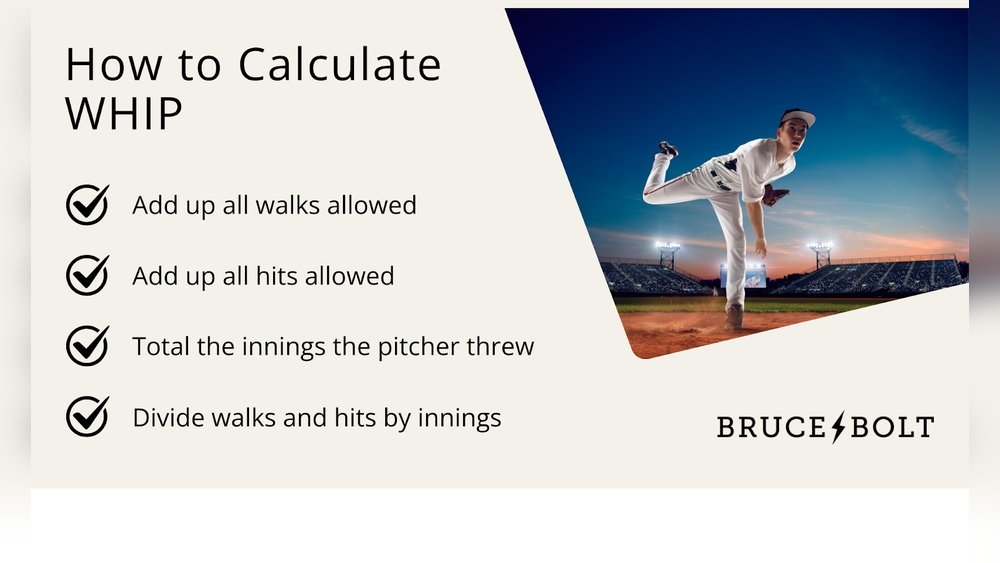
To calculate WHIP, add the total walks and hits allowed by the pitcher. Then divide this number by the innings pitched. The formula is:
WHIP = (Walks + Hits) ÷ Innings Pitched
For example, if a pitcher gives up 20 walks and 50 hits in 70 innings, the WHIP is (20 + 50) ÷ 70 = 1.00. A WHIP near 1.00 is considered excellent. This means the pitcher allows about one base runner per inning. WHIP gives a simple but clear picture of a pitcher’s control and effectiveness.
Why Whip Matters
WHIP, or Walks plus Hits per Inning Pitched, is a key pitching stat in baseball. It measures how many runners a pitcher allows on base per inning. Understanding why WHIP matters can help fans and players see how well a pitcher controls the game. A lower WHIP means fewer opponents reach base, which limits scoring chances.
Impact On Game Outcomes
WHIP directly affects how a game unfolds. A pitcher with a low WHIP keeps runners off the bases. This reduces the chance of the other team scoring runs. Fewer baserunners mean fewer chances to make big plays. Teams with pitchers who have low WHIP often win more games. It shows control over the game and fewer mistakes.
Relation To Pitching Effectiveness
WHIP reflects a pitcher’s overall effectiveness. It combines hits and walks, two ways batters reach base. A good WHIP shows a pitcher limits both hits and walks. This means the pitcher is precise and confident. High WHIP suggests the pitcher struggles to keep runners off base. Coaches and scouts use WHIP to judge pitching quality quickly. It is a simple but powerful way to measure success on the mound.
Whip Ratings
WHIP ratings are a key measure of a pitcher’s performance in baseball. WHIP stands for Walks plus Hits per Inning Pitched. It shows how many runners a pitcher allows on base every inning. Lower WHIP values mean better control and fewer scoring chances for the opposing team. Understanding WHIP ratings helps fans and analysts evaluate pitchers quickly.
Each pitcher has a WHIP rating that falls on a scale from exceptional to poor. This scale helps compare pitchers across different teams and seasons. The WHIP rating also reflects a pitcher’s ability to limit walks and hits, crucial in controlling the game pace.
Exceptional To Poor Scale
Pitchers with a WHIP between 1.00 and 1.25 are considered exceptional or elite. These pitchers rarely allow runners on base. A WHIP from 1.25 to 1.30 is good or above average. It shows solid pitching with some baserunners allowed. Average pitchers have a WHIP near 1.30. Anything above 1.30 falls into the poor category. These pitchers struggle to keep runners off the bases.
Interpreting Whip Values
WHIP values help predict how well a pitcher controls the game. A low WHIP means fewer walks and hits per inning. This limits the opponent’s chances to score runs. Teams value pitchers with low WHIP ratings for their reliability. WHIP should be considered along with other stats for a full picture. Pitchers with low WHIP often have greater success in games.

Credit: sports.yahoo.com
Whip In Context
WHIP stands for Walks plus Hits per Inning Pitched. It measures how many base runners a pitcher allows per inning. A lower WHIP means fewer runners reach base, showing strong pitching skills. WHIP helps compare pitchers across teams and seasons by giving a clear number to their control and effectiveness.
WHIP alone does not tell the full story but provides important insight. It shows how well a pitcher limits opponents from getting on base. This affects the chance of giving up runs. Evaluating WHIP alongside other stats gives a fuller picture of a pitcher’s performance.
League Averages
The average WHIP in Major League Baseball usually falls between 1.30 and 1.40. Pitchers with a WHIP under 1.20 are considered above average. A WHIP near or above 1.50 often signals struggles in preventing hits and walks. League averages can shift slightly each season based on trends in pitching and hitting.
Teams use league average WHIP as a benchmark. It helps identify pitchers who are better or worse than most in controlling base runners. Comparing a pitcher’s WHIP to league averages can show their relative value.
Historical Leaders
Some pitchers hold all-time records for the lowest career WHIP. For example, Addie Joss has one of the best career WHIPs at around 0.97. Greg Maddux and Pedro Martinez also rank among the leaders with career WHIPs under 1.10.
These pitchers combined skill and control to keep runners off base consistently. Their low WHIPs helped them dominate games and win many matches. Studying historical leaders shows what elite pitching looks like over a career.
Comparing Whip To Other Stats
Comparing WHIP to other pitching statistics helps us understand a pitcher’s performance better. WHIP focuses on how many batters reach base per inning. Other stats highlight different aspects of pitching success. Each stat has strengths and weaknesses. Using them together gives a clearer picture.
Whip Vs Era
WHIP measures walks plus hits allowed per inning. ERA counts earned runs given up by the pitcher. WHIP shows how many runners a pitcher allows on base. ERA shows how many runs score because of the pitcher. A low WHIP means fewer baserunners. A low ERA means fewer runs allowed. WHIP can reveal a pitcher’s control and consistency. ERA can be influenced by team defense and luck. Both stats are important for evaluating pitchers.
Whip And Batting Average Against
Batting Average Against (BAA) shows how often batters get hits off a pitcher. WHIP includes hits and walks allowed. BAA only counts hits, ignoring walks. WHIP gives a fuller view of baserunners allowed. BAA focuses on how hard the pitcher is hit. A low BAA means fewer hits. A low WHIP means fewer hits and walks. Together, they help understand a pitcher’s effectiveness.
Improving Whip
Improving WHIP is a key goal for every pitcher. A lower WHIP means fewer batters reach base. This often leads to fewer runs scored against the team. Pitchers focus on strategies to control walks and hits. These efforts help reduce baserunners and improve overall performance.
Pitching Strategies
Pitchers use different tactics to lower their WHIP. They study batters to find weaknesses. Mixing pitch types and speeds can confuse hitters. Keeping the ball low in the strike zone often results in ground balls. These strategies limit the number of hits allowed.
Controlling Walks And Hits
Reducing walks is crucial for a better WHIP. Pitchers work on their control and accuracy to avoid free passes. Limiting walks forces batters to earn their hits. Good defense also supports pitchers by turning balls in play into outs. Together, these efforts keep baserunners to a minimum.
Common Whip Misconceptions
WHIP, or Walks plus Hits per Inning Pitched, is a popular baseball stat. Many fans trust it to measure pitcher quality. Yet, several common misunderstandings about WHIP exist. These misconceptions can lead to wrong conclusions about a pitcher’s performance. Knowing its limits helps interpret WHIP more wisely.
Limitations Of Whip
WHIP counts only walks and hits allowed. It ignores other factors like errors or hit batters. It also does not show when runners score. A pitcher can have a low WHIP but still give up many runs. WHIP does not measure strikeouts or pitching style either. It offers only a partial view of a pitcher’s effectiveness.
When Whip Can Be Misleading
WHIP can mislead in some situations. Pitchers with high strikeout rates might have higher WHIP but still be very effective. Pitchers facing weak defenses may have better WHIP than those with strong defenses. Also, relief pitchers often have different WHIP patterns than starters. Context matters a lot when using WHIP to judge pitchers.

Credit: thedatajocks.com

Credit: thedatajocks.com
Frequently Asked Questions
What Is A Good Whip In Baseball?
A good WHIP in baseball ranges from 1. 00 to 1. 30. Below 1. 25 is elite, while 1. 25-1. 30 is solid. Lower WHIP means fewer baserunners allowed.
Who Has The Lowest Whip In Mlb History?
Addie Joss holds the lowest career WHIP in MLB history with an exceptional 0. 9678. He excelled at limiting baserunners.
What Is A Meatball In Baseball?
A meatball in baseball is an easy pitch thrown down the middle of the plate. Batters can hit it easily.
What Is Slugging In Baseball?
Slugging in baseball measures a player’s power hitting ability. It calculates total bases divided by at-bats, emphasizing extra-base hits. Higher slugging percentage means more doubles, triples, and home runs. It shows how effectively a hitter produces powerful, impactful hits beyond just singles.
Conclusion
WHIP measures how many runners a pitcher allows per inning. A lower WHIP means fewer runners reach base. This helps pitchers control the game better. Knowing WHIP helps fans understand pitching performance clearly. It’s a simple but important baseball stat.
Keep an eye on WHIP to see how pitchers perform. It reflects skill in preventing hits and walks. WHIP gives a clear picture of a pitcher’s effectiveness. Understanding WHIP makes baseball more enjoyable to watch.