If you’re trying to understand baseball stats better, you’ve probably come across the term “WHIP” and wondered what it really means. WHIP, which stands for Walks plus Hits per Inning Pitched, is a simple yet powerful number that tells you how well a pitcher keeps opposing players off the bases.
Imagine being able to quickly gauge a pitcher’s effectiveness just by looking at one stat—WHIP makes that possible. You’ll learn exactly how WHIP works, why it matters, and how it can change the way you watch the game. Keep reading to discover how this key stat can give you a deeper insight into pitching performance.
Whip Basics
Understanding WHIP is key to grasping pitching performance in baseball. It gives a clear look at how well a pitcher controls the game. Knowing the basics of WHIP helps fans and players alike follow the sport more closely.
WHIP is simple but powerful. It focuses on how many batters reach base because of a pitcher. This stat is used widely to compare pitchers across teams and seasons.
Whip Definition
WHIP stands for Walks plus Hits per Inning Pitched. It shows the average number of baserunners a pitcher allows each inning. Fewer baserunners mean better pitching control and defense. WHIP is a popular statistic in baseball analysis.
Whip Formula
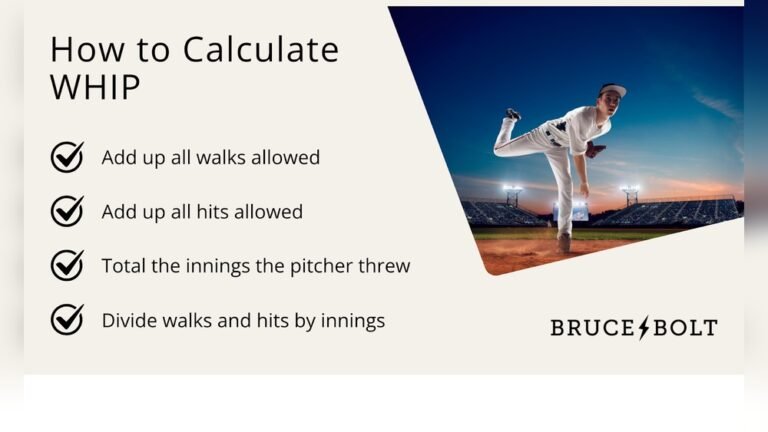
The formula to calculate WHIP is easy. Add the total walks and hits allowed by a pitcher. Then divide that number by the innings pitched. The formula looks like this:
WHIP = (Walks + Hits) ÷ Innings Pitched
This calculation gives a number that represents the pitcher’s effectiveness.
What Whip Measures
WHIP measures a pitcher’s ability to keep runners off base. It reflects control and command on the mound. A lower WHIP means fewer players reach base, which helps the team.
This stat does not count runners who reach base by errors or hit by pitches. It focuses only on walks and hits allowed. WHIP is a good indicator of how tough a pitcher is to beat.

Credit: www.wikihow.com
Calculating Whip
Calculating WHIP is an important step to understand a pitcher’s performance. WHIP stands for Walks plus Hits per Inning Pitched. This stat shows how many baserunners a pitcher allows each inning. It helps measure how well a pitcher controls the game by preventing players from reaching base.
To find WHIP, you add the total walks and hits a pitcher allows. Then, you divide that number by the innings they have pitched. This simple formula gives a clear number. A lower WHIP means fewer baserunners and better pitching.
Walks And Hits Explained
Walks happen when a batter gets four balls and goes to first base. Hits are when a batter safely reaches any base after hitting the ball. Both walks and hits count as baserunners. WHIP uses these two numbers to show how many players get on base against a pitcher. It does not count players who reach base from errors or hit by pitch.
Innings Pitched Role
Innings pitched is the total number of innings a pitcher has thrown. It measures the pitcher’s workload. One inning equals three outs. Partial innings count as fractions, like 0.1 for one out or 0.2 for two outs. Dividing walks plus hits by innings pitched gives the average baserunners allowed per inning. This ratio makes WHIP a fair comparison tool between pitchers.
Examples Of Whip Calculation
Imagine a pitcher allows 10 walks and 25 hits over 50 innings. Adding walks and hits gives 35. Dividing 35 by 50 innings results in a WHIP of 0.70. This means the pitcher allows 0.7 baserunners per inning.
Another example: A pitcher gives up 15 walks and 40 hits in 60 innings. The total is 55. Dividing 55 by 60 gives a WHIP of 0.92. This pitcher allows slightly more baserunners each inning than the first example.
Whip And Pitcher Performance
WHIP is a key stat that shows a pitcher’s ability to stop batters from reaching base. It sums up the walks and hits given up, then divides by innings pitched. This number gives a clear picture of how many runners a pitcher allows per inning. Lower WHIP means fewer baserunners and better performance. Understanding this helps fans and analysts see which pitchers control the game best.
Low Vs High Whip
A low WHIP means the pitcher lets in few walks and hits. This usually means fewer chances for the opposing team to score. Pitchers with low WHIP often have better control and command of their pitches. On the other hand, a high WHIP means more baserunners allowed. This can lead to more runs and less success for the pitcher. Teams prefer pitchers with low WHIP as they are harder to beat.
Whip Compared To Other Stats
WHIP is different from stats like ERA or strikeouts. ERA shows runs allowed, but WHIP focuses on baserunners. A pitcher can have a low ERA but a high WHIP if they allow many baserunners but escape scoring. Strikeouts show how many batters a pitcher retires without contact, but WHIP measures overall control. WHIP adds value by showing how often pitchers let batters reach base, which is crucial for defense.
Whip’s Role In Evaluating Pitchers
WHIP helps evaluate a pitcher’s consistency and control. It shows how well a pitcher limits opponents’ chances to score. Coaches and scouts use WHIP to compare pitchers quickly. It also helps identify pitchers who keep games close by reducing baserunners. WHIP is a simple yet powerful tool to assess pitching performance beyond just wins and losses.
Limitations Of Whip
WHIP is a popular stat to evaluate pitchers but it has clear limits. It shows how many batters reach base by walk or hit per inning. This helps measure a pitcher’s control and ability to avoid base runners.
Still, WHIP does not tell the whole story. It ignores many other factors affecting pitching performance. Understanding these limits helps avoid wrong conclusions about pitchers.
What Whip Doesn’t Include
WHIP counts only walks and hits allowed. It does not include hit batsmen, errors, or other ways runners reach base. These events affect the game but are not part of WHIP.
WHIP also ignores runs scored, strikeouts, and defensive plays. A pitcher might allow many runs but keep a low WHIP. This shows WHIP alone cannot measure a pitcher’s full effectiveness.
Situational Factors Affecting Whip
WHIP does not consider game situations like runners on base or the inning. Some pitchers perform differently under pressure or with certain counts.
Ballpark size and weather also influence hits and walks. Pitchers in hitter-friendly parks may have higher WHIP despite good skill. These external factors shape WHIP but remain unseen in the stat.
Common Misconceptions
Many think a low WHIP means a pitcher is always the best. But WHIP ignores strikeouts, home runs, and situational pitching skill.
A high WHIP does not always mean poor pitching. Context matters. Some pitchers allow more baserunners but prevent runs well.
Using WHIP alongside other stats gives a clearer view of pitching quality. Relying on WHIP alone can mislead fans and analysts.
Using Whip In Baseball Analysis
WHIP is a key stat used in baseball analysis. It helps measure a pitcher’s ability to keep runners off base. This stat combines walks and hits allowed per inning pitched. Analysts, coaches, and fans use WHIP to assess pitching performance and control. Understanding how WHIP works can deepen your appreciation of the game.
Whip In Sabermetrics
Sabermetrics uses WHIP to evaluate pitchers beyond basic stats. It focuses on how many runners a pitcher allows. A lower WHIP means fewer baserunners and usually better pitching. Sabermetricians use WHIP to compare pitchers’ effectiveness and consistency. This helps teams make smarter decisions about pitching strategy.
Comparing Pitchers Across Eras
WHIP allows fair comparison of pitchers from different baseball eras. It normalizes data by focusing on runners allowed per inning. Changes in rules and playing style affect stats like ERA. WHIP reduces these effects and highlights true pitching skill. Fans and analysts use WHIP to rank pitchers from past and present.
Whip For Fantasy Baseball
Fantasy baseball players use WHIP to pick strong pitchers. It predicts how often a pitcher lets batters reach base. Lower WHIP means fewer scoring chances for opponents. This can translate to better fantasy points for your team. Tracking WHIP helps fantasy managers choose reliable pitchers each week.
Improving Whip
Improving WHIP is essential for pitchers aiming to limit baserunners. Lowering WHIP means fewer hits and walks allowed per inning. This leads to fewer scoring chances for opponents. Many factors influence WHIP, including pitching tactics, defense, and physical readiness. Below are key areas to focus on to improve WHIP effectively.
Pitching Strategies
Pitchers must focus on control and pitch selection. Throwing strikes consistently reduces walks. Mixing pitch types keeps hitters off balance. Targeting weak spots in the batter’s stance helps limit hits. Pitchers should study opponents to anticipate their strengths. Smart pitching lowers baserunners and improves WHIP.
Defense Impact
Strong defense supports pitchers by turning balls into outs. Quick fielders reduce the number of hits. Good communication prevents errors on plays. Defensive shifts can position players where hitters often target. A solid defense helps keep the WHIP low by minimizing hits allowed.
Training And Conditioning
Physical fitness helps pitchers maintain control and velocity. Proper conditioning reduces fatigue during games. Strong arms and legs improve pitch accuracy and speed. Mental training helps pitchers stay focused under pressure. Consistent practice builds skills that reduce walks and hits.
Whip Trends And Records
WHIP trends and records reveal much about pitching performance over time. This stat measures how many batters reach base per inning. Watching WHIP trends helps track pitcher efficiency across seasons and eras. Records showcase the best performances and set benchmarks for future players.
Historical Leaders
Some pitchers have set incredible WHIP records in history. They kept runners off base better than almost anyone else. For example, legends like Pedro Martinez and Greg Maddux have some of the lowest career WHIPs. Their control and skill made them dominant on the mound.
Historical leaders often pitched in different eras. Comparing their WHIPs shows how pitching styles and strategies have changed. Still, a low WHIP always signals great pitching ability.
Current Season Insights
Each season brings new WHIP leaders and surprises. Current pitchers with low WHIPs are usually top performers on their teams. Their ability to limit walks and hits directly affects game outcomes.
Tracking WHIP during the season helps identify rising stars. Fans and analysts watch this stat closely to predict award winners and playoff impact.
Whip Milestones
Reaching certain WHIP numbers marks special achievements. A WHIP below 1.00 is rare and shows elite pitching. Few pitchers maintain such low WHIPs over a full season.
Milestones like these highlight pitchers who excel at controlling the game. They become benchmarks for young players aiming to improve.

Credit: thedatajocks.com

Credit: www.usatoday.com
Frequently Asked Questions
What Is A Good Whip Stat?
A good WHIP stat is typically below 1. 30. Lower WHIP values indicate better pitching performance.
Is A 0.95 Whip Good?
A 0. 95 WHIP is excellent, indicating the pitcher allows fewer than one baserunner per inning. This shows strong control and effectiveness.
What Is The Whip Statistic?
WHIP stands for Walks plus Hits per Inning Pitched. It measures how many baserunners a pitcher allows per inning. Lower WHIP values indicate better pitching performance. Calculate it by adding walks and hits, then divide by innings pitched. WHIP helps evaluate a pitcher’s effectiveness at preventing runners.
Is A Higher Or Lower Whip Better?
A lower WHIP is better. It means a pitcher allows fewer baserunners per inning, showing higher effectiveness.
Conclusion
Whip stat shows how many runners a pitcher allows per inning. A lower WHIP means fewer baserunners and stronger pitching. It helps fans understand a pitcher’s control and effectiveness. While it doesn’t count all ways runners reach base, it remains a useful measure.
Knowing WHIP can make watching baseball more enjoyable. Keep an eye on this stat to follow pitchers closely. Simple, clear, and important in baseball analysis.