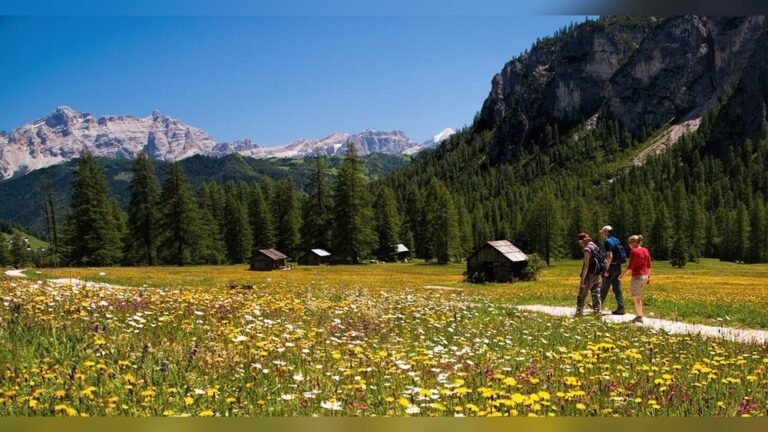

The best time to visit Washington D.C. for hiking and biking is mid-April through early June, with a second good window from late September through early November. Daytime temperatures in both windows sit between the 60s and low 80s °F, humidity stays low, and the region’s trail network — the C&O Canal towpath, Rock Creek Park, and the Mount Vernon Trail — is at its most comfortable.
Best time to visit before you plan

- Best months: mid-April to early June, and late September to early November. Both avoid the summer humidity.
- Avoid July and August: heat indexes in D.C. regularly pass 90°F, and shade is thin on most paved trails.
- Cherry blossom season (late March to early April) is beautiful but packed — expect crowds on the Tidal Basin and Mount Vernon Trail.
- Winter rides work on mild days: December through February often brings 40-50°F afternoons, fine for a layered ride.
- Rain check: spring and early summer carry the most thunderstorms; check the forecast the morning you ride.
- Trail condition check: after heavy rain, the C&O Canal towpath turns to mud in stretches — the C&O Canal National Historical Park page posts current conditions.
Why spring and fall win in D.C.
The reason is humidity, not just temperature. D.C. sits in a humid subtropical climate, and from late June through August the combination of heat and moisture pushes the heat index well above the air temperature. A 90°F day can feel like 100°F on an exposed paved trail, and the area’s most popular routes — the Mount Vernon Trail, the Anacostia Riverwalk — have long stretches with no shade at all.
Spring and fall flip those conditions. In April and May, air temperatures rise through the 60s and 70s °F while humidity stays moderate, and the dogwoods and redbuds are in bloom along Rock Creek. In October, the same temperatures come with dry air and steady visibility, plus fall color along the Potomac. You also get longer daylight than you expect: late April still gives you daylight past 7:30 p.m., which matters if you’re planning an out-and-back ride on the towpath.
One thing you can check for yourself: the National Weather Service forecast for Washington D.C. lists both the temperature and the heat index. If the heat index is forecast above 90°F, shorten your route or start before 9 a.m.
When the simple answer changes

The mid-April-to-June answer holds for most riders, but several situations change it. Here’s where the standard advice breaks down.
| Situation | What changes | What to do instead |
|---|---|---|
| You want cherry blossoms | Peak bloom is late March to early April | Come then, but ride before 8 a.m. |
| You’re riding the C&O towpath long-distance | Summer is buggy and wet | Choose October for dry, firm surface |
| You only have July or August | Midday heat is dangerous | Ride before 9 a.m. or after 6 p.m. |
| You’re a road cyclist chasing miles | Fall brings shorter days | Pick May, with daylight past 8 p.m. |
| You want fall foliage | Peak color hits late October to early November | Time your trip to that week, not September |
| You’re visiting during a holiday weekend | Trails near the Mall get crowded | Shift to Rock Creek or the towpath instead |
How to plan your hiking and biking visit to Washington
A good trip here comes down to matching the season, the trail, and the time of day. Work through these steps in order.
- Pick your window first. If you have a choice, book mid-April to early June or late September to early November. If your dates are fixed, plan around them — the next steps change depending on which month you land in.
- Choose your trail by surface. Paved routes (Mount Vernon Trail, Anacostia Riverwalk) suit any bike and stay rideable after rain. The C&O towpath is crushed gravel and dirt; it needs wider tires and dries slowly after storms.
- Set a start time. In April, May, September, and October, start between 8 and 10 a.m. In July or August, start before 8 a.m. — the heat index climbs fast after midday.
- Check the forecast the night before. Look at both temperature and heat index, plus storm chances. Spring thunderstorms in this region often build in the afternoon; a morning ride usually beats them.
- Plan your distance with daylight in mind. In October and November, sunset falls before 6 p.m. by late in the season, so an out-and-back on the towpath needs a turnaround time set in advance.
- Carry more water than feels necessary. For rides over an hour, take at least 1 liter per person per hour in warm weather — even in the milder months, the paved trails offer few refill points.
- Have a bail-out option. The Mount Vernon Trail and Rock Creek Park both sit near Metro stations, so you can cut a ride short and ride transit back. Check which stations sit near your route before you start.
Mistakes that spoil the trip

These are the errors that actually cost people a day of riding or hiking in D.C. — each one is easy to avoid once you know the consequence.
- Coming for the blossoms and riding the Tidal Basin at midday. Peak bloom draws enormous crowds; a ride that should take 30 minutes crawls through pedestrian traffic. Go at sunrise or skip the Basin on a bike entirely.
- Underestimating August. People see a 88°F forecast and think it’s manageable. With D.C. humidity, the heat index can pass 100°F, and dehydration on an exposed trail is a real risk, not a discomfort.
- Taking a road bike on the C&O towpath after rain. The surface softens into mud and ruts. Thin tires sink, the ride becomes miserable, and you may end up walking the bike for miles.
- Starting an October ride too late. Daylight runs out early, and long stretches of the towpath and Rock Creek have no lighting. If you turn around too late, you finish in the dark without a good shoulder.
- Ignoring trail closure notices. The towpath floods along the Potomac after heavy rain, and sections close. Riding a closed section risks a fine and, worse, a washed-out surface.
Related guides
Frequently asked questions
Can you bike in Washington D.C. in the winter?
Yes, on most days. December through February often brings afternoon temperatures in the 40s °F, and the paved trails stay clear except after snow or ice storms. Dress in removable layers, watch for icy patches on shaded sections of Rock Creek, and skip the towpath if it’s recently frozen and thawed.
How long is the Mount Vernon Trail?
About 18 miles one way, from Theodore Roosevelt Island to George Washington’s Mount Vernon estate. At an easy pace, plan 2.5 to 3 hours each way, plus stops. It’s paved and mostly flat, so it suits almost any bike, and there’s no shade over long stretches — another reason to ride it in spring or fall.
What happens if it rains during my trip?
Spring storms usually pass within an hour or two, so wait it out and ride the same day. But heavy rain leaves the C&O towpath muddy for a day or more afterward. If your trip is built around the towpath, check conditions on the park’s official page before committing, and keep a paved-trail backup route in mind.
Is it safe to bike in D.C. in the summer heat?
Only with adjustments. When the heat index passes 90°F, ride before 9 a.m., carry at least 1 liter of water per hour, and cut your planned distance by a third. Watch for dizziness or a headache — those are early heat-illness signs, and the right response is to stop, find shade, and drink.
Does it matter which week in October I visit?
Yes, more than in most cities. Peak fall color in the D.C. area typically arrives late October into early November, and it shifts by a week or more year to year. If foliage is your goal, check a regional foliage forecast the week before you book, rather than fixing dates months ahead.
Why is D.C. so humid in summer?
D.C. sits where hot, moisture-heavy air from the Gulf and Atlantic flows northward, and the Potomac region holds that moisture. The result is a heat index that runs well above the air temperature from late June through August. It’s the single biggest reason the spring and fall windows beat summer for trail time.
What should I bring for a day of hiking and biking?
For a spring or fall day: about 2 liters of water per person, a light rain shell, sunscreen, and a snack for rides over two hours. Add a spare tube and a small pump if you’re on the towpath — its gravel surface causes more flats than pavement. In October, add a front light in case you run late.
Conclusion
The windows are generous, so don’t over-plan around one perfect week. If you land in D.C. anywhere between mid-April and early June, or late September and early November, start your ride in the morning, pick a surface that matches your bike, and you’ll get the region at its best.