Are you curious about the exact height of a professional volleyball net and why it matters? Whether you’re a player, coach, or fan, knowing the official net height can change how you approach the game.
The right net height isn’t just a number—it sets the stage for fair play, challenges your skills, and shapes every spike, block, and serve. You’ll discover the precise measurements used in professional volleyball, how they differ between men’s and women’s games, and why these standards exist.
Ready to elevate your understanding and improve your game? Keep reading to unlock everything you need to know about professional volleyball net height.
Net Height Standards
The height of a volleyball net is a key factor in the sport. It affects how players serve, block, and spike. Different groups have different net height rules. These rules ensure fair play and challenge.
Net height standards vary by gender and age. This helps keep the game safe and fun for all players.
Men’s Regulation Height
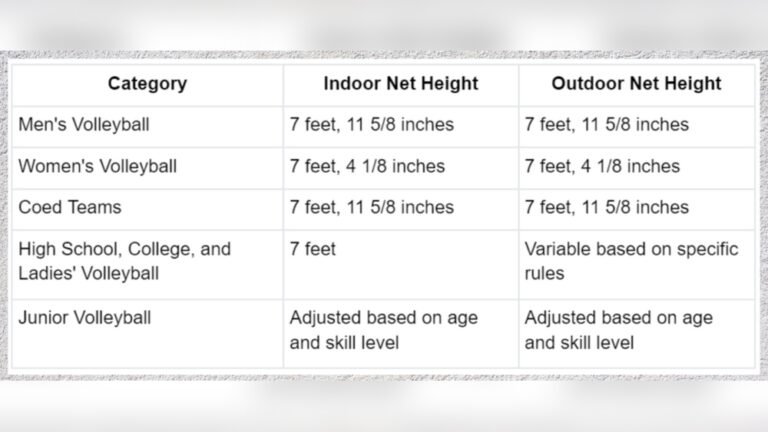
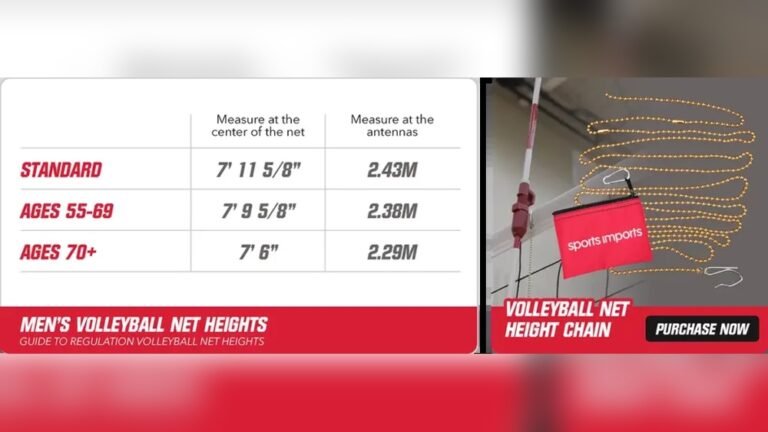
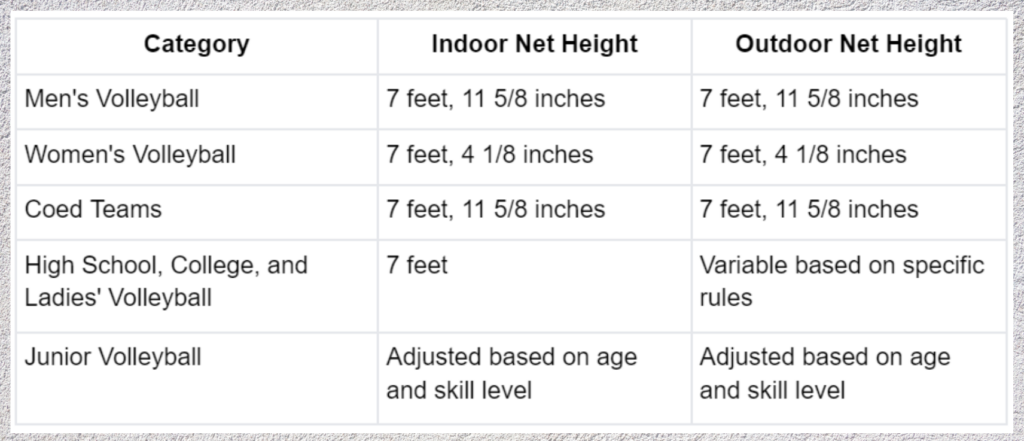
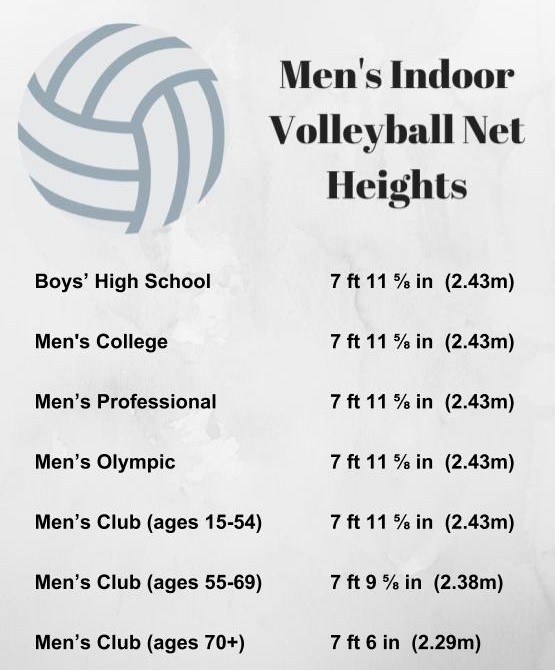
For men’s volleyball, the net height is set at 2.43 meters (7 feet 11 5/8 inches). This is the standard for both indoor and beach volleyball. The height suits the average reach and jump of male players. It creates a balanced and competitive game.
Women’s Regulation Height
Women play with a net height of 2.24 meters (7 feet 4 1/8 inches). This is lower than the men’s net. It fits the average height and jumping ability of female players. The lower net helps keep the game fast and exciting.
Youth And Senior Adjustments
Younger players use lower nets to match their skill and size. For example, boys and girls under 14 play with nets around 2.13 meters (7 feet). This helps them learn proper technique and enjoy the game.
Senior players may also use adjusted heights. This can reduce injury risk and make playing easier. The goal is to keep volleyball accessible at all ages.
Indoor Vs Beach Nets
Volleyball nets for indoor and beach play share the same official height but differ in other ways. The net height follows strict rules to keep the sport fair and consistent. While the height remains constant, the environment and materials affect the net’s performance and durability. Understanding these differences helps players and organizers choose the right net for each setting.
Height Consistency
Both indoor and beach volleyball nets stand at 2.43 meters for men and 2.24 meters for women. This uniform height ensures equal challenge across both versions. The set heights reflect the average professional players’ jumping ability. Coaches and referees rely on this standard for fair competition worldwide.
Material Differences
Indoor nets usually use thicker, more durable nylon or polyester. These materials withstand strong hits and indoor lighting conditions. Beach nets often feature weatherproof materials like UV-resistant polyethylene. These resist sun damage, salt, and moisture exposure near the water. The mesh size and cord thickness also vary to suit each environment.
Environmental Considerations
Indoor nets avoid moisture and wind stress, so they last longer with less wear. Beach nets face sun, wind, and rain constantly. This exposure can cause fraying and fading over time. Anchoring systems differ too; beach nets need strong poles and tension to handle wind. Indoor nets use fixed posts and tension cables for stable play.
Impact On Gameplay
The height of a professional volleyball net shapes how players perform and compete. It sets clear limits on jumping and hitting, affecting every move on the court. This standard height challenges athletes to improve their skills and adapt their tactics. The net height impacts key parts of the game like jumping, blocking, and strategy. Understanding this impact helps players and coaches prepare better for matches.
Jumping And Blocking Challenges
The official net height demands strong jumping skills. Players must time their jumps perfectly to reach above the net. Blocking becomes harder because the net is high enough to stop many attacks. This height tests a player’s ability to jump fast and high. It forces athletes to train their legs and timing for better performance. Success in jumping and blocking often decides the match outcome.
Offensive And Defensive Strategies
Teams adjust their strategies to fit the net height. Offensively, players aim to hit the ball over or around blockers. They use quick spikes and smart angles to score points. Defensively, teams focus on positioning and timing to block or dig attacks. The net height pushes coaches to develop plays that use the court’s full space. It keeps both offense and defense active and balanced during the game.
Skill Development For Players
The set net height encourages players to improve specific skills. Jump training becomes a key part of practice routines. Players work on hand-eye coordination to hit the ball precisely. Blocking drills help them learn when to jump and where to place their hands. The net height also teaches patience and focus, as players must wait for the right moment. These skills build confidence and increase chances to win.
Equipment And Installation
Proper equipment and installation are key to a professional volleyball net setup. The net must meet official height standards and be securely installed. Using the right net and following exact procedures helps ensure fair play and player safety. This section covers how to choose, set up, and maintain a volleyball net.
Choosing The Right Net
Select a net designed for professional use. It should be durable and meet official size and height requirements. Indoor and beach volleyball nets have the same height but may differ in material. Look for nets with strong mesh and reinforced edges. Quality nets resist weather and wear over time.
Setting Up To Regulation Standards
Install the net at the official height: 2.43 meters (7 feet 11 5/8 inches) for men and 2.24 meters (7 feet 4 1/8 inches) for women. Use sturdy poles to keep the net tight and stable. Check the net tension regularly to avoid sagging. Position the net so it covers the court centerline accurately. Follow official rules to ensure a fair game.
Maintenance Tips
Inspect the net regularly for tears or loose threads. Clean the net with mild soap and water to remove dirt and grime. Store the net in a dry place after use to prevent mold and mildew. Replace worn parts promptly to maintain net performance. Tighten the net before each game to keep it firm and even.
Regulatory Bodies And Rules
Volleyball net height is controlled by specific rules set by official bodies. These organizations ensure fair play and consistency worldwide. Understanding their guidelines helps players and organizers set the correct net height for matches. The standards also differ depending on the level of play and location.
International Volleyball Federation (fivb)
The FIVB is the main authority for volleyball rules globally. They set the official net height for both indoor and beach volleyball. For men’s volleyball, the net height is 2.43 meters (7 feet 11 5/8 inches). For women, it is 2.24 meters (7 feet 4 1/8 inches). These measurements apply in all FIVB-sanctioned tournaments.
The FIVB updates rules regularly to improve fairness and safety. Their standards are accepted worldwide, making them the benchmark for professional volleyball.
Olympic Standards
The Olympics follow the FIVB regulations strictly. Net height and all equipment must meet these standards. This ensures all athletes compete under the same conditions. The official net height during the Olympics is the same as FIVB rules.
Strict inspections happen before matches to confirm compliance. This keeps the competition fair and consistent for all countries.
Local And Recreational Variations
Local leagues and recreational groups may adjust net height for different age groups or skill levels. Youth volleyball often uses lower nets to match players’ abilities. Recreational play allows more flexibility to encourage participation.
These variations help make volleyball accessible and fun for everyone. Still, competitive leagues tend to follow official heights to prepare players for higher levels.
Credit: sterlingvolleyball.com
Adjusting Net Height For Training
Adjusting net height plays a key role in volleyball training. Coaches change the net height to fit player needs and skill levels. This helps players build proper technique and confidence. Different net heights target specific training goals. Here are common adjustments used in training sessions.
Youth Training Nets
Youth players train with lower nets to match their height and strength. Nets set below regulation height help young athletes learn basic skills. Lower nets reduce frustration and encourage more successful hits and blocks. This approach improves coordination and jumping ability over time. Gradually raising the net prepares youth players for official game standards.
Senior And Adaptive Play
Senior players or those with adaptive needs may use customized net heights. Lower nets prevent strain and reduce injury risk. Adjustments allow players of all abilities to enjoy volleyball safely. This promotes inclusion and keeps players active longer. Coaches select net heights based on individual physical conditions and comfort.
Skill-specific Height Modifications
Training drills sometimes use varied net heights to develop specific skills. Lower nets focus on quick attacks and fast arm swings. Higher nets train players to jump higher and improve blocking power. Changing the net height challenges players to adapt their technique. This variety enhances overall athletic performance and game readiness.
Common Myths And Misconceptions
Many people hold wrong ideas about professional volleyball net heights. These myths can cause confusion about the sport’s rules and challenges. Understanding the facts helps players and fans appreciate volleyball better. Let’s clear up some common myths and misconceptions.
Net Height Differences Between Genders
Some think men’s and women’s nets are the same height. They are not. The men’s net stands at 2.43 meters (7 feet 11 5/8 inches). The women’s net is lower, at 2.24 meters (7 feet 4 1/8 inches). This difference matches typical physical strength and jump ability.
The height difference is not about fairness but about skill balance. It allows both genders to compete at high levels. The net height adapts the game to players’ average capabilities.
Effect Of Net Height On Game Difficulty
Many assume a higher net always means a harder game. That is not entirely true. While a taller net raises the challenge, skill and technique matter more. Players improve by practicing, not just by changing net height.
The net height sets a standard challenge level. Players focus on timing, positioning, and teamwork to win. The difficulty comes from the whole game, not just the net.
Misunderstandings About Youth Net Heights
People often think youth volleyball uses the same net height as adults. Youth nets are lower. This helps younger players develop skills and enjoy the game. It makes the sport safer and more fun for kids.
Net heights for youth vary by age and gender. Setting the correct height helps young players build confidence. It avoids frustration and promotes learning.

Credit: volleyball-tips.com
Future Trends In Net Design
The future of professional volleyball net design shows promising advances. New trends focus on improving player experience and game quality. Innovations in technology, materials, and rules shape these changes. Each aspect aims to enhance durability, performance, and fairness in the sport.
Technological Innovations
Smart nets equipped with sensors can track ball hits and net touches. These sensors offer real-time data to referees and players. LED lights may highlight net faults instantly, improving decision accuracy. Wireless connectivity could enable live game analysis and coaching tips. Technology will make matches fairer and more engaging for fans.
Materials For Durability And Performance
New net materials promise stronger resistance to weather and wear. Lightweight synthetic fibers will replace traditional nylon for better flexibility. UV-resistant coatings will prevent color fading in outdoor nets. Enhanced materials reduce maintenance needs and extend net lifespan. Improved net tension systems will keep the net taut and stable during play.
Potential Changes In Regulations
Regulatory bodies may adjust net height for different player groups. Changes could include specific heights for youth and senior categories. Rule updates might introduce net designs that reduce injury risks. Officials may require nets with built-in technology for official matches. These changes aim to keep volleyball inclusive and safe for all players.
Credit: volleyball-tips.com
Frequently Asked Questions
How Tall Is A Men’s Professional Volleyball Net?
A men’s professional volleyball net stands 2. 43 meters (7 feet 11 5/8 inches) tall for both indoor and beach volleyball. This height challenges players’ jumping and skills according to official FIVB standards.
Is Volleyball Net Height Different For Pros?
Yes, professional volleyball net heights differ by gender. Men’s nets stand at 2. 43 meters, women’s at 2. 24 meters. These official heights apply to both indoor and beach volleyball.
How High Is A D1 Volleyball Net?
A Division 1 volleyball net stands 7 feet 11 5/8 inches (2. 43 meters) high for men. This height applies to both indoor and beach volleyball. It ensures fair competition by matching professional male players’ average jumping ability.
Is Size 5 The Official Volleyball Size?
Yes, size 5 is the official volleyball size for adult indoor and beach volleyball. It meets all FIVB standards.
Conclusion
The professional volleyball net height sets a clear standard for fair play. Men’s nets stand at 2. 43 meters (7 feet 11 5/8 inches). Women’s nets are slightly lower, at 2. 24 meters (7 feet 4 1/8 inches). This difference matches average physical abilities and keeps games balanced.
Both indoor and beach volleyball use these official heights. Understanding these measurements helps players prepare better. It also ensures the game stays competitive and fun. Remember, following the right net height is key to enjoying volleyball properly.