When you hear the term “whip” in baseball, do you wonder what it really means and why it matters? If you want to better understand pitching stats and what makes a pitcher stand out, knowing what WHIP means is a great place to start.
WHIP, short for Walks plus Hits per Inning Pitched, is a key number that shows how well a pitcher controls the game by limiting baserunners. By learning about WHIP, you’ll gain insights that can change the way you watch baseball and appreciate a pitcher’s skill.
Keep reading to discover exactly what WHIP means, how it’s calculated, and why it can be the difference between a good pitcher and a great one.
Meaning Of Whip In Baseball
WHIP is a key baseball stat used to judge pitchers. It shows how many runners a pitcher lets reach base per inning. This helps fans and coaches see how well a pitcher controls the game. A low WHIP means fewer runners get on base, which is good for the team. This stat is simple but very telling about a pitcher’s skill and effectiveness.
Pitchers with low WHIP numbers often prevent big scoring chances. WHIP focuses on walks and hits, two main ways runners get on base. It does not count errors or hit-by-pitches. Understanding WHIP helps you follow the game better and appreciate pitching talent.
Definition And Purpose
WHIP stands for Walks plus Hits per Inning Pitched. It measures how many batters reach base due to walks or hits each inning. The purpose is to evaluate a pitcher’s ability to keep runners off the bases. WHIP gives a quick snapshot of a pitcher’s control and dominance. Teams use WHIP to compare pitchers and plan their game strategies.
Key Components Of Whip
WHIP counts two key events: walks and hits. Walks occur when a pitcher throws four balls outside the strike zone. Hits happen when a batter safely reaches base with a hit. WHIP adds these two numbers then divides by innings pitched. It ignores other ways runners can reach base. This focus makes WHIP a clear indicator of how many runners a pitcher allows per inning.
Calculating Whip
WHIP is an important stat in baseball. It shows how many baserunners a pitcher allows each inning. Understanding how to calculate WHIP helps you see a pitcher’s performance clearly.
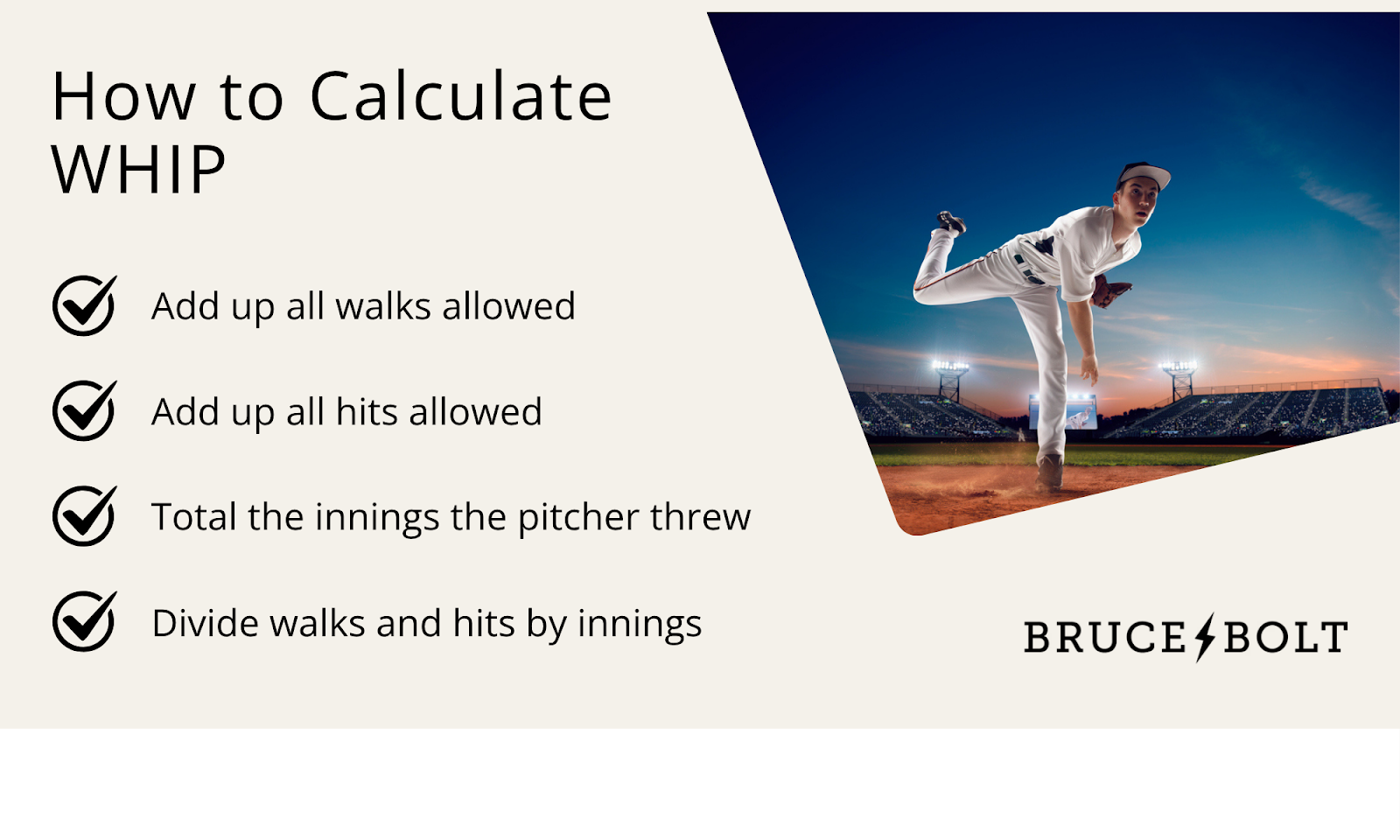
Calculating WHIP is straightforward. It involves adding walks and hits, then dividing by innings pitched. This gives an average number of baserunners allowed per inning.
Step-by-step Formula
Start by counting all the walks a pitcher gives up. Then, add all the hits the pitcher allows. Next, find out how many innings the pitcher has thrown. Finally, divide the total walks and hits by innings pitched. This result is the pitcher’s WHIP.
For example, if a pitcher allows 10 walks and 20 hits over 30 innings, WHIP is (10 + 20) ÷ 30 = 1.0. A lower number means fewer baserunners.
What Counts And What Doesn’t
Only walks and hits are included in the WHIP calculation. Hit batters, errors, or fielder’s choices do not count. Also, runs scored do not affect WHIP directly.
Innings pitched is counted in full and partial innings. For example, 4 and 2/3 innings is 4.67 innings. Accurate innings count is essential for correct WHIP.
Whip As A Pitching Metric
WHIP is a key pitching metric in baseball. It stands for Walks plus Hits per Inning Pitched. This stat shows how many base runners a pitcher allows on average each inning.
Pitchers with a low WHIP keep fewer runners on base. This usually means they perform better and give their team a stronger chance to win. WHIP helps fans and coaches understand a pitcher’s effectiveness beyond just strikeouts or wins.
Indicator Of Pitcher Effectiveness
WHIP directly measures how well a pitcher controls the game. Fewer walks and hits mean fewer chances for the opponent to score. A low WHIP reflects strong pitching skills and consistency. Teams often use WHIP to compare pitchers and make decisions.
Relation To Control And Command
Control means avoiding walks. Command means placing pitches where batters can’t hit well. WHIP combines both by tracking walks and hits allowed. A pitcher with good control and command usually has a low WHIP. This shows their ability to limit base runners and manage the game.
Credit: brucebolt.us
Interpreting Whip Values
Interpreting WHIP values helps understand a pitcher’s control and effectiveness. WHIP stands for Walks plus Hits per Inning Pitched. It shows how many runners a pitcher allows on base per inning. A lower WHIP means fewer baserunners, which is better for the pitcher’s team.
Pitchers with high WHIP let more players reach base. This usually leads to more scoring chances for the opposing team. WHIP gives a clear picture of how well a pitcher limits baserunners.
Low Vs High Whip
A low WHIP, such as below 1.20, signals strong pitching. These pitchers rarely allow walks or hits. Their innings often end quickly and cleanly. A high WHIP, above 1.50, shows a pitcher struggles to keep runners off base.
High WHIP pitchers face more pressure and often pitch in tough situations. Teams prefer pitchers with low WHIP for better game control. It is a simple way to compare pitchers’ effectiveness across games and seasons.
Impact On Game Performance
WHIP directly affects a team’s defense and scoring chances. Fewer baserunners mean fewer chances for opponents to score runs. Pitchers with low WHIP help their team stay in control longer.
A high WHIP increases the risk of runs scoring. It forces pitchers to work harder and often leads to earlier fatigue. Coaches use WHIP to decide pitching strategies and player matchups.
Whip Compared To Other Stats
WHIP is an important stat in baseball, but it is just one way to measure a pitcher’s performance. Comparing WHIP to other stats helps understand its strengths and limits. WHIP focuses on how many batters reach base by walk or hit. Other stats like ERA and FIP look at runs and strikeouts. Each stat tells a different story about the pitcher’s skill and effectiveness.
Whip Vs Era
ERA stands for Earned Run Average. It shows how many runs a pitcher allows per nine innings. WHIP counts walks and hits allowed per inning. ERA focuses on runs, while WHIP focuses on baserunners. A low WHIP means fewer runners reach base. A low ERA means fewer runs score. Both stats measure pitching but from different angles. WHIP can be better to see how well a pitcher controls the game. ERA depends on defense and luck more than WHIP.
Whip Vs Fip And Other Metrics
FIP means Fielding Independent Pitching. It estimates a pitcher’s skill without fielders’ help. FIP uses strikeouts, walks, hit by pitches, and home runs. WHIP only counts walks and hits allowed. FIP shows how well a pitcher controls the main events. WHIP shows how many batters reach base. Other metrics like K/9 (strikeouts per nine innings) and BB/9 (walks per nine innings) add more details. WHIP is simple and clear but not complete alone. Combining WHIP with FIP and others gives a fuller picture of pitching quality.
Famous Pitchers And Their Whip
WHIP is a key measure of a pitcher’s control and skill. It shows how many baserunners a pitcher allows per inning. Famous pitchers often have very low WHIP numbers. These pitchers keep runners off bases and limit scoring chances.
Studying the WHIP of top pitchers helps fans appreciate pitching excellence. It highlights who consistently dominates hitters. Below are some notable trends and record holders in WHIP among Major League Baseball (MLB) stars.
Record Holders With Lowest Whip
Some pitchers have set records with the lowest career WHIP. Addie Joss, a Hall of Famer, holds one of the lowest career WHIPs at 0.97. Greg Maddux, known for his precision, finished his career with a 1.14 WHIP. Mariano Rivera, the best closer ever, recorded a 1.00 WHIP. These numbers show how few baserunners these pitchers allowed.
Low WHIP means fewer walks and hits allowed per inning. It shows great pitching control and effectiveness. These record holders set high standards for future pitchers.
Whip Trends Among Top Mlb Pitchers
Modern pitchers often focus on lowering their WHIP to improve performance. Many top pitchers today maintain WHIPs around or below 1.20. This shows strong control and fewer mistakes. Pitchers like Max Scherzer and Jacob deGrom regularly post low WHIPs, reflecting their dominance.
WHIP trends reveal that pitchers who limit baserunners win more games. Teams value pitchers with low WHIP for their ability to control the game. Watching WHIP trends helps understand the shifting dynamics of pitching success in MLB.
Improving Your Whip
WHIP is a key measure of pitching success in baseball. It shows how many batters reach base by walk or hit per inning. Lower WHIP means fewer runners and better control on the mound.
Improving WHIP requires focus on limiting walks and hits. Strong pitching control helps keep runners off base. Practicing specific techniques and training methods can reduce baserunners effectively.
Techniques To Limit Walks And Hits
Control the strike zone to reduce walks. Pitchers should aim for consistent release points. Mixing pitch speeds keeps hitters off balance.
Study batters to anticipate their swing patterns. Use pitches that exploit their weaknesses. Focus on location rather than speed alone.
Stay calm under pressure. Avoid rushing pitches. Accurate throwing increases chances to get outs and lowers WHIP.
Training For Better Pitching Control
Regular drills improve muscle memory and accuracy. Practice throwing strikes to different zones repeatedly. Incorporate balance and posture exercises.
Use video analysis to spot flaws in mechanics. Adjust grip and arm angle for better control. Strength training supports consistent delivery.
Simulate game situations to handle stress well. Controlled breathing helps maintain focus. Good control means fewer walks and hits, lowering WHIP.

Credit: www.youtube.com
Using Whip For Player Evaluation
WHIP is a key metric in baseball that helps evaluate pitchers. It shows how many baserunners a pitcher allows per inning. Lower WHIP means fewer runners and better control on the mound. Teams and analysts use WHIP to compare pitchers quickly and effectively.
This stat gives insight beyond just wins and losses. It highlights how well a pitcher limits opponents’ chances to score. WHIP is simple but powerful for judging a player’s performance and potential.
Scouting And Recruitment
Scouts use WHIP to assess pitchers’ abilities before drafting or signing. A low WHIP shows strong control and fewer mistakes. It helps identify pitchers who consistently prevent hits and walks. Teams prefer pitchers with low WHIP for building strong rotations.
Recruiters analyze WHIP alongside other stats to predict future success. It reduces risk when investing in young or unknown players. WHIP offers a clear view of a pitcher’s skill in keeping runners off base.
Fantasy Baseball Applications
Fantasy players rely on WHIP to pick pitchers who perform well. A lower WHIP usually means fewer runs allowed and more wins. It helps choose pitchers who keep games close and earn more points.
Monitoring WHIP throughout the season helps adjust fantasy rosters wisely. It signals when a pitcher is struggling or improving. Using WHIP can give fantasy teams an edge in competition.
Common Misconceptions About Whip
Many baseball fans think WHIP tells the whole story about a pitcher’s skill. WHIP stands for Walks plus Hits per Inning Pitched. It shows how many baserunners a pitcher allows on average each inning. This stat is useful but not complete. Some common misconceptions confuse WHIP with other measures of pitching performance.
Understanding what WHIP does not measure helps fans see its limits. It does not capture every detail about pitching. This section explains what WHIP misses and its limitations.
What Whip Does Not Measure
WHIP does not show the quality of the hits allowed. A single and a home run count the same in WHIP. It also does not include errors or hit-by-pitches. WHIP ignores when baserunners score or how runs are allowed. It only counts walks and hits. It does not measure strikeouts or ground balls. Pitchers with the same WHIP can have very different results in real games.
Limitations Of Whip
WHIP treats all walks and hits equally. It does not reflect the timing of baserunners. A pitcher might allow many hits but no runs. Another pitcher might allow fewer hits but more runs. WHIP does not consider the defense behind the pitcher. A strong defense can reduce runs, but WHIP stays the same. It also does not measure a pitcher’s ability to prevent extra-base hits. WHIP is a simple stat that needs support from other numbers for a full picture.

Credit: www.suzitee.com
Whip And Pitching Dominance
WHIP, or Walks plus Hits per Inning Pitched, is a key measure of pitching dominance. It shows how many baserunners a pitcher allows each inning. A low WHIP means fewer batters reach base, making it harder for opponents to score. Pitchers with strong WHIP numbers often control the game’s pace and pressure.
Pitching dominance is not just about strikeouts. It’s about limiting opportunities. WHIP gives insight into a pitcher’s ability to keep runners off base. This leads to fewer runs and more wins. A dominant pitcher maintains a low WHIP consistently across games.
How Whip Reflects Pitching Mastery
WHIP captures a pitcher’s control and effectiveness. A lower WHIP shows fewer walks and hits allowed. This means the pitcher keeps the game under control. It reflects skill in preventing batters from reaching base. Pitchers with low WHIP often have strong command and good pitch selection.
A high WHIP often signals trouble. More baserunners create more scoring chances for the opposition. WHIP helps coaches and fans see how well a pitcher limits damage. It adds depth beyond just counting strikeouts or earned runs.
Strategies To Achieve Pitching Dominance
Controlling the strike zone reduces walks. Pitchers focus on consistent release points and pitch location. This helps avoid free passes and keeps hitters guessing. Mixing pitches keeps batters off balance and less likely to get hits.
Physical fitness and mental toughness matter. Staying strong late in the game lowers chances of mistakes. Studying hitters’ tendencies allows pitchers to plan better. Good defense behind the pitcher supports low WHIP by turning balls in play into outs.
Frequently Asked Questions
What Is A Good Whip In Baseball?
A good WHIP in baseball is typically below 1. 20. It shows a pitcher allows few baserunners per inning. Lower WHIP means better control and effectiveness. Top pitchers often maintain WHIPs under 1. 00, indicating strong performance and fewer hits or walks allowed.
Who Has The Lowest Whip In The Mlb?
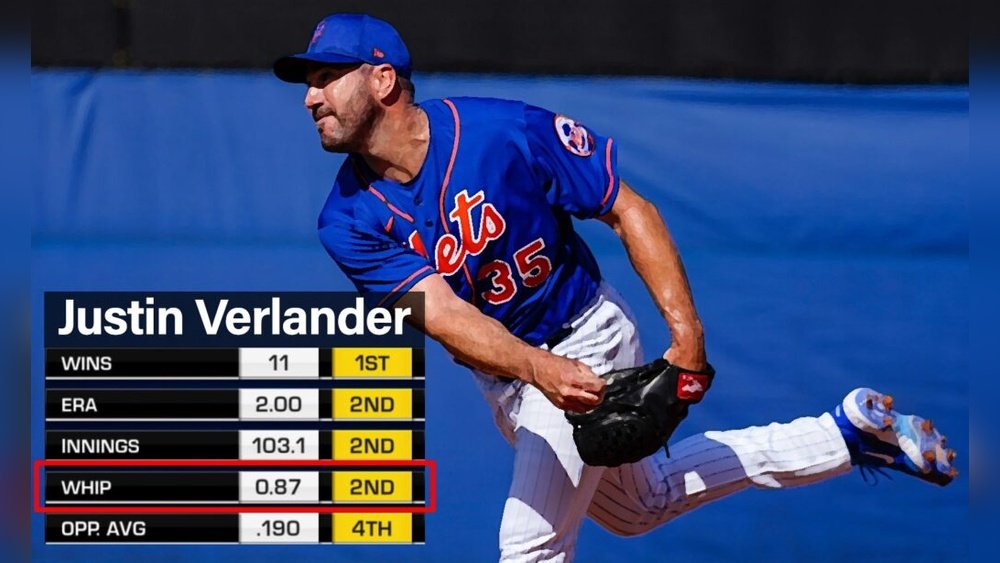
As of 2024, the MLB pitcher with the lowest WHIP is Justin Verlander, boasting an impressive WHIP below 0. 90.
Is A Higher Or Lower Whip Better?
A lower WHIP is better because it means a pitcher allows fewer baserunners per inning. This indicates stronger performance and control.
Is A 0.95 Whip Good?
A 0. 95 WHIP is excellent, indicating the pitcher allows fewer than one baserunner per inning. This shows strong control and effectiveness.
Conclusion
Understanding WHIP in baseball helps you appreciate pitching performance better. It shows how many runners a pitcher allows per inning. A lower WHIP means fewer baserunners and stronger pitching. This statistic helps fans and coaches evaluate pitchers easily. Remember, WHIP focuses only on walks and hits, not errors or hit batters.
Knowing WHIP adds depth to watching and discussing baseball games. Keep an eye on this number to follow your favorite pitchers closely. Simple yet powerful, WHIP remains a key baseball stat for everyone.