
Are you setting up a volleyball game and wondering about the right net height for men’s play? Getting the men’s height volleyball net just right can make all the difference in how competitive and enjoyable your matches are.
Whether you’re organizing a casual game in Austin, Texas, or gearing up for a serious tournament, knowing the exact net height helps you play by the rules and improves your skills. You’ll discover everything you need to know about men’s volleyball net height—why it matters, the official measurements, and tips to set it up perfectly every time.
Keep reading to make sure your game is on point and ready to spike!
Men’s Net Height Standards
The height of a volleyball net is key for fair and exciting play. Men’s net height standards are set by official rules. These standards ensure games stay consistent worldwide. Understanding these standards helps players and coaches prepare properly for matches.
Official Measurements
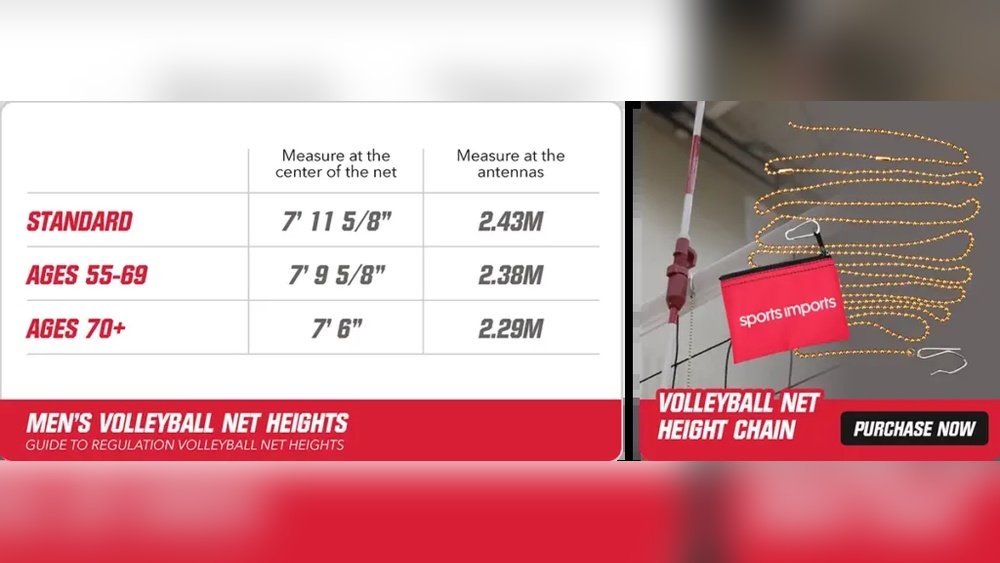
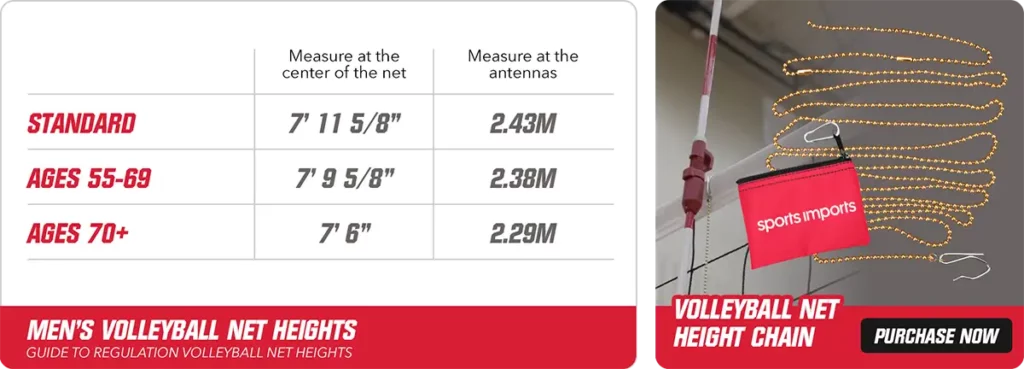
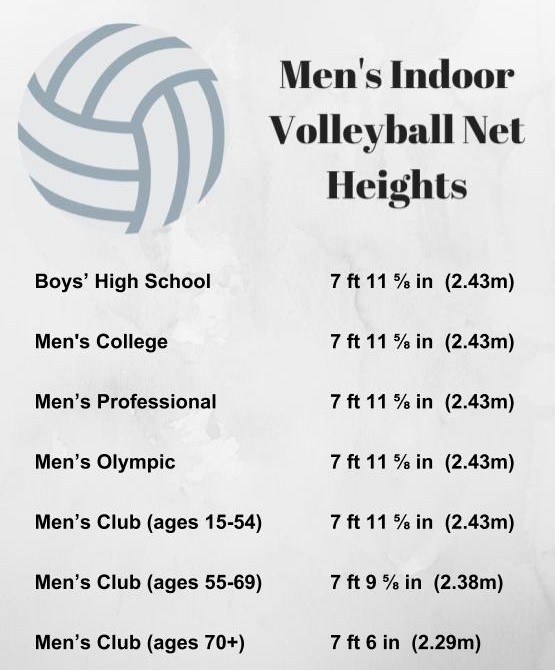
The official height for a men’s volleyball net is 2.43 meters. This equals about 7 feet 11 5/8 inches. This height is used in all major competitions. The net is measured from the center of the court. It must be tight and level for fair play.
Differences From Women’s Nets
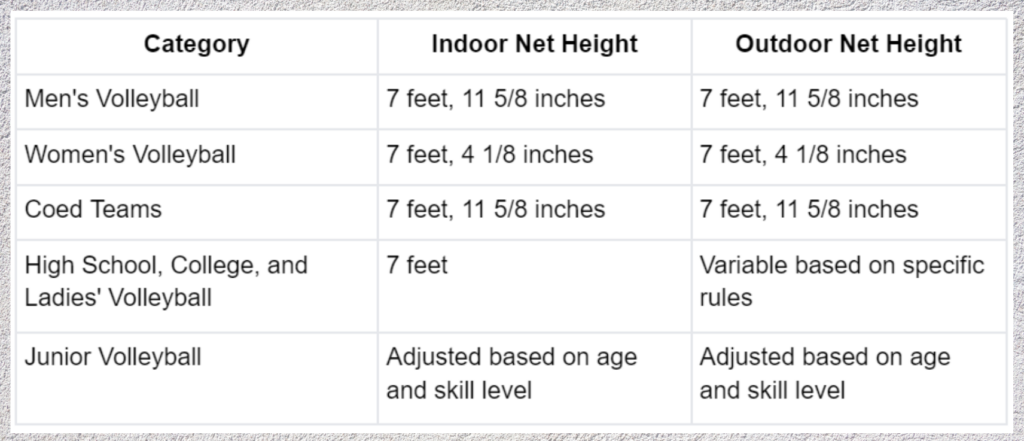
Men’s nets are higher than women’s nets. The women’s net height is 2.24 meters or 7 feet 4 1/8 inches. This difference accounts for average height and jumping skills. The higher net challenges men’s teams physically. It changes how the game is played and viewed.
Youth And Senior Variations
Youth volleyball uses lower net heights. This helps younger players develop skills easily. For boys under 14, the net is often set at 2.24 meters. Senior or recreational leagues may adjust net height too. These changes make volleyball safe and fun for all ages.
Credit: sterlingvolleyball.com
Choosing The Right Net
Choosing the right men’s height volleyball net matters for a good game. The net must meet official height standards. It should fit the playing area perfectly. The net quality affects gameplay and durability. Several factors help pick the best net for your needs.
Consider the net’s material, strength, and ease of transport. Each of these impacts performance and convenience. A well-chosen net improves practice and competition alike.
Material Options
Volleyball nets come in different materials. Nylon and polyester are common choices. Nylon nets are lightweight and resist water well. Polyester nets offer strong resistance to sun damage. Some nets use polyethylene for extra durability. Choose a material that suits your environment and budget.
Durability Factors
Durability depends on the net’s thread thickness and weave. Thicker threads last longer and resist tears. Look for nets with reinforced edges and double stitching. Weather resistance also matters, especially for outdoor nets. UV protection helps prevent fading and weakening. A durable net reduces replacement costs over time.
Portability Features
Portability is key for players who travel or move nets often. Lightweight nets with easy folding or rolling options save effort. Some nets come with carrying bags for simple transport. Quick setup and takedown systems add convenience. Pick a net that fits your activity level and storage space.
Setting Up The Net
Setting up the men’s height volleyball net correctly is key for a great game. It ensures fair play and safety for all players. A properly installed net keeps the match smooth and enjoyable. Follow clear steps to get the net ready without trouble.
Required Tools And Equipment
Gather these tools before starting the setup:
- Volleyball net designed for men’s height (7 feet 11 5/8 inches)
- Two sturdy poles or posts
- Measuring tape
- Ropes or cables for support
- Tensioning device or ratchet straps
- Hammer or mallet (if needed for securing posts)
- Level to check post alignment
Step-by-step Installation
Begin by placing the two poles at the correct distance apart. The official court width is 29 feet 6 inches. Make sure the poles stand straight and firm in the ground.
Attach the volleyball net to the poles at the top and bottom. The net should be centered between the poles. Use ropes or cables to tie the net securely. Check that the net height is exactly 7 feet 11 5/8 inches at the center.
Secure any loose ends and make sure the net hangs evenly. Adjust the poles and ropes if needed to keep the net stable.
Ensuring Proper Tension
The net must be tight but not overly stretched. Use a tensioning device or ratchet straps to pull the net taut. A loose net affects gameplay and player safety.
Check the tension by pressing the net gently in the middle. It should resist but allow some give. Adjust the ropes or straps until the tension feels right.
Finally, confirm the net height and tension before starting the game. Proper setup leads to better performance and fun for all players.
Court Dimensions And Net Placement
Understanding court dimensions and net placement is crucial for setting up a men’s height volleyball net correctly. The court size and net position influence gameplay, fairness, and safety. Proper setup ensures players can perform at their best and enjoy the sport fully.
Regulation Court Size
The official volleyball court measures 18 meters long and 9 meters wide. This size applies to both indoor and outdoor courts. The court divides into two equal halves, each 9 by 9 meters. Each half contains an attack line, 3 meters from the net. This line marks the front and back zones for players during play.
Net Positioning Tips
The net height for men’s volleyball is 2.43 meters from the floor. Secure the net tightly between two poles placed on each side. The net must run parallel to the court’s sidelines. Check the tension often to avoid sagging. Keep the antennae on the net vertical and above the sidelines. This setup helps referees judge if the ball crosses legally.
Marking Boundary Lines
Use clear, visible lines to mark the court boundaries. Lines should be 5 centimeters wide and contrast with the floor color. Mark the sidelines and end lines clearly. Draw the center line under the net to separate the two halves. The attack lines must also be distinct. Correct boundary marking prevents disputes and keeps the game fair.
Measuring And Adjusting Net Height
Measuring and adjusting the height of a men’s volleyball net is crucial for fair play. The official net height ensures the game meets standard rules. Precise measurement helps maintain consistency across matches and practice sessions. Adjusting the net height is simple with the right tools and knowledge.
Using Telescopic Measuring Sticks
Telescopic measuring sticks offer a quick way to check net height. They extend to the required height, usually 7 feet 11 5/8 inches for men’s volleyball. Place the stick next to the net and adjust until the net top aligns with the stick’s mark. This tool reduces errors and saves time during setup.
Manual Measurement Techniques
Manual measurement works well without special tools. Use a tape measure or ruler from the ground to the net’s top edge. Ensure the measuring device is straight and vertical. Measure on both sides of the net for accuracy. Cross-check measurements to avoid discrepancies before play starts.
Adjusting For Different Play Levels
Net height varies by age and skill level. Youth leagues often use lower nets to match player abilities. Recreational play may allow flexible net heights to encourage participation. Know the correct height for your group and adjust the net poles accordingly. Proper adjustment improves player safety and enjoyment.
Credit: www.sportsimports.com
Common Setup Mistakes
Setting up a men’s height volleyball net correctly is key to fair play. Many common mistakes affect the game’s flow and safety. These errors can confuse players and cause frustration during matches. Understanding these mistakes helps ensure a smooth setup and better gameplay.
Incorrect Height Settings
The men’s volleyball net height is 7 feet 11 5/8 inches (2.43 meters). Setting it too high or too low changes the game’s difficulty. A net set too low makes blocking and spiking easy. Too high, and players struggle to play properly. Always use a measuring tape to confirm the exact height.
Uneven Net Tension
Net tension affects the ball’s bounce and game speed. Too loose, the net sags in the middle and slows the ball. Too tight, it may damage the poles or net fabric. Check tension on both sides evenly. A well-tensioned net stays firm and consistent during play.
Improper Anchor Placement
Anchors hold the net poles steady during intense play. Poor anchor placement causes poles to lean or fall. Place anchors firmly in the ground or use weighted bases for indoor courts. Secure anchors improve net stability and player safety on the court.
Maintenance And Care
Proper maintenance and care keep a men’s height volleyball net in top condition. Regular attention helps extend the net’s life. It ensures the net stays safe and ready for play. Simple steps prevent damage and costly replacements. Follow these tips to care for your volleyball net effectively.
Cleaning Tips
Clean the net after each use. Use a soft brush to remove dirt and dust. Wipe the net with a damp cloth and mild soap. Avoid harsh chemicals that can weaken the fibers. Let the net dry completely before storing it. This prevents mold and mildew growth. Clean nets perform better and look good longer.
Storage Recommendations
Store the volleyball net in a cool, dry place. Avoid direct sunlight to prevent fading and damage. Fold the net loosely to avoid creases and tears. Use a storage bag or box to keep it safe. Keep the net away from sharp objects. Proper storage helps maintain the net’s shape and strength.
Repairing Damages
Check the net regularly for holes or frayed edges. Small tears can be fixed with strong nylon thread. Use a needle and sew the damaged area carefully. Replace broken or missing hooks and cables promptly. Repairing damage early stops it from worsening. Well-maintained nets provide a better playing experience.
Credit: volleyball-tips.com
Frequently Asked Questions
Is The Net 8 Feet High In Men’s Volleyball?
No, the men’s volleyball net is 7 feet 11 5/8 inches (2. 43 meters) high, not 8 feet.
Are Men’s And Women’s Volleyball Nets The Same Height?
Men’s volleyball nets are set at 2. 43 meters (7 feet 11 5/8 inches). Women’s nets are lower, at 2. 24 meters (7 feet 4 1/8 inches). The height difference suits average player height and jumping ability for fair, competitive play.
How Tall Is A Man’s Net?
A men’s volleyball net stands 7 feet 11 5/8 inches (2. 43 meters) tall. This height suits average male player abilities.
What Is The Net Height For Males?
The official net height for men’s volleyball is 2. 43 meters (7 feet 11 5/8 inches). This standard ensures fair and competitive play.
Conclusion
Men’s volleyball net height plays a key role in fair play and competition. It matches players’ average height and jumping skills. Knowing the exact net height helps players practice and perform better. Setting the net correctly also ensures safety during the game.
Coaches and players should always check net height before matches. This small detail can improve the overall volleyball experience. Understanding the men’s height volleyball net brings clarity to the sport. Keep this in mind for better games and training sessions.