Are you setting up a volleyball game and wondering what the exact volleyball net dimensions should be? Whether you’re playing indoors or on the beach, knowing the correct size and height of the net is crucial for a fair and enjoyable match.
Getting these measurements right not only ensures you follow official rules but also helps improve your game experience. You’ll discover everything you need to know about volleyball net dimensions— from the standard height for men’s and women’s games to the net length and variations for youth players.
Keep reading to make sure your net is set up perfectly every time!

Credit: www.dimensions.com
Professional Volleyball Net (Official Size 32 x 3.3 FT)
- Official 32 x 3.3 ft size
- Double steel cable support
- Double side bars for stability
- Portable and easy to set up
- Suitable for indoor and outdoor use
Best For: Backyard games, schools, and volleyball courts.
Net Size And Length
The net size and length are key parts of volleyball setup. These measurements affect play and rules. Nets must follow official sizes for fair matches. Different types of volleyball use different net sizes. Sizes also change for younger players. Knowing the correct dimensions helps in setting up the court properly. It improves the game experience and ensures safety.
Standard Measurements
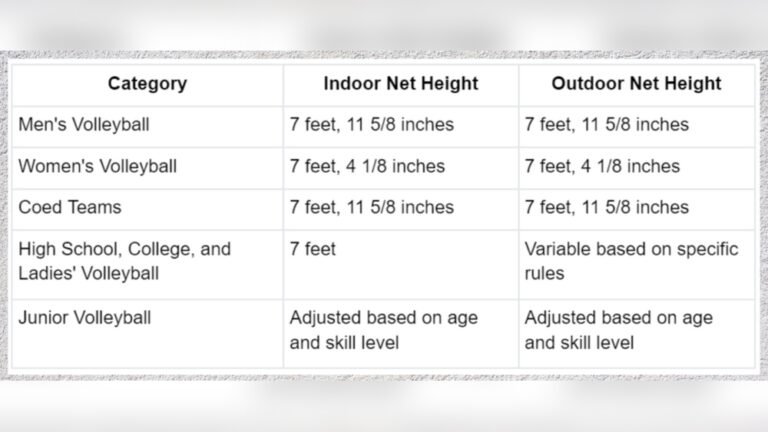
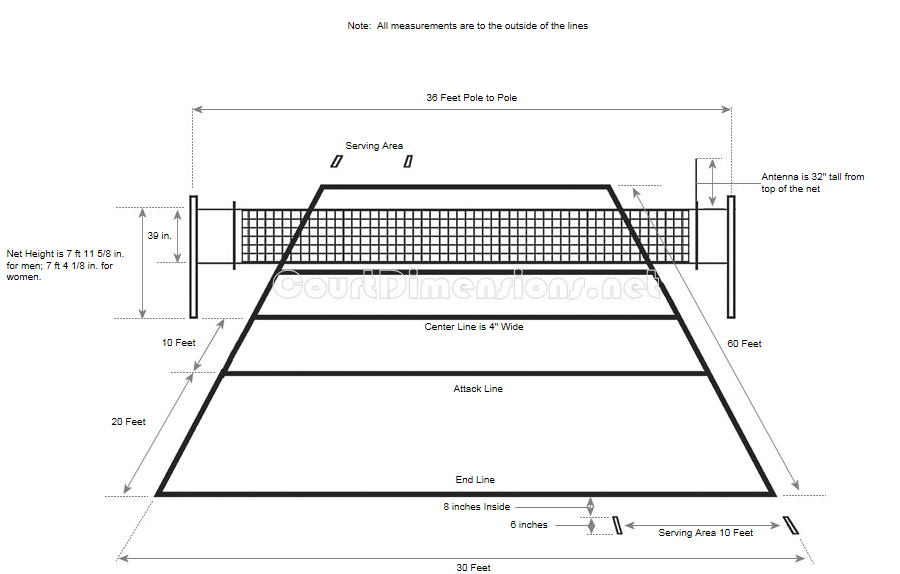
The standard volleyball net is 32 feet long and 3 feet wide. The length fits the court width exactly. The net’s height depends on the game type. For men’s indoor volleyball, the net height is 7 feet 11 5/8 inches. For women’s indoor and beach volleyball, the height is 7 feet 4 1/8 inches. The net material is strong and durable to withstand play. It has a white band on top to mark the boundary.
Indoor Vs Beach Nets
Indoor and beach volleyball nets differ in some ways. Both use the same length of 32 feet. The net height is the same for women’s indoor and beach volleyball. Beach nets may have extra features for wind resistance. Indoor nets are designed for gym use and are less affected by weather. Beach nets often include side straps to hold them tight on sandy courts. The net thickness and mesh size can vary between the two types.
Junior And Youth Sizes
Youth volleyball nets are smaller to suit younger players. Net heights are lower to match children’s reach. For ages 12 and under, the net height is usually 6 feet 6 inches. Older youth players use nets closer to adult sizes. Net length remains the same at 32 feet for most youth games. Adjusting net height helps improve skills and confidence. Coaches and parents should check regulations for each age group before play.
Net Height Standards
The height of a volleyball net plays a crucial role in the sport. It sets the challenge for players to serve, block, and spike effectively. Different groups follow specific net height standards to ensure fairness and safety. These standards vary mainly by gender and age group. Understanding these heights helps players and coaches prepare for official matches and training sessions.
Men’s Regulation Height
The official net height for men’s volleyball is 2.43 meters. This is about 7 feet 11 5/8 inches. It is used in professional, college, and high school competitions. This height challenges men’s typically higher jump and reach abilities. The net must be set at this height for all official indoor matches for men.
Women’s Regulation Height
Women’s volleyball nets are set lower than men’s. The official height is 2.24 meters or roughly 7 feet 4 1/8 inches. This height suits the average reach and jump of female players. It applies to all professional, college, and high school women’s competitions. Using this standard keeps the game competitive and fair.
Variations By Age Group
Youth volleyball nets have different heights depending on age. Younger players use lower nets to match their skill and size. For example, under-12 players might use a net at 2.13 meters or lower. As players grow older, the net height gradually increases. This progression helps players develop skills comfortably and safely.
Court Dimensions
The dimensions of a volleyball court are key to playing the sport correctly. Each type of volleyball, indoor or beach, has specific court sizes. These sizes ensure fair play and safety for all players.
Understanding court dimensions helps players and organizers set up the game area properly. It also makes sure the game follows official rules and standards.
Indoor Court Size
An indoor volleyball court measures 18 meters long and 9 meters wide. This size creates two equal halves, each 9 by 9 meters. The surface is usually a hard floor, like wood or synthetic material. The court must be clear of any obstacles around the edges.
Beach Court Size
A beach volleyball court is smaller than an indoor court. It measures 16 meters long and 8 meters wide. Like indoors, the court is divided into two halves. The surface is sand, which makes movement slower and more challenging. The smaller size suits the two-player teams common in beach volleyball.
Boundary Markings
Boundary lines mark the play area on both indoor and beach courts. These lines are 5 centimeters wide and should be visible. For indoor courts, the lines are usually painted on the floor. Beach courts use tape or rope to mark boundaries on sand. The boundary lines define where the ball is in or out of play.

Credit: www.networldsports.com
Materials And Construction
The materials and construction of a volleyball net affect its performance and longevity. Choosing the right net ensures stable play and good durability. Nets vary by fabric, reinforcement, and special features that protect against wear.
Net Fabric And Mesh
The net fabric is usually made from strong nylon or polyester. These materials resist stretching and tearing. The mesh size is uniform, with squares about 10 cm wide. This size stops the ball but lets wind pass through. A tight, even mesh keeps the net stable during play.
Side Tapes And Reinforcements
Side tapes frame the net edges and add strength. They are often made from heavy-duty vinyl or canvas. These tapes hold the net’s shape and prevent fraying. Reinforced corners have extra stitching or padding. This support helps the net handle tension from the poles and gameplay.
Durability Features
Durability depends on UV-resistant coatings and water-repellent treatments. These protect the net from sun damage and rain. Some nets include rust-proof cables for outdoor use. Strong stitching and double layers add extra toughness. A well-made net lasts through many matches and weather conditions.
Setup Tips
Setting up a volleyball net correctly is essential for fair play and safety. Proper setup ensures the net stays stable during the game. It also helps maintain the right tension and height. Here are some key tips to help you set up your volleyball net efficiently.
Securing The Net
Start by placing the poles firmly in the ground or stands. Use strong anchors or weights to prevent movement. Attach the net to the poles using hooks or ties. Make sure the net hangs evenly without sagging. Check both sides to confirm the net is centered on the court.
Adjusting Net Tension
Tighten the net so it is firm but not overly stretched. Use the tension cables or ropes on the sides to adjust the tightness. The net should not flap in the wind or sag in the middle. Proper tension keeps the net at the regulation height during play.
Common Setup Mistakes
Avoid placing the poles too far apart or too close. This can cause the net to be loose or overly tight. Do not forget to check the net height for your specific game level. Uneven net height can affect the fairness of the game. Lastly, ensure all attachments are secure to prevent accidents.
Credit: www.courtdimensions.net
Regulation Compliance
Regulation compliance ensures fairness and consistency in volleyball matches. Net dimensions must meet official standards. This guarantees all players compete under the same conditions. Different organizations set rules for net height and length. These rules vary by level and type of play. Understanding these standards is essential for proper setup and gameplay.
Fivb Standards
The International Volleyball Federation (FIVB) sets global rules. The official net length is 9.5 to 10 meters (about 31 feet). For men’s indoor volleyball, the net height is 2.43 meters (7 feet 11 5/8 inches). For women, it is 2.24 meters (7 feet 4 1/8 inches). Beach volleyball uses the same net lengths but slightly different heights. FIVB rules apply to international and professional competitions.
High School And College Rules
High school volleyball follows the National Federation of State High School Associations (NFHS) rules. The net height for boys is 2.43 meters, matching FIVB standards. Girls’ net height is 2.24 meters, the same as international rules. College volleyball uses NCAA standards, which mirror FIVB regulations. Net length is usually fixed at 9.5 meters. Proper net setup is vital for official matches.
Recreational Play Differences
Recreational volleyball allows more flexibility in net dimensions. Net height often adjusts for age or skill level. Youth leagues use lower nets to encourage participation. Length may vary depending on court size and available equipment. Rules in recreational play focus on fun and safety. Regulation compliance is less strict but still encouraged for skill development.
Frequently Asked Questions
What Is The Official Size Of A Volleyball Net?
The official volleyball net measures 32 feet (9. 75 meters) in length. Its height is 7 feet 11 5/8 inches (2. 43 meters) for men and 7 feet 4 1/8 inches (2. 24 meters) for women.
How Tall Is The Net For High School?
The high school volleyball net height is 7 feet 4 1/8 inches (2. 24 meters) for women and 7 feet 11 5/8 inches (2. 43 meters) for men.
What Is A High School Volleyball Net?
A high school volleyball net measures 32 feet long. For boys, it stands 7 feet 11 5/8 inches tall; for girls, 7 feet 4 1/8 inches. It meets official regulation standards for competitive play.
What Are The Official Volleyball Net Dimensions?
The official volleyball net measures 32 feet (9. 75 meters) in length. The height is 7 feet 11 5/8 inches (2. 43 meters) for men and 7 feet 4 1/8 inches (2. 24 meters) for women. These standards apply to indoor volleyball.
Conclusion
Understanding volleyball net dimensions helps players and coaches set up courts correctly. The standard net length is 32 feet for both indoor and beach volleyball. Men’s net height is 7 feet 11 5/8 inches, while women’s is 7 feet 4 1/8 inches.
Junior and youth nets vary in height based on age groups. Knowing these measurements ensures fair play and improves the game experience. Keep these key numbers in mind for practice or competition. Accurate net setup supports better skills and more enjoyable matches.