There’s no single best cap for hiking. The right one comes down to three things about you: how hot your head runs, whether you hike in sun all day or in cold wind, and whether the cap has to fold into a pocket. These caps differ in fabric, brim shape, coverage and fit — not in rank. Best caps for hiking is really a question about your habits, not a leaderboard. Two products split most buyers: the Under Armour Iso-Chill ArmourVent for warm-weather stretch comfort, and the Sunday Afternoons Swift Cap for full sun coverage.
1. Under Armour Iso-Chill ArmourVent

Best for: someone hiking in heat who wants a stretchy, shaped cap
Warm-weather hiking asks a lot of a cap. Your head sweats, the sun beats down, and a heavy hat turns into a soggy weight by mile three. This cap’s listing leans into that problem: ArmourVent fabric is described as light, stretchy, durable and fast-drying. The Iso-Chill sweatband is said to disperse body heat and feel cool to the touch.
The stretch construction matters more than it sounds. A stretch fit moves with your head instead of pressing on it, and the UA Classic Fit uses pre-curved visor and structured front panels that the listing says maintain shape with a low profile. So it holds its look on the trail and in town. The trade-off is coverage: this is a classic cap shape, so your ears and neck get nothing from it. If you hike in cold wind or want full sun cover, that’s the gap.
Good if:
- You hike in summer heat and sweat heavily
- You want a cap that keeps its shape after packing
- You like a snug, stretchy fit rather than an adjustable strap
Skip it if:
- You need ear and neck coverage on exposed alpine trails
2. Sunday Afternoons Swift Cap

Best for: all-day sun exposure on open, exposed trails
Long days in strong sun change what you need. A cap stops being a fashion item and becomes shade. The Swift Cap listing answers that directly with UPF 40+ protection, a stiff curved brim, and dark fabric under the brim — a detail that cuts glare bouncing off bright ground.
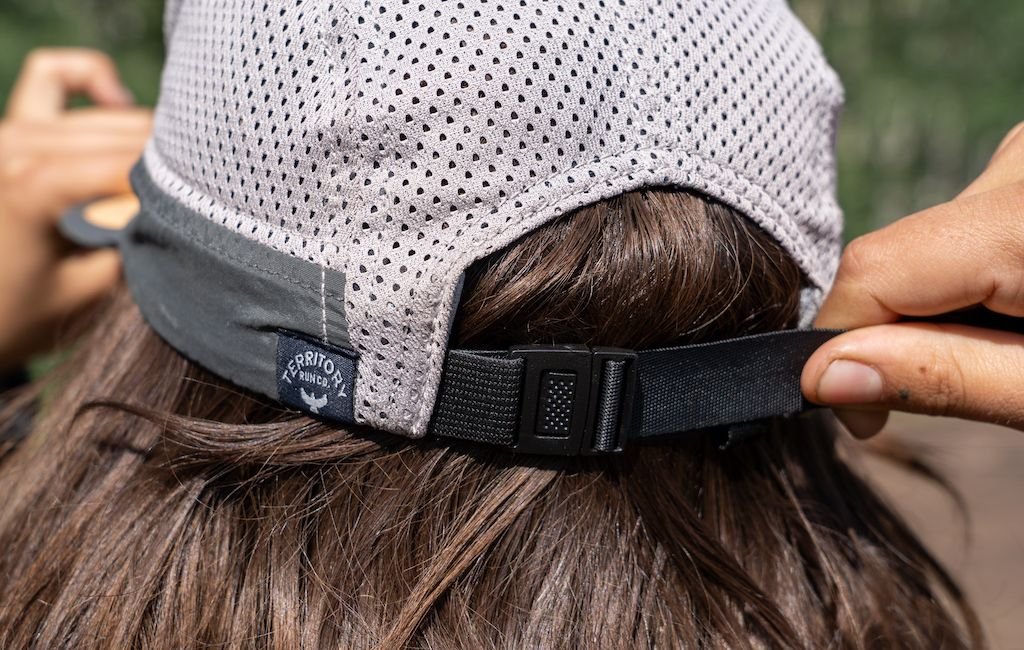
The rest of the listing is built for sweat. It has a TransAction headband, quick-dry fabric, and 100% polyester mesh, plus a water-resistant finish for passing showers. A quick-release buckle at the back lets you adjust the fit quickly. The trade-off is that mesh and a stiff brim make it a trail hat, not a casual one — it looks like gear, and the structured brim won’t fold away flat.
Good if:
- You hike open ridgelines and fire roads with no tree cover
- You want a brim that stays stiff and holds its shape
- You sweat a lot and want a headband designed for it
Skip it if:
- You want a cap that packs down small in a pocket
- You prefer a soft, unstructured look off the trail
3. Reflective Folding Outdoor Hat

Best for: hikers who need a cap that disappears into a pack
Some hikers care less about the cap on their head and more about the cap in their bag. This one is built for that. Its brim uses a 3-panel bill design that folds, and the listing says it fits into any pocket or backpack. The brim is also reflective, which the listing ties to visibility and safety in low light.
Protection is the other half of the pitch. The cap body is described as UPF 50+ against UV rays, with the breathable mesh panels excluded from that claim — worth knowing, since mesh lets light through. Two side airy meshes are there for ventilation, and the soft unstructured fabric is listed as quick-drying. An adjustable hook and loop closure is said to fit most men and women. The trade-off is shape: unstructured means it drapes rather than holds a crisp crown.
Good if:
- You want a cap that folds flat in a pocket or pack lid
- You hike or run at dawn or dusk and want to be seen
- You share gear and want an adjustable fit
Skip it if:
- You want a structured cap that holds a firm shape
- You want UPF coverage across the whole cap, mesh included
4. Running Hat Breathable

Best for: fast hikers and trail runners who want almost nothing there
When you move fast, a cap has one job: stay out of the way. This listing leans hard into that with a full mesh build for airflow and a HYDROHEX material that wicks moisture and dries fast. The seller describes it as ultra-light and “barely there.”
Fit is spelled out, which helps. The adjustable closure is listed as fitting heads 21 to 24 inches (54 cm to 62 cm), and the hat is washable. UPF protection is mentioned for UV rays. The trade-off is structure: full mesh and a lightweight build mean less shade and less shape than a stiff-brim cap. On a hot, exposed climb, that airflow is the point — but it won’t block sun the way a solid fabric will.
Good if:
- You run or hike fast and overheat easily
- You want a washable hat you can sweat through daily
- You need a stated fit range before you buy
Skip it if:
- You want maximum shade on exposed trails
- You prefer a structured, shaped crown
5. Merino Wool Beanie

Best for: cold-weather hiking and windy summits
Not every hike is a summer hike. For shoulder-season and winter trips, a sun cap is the wrong tool. This beanie’s listing is built around warmth: merino wool knit fabric for warmth and durability, plus a double-layered design with a thick fleece lining inside. The seller says that’s aimed at strong windy days and headaches from cold.
Comfort details are listed too. The fabric is described as odor free and soft, not itchy, with elastic stretch that stays on without being too tight. The cuff pulls down over your ears for extra warmth, and the listing says it packs into a camping pack or outdoor gear without adding bulk. The design is intended to accommodate a wide range of head shapes and sizes for both men and women. The trade-off is obvious: no brim, so no sun protection at all.
Good if:
- You hike in winter, at altitude, or in strong wind
- You want ear coverage from a pull-down cuff
- You want a hat that stuffs into a pack without bulk
Skip it if:
- You hike in sun and need a brim
- You want a single cap for year-round warm-weather use
Where These Overlap
The two sun caps — the Under Armour Iso-Chill ArmourVent and the Sunday Afternoons Swift Cap — overlap the most. Both are warm-weather caps, and both are aimed at sweaty heads. The deciding factor is structure: the Under Armour is a stretch, structured fit, while the Swift Cap is mesh with a stiff brim and a dark under-brim. The Reflective Folding Outdoor Hat and the Running Hat Breathable are genuinely different: one folds and reflects, the other is full mesh for airflow. The Merino Wool Beanie isn’t in the same conversation at all — it’s for cold, not sun.
Still Not Sure?
How often will I actually wear a hiking cap?
Be honest about your habits. If it’s most weekends in sun, the Sunday Afternoons Swift Cap and its UPF 40+ coverage earn their place. If it’s occasional and you want a cap that packs away, the Reflective Folding Outdoor Hat is the easier choice.
What do I already own that this has to work with?
Think about your layers. If you already carry a hooded sun shirt, a light cap like the Running Hat Breathable is described as ultra-light and full mesh. If you hike in wind and cold, the Merino Wool Beanie is described as a double-layered knit with a fleece lining.
What am I most likely to regret?
Usually the wrong fabric for the season. A mesh cap on a cold summit, or a wool beanie in July, are both the wrong tool for the conditions. If you’re unsure, start with the Under Armour Iso-Chill ArmourVent — its stretch fit and fast-drying fabric suit warm conditions.
Related guides
Frequently Asked Questions
What should I look for in a hiking cap for sun protection?
Look for a stated UPF rating and a brim that shades your face. The Sunday Afternoons Swift Cap lists UPF 40+ with a dark under-brim, and the Reflective Folding Outdoor Hat lists UPF 50+ on the cap body — though its mesh panels are excluded from that claim.
Do hiking caps fit all head sizes?
Not always, so check the listing. The Running Hat Breathable states a fit range of 21 to 24 inches (54 cm to 62 cm) with an adjustable closure. The Reflective Folding Outdoor Hat uses an adjustable hook and loop fit, and the Merino Wool Beanie is designed with high elasticity to fit a variety of users.
Should I wear a cap or a beanie for hiking?
It depends on the weather, not preference. Caps with brims and mesh handle heat and sun, like the Sunday Afternoons Swift Cap. For cold wind and winter trips, the Merino Wool Beanie’s double layer and fleece lining are built for warmth instead.
Can I fold a hiking cap to fit in my pack?
Some fold, most don’t. The Reflective Folding Outdoor Hat has a 3-panel brim that fits into any pocket or backpack. The Under Armour Iso-Chill ArmourVent has structured front panels that maintain shape, and the Swift Cap has a stiff curved brim.
As an Amazon Associate, we earn from qualifying purchases. This post contains affiliate links – if you buy through them, we may earn a commission at no extra cost to you.
Closing
If you hike in heat and want a stretchy, shaped cap, look at the Under Armour Iso-Chill ArmourVent. If you’re on open trails all day and want maximum sun coverage, the Sunday Afternoons Swift Cap is the one. Check both listings and pick by your season.