Finding the best drone for fishing is rarely about picking one “perfect” device. Instead, it comes down to matching a specific drone’s payload capacity, water resistance, and range to your local fishing environment. Whether you’re dropping bait off a beach or trolling in deep reservoirs, these machines differ primarily in their durability and how much weight they can carry. The best drone for fishing search often leads buyers to two distinct paths: those who need a rugged, waterproof workhorse for the open ocean, and those who prefer a lighter, screen-equipped drone for casual inland use.
As an Amazon Associate, we earn from qualifying purchases. This post contains affiliate links – if you buy through them, we may earn a commission at no extra cost to you.
1. SwellPro FD3 Fisherman WaterProof Fishing Drone with 4K Camera
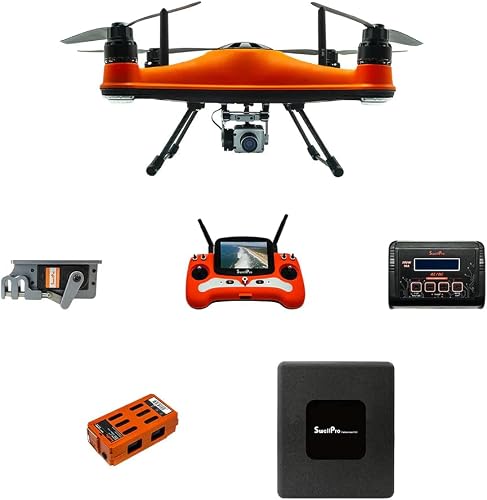
Best for: Someone needing a dedicated, waterproof drone for open ocean fishing.
The FD3 is built for those who face harsh saltwater conditions where a standard drone would fail. Its IP67 waterproof rating means the aircraft is designed to handle splashes and landing on the water, ensuring durability when flying over the surf. This model prioritizes a 4.4lb bait release capacity, allowing you to carry larger hooks and heavier sinkers to reach distant fishing zones.
It isn’t intended for the casual hobbyist who only wants to take landscape photos. The specialized design focuses heavily on the mechanics of bait delivery rather than advanced cinematic flight modes. If you’re looking for a drone to fly in calm, inland parks, this unit’s heavy-duty engineering may feel like more than you actually require.
Good if:
- You fish regularly in saltwater environments.
- You need to drop heavy baits at long distances.
- You prefer a drone designed specifically for fishing operations.
Skip it if:
- You only fish in small, calm ponds.
- You’re looking for a high-end cinematic camera drone.
2. Swellpro Fisherman MAX Heavy Lift Fishing Drone with 4K Camera

Best for: Anglers who need to carry significant weight for big-game fishing.
This model is the choice for those who need heavy lift capability. It’s engineered to handle a 3.5kg bait release, which is ideal for deploying heavy lines or large live baits that smaller drones can’t lift. The inclusion of underwater photography features via the DORY unit allows you to inspect the water column, using a 1080p camera and 250-lumen headlights to find structure or fish before you cast.
Because this drone is built for heavy lifting, it isn’t the most agile option for tight, obstacle-filled environments. It’s a specialized tool that assumes the user has a specific need for heavy payloads and underwater observation. Users who prioritize speed or compact storage may find this model less convenient for quick trips.
Good if:
- You target large fish that require substantial bait.
- You want to see what is happening underwater.
- You need a high-capacity payload delivery system.
Skip it if:
- You have limited space for transport.
- You need a lightweight, quick-deploy drone.
3. SwellPro Fisherman FD1+ Best Entry-Level Fishing Drone with Bait Release

Best for: Beginners who want a rugged, waterproof drone for fishing.
The FD1+ is designed to simplify the learning curve for new drone pilots. With its calibration-free flight sensors and GPS 9.0 technology, it handles the complex positioning work for you. It boasts a 4.8lb bait capacity and a 1.3km range, meaning it can reach far-off spots without needing a kayak. The self-floating design and automatic flip feature make it highly resilient if you happen to land on the water.
This drone isn’t for the pilot who wants to record professional-grade 4K movies, as its design focus is strictly on fishing utility. If you’re an experienced pilot who values advanced creative settings over fishing reliability, this unit might feel too basic. It’s built to keep your gear safe and your bait in the water.
Good if:
- You’re new to using drones for fishing.
- You need a drone that can land safely on water.
- You want a long-range bait delivery system.
Skip it if:
- You’re primarily interested in cinematic aerial photography.
- You want to fly in highly complex, obstacle-heavy areas.
4. Waterproof Drone 4K Camera Single-axis Gimbal 28 mins Night Vision

Best for: Fishermen who want stable flight controls without compass calibration headaches.
This drone uses the IDF-9 flight control system, which is designed for extreme stability during sea fishing. The built-in GPS heading correction helps manage interference, which is a common issue when flying near large bodies of water with metal equipment. Its waterproof switch design means you can drop bait repeatedly without worrying about shutting down the power every time, which saves time during an active bite.
The drone isn’t meant for those who want a “do-it-all” photography drone. While it includes a 4K camera with electronic anti-shake, it’s optimized for the rigors of fishing rather than smooth, professional video production. Users who find the single-axis gimbal limiting for high-end video work should look elsewhere.
Good if:
- You fish in areas with high magnetic interference.
- You want a simple, reliable bait-drop mechanism.
- You frequently drop multiple baits in one session.
Skip it if:
- You need a 3-axis gimbal for professional video.
- You’re looking for a small, compact travel drone.
5. Drones with Camera for Adults 4K

Best for: Anglers who want an all-in-one package with a large screen.
This model is built for convenience, featuring a 7.2-inch touchscreen controller that lets you fly without needing a phone. With its 10km transmission range and 3-axis gimbal, it bridges the gap between a fishing tool and a high-end camera drone. The 360-degree obstacle avoidance adds a layer of safety, making it easier to fly near trees or rocky shorelines.
It isn’t designed for the extreme saltwater conditions that specialized waterproof drones handle. If your primary goal is landing the drone on the ocean surface, this unit isn’t the right choice, as it lacks the specialized seals of the dedicated saltwater models. It’s better suited for lakes, rivers, and reservoirs.
Good if:
- You want a large, built-in screen controller.
- You need high-end camera stabilization for video.
- You fly in areas where obstacle avoidance is helpful.
Skip it if:
- You need a drone that can land on saltwater.
- You require a heavy-lift capacity for very large baits.
6. AE60 Drone with Camera 4K

Best for: Beginners who want a balance of payload and cinematic features.
The AE60 is a versatile option that supports a 1.32lb payload while offering a 3-axis gimbal for stable 4K video. It’s designed to be user-friendly, with GPS auto-return and obstacle avoidance to help prevent crashes. The 90-minute flight time, provided by two modular batteries, allows for extended sessions on the water without constant recharging.
This isn’t a heavy-duty platform for deep-sea or big-game fishing. The payload capacity is limited compared to the specialized Fisherman series, making it best for lighter lures and supplies. Experienced anglers looking to lift several pounds of bait will find this model too restricted for their specific needs.
Good if:
- You want a mix of fishing and photography.
- You’re a beginner needing safety features like obstacle avoidance.
- You want a long flight time for all-day trips.
Skip it if:
- You need to drop heavy baits that exceed the manufacturer’s stated capacity.
- You fish in extreme, high-wind saltwater environments.
7. Ideafly New Fishing Drone with 4k Camera

Best for: Travelers who need a portable, waterproof drone.
Portability is the standout feature of this model, which comes with its own suitcase and a foldable design. It handles the basics well, including a 1kg payload release and a 4K camera with electronic anti-shake. The waterproof, dustproof, and sandproof design makes it a good choice for beach vacations where salt and sand are constant concerns.
It isn’t for the user who needs the most advanced flight stability systems available today. While it handles basic fishing tasks, it lacks the multi-axis gimbal stabilization found on larger, more complex units. If you’re a serious content creator, the single-axis gimbal might not produce the results you expect.
Good if:
- You travel frequently and need a portable drone.
- You fish at the beach and worry about sand and salt.
- You want an easy-to-operate, all-around fishing drone.
Skip it if:
- You need professional-grade camera stability.
- You require a heavy-lift payload capacity.
8. GPS Drone with 4K UHD Camera

Best for: Users needing a simple, entry-level delivery tool.
The Airdrop GPS Drone is a lightweight, foldable unit that makes it easy to carry along on camping or fishing trips. It features a one-key drop release, which is excellent for delivering small items or light baits. The 4.5-inch screen on the controller is a nice touch, allowing you to see your FPV view without draining your phone battery.
It isn’t built for high-wind environments or heavy lifting. With a weight of 248g, it’s designed for ease of use and portability, not for battling strong coastal currents. If you’re looking for a rugged, industrial-style drone to survive harsh conditions, this isn’t that machine.
Good if:
- You prefer a controller with a built-in screen.
- You need something for light bait delivery.
Skip it if:
- You need to fly in high-wind conditions.
- You’re targeting large fish with heavy gear.
9. FPV Drone with 4K HD Camera

Best for: Those who want an immersive FPV flight experience while fishing.
This drone focuses on the first-person view experience, using a 4.5-inch screen to keep you connected to the flight. It includes obstacle avoidance and a one-key payload drop, which makes it a good entry point for those wanting to combine fishing with drone flying. It’s compact and foldable, making it a solid choice for spontaneous trips to the lake or river.
It isn’t designed for heavy payloads or professional photography. The camera is effective for hobbyist use, but it lacks the advanced stabilization required for professional-grade, shake-free footage. If your primary focus is capturing ultra-smooth, cinematic footage, this model may leave you wanting more.
Good if:
- You enjoy the immersive feel of FPV flying.
- You want a compact drone for casual fishing.
- You need an easy-to-use payload release.
Skip it if:
- You need professional-grade video stabilization.
- You require a heavy-duty frame for harsh weather.
10. FPV Drone with 2.7K Camera

Best for: Users who want a premium FPV experience with a 3-axis gimbal.
This drone stands out with its 2.7K camera and 3-axis gimbal, offering much smoother video than the basic FPV models. The 4.92-inch touchscreen remote provides a clear, intuitive way to manage your flight and camera settings. With 4-way obstacle avoidance and a 50-minute flight time, it’s a well-rounded tool for both fishing and general aerial exploration.
It isn’t for the angler who needs to lift heavy weights, as its payload limit is 0.66lbs. This drone is better suited for smaller baits and fun, casual drops. It’s a great middle-ground for the hobbyist, but it isn’t intended for heavy-duty big-game fishing.
Good if:
- You want smooth video that remains steady even during complex aerial maneuvers.
- You prefer an intuitive touchscreen controller.
- You want safety features like 4-way obstacle avoidance.
Skip it if:
- You need a heavy-lift drone for large baits.
- You’re looking for a specialized saltwater-only drone.
Where These Overlap
Many of these drones, especially the smaller, foldable models like the Airdrop GPS Drone and the FPV Payload Drone, share very similar features. They often use the same basic GPS systems, one-key return, and simple payload release mechanisms. For a casual user who just wants to drop a light bait in a local lake, the choice between these two often comes down to personal preference for the controller screen or the brand’s included accessories.
Conversely, the SwellPro series is in a different league regarding durability. These drones use specialized seals to resist water, which is a fundamental difference from the foldable, general-purpose drones. If your fishing environment involves saltwater or the risk of landing on the water, the choice isn’t really between these models, but between the specific level of payload you need. Always check the Civil Aviation Authority guidance on drone safety and airspace regulations before your first flight, as these rules apply regardless of which model you choose.
Still Not Sure?
How often will I really use it?
If you only fish occasionally, a portable, foldable drone like the Ideafly Fishing Drone is likely plenty. It’s easy to pack and doesn’t take up much room in your gear bag. However, if you’re out on the water every weekend, the durability of the SwellPro Fisherman FD3 will save you money in the long run by resisting water damage. Consider how many trips you plan to take before choosing your level of investment.
What do I already own that this has to work with?
Think about your current fishing gear. If you use heavy live bait or large rigs, you need a heavy-lift drone like the SwellPro Fisherman MAX. If you already have a smartphone you prefer to use for navigation, you might not need a drone with a built-in screen. Matching the drone to the weight of your existing gear ensures you don’t end up with a machine that can’t lift your line.
What am I most likely to regret choosing?
Most buyers regret choosing a drone that’s too fragile for their local environment. If you buy a non-waterproof drone for ocean use, you’ll likely regret it the first time a wave splashes it. If you’re unsure, prioritize the SwellPro Fisherman FD1+ for its balance of waterproofing and beginner-friendly features. It’s better to have a drone that’s slightly over-engineered for your needs than one that breaks on the first trip.
Frequently Asked Questions
Do I need a special license to operate a fishing drone?
Regulations vary by your location and the weight of your drone. Drones under 250g often have fewer restrictions, but adding a payload may require registration. Always check your local aviation authority website before your first flight to verify your specific model’s requirements.
Can I fly my drone in high wind conditions?
Wind resistance varies significantly between drone models. Heavy-lift drones use high-efficiency motors to handle strong winds, while smaller models struggle in anything more than a light breeze. If you fish on the open coast, prioritize a model with high wind-resistance specifications to prevent your drone from being blown off course.
Is the payload release automatic or manual?
Most modern fishing drones, such as the GPS Fishing Drone, use an integrated payload release that’s triggered by a button on your remote. This is much safer and more reliable than manual setups. The SwellPro Fisherman FD3 and FD1+ also feature dedicated release mechanisms designed for fishing.
How do I maintain a drone used for saltwater fishing?
Even with waterproof drones like the Waterproof Fishing Drone, salt is corrosive and will damage your electronics if left unchecked. After every saltwater flight, you should gently rinse the drone with fresh water and dry it thoroughly. Never skip this step, as salt crystals can build up in the motors and gimbal joints. The Ideafly Fishing Drone is dustproof and sandproof, which is a benefit if you’re fishing in sandy, coastal areas.
Conclusion
Before you commit to a purchase, head down to your favorite local spot and check the wind conditions. It’s worth testing a friend’s gear or visiting a hobby shop first to see how the controls feel in your hands. You’ll be much more confident once you’re finally ready to cast your line.