As an Amazon Associate, we earn from qualifying purchases. This post contains affiliate links – if you buy through them, we may earn a commission at no extra cost to you.
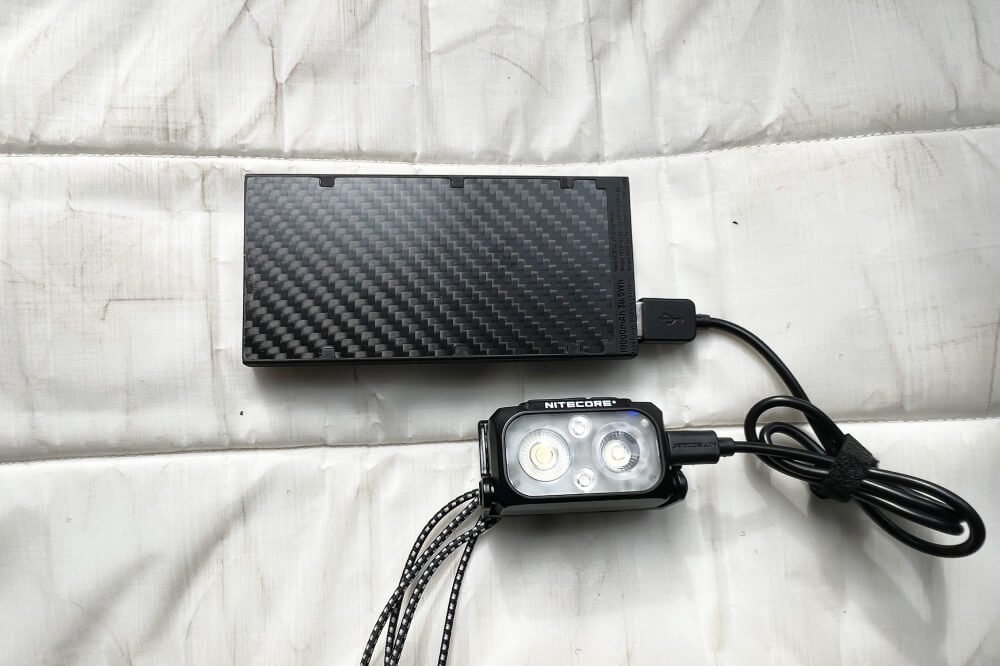
There’s no single best power bank for hiking, because every trail and every pack is different. What matters most is how far you’re going, how much weight you’ll carry, and whether you expect rain or drops on rocks. The picks here differ in capacity, weather protection, charging speed, and extras like built-in cables or solar panels. That means the right one depends on your specific hike, not a universal ranking. If you want the lightest waterproof option, look at the Nitecore NB Plus 10000. If you need heavy-duty drop protection with a tripod mount, check the NESTOUT Rugged 15000.
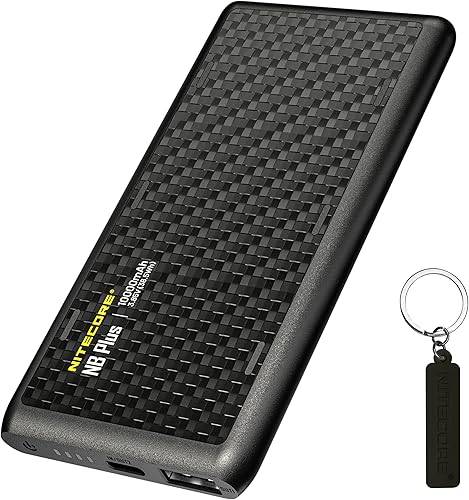
1. Nitecore NB Plus 10000mAh Power Bank IPX7 Waterproof Lightweight Competition-Grade
Best for: ultralight hikers who need reliable waterproofing without adding bulk.
When you’re counting grams on a long trail, every piece of gear has to earn its place. This unit weighs only 155g (5.47 oz), which keeps your base weight down while still holding 10,000mAh. It uses a composite anti-torsion structure with four rounded corners to reduce abrasion against your pack or jacket. You get both USB-A and USB-C ports, letting you charge two devices at once with up to 22.5W output.
The IPX7 rating means it handles submersion, so sudden river crossings or heavy downpours won’t ruin your backup power. An energy density of up to 300mWh/g packs a lot of capacity into a very slim shape. That slim profile slides easily into a hip belt pocket instead of bouncing around inside your main bag.
Good if:
- You count every gram in your backpack.
- You hike in wet climates where gear gets soaked.
- You only need to top off one phone per day.
Skip it if:
- You share your power bank with three other people on long trips.
2. NESTOUT Rugged 15000

Best for: rough terrain hikers who drop their gear often.
Trails full of loose rock and roots demand gear that survives hard impacts. This battery wraps its lithium-ion cells in a silicone cushion to absorb shocks, passing the US Military Standard MIL-STD 810G 516.7 Drop Test. It holds 15,000mAh, giving you more total charges than smaller units when you’re out for a long weekend. The IP67 rating blocks both dust and water, keeping dirt out of the ports during dry desert hikes.
A standard ¼ 20” tripod mount sits on the bottom, letting you attach lights or accessories directly to the battery. It also supports fast-charging USB-C Power Delivery up to 32W, automatically detecting what your plugged-in device needs. The listing describes automatic power allocation but does not detail the specific protection mechanism for small devices. Still, this isn’t the right pick if you strictly prioritize ultralight packing, since rugged shells and silicone cushions add noticeable weight to your load.
Good if:
- You frequently drop things on rocky trails.
- You want to mount a lantern directly to your charger.
- You need enough capacity for a multi-day weekend trip.
Skip it if:
- You refuse to carry anything heavier than absolutely necessary.
3. INIU Outdoor Rugged 10000mAh Portable Charger

Best for: fast-paced hikers needing quick top-offs between trail sections.
Sometimes you only have twenty minutes at a summit before moving again. With up to 45W output, this charger powers an iPhone 17 Pro to 63% or a Galaxy S26 Ultra to 61% in just 30 minutes. It holds 10,000mAh in a body measuring 3.6 × 2.3 × 1.1in, weighing 6.9oz. That compact size fits neatly into a jacket pocket without dragging it down.
It carries an IPX7 rating. A built-in 1/4-in thread works with most tripods and bike mounts, while a detachable D-ring screw and carabiner let you clip it outside your pack. Eighteen-layer safety protection guards your devices while they pull high wattage.
Good if:
- You rely heavily on GPS apps that drain your phone quickly.
- You want to clip your charger to the outside of your bag.
- You take mostly short day hikes rather than week-long treks.
Skip it if:
- You need to recharge tablets or laptops on the trail.
4. Anker Power Bank

Best for: multi-device users carrying phones, watches, and laptops together.
If you bring a laptop into the backcountry, you need serious output and capacity. This unit distributes 87W across three devices, sending up to 65W to a single port. It can push a 14″ MacBook Pro to 50% in under 40 minutes, backed by a massive 20,000mAh cell. The built-in USB-C cable endures over 10,000 bends, meaning you don’t have to pack a separate cord that might tangle or break.
Measuring 6.2 × 2.9 × 1.0 in and weighing 15.5 oz, it stays relatively flat despite the large battery inside. It recharges fully in 1.5 hours when you plug it into a 65W wall charger back at camp or a hotel. It’s approved for airline travel, so it doubles perfectly for your flight to the trailhead. Avoid this if your primary concern is surviving deep mud or heavy rain, since the listing doesn’t highlight an IP weather rating.
Good if:
- You bring a laptop or tablet on your outdoor trips.
- You hate managing multiple loose charging cables.
- You fly to your hiking destination frequently.
Skip it if:
- You expect constant heavy rain or plan to cross rivers.
5. BLAVOR Solar Power Bank 20000mAh

Best for: extended basecamp stays where wall outlets are completely unavailable.
When you’re camping for days away from any grid, sunlight becomes your only refill. This unit provides a 20,000mAh battery capacity for extended use away from outlets. It includes 4 built-in cables (two USB-C, one iOS, one USB-A) alongside three extra ports, letting you charge up to 6 devices simultaneously. There’s even a wireless charging area specifically sized for phones and an Apple Watch.
Beyond charging, it acts as a camp hub with a three-mode flashlight, a three-level camping light, a compass, and a thermometer. Its flame retardant ABS+PC shell and waterproof silicone protection guard against rough handling outdoors. The USB-C port pushes 20W fast charging, filling an iPhone 15 in around 50 minutes.
Good if:
- You set up a basecamp and stay there for days.
- You lead group hikes where everyone needs a quick charge.
- You want a built-in camp light and compass in one item.
Skip it if:
- You move fast and need lightweight gear for continuous walking.
Also Worth Considering
The NESTOUT Rugged Power Bank offers a portable energy reserve with 20W USB-C PD and IP67 protection, making it a solid alternative if you want the brand’s rugged design in a slightly smaller package. The FLEXTAILGEAR Power Bank provides another reliable outdoor option, appealing to those who prefer specialized camping gear brands. Finally, the INIU Fast Charging Portable Charger delivers 45W speed in a smaller travel-focused body, ideal if you prioritize fast charging over rugged outdoor features.
Where These Overlap
Several of these chargers share a similar energy capacity and weather resistance, making the choice between them quite narrow. The Nitecore NB Plus 10000 and INIU Outdoor Rugged both hold enough power for daily needs and block water, but the INIU pushes 45W while the Nitecore focuses entirely on saving weight. If you need raw speed, pick the INIU. If you count every gram, grab the Nitecore. The two NESTOUT models share the same rugged DNA, differing mainly in total battery size.
Still Not Sure?
How many days will I actually be off the grid?
A quick afternoon loop only needs enough power to top off your phone once. Multi-day treks without wall outlets demand higher capacities like 15,000mAh or 20,000mAh to keep your navigation running safely. Match your battery size to your longest expected trip, pointing most weekend hikers toward the NESTOUT Rugged 15000.
What else am I already carrying that needs power?
If you only bring a smartphone, almost any standard portable charger does the job fine. Adding a GPS watch, headlamp, or laptop necessitates higher wattage outputs and extra physical ports to avoid bottlenecks. For anyone hauling a laptop onto the trail, the Anker Power Bank handles that heavy draw effortlessly.
Am I likely to drop this thing on sharp rocks?
Smooth paved paths rarely destroy electronics, but rocky scrambles and river crossings punish careless packing. If your route involves climbing or slippery footing, shockproofing matters just as much as water resistance. Hikers navigating rough, unpredictable terrain should lean heavily on the NESTOUT Rugged 15000.
If you hike fast and light, grab the Nitecore NB Plus 10000. If you hit rocks and need tough armor, pick the NESTOUT Rugged 15000.
Related guides
- 10 Best Sun Hats for Hiking: Expert Picks for Every Trail this year
- 10 Best Bras for Hiking: Expert Picks for Every Trail Type this year
- 10 Best Sun Gloves for Hiking: Our Top Picks for Every Trail this year
Frequently Asked Questions
Can I take a 20,000mAh hiking power bank on an airplane?
Yes, aviation rules generally allow batteries within the standard carry-on limit in carry-on luggage. The Anker Power Bank lists a 20,000mAh capacity and states it is approved for airline travel. Always pack them in your carry-on bag, never in checked luggage.
What does an IP67 rating mean for a trail charger?
An IP67 rating means the device is fully protected against dust ingress and can survive temporary submersion in water. According to IEC international enclosure standards, the “6” blocks all dust, while the “7” allows submersion up to 1 meter for 30 minutes. The NESTOUT Rugged 15000 and INIU Outdoor Rugged both carry this rating.
Do I really need 45W output for hiking?
You don’t need it if you only charge overnight at camp. But if you stop briefly at a viewpoint and need a fast top-off before turning your GPS back on, high wattage saves time. The INIU Outdoor Rugged provides 45W output, reaching 63% on an iPhone 17 Pro in 30 minutes.
How do I attach a power bank to my hiking backpack?
Look for built-in loops, threads, or clips designed for outdoor mounting. The INIU Outdoor Rugged includes a detachable D-ring screw and carabiner for clipping to straps. The NESTOUT Rugged 15000 features a ¼ 20” tripod mount on the bottom, letting you bolt on compatible outdoor accessories.
Conclusion
Before your next trip, charge your chosen battery fully and leave it in your pack overnight. You’ll see how it handles real conditions without risking a dead phone on the trail. Don’t overthink it—just pick one that fits your route and start walking.