

Are you ready to take your high school boys volleyball game to the next level? One key detail that can make a big difference is knowing the exact net height you’ll be playing against.
Whether you’re a player, coach, or fan, understanding the regulation net height helps you train smarter, improve your skills, and gain a competitive edge. You’ll discover the official net height for high school boys volleyball and why it matters for your performance on the court.
Keep reading to unlock the crucial info that could transform your game!
Net Height Standards
The net height in high school boys volleyball follows strict standards. These standards ensure fair play and proper competition. Understanding net height helps players and coaches prepare better. It also maintains consistency across schools and tournaments.
Net height standards vary by age group and competition level. Each level has a specific regulation height for the net. This section explains the official height for high school boys and how it compares to other levels. It also covers the proper techniques to measure the net height accurately.
Official Height For High School Boys
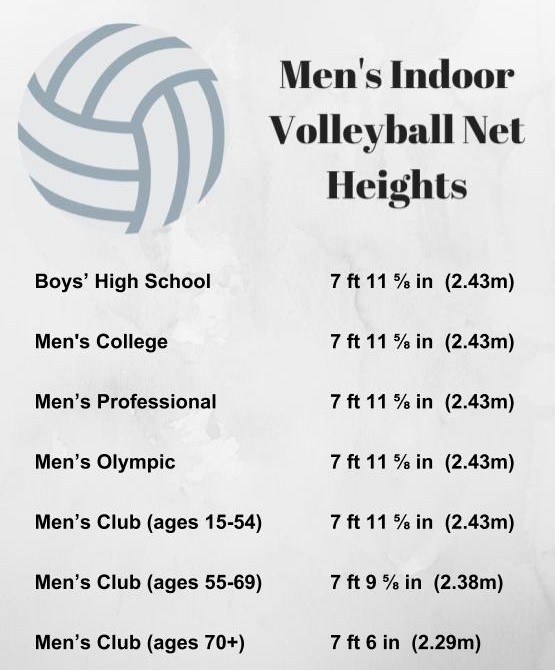
The official net height for high school boys is 7 feet 11 5/8 inches. This measurement equals 2.43 meters. It is the same height used in college and professional men’s volleyball. The set height challenges players to develop strong skills in spiking and blocking.
Coaches must ensure the net is set at this height before every match. Referees check the net height during official games. Playing with the correct net height keeps the competition fair and standardized.
Comparison With Other Levels
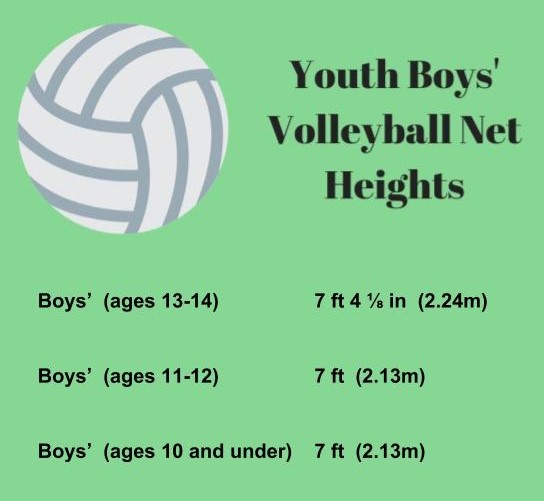
Youth and middle school volleyball nets are lower than high school nets. For example, middle school boys use a net height of 7 feet 4 1/8 inches (2.24 meters). Women’s and girls’ volleyball nets are set at 7 feet 4 1/8 inches (2.24 meters) as well.
The high school boys net is taller to match their strength and skill level. College and professional men’s volleyball use the same 7 feet 11 5/8 inches height. This consistency helps players transition smoothly between levels.
Measurement Techniques
Measuring the net height requires a reliable tape measure or a specialized net gauge. The net is measured from the center of the court. The tape should be tight and vertical to avoid errors.
Measure from the playing surface to the top edge of the net. Check the net height on both sides to ensure it is level. Adjust the net posts carefully to maintain the exact height.
Regular checks during practice and games prevent the net from sagging or shifting. Proper measurement supports fair play and helps players perform at their best.
Importance Of Correct Net Height
Setting the correct net height in high school boys volleyball is crucial. It shapes the entire playing experience and affects many aspects of the game. The net height must meet official standards to ensure the sport remains fair and enjoyable. Each player’s skills and growth depend on this important factor. Coaches and players must understand why this matters deeply.
Impact On Gameplay
Correct net height influences how the game is played. It affects serving, attacking, and blocking techniques. Players can perform moves naturally and safely. The right height allows for balanced rallies and fair scoring opportunities. Too high or too low nets change the game’s pace and flow. It can lead to frustration or unfair advantages during matches.
Player Development
Proper net height supports player growth and skill building. It challenges players just enough to improve their jumping and timing. Young athletes learn correct form and strategy through consistent practice at the right height. This boosts confidence and reduces injury risks. Adjusting the net incorrectly can hinder progress and cause bad habits.
Fair Competition
Official net height ensures all teams compete on equal terms. It creates a level playing field for tournaments and regular games. Consistent standards prevent disputes and confusion during matches. This fairness motivates players to focus on skill and teamwork. It also upholds the integrity of the sport at the high school level.
Adjusting Net Height
Adjusting the net height is essential in boys’ high school volleyball. The correct height ensures fair play and meets official standards. Coaches and players must know how and when to make these changes. Proper adjustments also help avoid injuries and improve game quality.
When To Adjust
The net height changes depending on the level of play. For high school boys, the standard height is 7 feet 11 5/8 inches. Adjust the net before matches and practice sessions. Also, check the height after moving the net or if it looks uneven. Always measure with a reliable tape to be sure.
Tools And Equipment
Use a measuring tape or a net height gauge for accuracy. Some nets have built-in height markers to help adjust quickly. You might need a ladder or step stool to reach the adjustment mechanism. Keep tools nearby during games for quick fixes. Proper equipment makes the process safe and easy.
Common Challenges
Adjusting the net can be tricky without experience. Nets may get stuck or slip from the clamps. Sometimes, the poles are not stable, causing the net to sag. Weather conditions like wind can also affect net height. Regular checks and maintenance help prevent these problems.
Credit: volleyball-tips.com
Tips For Coaches
Coaches play a vital role in guiding high school boys volleyball teams. Setting the right net height and proper training can boost player skills and confidence. Focused coaching helps players improve their net play and stay safe during practices and matches. Here are important tips for coaches to consider.
Setting Up The Net
The official net height for high school boys volleyball is 7 feet 11 5/8 inches (2.43 meters). Ensure the net is tight and level across the court. Use a reliable measuring tape to check the height on both sides. Adjust the posts so the net stays stable and does not sag. Mark the posts clearly to speed up future setups. A correctly set net improves fair play and match quality.
Training Drills For Net Play
Practice blocking and hitting drills close to the net. Use simple exercises like quick jumps and arm swings to build strength and timing. Include drills that improve footwork and hand positioning at the net. Encourage players to watch the ball carefully and react fast. Small-sided games can simulate real match situations near the net. Regular net drills develop player confidence and skill.
Ensuring Safety
Check the net and court area for any hazards before each session. Make sure the net antennas are secure and flexible to avoid injuries. Teach players to land safely after jumps to prevent ankle or knee injuries. Enforce rules that limit aggressive contact at the net. Provide proper warm-up and cool-down routines to reduce muscle strain. Safety keeps players healthy and ready to perform.
Tips For Players
Playing high school boys volleyball means dealing with a net height of 7 feet 11 5/8 inches. This can challenge many players. Knowing how to approach the net, jump, and block helps improve your game.
Besides physical skills, mental focus plays a big role. Staying calm and confident can change how well you play at the net.
Approaching The Net
Move quickly but control your steps. Keep your eyes on the ball and the opponent. Approach the net with balance to prepare for a jump or block. Avoid rushing, which can cause mistakes.
Jumping And Blocking Techniques
Jump straight up, not forward, to meet the ball at net height. Use your arms to reach above the net and block the ball effectively. Timing your jump is key to stopping attacks. Practice jumping exercises to increase height and strength.
Mental Preparation
Visualize your moves before each play. Stay positive and trust your training. Focus on each point, not the score. Deep breathing helps reduce nerves and improves concentration. Mental toughness can make you a stronger player.
Credit: volleyball-tips.com
Regional Variations
The height of the volleyball net for high school boys varies across different regions. These differences depend on local regulations and traditions. Understanding regional variations helps coaches and players prepare better for competitions. It also ensures fairness in the game at all levels.
Differences In Texas And Beyond
In Texas, the standard net height for high school boys is often set at 7 feet 11 5/8 inches. This matches the official height used by many national bodies. Some neighboring states may follow this standard closely. Others might use a slightly lower or higher net based on their own rules.
Outside of Texas, some regions adopt different net heights. These differences reflect local preferences or historical rules. It can affect how players train and play. Coaches must stay aware of these variations when traveling for games.
Adapting To Local Rules
Teams must adjust quickly to the net height at each venue. Players may need to change their jump timing and attack style. Coaches often train athletes to be flexible with net heights. This skill can give teams an edge during tournaments held in different regions.
Officials also play a role in enforcing local standards. They ensure the net is set at the correct height before matches start. Clear communication helps avoid confusion and keeps the competition fair. Knowing regional variations is essential for everyone involved in boys’ high school volleyball.
Equipment Recommendations
Choosing the right equipment is key for high school boys volleyball. The net height must meet official standards, but the quality of the net and poles also matters. Good equipment improves play and safety. It also lasts longer and saves money over time.
Best Nets For High Schools
Look for nets made from durable materials like nylon or polyethylene. These resist wear and tear from weather and frequent use. Nets with reinforced edges and strong mesh provide better performance. Adjustable poles help set the correct net height easily. Many schools prefer portable nets for flexibility.
Maintenance Tips
Regularly check the net and poles for damage or loose parts. Clean the net with mild soap and water to remove dirt and grime. Avoid leaving the net exposed to harsh weather for long periods. Store the net in a dry place after use. Tighten all attachments before each game to keep the net stable.
Budget-friendly Options
Affordable nets often use simpler materials but can still meet standards. Look for sales or bulk deals from sports suppliers. Used nets in good condition are a smart choice for schools on tight budgets. Choose nets with easy setup to save time and effort. Focus on durability rather than extra features to get the best value.

Credit: sterlingvolleyball.com
Frequently Asked Questions
How Tall Is A High School Volleyball Net For Boys?
A high school boys volleyball net stands 7 feet 11 5/8 inches (2. 43 meters) tall. This is the official regulation height for male high school volleyball games.
How Tall Is The Net For High School?
The high school boys’ volleyball net height is 7 feet 11 5/8 inches (2. 43 meters). Girls’ net height is 7 feet 4 1/8 inches (2. 24 meters).
What Is The Net Height For Males?
The net height for male high school volleyball players is 7 feet 11 5/8 inches (2. 43 meters). This standard follows official regulations.
How Tall For High School Volleyball?
The standard net height for high school boys’ volleyball is 7 feet 11 5/8 inches (2. 43 meters). Girls’ net height is 7 feet 4 1/8 inches (2. 24 meters). These heights follow official regulations for competitive play.
Conclusion
The standard net height for high school boys’ volleyball is 7 feet 11 5/8 inches. This height challenges players to develop strong skills and quick reflexes. Knowing the correct net height helps coaches and players prepare better. It also ensures fair play during matches.
Remember, consistent practice at this height improves performance. Stay focused and enjoy the game at the right level.