
Golf is a sport full of special terms. One of the most common is the word bogey. If you’re new to golf or just starting to watch the game, you’ll hear this word again and again. But what does it really mean? And why do golfers talk about it so much? This article explains what a bogey is in golf, why it matters, and how it fits into the larger world of golf scoring. By the end, you’ll understand not just the definition, but also how bogeys affect strategy, mindset, and even the history of the sport.
The Meaning Of A Bogey
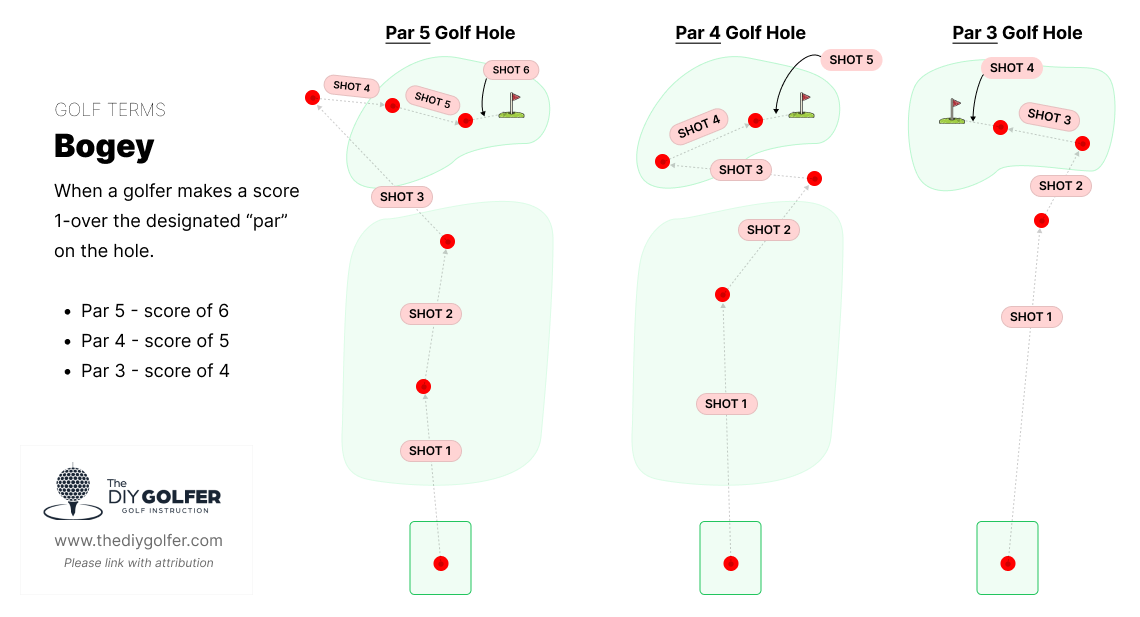
In golf, the word bogey has a simple meaning. A bogey is when a player takes one stroke more than the par for a hole. For example, if a hole is a par 4, and you need 5 strokes to finish it, that’s a bogey.
- Par is the number of strokes that an expert golfer is expected to need to complete a hole.
- Bogey means you took one more stroke than par.
So, if you play a par 3 hole in 4 shots, or a par 5 hole in 6 shots, both are bogeys. It’s a universal term, used everywhere golf is played.
The Origins Of The Word “bogey”
The history of the word bogey is interesting and a bit quirky. It started in Britain in the late 19th century. At first, it meant the score that a good player would aim for on a hole—what we now call “par.” The name came from a popular British song called “The Bogey Man,” and golfers would try to “beat the bogey man” by scoring better than this set number.
As golf spread, especially to the United States, the word par became the standard for the expert score. The term bogey shifted to mean one over par, the way we use it today. This history explains why golf has so many unusual terms and traditions.
How Scoring Works In Golf
Understanding bogeys is easier if you know how golf scoring works. Each hole on a golf course has a par value, usually between 3 and 5. Here’s a quick look at common golf scores:
| Term | Definition | Example (Par 4) |
|---|---|---|
| Birdie | One stroke under par | 3 strokes |
| Par | Expected strokes | 4 strokes |
| Bogey | One stroke over par | 5 strokes |
| Double Bogey | Two strokes over par | 6 strokes |
| Triple Bogey | Three strokes over par | 7 strokes |
Golfers try to score as few strokes as possible. Getting a bogey is not ideal, but it’s not the worst result either. Many amateur golfers actually score a bogey or worse on most holes.
Why Bogeys Matter In Golf
You may wonder, why focus on bogeys? For many players, making a bogey is a normal part of the game. In fact, the average score for most recreational golfers is close to a bogey on every hole.
Bogey Golfers
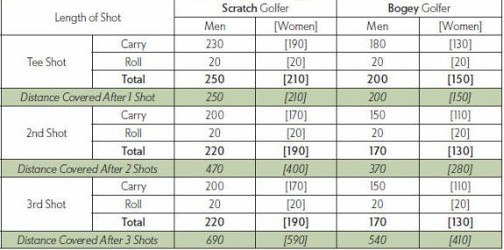
In golf slang, a bogey golfer is someone who averages about one over par per hole. For example, on an 18-hole course with a par of 72, a bogey golfer would usually score around 90.
Why is this important? Golfers use the idea of the “bogey golfer” to set skill levels, calculate handicaps, and design courses. The United States Golf Association (USGA) even uses the term in its rules.
Course Difficulty And Bogeys
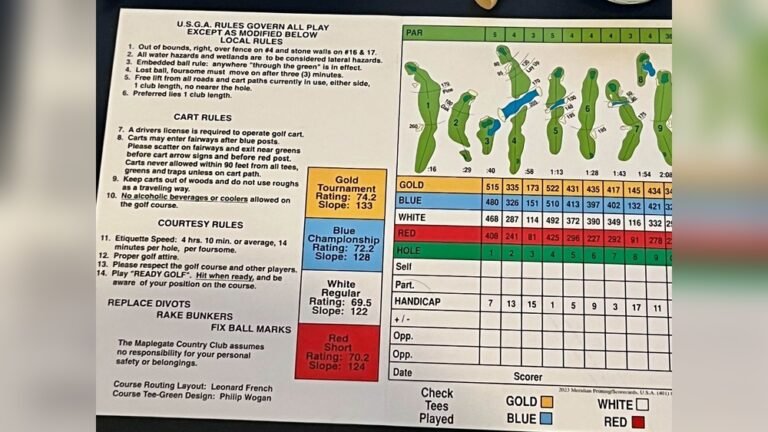
Golf courses are rated for difficulty. The Course Rating tells you how a scratch golfer (someone who can play to par) would do. The Slope Rating is based on how a bogey golfer would play the same course. If the Slope Rating is high, bogey golfers will find the course much harder than scratch golfers.
Bogey Vs. Other Common Golf Scores
It helps to compare bogey with other scores you’ll hear often in golf. Let’s look at a few:
- Birdie: One stroke under par (great result)
- Par: Exactly par (good result)
- Bogey: One over par (not bad for most amateurs)
- Double Bogey: Two over par (costly, but common for beginners)
- Triple Bogey or worse: Three or more over par (needs improvement)
Here’s a quick comparison:
| Score Name | Strokes Over/Under Par | Typical Reaction |
|---|---|---|
| Birdie | -1 | Celebration |
| Par | 0 | Satisfaction |
| Bogey | +1 | Acceptable/Neutral |
| Double Bogey | +2 | Disappointment |
| Triple Bogey | +3 | Frustration |
As you can see, bogey is the line between a decent hole and a poor one. Many players try to avoid double bogeys and worse.
Bogey In Different Types Of Golf
Golf is played in many forms. The meaning of bogey stays the same, but its impact can change depending on the game format.
Stroke Play
This is the most common type of tournament golf. Every stroke counts toward your total score. Here, making fewer bogeys gives you a better chance to win. For professionals, a bogey can cost them a big prize.
Match Play
In match play, players compete hole by hole. A bogey might only lose a single hole, rather than ruining your entire round. Sometimes, a bogey still wins the hole if your opponent does worse.
Stableford
Stableford is a scoring system where you earn points based on your score on each hole. A bogey usually gets you 1 point. In this format, bogeys are not as damaging as in stroke play.
Credit: www.thediygolfer.com
The Mindset Around Bogeys
Many beginners get upset about making a bogey. But experienced golfers know that golf is a hard game. Even the best players in the world make bogeys. In fact, in a typical round, a pro might make 2–3 bogeys.
Managing Expectations
If your goal is to break 90 or 100, making bogeys is actually a good sign. It means you are playing close to the level of a bogey golfer, which is a big achievement for most amateurs.
Learning From Bogeys
Every bogey tells a story. Did you miss the fairway? Three-putt on the green? Understanding why you made a bogey can help you improve. Many coaches say that “bogeys don’t ruin rounds—big numbers do. ” If you can avoid double and triple bogeys, your scores will improve quickly.
Strategies To Avoid Bogeys
Golfers always try to make fewer bogeys. Here are some practical ways to do it:
- Play smart from the tee: Use a club that keeps you in play, even if it’s not the driver.
- Aim for the middle of the green: Don’t chase tough pin locations.
- Practice your short game: Most bogeys happen around the green.
- Avoid risky shots: Take your medicine and get back in play after a bad shot.
- Work on putting: Three-putts turn pars into bogeys.
A non-obvious tip: Many golfers try to play “hero shots” after a mistake, which often leads to double or triple bogey. Sometimes, playing safe and accepting a bogey is the smart move.
Credit: golf-info-guide.com
Bogey And Golf Handicaps
Handicaps are a big part of amateur golf. They let players of different abilities compete fairly. The bogey golfer is central to how handicaps are set.
How Handicaps Use Bogey Scores
The USGA defines a bogey golfer as a player with a handicap of about 20 (men) or 24 (women). Courses are rated based on how this player would score. The difference between a scratch golfer’s expected score and a bogey golfer’s is the Slope Rating.
This system means your bogeys really matter. If you’re always making bogeys, your handicap will reflect that. Over time, as you improve, you’ll see more pars and fewer bogeys in your scores.
Famous Bogeys In Golf History
Even the greatest golfers have made bogeys at big moments. Sometimes, a single bogey can decide a tournament. Here are two examples:
- Jean Van de Velde (1999 Open Championship): On the final hole, Van de Velde needed a double bogey to win, but he made a triple bogey, lost his lead, and lost the playoff.
- Phil Mickelson (2006 U.S. Open): Mickelson made a double bogey on the 18th hole, losing his chance for the title.
These moments show that bogeys are a normal part of golf—even for the best in the world.

Credit: www.carttek.com
How To Track Your Bogeys
Keeping track of your bogeys can help you improve. Most scorecards have a space for each hole. After your round, count how many holes you played in one over par.
Some golfers use apps or spreadsheets. Here’s a simple way to track:
| Hole | Par | Your Score | Bogey? |
|---|---|---|---|
| 1 | 4 | 5 | Yes |
| 2 | 3 | 4 | Yes |
| 3 | 5 | 6 | Yes |
| 4 | 4 | 6 | No (Double Bogey) |
By tracking your bogeys, you’ll see patterns. Are you making bogeys on par 3s or par 5s? Is it always after a bad drive? This information is valuable for practice.
The Value Of Bogey Golf
Many people think only professionals or single-digit handicap golfers are “good.” But the truth is, bogey golf is a great level for most amateurs. If you can shoot around 90 on a par 72 course, you’re better than about 75% of all golfers.
One insight beginners miss: Golf is designed to be challenging. Even famous courses expect most players to make bogeys. Don’t be discouraged if you’re not making lots of pars and birdies. Focus on steady play and celebrate your progress.
Bogey In Popular Culture
Golfers love to joke about bogeys. There are even clubs and tournaments named after the word. Some players call themselves “bogey machines” when they’re having a tough day. The term is so well-known that even non-golfers use it to mean a minor mistake.
You’ll see bogeys mentioned in golf magazines, TV broadcasts, and even movies. It’s a reminder that golf is a game where everyone struggles sometimes.
Frequently Asked Questions
What Does “bogey” Mean In Golf?
A bogey in golf means taking one stroke more than par on a hole. For example, if a hole is a par 4 and you need 5 shots, that’s a bogey.
Is A Bogey Good Or Bad?
For professional golfers, a bogey is usually bad. For most amateur golfers, making a bogey is normal and not a problem. Many golfers aim for bogey golf as a milestone.
What’s The Difference Between A Bogey, Double Bogey, And Triple Bogey?
A bogey is one over par, a double bogey is two over par, and a triple bogey is three over par on a single hole.
What Is A Bogey Golfer?
A bogey golfer is someone who averages about one over par per hole. On an 18-hole, par 72 course, a bogey golfer would typically score around 90.
Where Can I Learn More About Golf Scoring Terms?
You can find more details about golf scoring and terms at the Wikipedia page on golf scoring.
Golf is a game of small victories and lessons. Understanding what a bogey is will help you enjoy the game more and measure your progress. Every golfer, from beginner to pro, deals with bogeys. The key is to learn from them, keep improving, and remember that even one over par can be a step toward your best round yet.