Golf is a sport of precision and skill. Players are always searching for ways to improve their game, whether it’s adjusting their swing or choosing the right club. One term that has become popular among golfers and coaches is smash factor. If you watch golf on TV or visit a modern driving range, you might hear people talking about smash factor and how it affects performance. But what exactly is smash factor in golf, and why does it matter?
Understanding Smash Factor
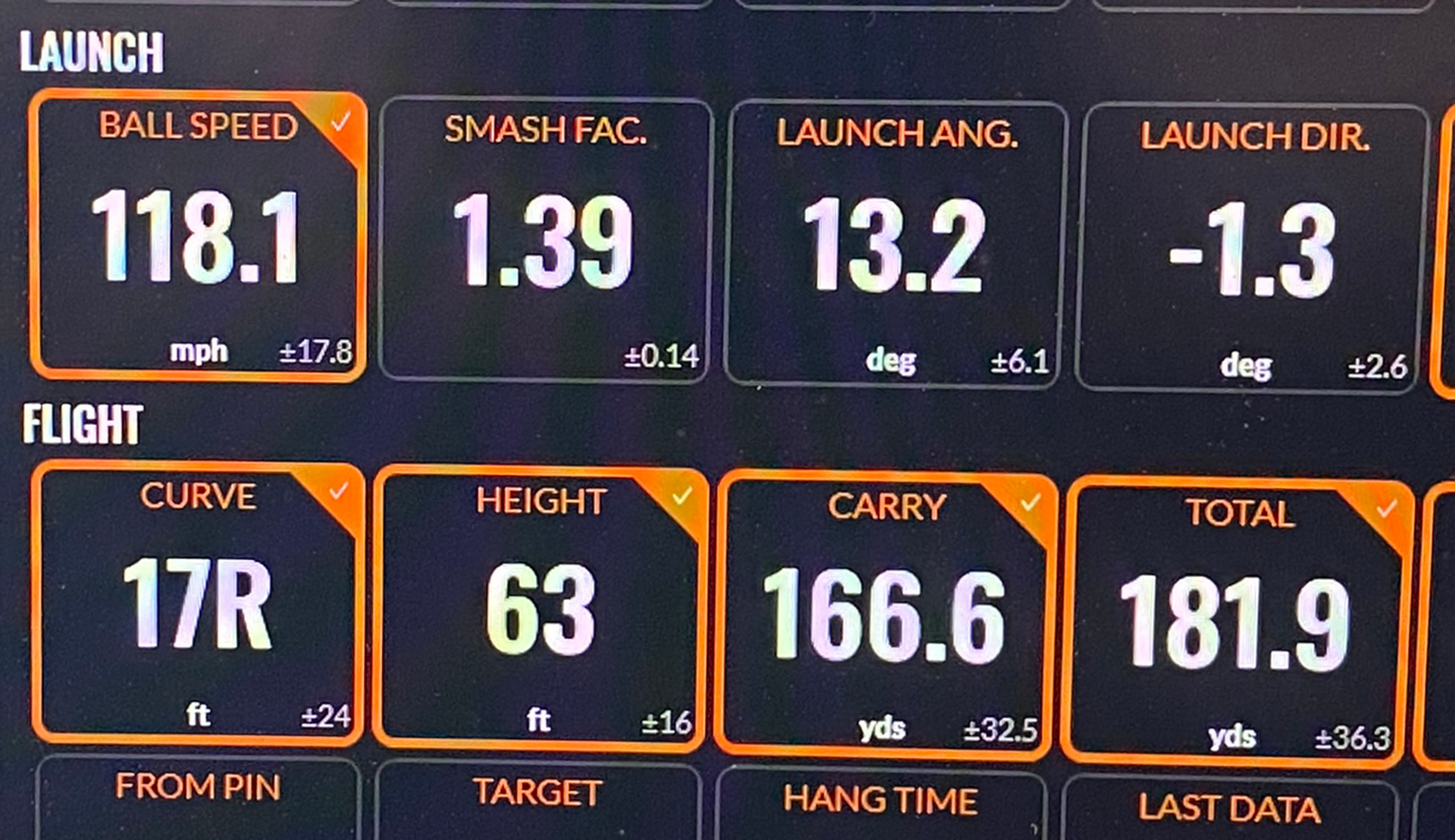
Smash factor is a simple ratio that shows how efficiently a golfer transfers energy from the club to the ball. It is calculated by dividing the ball speed by the clubhead speed. In other words, it tells you how well your swing turns clubhead speed into ball speed.
For example, if your clubhead speed is 100 mph and your ball speed is 150 mph, your smash factor is 1. 5 (150 ÷ 100). This number is important because it shows how much energy goes into the ball compared to the speed of your swing.
Golf launch monitors like TrackMan, GC Quad, and FlightScope measure smash factor during practice or fittings. Coaches and players use this data to improve technique and equipment choices.
The Science Behind Smash Factor
The physics of smash factor is not complicated, but it’s interesting. When the club strikes the ball, some energy transfers to the ball, making it fly. The rest is lost due to friction, deformation, and other factors.
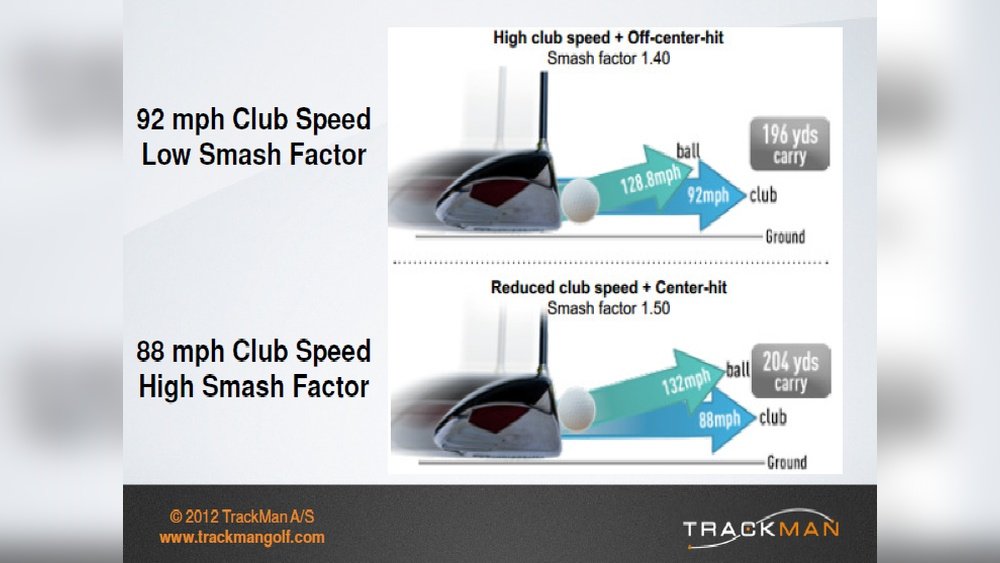
A higher smash factor means you are hitting the ball more efficiently. If your smash factor is low, it suggests energy is lost, possibly due to a poor strike, off-center hit, or unsuitable equipment.
The maximum smash factor is limited by the USGA rules. For drivers, the legal limit is around 1. 5–1. 52. Professional golfers often reach close to this number, while amateurs usually see lower values.

Credit: flightscope.com
Typical Smash Factor Values
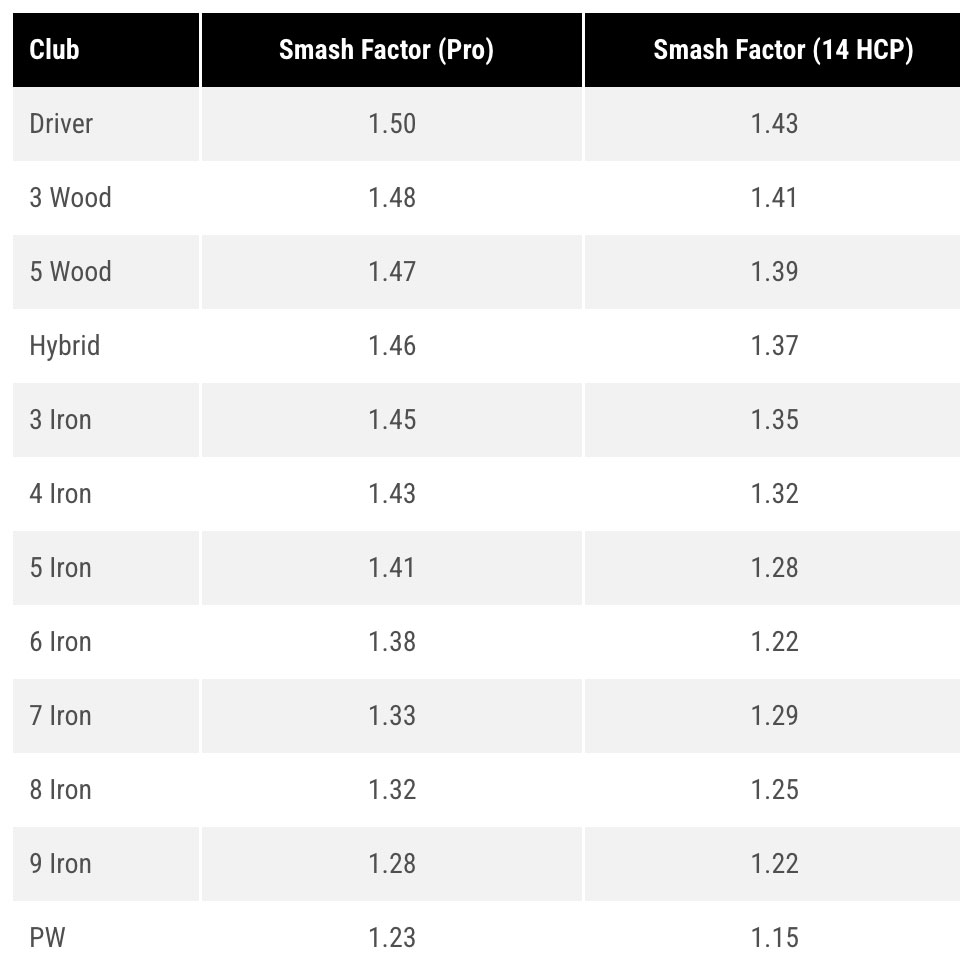
Smash factor changes depending on the club you use. Drivers usually produce the highest smash factor, while irons and wedges show lower values. Here’s a quick comparison:
| Club Type | Average Smash Factor | Typical Ball Speed (mph) | Typical Clubhead Speed (mph) |
|---|---|---|---|
| Driver | 1.45–1.50 | 140–170 | 95–115 |
| 3 Wood | 1.40–1.45 | 120–140 | 85–100 |
| 7 Iron | 1.30–1.35 | 80–105 | 60–80 |
| Pitching Wedge | 1.20–1.25 | 60–80 | 50–65 |
These values are averages. A skilled player with good contact may see slightly higher numbers. Beginners or those with poor technique often get lower smash factors.
Why Smash Factor Matters
Many golfers focus on clubhead speed, thinking that swinging harder means hitting farther. But smash factor shows that speed isn’t everything. If your smash factor is low, you won’t get maximum distance, even with a fast swing.
Improving smash factor can:
- Help you hit longer shots without swinging harder
- Reveal if your equipment fits your swing
- Show if you are striking the ball correctly
A high smash factor suggests you are making solid contact, using the center of the clubface, and your equipment is suitable. If your smash factor is low, you may be missing the sweet spot or using clubs that don’t match your swing.
How To Measure Smash Factor
Most golfers use a launch monitor to measure smash factor. These devices use radar or cameras to record clubhead speed and ball speed. The monitor then calculates smash factor instantly.
Some popular launch monitors are:
- TrackMan
- GC Quad
- FlightScope
- Foresight Sports
At many golf stores and ranges, you can ask for a fitting or practice session with these devices. They show not only smash factor, but also spin rate, launch angle, and carry distance.
Improving Your Smash Factor
Getting a higher smash factor isn’t just about swinging faster. You need to focus on technique and equipment.
- Hit the sweet spot: The center of the clubface transfers maximum energy. Practice to make solid contact.
- Check your equipment: Clubs that are too stiff, too flexible, or the wrong length can lower smash factor.
- Work on swing mechanics: Keeping your swing smooth and balanced helps you strike the ball cleanly.
- Get a professional fitting: Experts can help you choose the right clubs for your swing speed and style.
Many golfers believe that more speed equals more distance. But if you miss the sweet spot, your smash factor drops and the ball won’t go as far.
Credit: www.golfmonthly.com
Smash Factor Vs. Other Golf Metrics
Golfers often track many numbers: clubhead speed, ball speed, spin rate, launch angle, and carry distance. How does smash factor compare?
| Metric | What it Measures | Importance |
|---|---|---|
| Clubhead Speed | How fast the club moves at impact | Higher speed can mean more distance |
| Ball Speed | How fast the ball leaves the clubface | Directly affects distance |
| Smash Factor | Ball speed divided by clubhead speed | Shows efficiency of energy transfer |
| Spin Rate | How much the ball spins after impact | Affects trajectory and control |
| Launch Angle | Angle at which the ball leaves the club | Influences height and carry |
Smash factor is unique because it doesn’t just measure speed, but how well you use it. Improving smash factor often leads to better results without increasing effort.
Practical Examples
Let’s look at two golfers: Sarah and Mike.
- Sarah swings her driver at 100 mph. Her ball speed is 150 mph. Smash factor: 1.5.
- Mike swings at 105 mph. His ball speed is 147 mph. Smash factor: 1.4.
Sarah’s ball goes farther, even though she swings slower. Her higher smash factor means she uses her speed more efficiently.
Another example: If you hit the ball off the toe or heel of the club, smash factor drops. It’s not just about swinging hard, but hitting the center.
Common Mistakes That Lower Smash Factor
Some mistakes can reduce smash factor without you realizing it:
- Off-center hits: Missing the sweet spot lowers ball speed.
- Wrong club fit: Clubs that don’t match your swing can waste energy.
- Poor ball position: Standing too far or too close affects contact.
- Inconsistent swing path: If your swing isn’t stable, you lose efficiency.
Golfers often overlook these details. Improving smash factor is sometimes about small changes, not big adjustments.
Equipment And Smash Factor
Club design affects smash factor. Modern drivers have large sweet spots and flexible faces to help golfers get higher smash factors. Older clubs or poorly fitted equipment can make it harder to reach optimal numbers.
Golf balls also play a role. Softer balls may absorb more energy, while firmer balls transfer energy better. Choosing the right ball for your swing speed can help.
Professional club fitting is recommended for serious golfers. Experts use launch monitors to check smash factor and help you pick clubs and balls that suit your game.
How Pros Use Smash Factor
Professional golfers pay attention to smash factor during training and competition. They know that maximizing efficiency leads to more consistent performance.
- PGA Tour players often have smash factors around 1.48–1.50 with drivers.
- Many pros use launch monitors daily to track improvements.
- Coaches analyze smash factor to fix swing faults and recommend equipment.
Some famous golfers, like Rory McIlroy and Dustin Johnson, are known for combining high clubhead speed with high smash factor. This allows them to hit long, accurate drives.
Limitations Of Smash Factor
While smash factor is a useful metric, it’s not the only thing that matters. Some limitations:
- It doesn’t measure accuracy or consistency.
- High smash factor with poor launch angle may not give maximum distance.
- It’s affected by club and ball type, so comparisons must be fair.
Still, smash factor is a valuable tool for golfers who want to understand their performance and make improvements.
Non-obvious Insights For Beginners
Many beginners believe that speed is everything, but two insights often missed:
- Small improvements in contact make big changes in smash factor. Even a slight move toward the center of the clubface can raise your number and add yards.
- Matching club and ball to your swing matters more than you think. A club that fits your speed and style can raise smash factor without changing your technique.
These points show why smash factor is important for both amateurs and pros.
Real-world Data: Smash Factor Over Time
Golfers can track smash factor to see progress. Here’s an example showing how practice affects smash factor:
| Week | Average Smash Factor | Driver Distance (yards) |
|---|---|---|
| 1 | 1.38 | 220 |
| 2 | 1.42 | 230 |
| 3 | 1.46 | 240 |
| 4 | 1.49 | 250 |
This data shows that as smash factor improves, distance increases. Small gains can make a big difference.
Credit: www.golfbox.com.au
Frequently Asked Questions
What Is A Good Smash Factor For A Driver?
A good smash factor for a driver is usually between 1.45 and 1.50. Professional golfers often reach 1.48 or higher. Most amateurs aim for 1.40–1.45. Improving your contact and club fit can help you reach these numbers.
How Can I Increase My Smash Factor?
To increase smash factor, focus on hitting the center of the clubface and using clubs that fit your swing. Practice with launch monitors to check your numbers. Smooth, balanced swings and proper ball position make a big difference.
Does Smash Factor Affect Distance?
Yes, smash factor directly affects distance. Higher smash factor means more ball speed for the same swing speed. This results in longer shots without extra effort.
Is Smash Factor The Same For All Clubs?
No, smash factor changes by club. Drivers have the highest smash factor, while irons and wedges are lower. Each club transfers energy differently, so the numbers vary.
Can Beginners Improve Smash Factor Quickly?
Beginners can improve smash factor by practicing solid contact and getting a proper club fitting. Even small changes in technique or equipment can raise smash factor and add distance.
Golfers who understand smash factor gain a valuable tool for improving their game. By focusing on efficient energy transfer, not just speed, you can hit longer and more consistent shots. Whether you’re a beginner or a pro, tracking smash factor helps you see real progress. If you want to learn more about golf club fitting and performance, check out Golf Club Wikipedia for deeper information.
Remember, smash factor is about making the most of your swing. Work on technique, check your equipment, and practice smart. You’ll see results on the course and enjoy the game even more.