Golfers everywhere share a simple goal: hit the ball farther. Whether you’re a weekend player or a seasoned competitor, getting extra yards off the tee can change your game. But finding the best golf ball for distance isn’t easy. Manufacturers use different materials, designs, and technologies. Some balls fly straight but not far, while others promise big distance but sacrifice control. So, how do you choose the right golf ball to maximize your length?
Let’s break down the facts, compare top models, and reveal what really matters when you’re searching for a ball that delivers the longest drives.
What Makes A Golf Ball Go Far?
Distance starts with physics. When you hit a golf ball, its speed, spin, and flight path are shaped by both the club and the ball itself. Here are the main factors that affect distance:
- Compression: Low compression balls are softer, making them easier to launch for players with slower swing speeds. High compression balls suit faster swings, giving more energy transfer.
- Core Design: A larger, firmer core increases initial ball speed, helping the ball travel further.
- Aerodynamics: Dimple patterns control how air flows around the ball, reducing drag and keeping the ball in the air longer.
- Cover Material: Surlyn and urethane are common covers. Surlyn is durable and usually gives more distance, while urethane offers more spin and control.
Many beginners think only club speed matters, but ball selection can add 10–20 yards to your drives. For example, a study by Golf Digest showed that using a ball matched to your swing speed can boost your distance by up to 15%.
Comparing Top Golf Balls For Distance
To help you choose, here’s a comparison of popular balls designed for distance. Each ball is tested for carry, total distance, and price.
| Ball Model | Compression | Average Carry (yards) | Total Distance (yards) | Price (per dozen) |
|---|---|---|---|---|
| Titleist Velocity | High | 220 | 245 | $30 |
| Callaway Warbird | Low | 215 | 240 | $22 |
| TaylorMade Distance+ | Medium | 218 | 242 | $20 |
| Bridgestone e6 | Low | 217 | 241 | $25 |
| Srixon Distance | Medium | 216 | 240 | $23 |
As you can see, Titleist Velocity leads for carry and total distance, but you might prefer a lower price or different feel. Remember, numbers alone don’t tell the full story.
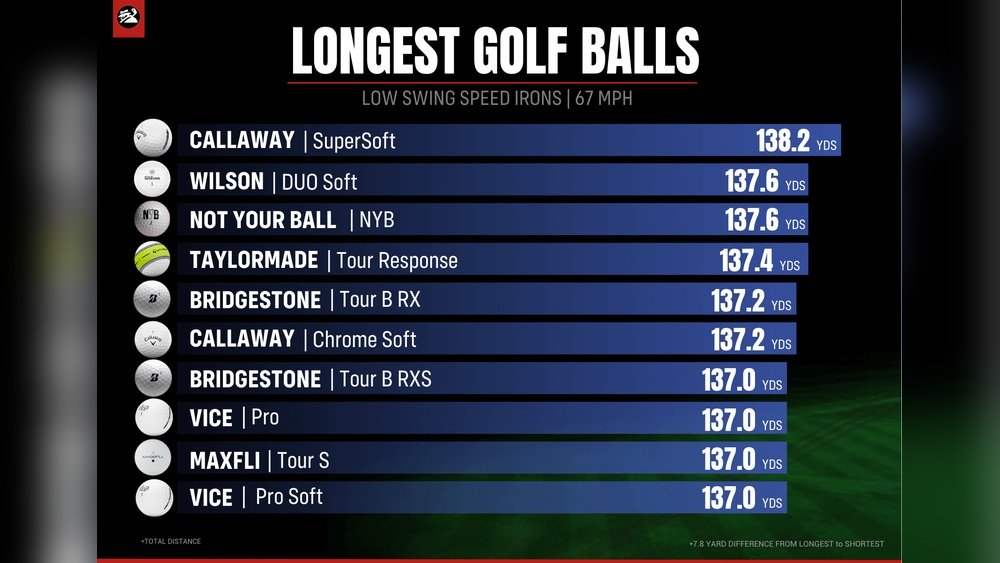
Credit: www.moresports.com
How Your Swing Speed Shapes Ball Choice
One non-obvious insight: the best ball for distance depends on your swing speed. Not everyone hits the ball at 110 mph like a pro. If you swing slower, a high-compression ball can actually reduce your distance.
Here’s a simple guide:
| Swing Speed | Recommended Compression | Best Ball Type |
|---|---|---|
| Less than 85 mph | Low | Soft core, Surlyn cover |
| 85–105 mph | Medium | Balanced core, varied cover |
| Above 105 mph | High | Firm core, advanced dimples |
Most recreational golfers swing below 90 mph. Choosing a low-compression ball can add visible distance, while a high-compression ball may feel “dead” and fly shorter.
The Role Of Dimples And Aerodynamics
You might not notice, but the dimple design on a golf ball is crucial for distance. Dimples reduce air resistance and keep the ball stable in flight. The more optimized the pattern, the less drag, and the farther the ball goes.
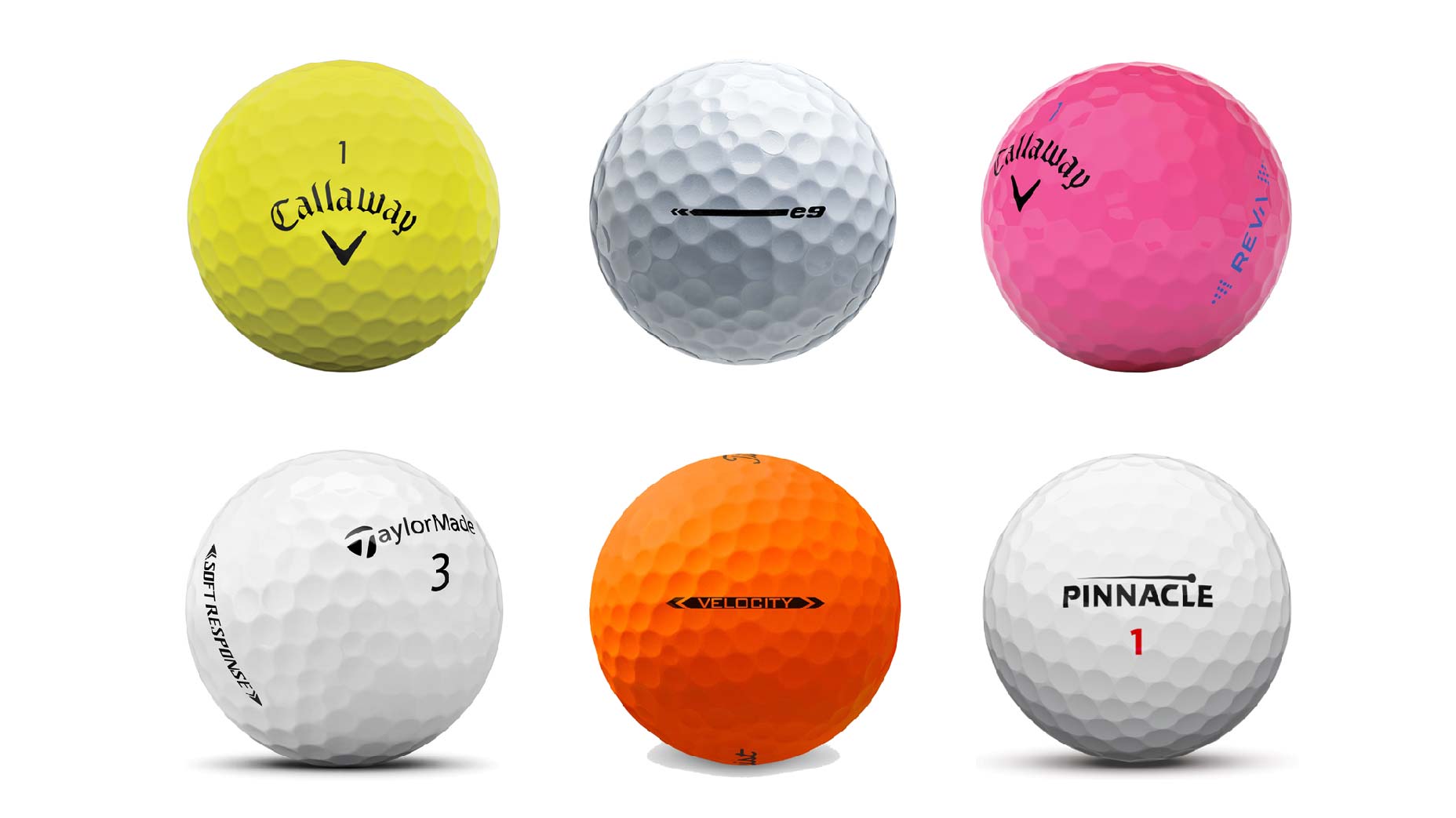
For example, the Titleist Velocity uses 350 octahedral dimples to create a high launch and low spin. This means the ball flies higher and stays in the air longer, leading to more distance.
Some balls have deep dimples for a piercing trajectory, while others use shallow designs for more lift. Manufacturers often keep their dimple formulas secret, but testing shows that a modern dimple pattern can add 5–10 yards compared to older models.
Credit: golf.com
Distance Vs. Control: What Are You Sacrificing?
Many balls for distance use Surlyn covers because they are hard and durable. This helps the ball bounce off the club with more speed. But a hard cover usually means less spin and less control around the greens.
If you only want length, a distance ball is great. But if you value spin for approach shots, you might lose some accuracy. For example, the Callaway Warbird gives excellent distance but less stopping power on the green.
A common mistake is picking the “longest” ball and ignoring how it feels on chips and putts. For many players, a balanced ball is better. Try different models to see what fits your game.
Real-world Testing: What Golfers Say
Golfers often find that the numbers on the package don’t match their experience. Real-world testing matters. Here’s what everyday players report:
- The Bridgestone e6 gives extra yards for slower swings, but feels softer on impact.
- The TaylorMade Distance+ offers consistent flight and good roll, but is less responsive on short shots.
- The Srixon Distance is popular for casual rounds, with a lively feel and solid performance.
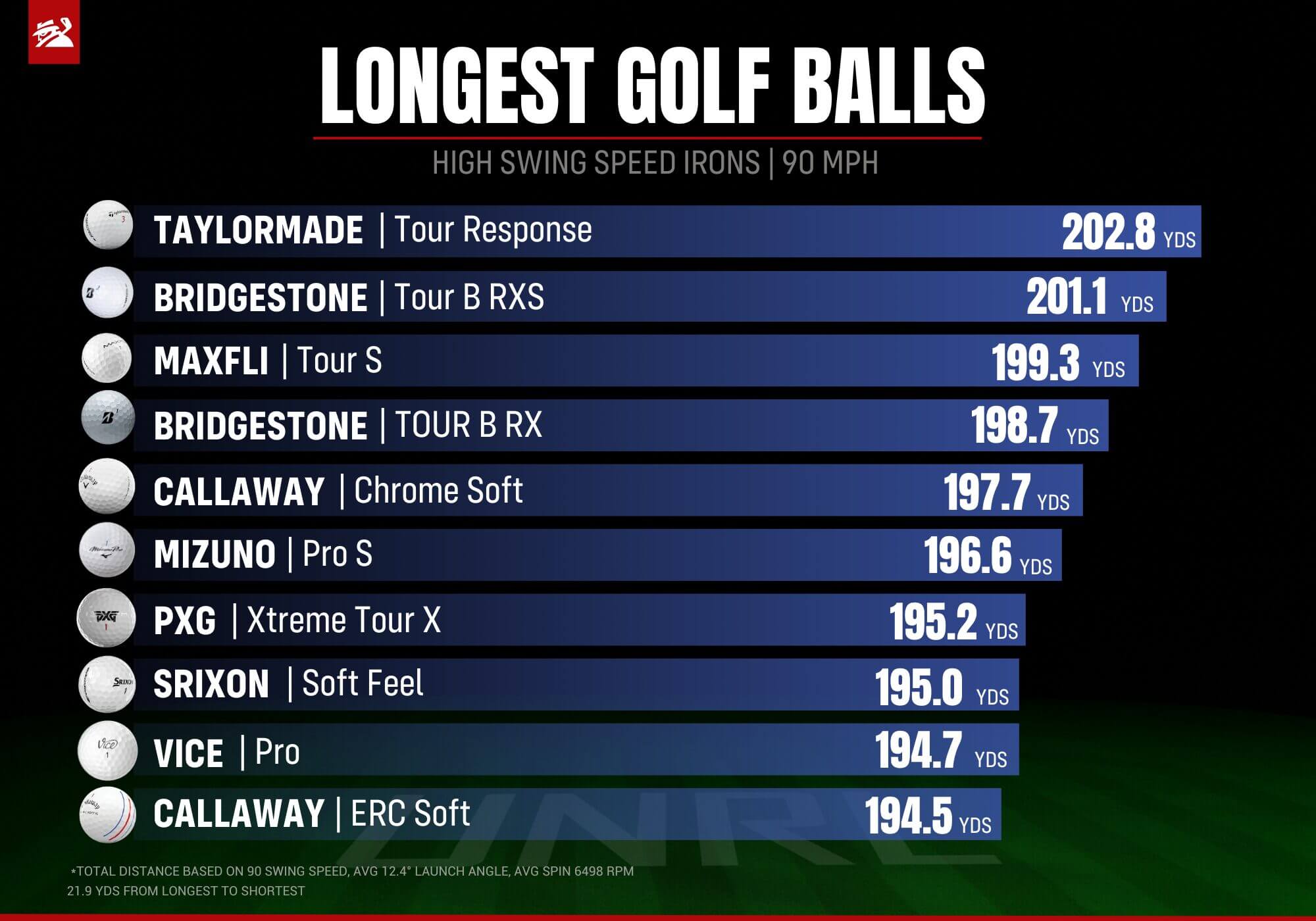
Golfers with fast swings prefer the Titleist Velocity for its firm response and high launch. Slower swingers often choose the Callaway Warbird or Bridgestone e6.
Testing balls yourself is important. Many stores sell small packs so you can try before buying a dozen.
Credit: mygolfspy.com
How To Choose The Best Golf Ball For Distance
Here’s a practical guide to picking the right ball:
- Know Your Swing Speed: Get measured at a golf shop or use a launch monitor. This is the key factor.
- Test Different Models: Buy sleeves (packs of 3) and hit each ball on the course or range.
- Consider Your Budget: Distance balls range from $20 to $30 per dozen. Higher prices often mean more technology, but not always more distance.
- Check Durability: Surlyn covers last longer. Urethane is softer but wears out faster.
- Think About Control: If you play a lot of short shots, find a ball that balances distance and spin.
- Read Reviews: User feedback can show how balls perform in real conditions.
- Avoid Common Mistakes: Don’t buy high-compression balls if your swing is slow. Don’t pick a ball just because it says “longest” on the box.
A non-obvious tip: many players overlook how weather affects ball performance. Cold air makes balls fly shorter, so in winter, a softer ball can help you get back some distance.
Distance Ball Technologies: What’s New?
Golf ball makers are always improving their products. In recent years, new materials and designs have increased distance even more. Here are some innovations:
- Dual-Core Technology: Two layers inside the ball increase energy transfer for faster launches.
- Advanced Dimple Designs: New patterns reduce drag and help balls stay airborne longer.
- Polymer Blends: Combining different plastics makes balls softer or harder, depending on need.
- High-Speed Mantle Layers: Extra inner layers boost ball speed, especially on drives.
Brands like Titleist, Callaway, and TaylorMade all use different tech to give you more yards. For detailed research, visit Golf Digest.
Performance Data: Distance Ball Results
Let’s look at how distance balls perform in real tests. Here’s a summary from launch monitor data:
| Ball | Driver Launch Angle | Spin Rate (rpm) | Ball Speed (mph) | Total Distance (yards) |
|---|---|---|---|---|
| Titleist Velocity | 13.5° | 2600 | 150 | 245 |
| Callaway Warbird | 14.1° | 2550 | 148 | 240 |
| TaylorMade Distance+ | 13.8° | 2700 | 149 | 242 |
| Bridgestone e6 | 14.2° | 2500 | 147 | 241 |
| Srixon Distance | 13.7° | 2600 | 148 | 240 |
These numbers show that launch angle and ball speed are key for distance. Lower spin rates also help the ball roll farther after landing.
Should You Use A Distance Ball Every Time?
Distance balls are great for long drives, but they aren’t perfect for every situation. If you play on windy courses, a ball with lower spin can help avoid big hooks or slices. On soft greens, a distance ball may roll too far, making approach shots tricky.
Some players switch balls depending on the course. Others stick with one model for consistency. If you want to improve your scores, try a distance ball for long holes and a softer ball for short ones.
Frequently Asked Questions
What Is The Best Golf Ball For Distance For Beginners?
Beginners should look for low-compression balls with Surlyn covers. These are easier to hit and give more distance with slower swings. The Callaway Warbird and Bridgestone e6 are good choices.
Does A Higher Price Mean More Distance?
Not always. While expensive balls may use advanced materials, many budget models offer similar distance. Focus on core design and compression, not just the price tag.
How Can I Measure My Swing Speed?
You can use a launch monitor at golf stores or driving ranges. Some apps and devices also estimate swing speed. Knowing your speed helps you pick the right ball for your game.
Will A Distance Ball Help With Accuracy?
Distance balls usually have lower spin, which can reduce hooks and slices. However, they may not be as accurate on short shots. If you want both distance and control, test different balls and see which fits best.
How Often Should I Replace My Golf Ball?
Replace your ball when you see cuts, scuffs, or cracks. A damaged ball loses distance and control. Most distance balls last several rounds if you avoid hitting trees or cart paths.
Final Thoughts
Choosing the best golf ball for distance is a mix of science and personal testing. Look for balls with the right compression, core, and cover for your swing speed. Don’t just trust marketing claims—try different models and see what works on the course. Remember, extra yards can make golf more fun, but a balanced ball may improve your whole game. Use the data, listen to your swing, and watch your drives get longer.