Are you setting up a volleyball net and wondering what the exact height should be? Whether you’re playing casually with friends or gearing up for an official game, knowing the regulation height of a volleyball net is crucial.
It affects your gameplay, your spikes, and your blocks, making every move count. You’ll discover the official standards for men’s, women’s, and co-ed volleyball net heights, plus tips on adjusting for youth and recreational play. Keep reading to make sure your net is set just right—and to gain a winning edge every time you hit the court!

Credit: www.networldsports.com
Official Net Heights
The official net heights in volleyball vary by gender and play type. These heights ensure fair competition and proper game play. Knowing the exact net height is important for players, coaches, and officials. Different leagues follow specific standards set by volleyball organizations worldwide. Below are the standard heights used in official volleyball matches and recreational play.
Men’s Standard Height
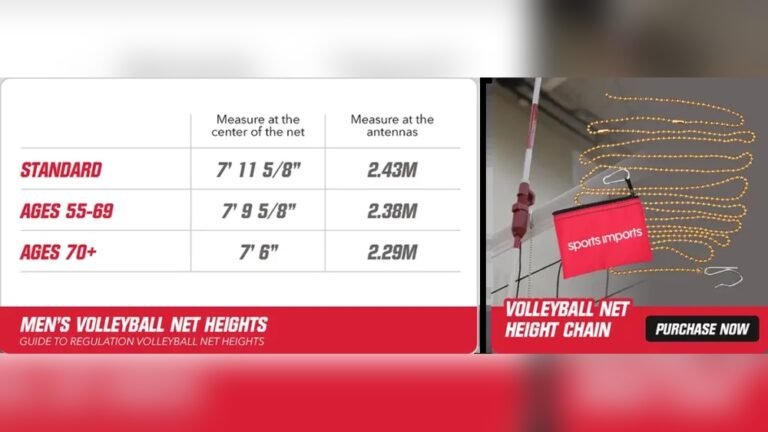
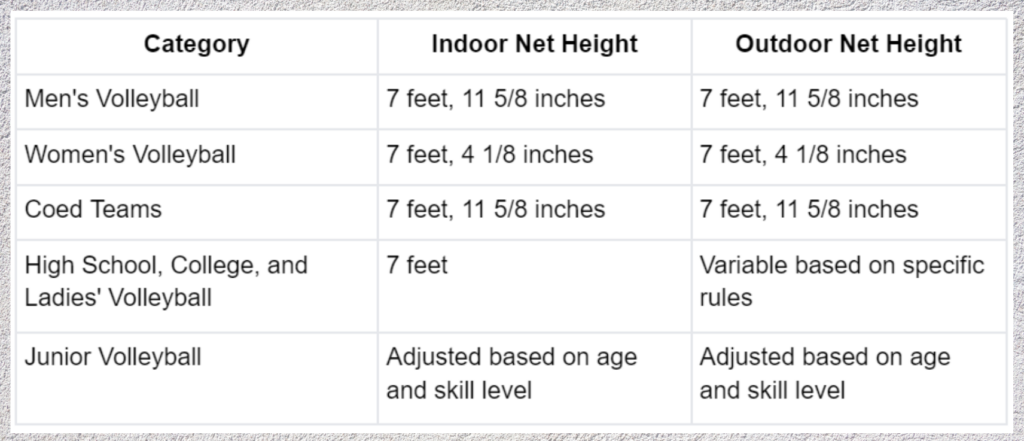
The official net height for men is 2.43 meters (7 feet 11 5/8 inches). This height is used in most indoor men’s volleyball competitions. It provides a challenging barrier for players to spike, block, and serve over. The 2.43-meter net height is recognized by the International Volleyball Federation (FIVB) and most national volleyball bodies.
Women’s Standard Height
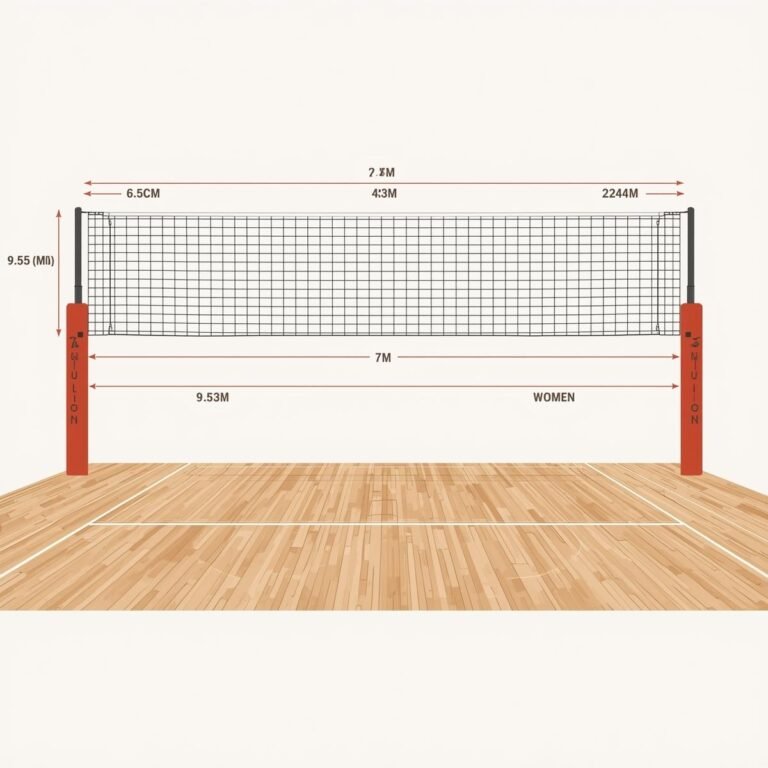
For women, the regulation net height is 2.24 meters (7 feet 4 1/8 inches). This slightly lower height suits the average reach and jumping ability of female players. It promotes fast-paced rallies and dynamic play. This height is standard in professional, collegiate, and international women’s volleyball events.
Co-ed And Recreational Heights
Co-ed and recreational leagues often use net heights between the men’s and women’s standards. The common height for mixed teams is 2.35 meters (7 feet 8 1/2 inches). Some recreational leagues set nets lower to encourage fun and inclusive play. Youth volleyball nets vary too, usually lower based on players’ ages and skill levels.
Variations By Age And Level
The regulation height for a volleyball net changes based on the players’ age and skill level. Different leagues and training settings use various net heights to match physical abilities and promote fair play. This ensures players enjoy the game and develop their skills safely.
Youth Volleyball Net Heights
Youth volleyball nets are lower than adult nets. This helps younger players reach and hit the ball more easily. For example, boys under 14 often use nets set at 2.13 meters (7 feet). Girls in the same age group usually play with nets at 2.13 meters as well. These heights allow kids to focus on learning the rules and techniques.
Older Leagues Adjustments
Some older men’s leagues use slightly lower nets than the official height. The standard men’s net height is 2.43 meters (7 feet 11 5/8 inches). But older players may prefer a net set closer to 2.35 meters. This adjustment helps reduce strain and keeps the game enjoyable for everyone. Women’s nets remain at 2.24 meters (7 feet 4 1/8 inches) across all adult leagues.
Training And Practice Nets
Training nets often have adjustable heights. Coaches use these nets to help players improve specific skills. Lower nets can assist beginners in practicing serves and spikes. Higher nets challenge advanced players to improve their jump and reach. Adjustable nets make training more flexible and effective for all levels.
Indoor Vs Beach Volleyball
Volleyball has two popular formats: indoor and beach volleyball. Both share similar rules but differ in playing environment and court setup. Understanding these differences helps explain the regulation net heights.
Indoor volleyball takes place inside a gym on a hard court. Beach volleyball happens outdoors on sand. These distinct settings influence court size, net height, and other factors.
Court Size Differences
Indoor volleyball courts measure 18 meters long and 9 meters wide. Beach volleyball courts are smaller, usually 16 meters by 8 meters. The smaller beach court suits outdoor play and fewer players.
The number of players also differs. Indoor volleyball has six players per team. Beach volleyball features two players per side. Court size matches the style of play and player count.
Net Height Consistency
Net height remains mostly the same between indoor and beach volleyball. For men, the standard net height is 2.43 meters. For women, it is 2.24 meters. These heights follow international volleyball federation rules.
Younger players or recreational leagues may use lower nets. The regulation heights ensure fairness in official matches across both indoor and beach volleyball.
Environmental Considerations
Playing outdoors changes how the net and court react. Wind and sun can affect beach volleyball games. The softer sand surface changes player movement and jumping compared to indoor courts.
Indoor courts have controlled lighting and no wind. The indoor setting allows consistent play and less impact from weather. These environmental factors influence court design but keep net height standards consistent.

Credit: www.networldsports.com
Measuring Net Height
Measuring the net height is essential for fair volleyball play. It ensures the net matches official rules. Proper measurement keeps the game balanced and competitive. Both indoor and beach volleyball have specific heights to follow. Accurate net height helps players perform at their best. It also prevents disputes during matches. This section explains how to measure volleyball net height correctly.
Proper Support And Setup
The net should be fully stretched between two poles. Poles must be firmly anchored in the ground or floor. Use a stable frame to avoid sagging or tilting. The net’s top tape must be even on both sides. Check the tension regularly to maintain the correct height. Proper setup creates a level and secure net for measurement.
Tools For Accurate Measurement
Use a tape measure or a measuring stick for precision. A laser level can help verify height alignment. Measure from the center of the court for accuracy. The measurement should be from the floor to the top edge of the net. Mark poles with height indicators for quick checks. Keep tools handy for regular adjustments during play.
Common Mistakes To Avoid
Do not measure from uneven surfaces or slopes. Avoid measuring from the net’s bottom or side edges. Do not rely on visual guesswork or rough estimates. Never ignore net tension; a loose net affects height. Avoid measuring only at one pole; check both sides. Regular checks prevent mistakes and keep the net regulation height.
Impact On Gameplay
The height of a volleyball net shapes the entire flow of the game. It influences how players jump, block, and spike. Different heights can change the pace and style of play. Players must adjust their skills to meet the challenge the net height presents.
Understanding this impact helps players prepare better for matches. Coaches also use this knowledge to train teams effectively. Below are key ways the net height affects gameplay.
Effect On Player Performance
A higher net demands more from players physically. Jumping ability becomes crucial for successful attacks and blocks. Players with strong vertical leaps have an advantage.
Lower nets allow for faster, more aggressive plays. Players can hit more powerful spikes with less effort. This can lead to quicker rallies and more scoring opportunities.
Strategic Differences By Height
Teams change their tactics based on net height. A higher net favors defensive play and careful ball placement. Players focus on timing and positioning to overcome the barrier.
With a lower net, teams often use faster offensive moves. Quick sets and sharp spikes become common strategies. This keeps opponents on their toes and can disrupt defense.
Adapting To Net Variations
Players must adjust quickly to net height changes during tournaments or practice. Training includes exercises to improve jumping and timing skills. Flexibility in tactics also helps teams stay competitive.
Coaches emphasize reading the net height before games. Teams practicing at different heights build confidence and versatility. This adaptation improves overall gameplay and teamwork.
Rules From Governing Bodies
Volleyball net height is controlled by strict rules set by official organizations. These governing bodies ensure fair play and consistency worldwide. Understanding their regulations helps players and coaches prepare correctly for matches.
The rules vary slightly based on competition level and gender. Each body publishes clear standards for net height to follow during games.
Fivb Regulations
The International Volleyball Federation (FIVB) sets the global standard. For men, the net height is 2.43 meters (7 feet 11 5/8 inches). For women, it is 2.24 meters (7 feet 4 1/8 inches). These measurements apply to official indoor and beach volleyball competitions.
The FIVB rules also define net tension and court dimensions. These standards ensure uniformity in international tournaments and Olympic games.
Usa Volleyball Guidelines
USA Volleyball follows the FIVB height rules for adult competitions. The men’s net remains at 2.43 meters and the women’s at 2.24 meters. Youth leagues use lower nets depending on player age.
Younger players often compete with nets as low as 2.13 meters. This adjustment helps beginners develop skills safely and comfortably.
Other International Standards
Many countries adopt FIVB regulations for their official competitions. Minor differences exist in youth and recreational leagues worldwide. Some older men’s leagues use slightly lower nets for safety.
Beach volleyball courts may also have specific rules. For example, court size and net height can vary in informal play or regional tournaments.
Choosing The Right Net Height
Choosing the right net height is crucial for a good volleyball experience. The correct height ensures fair play and suits the players’ abilities. It affects how the game flows and how players perform. Setting the net too high or too low can change the challenge and fun of the game.
Factors To Consider
Age and gender are key factors in choosing net height. Official heights differ for men and women. Men’s net height is 2.43 meters (7 feet 11 5/8 inches). Women’s net height is 2.24 meters (7 feet 4 1/8 inches). Youth players usually need lower nets. Skill level also matters. Beginners benefit from a lower net to build confidence.
Customizing For Skill Level
Adjusting net height helps players improve. Lower nets suit new players and children. Experienced players should use regulation height for challenge. Coaches often raise the net gradually. This approach helps players gain strength and technique. Custom heights keep games competitive and fun.
Safety Considerations
Safety is vital when setting net height. Nets set too high can cause injury. Players might strain muscles or fall. Nets too low may lead to awkward movements. Always check the stability of the net. Proper setup prevents accidents and ensures safe play.
Credit: sterlingvolleyball.com
Common Questions
Many players and fans have questions about volleyball net heights. These common questions help clarify the rules and standards. Understanding the differences improves the playing experience. Below, we answer some frequent questions about volleyball net heights.
Why Are Heights Different For Men And Women?
The net height is higher for men than women. This difference matches the typical physical strength and jumping ability. Men’s net height is 2.43 meters (7 feet 11 5/8 inches). Women’s net height is 2.24 meters (7 feet 4 1/8 inches). This ensures fair competition and balanced gameplay.
What Is Co-ed Net Height?
Co-ed volleyball uses a middle net height. It is set between men’s and women’s heights. Usually, the co-ed net height is 2.35 meters (7 feet 8 1/2 inches). This height works well for mixed teams. It keeps the game challenging and fun for all players.
Can Net Height Be Adjusted During Matches?
Net height cannot change during official matches. It must stay at the set regulation height. Referees check the net height before the game starts. Adjustments are only allowed between matches or sets. This rule keeps the game fair and consistent.
Frequently Asked Questions
What Is The Regulation Volleyball Net Height?
The regulation volleyball net height is 2. 43 meters (7 feet 11 5/8 inches) for men and 2. 24 meters (7 feet 4 1/8 inches) for women. Co-ed and recreational play often use 2. 35 meters. Youth leagues may use lower heights based on age groups.
Is The Volleyball Net 3 Feet High?
A standard volleyball net is not 3 feet high. Men’s net height is 7 feet 11 5/8 inches (2. 43 meters). Women’s net height is 7 feet 4 1/8 inches (2. 24 meters). Recreational or co-ed nets vary but remain above 3 feet.
What Is A Full-size Volleyball Net?
A full-size volleyball net measures 32 feet wide and 3 feet high. Official height is 7 feet 11 5/8 inches for men, 7 feet 4 1/8 inches for women. It fits regulation indoor and beach courts for official play.
At What Height Should The Volleyball Net Be Supported?
The official volleyball net height is 2. 43 meters (7 feet 11 5/8 inches) for men and 2. 24 meters (7 feet 4 1/8 inches) for women. Co-ed or recreational nets often set at 2. 35 meters (7 feet 8 inches).
Adjust height for youth or specific leagues as needed.
Conclusion
The regulation height for a volleyball net ensures fair play for all players. Men’s nets stand at 2. 43 meters (7 feet 11 5/8 inches). Women’s nets measure 2. 24 meters (7 feet 4 1/8 inches). Youth and recreational leagues often use lower nets for safety and skill levels.
Knowing these heights helps set up courts correctly. It also improves the playing experience. Always check official rules before setting net height. This simple step supports better games and fair competition.