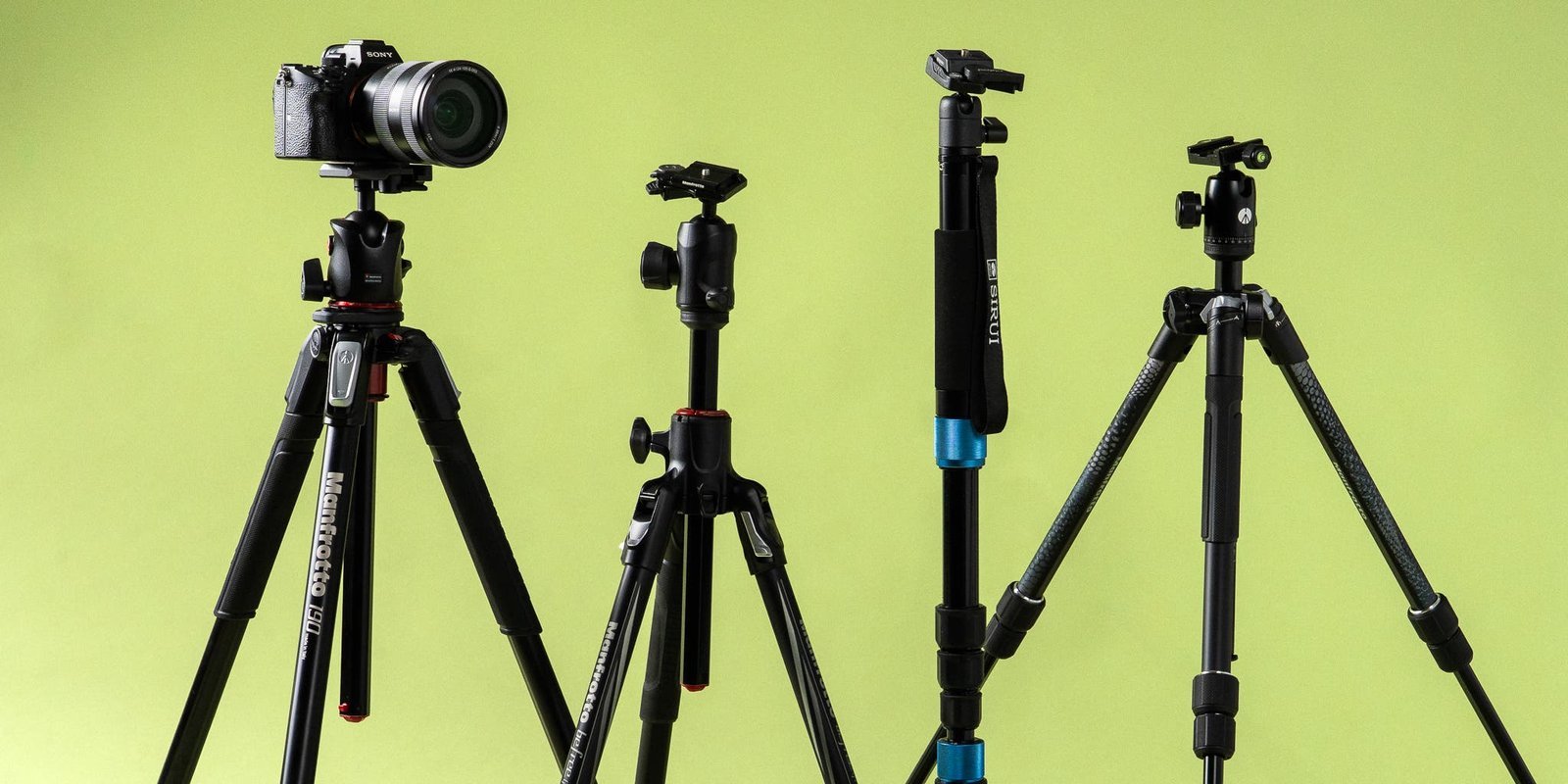
The best hiking tripod depends on your pack weight, setup speed, and camera gear. These five models vary in material, height, and stability. The Peak Design Travel Tripod is ideal for speed, while the Fotopro 60″ Carbon Fiber suits those counting every ounce. As an Amazon Associate, we earn from qualifying purchases..
1. Peak Design Travel Tripod

Best for: hikers who shoot fast and hate fumbling with gear.
A camera tripod for hiking should not be a burden on the trail. You need a model that opens quickly so you do not miss the light. This design packs to the size of a water bottle for easy storage and deploys in seconds without complex adjustments.
It handles up to 20 lbs, so a full-frame DSLR with a telephoto lens won’t wobble. The omnidirectional ball head uses a single adjustment ring, keeping controls simple when your hands are cold. A built-in mobile mount pops out of the center column if you’d rather use your phone. It’s not for someone who wants to leave their tripod behind as a monopod, since this one doesn’t convert.
Good if:
- You switch between a camera and phone often on the same hike.
- You carry a heavy mirrorless setup with big glass.
- You want a shape that fits inside a backpack sleeve.
Skip it if:
- You prefer a detachable monopod for moving shots.
- You only shoot with a lightweight point-and-shoot.
2. Fotopro 60″ Carbon Fiber Camera Travel Tripod

Best for: ultralight hikers carrying carbon fiber to save energy.
Every ounce matters when you’re climbing elevation all day. Carbon fiber cuts the weight here to just 2 lbs, compared to the 2.53 lbs of the aluminum models mentioned in the listing. It folds to 14.17 inches, fitting into carry-on bags or tight pack spaces without snagging branches. Carbon fiber dampens vibration better than metal, which helps when you’re shooting long exposures in the wind.
The legs offer three angles—25°, 50°, and 80°—so you can plant it firmly on rocky slopes. One leg detaches in under ten seconds to become a 42.7-inch monopod without tools. It ships with an Arca-Swiss compatible plate, meaning it works with the quick-release gear you might already own. It’s not for someone hauling a massive cinema rig, as the 17.6 lb load limit has its ceiling.
Good if:
- You count grams and refuse to carry heavy aluminum.
- You shoot panoramas using the 360° ball head.
- You want a monopod option without buying a second item.
Skip it if:
- Your camera and lens combo exceeds 17.6 lbs.
- You never shoot on uneven ground where leg angles matter.
3. SmallRig 71″/ 180cm Aluminum Camera Ball Head Tripod & Monopod

Best for: creators who mount monitors and phones alongside cameras.
Some hikers aren’t just taking photos; they’re recording video or monitoring a feed. This aluminum tripod reaches 71 inches, giving you height for shooting over tall grass or rocks. It weighs 1530g and holds up to 33 lbs vertically, which covers almost any standard camera setup you’d take outdoors. The magnesium aluminum alloy build provides a net weight of 1530g.
What sets it apart are the three 1/4″ threaded holes added to the bracket. You can attach magic arms, external monitors, or phones directly to the tripod body. The 36mm metal ball-head rotates fully, and the center pole inverts for low-angle macro work. It converts into a monopod too, making it a flexible companion for moving trails. It’s not for someone wanting a compact water-bottle shape, since it folds to 16.9 inches.
Good if:
- You run a monitor or microphone off your tripod.
- You need maximum height for standing-level video.
- You shoot macro by inverting the center column.
Skip it if:
- You want the absolute smallest folded footprint.
- You only carry a phone and don’t need accessory mounts.
4. K&F Concept 64 inch/163cm Lightweight Aluminum Travel Camera Tripod

Best for: first-time buyers wanting a straightforward folding tripod.
If you’ve never carried a tripod on a hike, you want something simple that doesn’t confuse you. This one uses flip leg locks you can open and close with one hand in seconds. It extends from 20.4 inches to 64.1 inches, covering most shooting heights you’ll find on a trail. The net weight is 2.53 lbs including the ball head, keeping your pack manageable.
The 36mm ball head withstands up to 17.6 lbs and features a 360-degree panning dial for landscape sweeps. You can invert the center column or swap it for a short one to get really low to the ground. It uses a standard 1/4″ thread that fits most Arca-Swiss quick release plates you might buy later. It’s not for someone who needs a monopod, because this listing doesn’t mention that conversion.
Good if:
- You want simple setup when your other hand holds a camera.
- You shoot landscapes requiring precise panning adjustments.
- You like getting low for ground-level nature shots.
Skip it if:
- You plan to use a monopod for walking videos.
- You need to mount accessories directly to the legs.
5. NEEWER Basics TP14B 72″ / 182 cm Compact Travel Tripod

Best for: content creators filming with both phones and cameras.
Hiking often means capturing video for social media, not just still photos. This tripod includes a phone holder mount compatible with devices like the iPhone 16 series and Samsung Galaxy S25 Ultra. It reversely folds to 17 inches, making it easy to strap to the outside of a daypack. Weighing 2.9 lbs, it balances portability with the reach needed for taller users.
The 2-section center column elevates the setup up to 72 inches, which is great for eye-level vlogging on the trail. You can invert it for macro shots, and the three leg angle adjustments help on uneven dirt paths. The 360° ball head allows 90° tilt and includes a leveling scale for straight horizons. It’s not for someone avoiding extra bulk, since 2.9 lbs is heavier than the carbon options here.
Good if:
- You film vertical or horizontal video with your smartphone.
- You need a 72-inch height for standing vlogs.
- You want a leveling scale built into the head.
Skip it if:
- You strictly shoot photography and never use a phone.
- You prioritize the lowest possible weight above all else.
Where These Overlap
The K&F Concept 64″ Aluminum and the Neewer TP14B share similar flip-lock mechanics and max loads around 17 lbs. If you don’t need a phone mount, the choice barely matters between them. The Fotopro 60″ Carbon Fiber and the SmallRig CT-10 both convert to monopods, but they diverge entirely on material and accessory mounting. Pick based on whether you value carbon weight or bracket threads.
Still Not Sure?
How heavy is my camera setup?
A mirrorless body with a small lens stays under 5 lbs, which any of these handle easily. But if you carry a full-frame DSLR with a large telephoto zoom, you need higher capacity. The SmallRig CT-10 supports 33 lbs vertically, making it the safest anchor for heavy glass.
Do I shoot more video or photos?
Photographers usually want precision panning and low angles for landscapes. Video creators need height for eye-level framing and often mount smartphones alongside main cameras. If your hikes involve vlogging or social clips, the Neewer TP14B includes the phone holder you’ll actually use.
Will I use the monopod feature?
Many hikers buy a tripod but walk fast-moving trails where setting up three legs takes too long. A detachable monopod lets you stabilize a shot while staying mobile. If you know you’ll keep moving, the Fotopro 60″ Carbon Fiber converts in under ten seconds.
For slow setups where you stay put, the Peak Design Travel Tripod serves photographers who want fast deployment without converting to a monopod. Choose based on your pace. Check the buttons below to see today’s details on Amazon.
Related guides
- Best Time Of Year For Hiking In San Francisco
- Best Boots for Summer Hiking: Top Lightweight Waterproof Picks
- 10 Best Hiking Pants for Tall Women: Our Expert Picks this year
Frequently Asked Questions
Which hiking tripod fits inside a backpack water bottle pocket?
The Peak Design Travel Tripod packs down to the diameter of a standard water bottle. This specific shape slides into side pockets without needing straps or external clips. The others fold between 14 and 17 inches, which usually requires internal packing or external lash points instead.
Can I use my existing Arca-Swiss plates with these hiking tripods?
Yes, several accept them directly. The Fotopro 60″ Carbon Fiber ships with a true Arca-Swiss compatible plate included. The K&F Concept 64″ Aluminum applies to most Arca-Swiss quick release plates via its standard thread. The Neewer TP14B also uses a 1/4″ Arca type quick release plate.
How do I stabilize a hiking tripod in strong mountain winds?
Look for a center hook to hang your backpack for downward weight. The Fotopro 60″ Carbon Fiber and the Neewer TP14B both include a weight hook for wind stability. Wider leg angles, like the 80° setting on the Fotopro, help stabilize the tripod on uneven ground.
Does a carbon fiber hiking tripod really weigh less than aluminum?
The listings show the difference clearly. The Fotopro 60″ Carbon Fiber weighs 2 lbs and states it saves over 1.3 lbs versus aluminum models. Compare that to the K&F Concept 64″ Aluminum at 2.53 lbs or the SmallRig CT-10 at 1530g, and the carbon advantage is real for long distances.
Conclusion
Choosing the right support gear makes a huge difference when you’re out on the trail. Once you’ve picked the perfect match for your camera, head outside and practice setting it up on uneven ground. You’ll feel much more confident capturing those breathtaking landscapes when you’re finally ready for your next big adventure.