Choosing between braid or monofilament (mono) fishing line for your baitcaster can feel confusing, especially if you’re new to baitcasting reels. Many anglers talk passionately about their favorite line, but not all advice is practical or easy to understand. Let’s break down everything you need to know about braid and mono lines for baitcasters, so you can fish with more confidence and fewer problems.
Why Your Line Choice Matters For Baitcasters
A baitcasting reel is different from a spinning reel. It sits on top of your rod and lets you control your cast with your thumb. This design helps you cast farther and with more accuracy. But it also makes the reel more sensitive to problems like backlash (when the line gets tangled on the spool).
The fishing line you use affects almost everything:
- Casting distance
- Line memory (how much your line wants to coil up)
- Knot strength
- Sensitivity (feeling bites)
- Abrasion resistance (how well your line holds up against rocks or cover)
Choosing the right line can help you avoid frustration and land more fish.
What Is Monofilament Line?
Monofilament (often called “mono”) is the classic, single-strand plastic fishing line that’s been around for decades. It’s soft, easy to tie knots with, and stretches under pressure.
Key Features Of Mono
- Affordable: Mono is usually the cheapest line option.
- Stretch: It stretches, which can help absorb sudden shocks from fighting fish.
- Easy to Handle: Less likely to tangle, good for beginners.
- Floats: Mono floats, which can be helpful for topwater fishing.
When To Use Mono On A Baitcaster
Mono is a solid choice when:
- You want a budget-friendly line.
- You fish topwater lures, crankbaits, or spinnerbaits.
- You’re new to baitcasting and want fewer tangles.

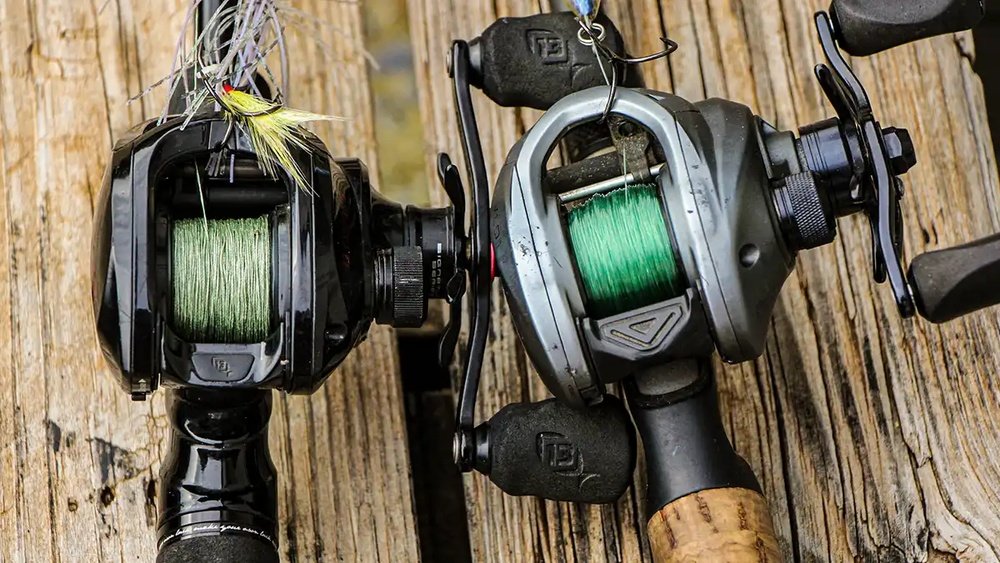
Credit: www.reddit.com
What Is Braid Line?
Braided line is made from several fibers woven together, creating a strong, thin, and nearly stretch-free line.
Key Features Of Braid
- High Strength: Braid is much stronger than mono of the same diameter.
- Very Little Stretch: You feel even light bites.
- Thin Diameter: Thinner line means longer casts and more line on your spool.
- Does Not Rot: Braid lasts longer and doesn’t degrade from sunlight or water.
- Floats: Like mono, braid also floats.
When To Use Braid On A Baitcaster
Braid shines when:
- You fish in heavy cover (grass, lilies, timber).
- You want long, accurate casts.
- You need to feel every bite and change in your lure.
Braid Vs Mono: Head-to-head Comparison
To see how these lines stack up, let’s look at a direct comparison:
| Feature | Monofilament | Braid |
|---|---|---|
| Strength (per diameter) | Lower | Higher |
| Stretch | High | Almost none |
| Sensitivity | Medium | Very high |
| Abrasion Resistance | Good | Fair (can fray on rocks) |
| Visibility in Water | Low (less visible) | High (fish may see it) |
| Price | Low | High |
| Memory | High (coils up) | Low (stays straight) |
| Knot Strength | Good | Can slip if tied wrong |
Pros And Cons Of Mono On Baitcasters
Advantages Of Monofilament
- Forgiving Stretch: Mono’s stretch lets you make mistakes without losing fish. If you set the hook too hard, the line absorbs the shock.
- Easier Casting for Beginners: It’s less likely to dig into itself on the spool, so backlashes are easier to fix.
- Cheaper to Replace: Spoiling your line isn’t expensive if you need to change often.
- Good for Topwater: Because mono floats, it works well for lures on the surface.
- Invisible Underwater: Clear mono is hard for fish to see, which matters in clear water.
Disadvantages Of Monofilament
- Memory Problems: Mono wants to stay coiled, which can cause loose loops and tangles.
- Lower Sensitivity: You may miss light bites, especially in deep water.
- Weaker Over Time: Sunlight and water make mono weaker, so you need to replace it more often.
- Thicker Line: For the same strength, mono is thicker than braid, so you can’t fit as much on the reel.
Pros And Cons Of Braid On Baitcasters
Advantages Of Braided Line
- Superb Strength: Braid is up to four times stronger than mono of the same thickness. You can use thinner line for the same power.
- Long, Accurate Casts: Thin braid flies off the reel easily, helping you reach distant spots.
- Extreme Sensitivity: No stretch means you feel every bump, weed, or nibble.
- Lasts Longer: Braid does not break down as quickly as mono, so you don’t replace it as often.
- Slices Through Vegetation: In weedy lakes, braid cuts through grass, making it perfect for heavy cover.
Disadvantages Of Braided Line
- Backlash Issues: Braid can dig into itself on the spool, making backlashes harder to fix.
- Slippery on Spool: If you tie braid directly to the spool, it can slip and spin. Use backing or tape for grip.
- Visible to Fish: In clear water, fish might see the line. Many anglers use a fluorocarbon leader to hide the line.
- Expensive: Braid costs more upfront than mono.
- Knot Problems: Not all knots hold well with braid. You need special knots, like the Palomar or Double Uni.
Practical Scenarios: Which Line Is Best?
Scenario 1: Heavy Cover Bass Fishing
Fishing in thick grass, lily pads, or wood? Braid is the clear winner. Its strength and cutting ability help you pull fish out of dense cover. Mono will break more easily or stretch too much.
Scenario 2: Clear Water Lakes
In ultra-clear water, mono is often better. Fish are less likely to spot your line, and the stretch helps keep fish hooked when they jump.
Scenario 3: Casting Light Lures
Casting lightweight lures can be tricky with baitcasters. Braid’s thin diameter helps you cast farther, but beginners may struggle with backlashes. Mono is easier at first.
Scenario 4: Topwater Lures
Both lines float, but mono is usually preferred because its stretch helps keep treble hooks from pulling out when a fish strikes.
Scenario 5: Saltwater Fishing
Braid is popular for saltwater baitcasters. Its small diameter and strength let you use smaller reels while handling big fish.
Common Mistakes When Choosing Line For Baitcasters
- Using Braid Without Backing: Spool braid directly onto your reel, and it can slip. Always use a few yards of mono as a base, or electrical tape, before adding braid.
- Wrong Knot Choice: Braid needs knots like the Palomar or Double Uni. Regular knots can slip and fail.
- Too Heavy Line: Putting 50 lb braid on a small baitcaster can cause casting problems. Match your line weight to your reel’s rating.
- Ignoring Water Clarity: In very clear water, using straight braid can cost you bites. Add a leader or switch to mono.
- Not Replacing Old Line: Mono gets weak with sun and age. Change it at least once per season.
Credit: www.reddit.com
Non-obvious Insights Most Anglers Miss
- Line Color Makes a Difference: Braid comes in many colors—green, yellow, white. Use green in weedy water, yellow for visibility (but add a leader), and white for night fishing.
- Spool Shape Affects Performance: Some baitcasters have shallow, wide spools. Thin braid can slip under the edges, causing tangles. Know your reel type when picking line.
- Temperature Changes: In cold weather, mono gets stiffer and has more memory. Braid is less affected by temperature.
- Spooling Tension: Both lines need to be wound tightly and evenly on the spool. Loose spooling causes line digging and backlash, especially with braid.
How To Spool Braid And Mono On A Baitcaster
Spooling Braid
- Add a base of about 20 yards of mono to the spool.
- Tie the braid to the mono with a Double Uni knot.
- Hold the line tight and fill the spool to about 1/8 inch from the rim.
- Always check for even winding.
Spooling Mono
- Tie mono directly to the spool with an Arbor knot.
- Keep tension on the line while spooling.
- Fill the spool to 1/8 inch from the edge.
Real-world Data: Braid Vs Mono Casting Distance
Studies show that braid outcasts mono in most situations, especially with lighter lures. Here’s a summary:
| Line Type | 1/4 oz Lure Cast (avg) | 1/2 oz Lure Cast (avg) |
|---|---|---|
| Braid (20 lb, 0.18mm) | 110 ft | 130 ft |
| Mono (10 lb, 0.28mm) | 90 ft | 115 ft |
The thinner diameter of braid gives you a clear advantage for distance casting.
Cost Comparison
Let’s look at average US prices for 150 yards:
| Line Type | Average Price (150 yd) |
|---|---|
| Monofilament (10 lb) | $6–$8 |
| Braid (20 lb) | $15–$25 |
While braid is much more expensive, it can last several seasons, making it a better value long-term for some anglers.
Credit: www.woolyyarn.com
Should You Combine Braid And Mono? (the Leader System)
Many anglers use braid as their main line with a short mono or fluorocarbon leader. This setup gives you the best of both worlds: strength and sensitivity from braid, and the invisibility and shock absorption of mono.
- Attach the leader with a Double Uni or FG knot.
- Use 3–6 feet of leader for most situations.
This hybrid setup is especially popular for bass, pike, and inshore saltwater fishing.
Final Thoughts: The Best Choice For You
There is no single “best” answer when it comes to braid or mono for baitcaster. The right choice depends on your fishing style, target species, water clarity, and experience. If you’re just starting, mono is easier and less risky. If you want long casts, extra sensitivity, or fish in heavy cover, braid is hard to beat. Many experienced anglers carry both lines and switch as needed. Try each in different conditions to see what works best for you.
If you want a deep dive into fishing lines, the Wikipedia Fishing Line Article is a solid resource for more reading.
Frequently Asked Questions
What Pound Test Should I Use For Braid On A Baitcaster?
Most anglers use 20–50 lb braid on baitcasters, depending on the target species and cover. For bass in heavy weeds, 30–50 lb is common. For open water, 20–30 lb works well.
Can I Use Mono As A Leader With Braid Main Line?
Yes, using mono as a leader is popular. It helps make your line less visible and adds stretch for fighting fish. Use a strong knot, like the Double Uni or FG knot, to connect them.
Is Braid Harder To Use On Baitcasters Than Mono?
For beginners, yes. Braid is more sensitive to loose spooling and backlashes. But with practice and proper setup, most anglers find it manageable and enjoy its benefits.
How Often Should I Change My Mono Or Braid?
Mono should be replaced at least once per season, or sooner if it feels rough or faded. Braid lasts much longer—sometimes several years—unless it is badly frayed or damaged.
Does Water Type (fresh Or Salt) Affect My Line Choice?
Yes. Saltwater can break down mono faster, so braid is often preferred for its durability. In freshwater, both lines work well, but consider water clarity and target species when choosing.
Choosing between braid and mono for your baitcaster is not just about following the crowd. Think about your local water, the fish you chase, and your comfort with baitcasters. With the right line, every cast can feel smoother and more rewarding.