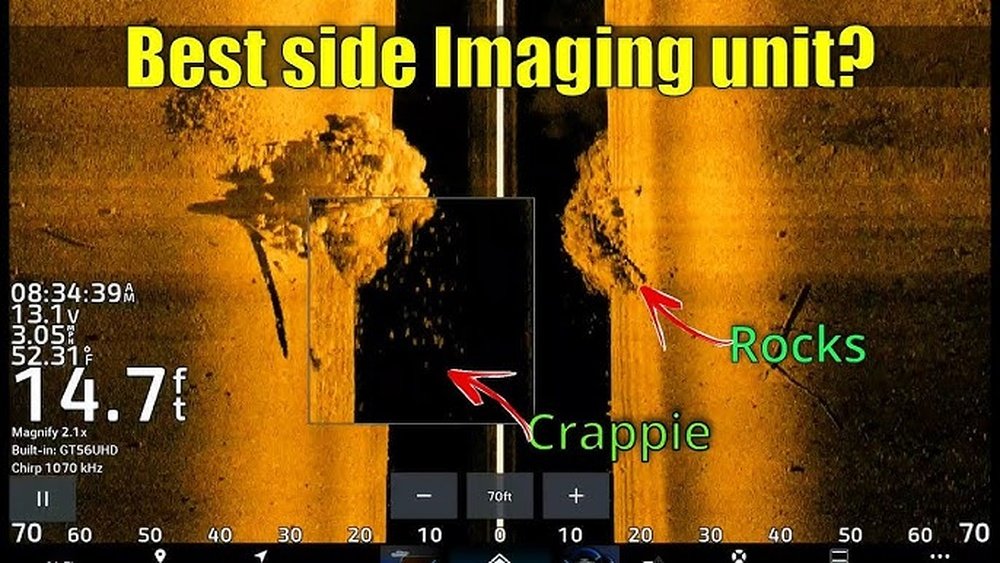
If you love ice fishing, you might wonder if side imaging works. Many anglers ask, “Can you use side imaging for ice fishing?” The short answer is yes. But there are some things to know before you try it. This article will explain how side imaging works under ice and how to use it well.
What Is Side Imaging?
Side imaging is a type of fish finder technology. It uses sound waves to send signals sideways from the transducer. The transducer is a device that sends and receives sound waves in water. The sound waves bounce off objects like fish, plants, or rocks. Then, the transducer receives the echo. The fish finder turns the echo into images you can see on the screen.
Side imaging shows a wide view of the water on both sides of your device. It helps you find fish and underwater structures far from your fishing spot. This is different from down imaging, which looks only below your boat or device.
How Does Side Imaging Work on Open Water?
On open water, side imaging is very helpful. You move your boat slowly, and the side imaging shows what is on each side of the boat. It helps find fish hiding near rocks, weeds, or drop-offs. You can cover a lot of water and see many fish. Many anglers use side imaging in lakes and rivers to find the best fishing spots.
Can You Use Side Imaging for Ice Fishing?
Yes, you can use side imaging for ice fishing. But the way you use it is a little different from open water. When ice fishing, you do not move a boat. You stay in one place or move very little. The transducer stays under the ice, not moving much.
Because the transducer is still, side imaging works differently. Instead of scanning a large area by moving, you spin or turn the transducer under the ice. This allows you to see fish and structures around your fishing hole.
How To Use Side Imaging Under Ice
- Drill a hole in the ice: Make a fishing hole large enough for your transducer.
- Lower the transducer: Place the transducer under the ice in the water.
- Slowly rotate the transducer: Turn it left and right to scan the area around your hole.
- Watch the screen: Look for fish, plants, or structures on both sides.
- Mark good spots: If you see fish, you know where to drop your bait.
This method works best for finding fish that swim near or under the ice. It also helps locate suspended fish in open water pockets under the ice.
What Are the Benefits of Using Side Imaging Ice Fishing?
Using side imaging for ice fishing has many benefits:
- See fish around your hole: You can spot fish on both sides of the hole.
- Find structures: You can locate underwater rocks, weeds, and drop-offs where fish hide.
- Cover more area: By rotating the transducer, you see a bigger area than just below your hole.
- Better fishing spots: You can choose where to drop your bait based on what you see.
- Save time: No need to drill many holes blindly; you can check more water faster.
Are There Any Challenges Using Side Imaging on Ice?
Yes, there are some challenges. Side imaging was made for moving boats. When the transducer is still, the images may look different or harder to read. The narrow beam of side imaging can miss fish if you do not spin the transducer enough.
Also, ice and snow can affect the sound waves. If the ice is very thick or there is no water on top, the transducer may not work well. You need some water between the transducer and the ice to get good signals.
Another challenge is the cost. Side imaging units are often more expensive than simple fish finders. But many ice anglers find the extra cost worth it for better information.
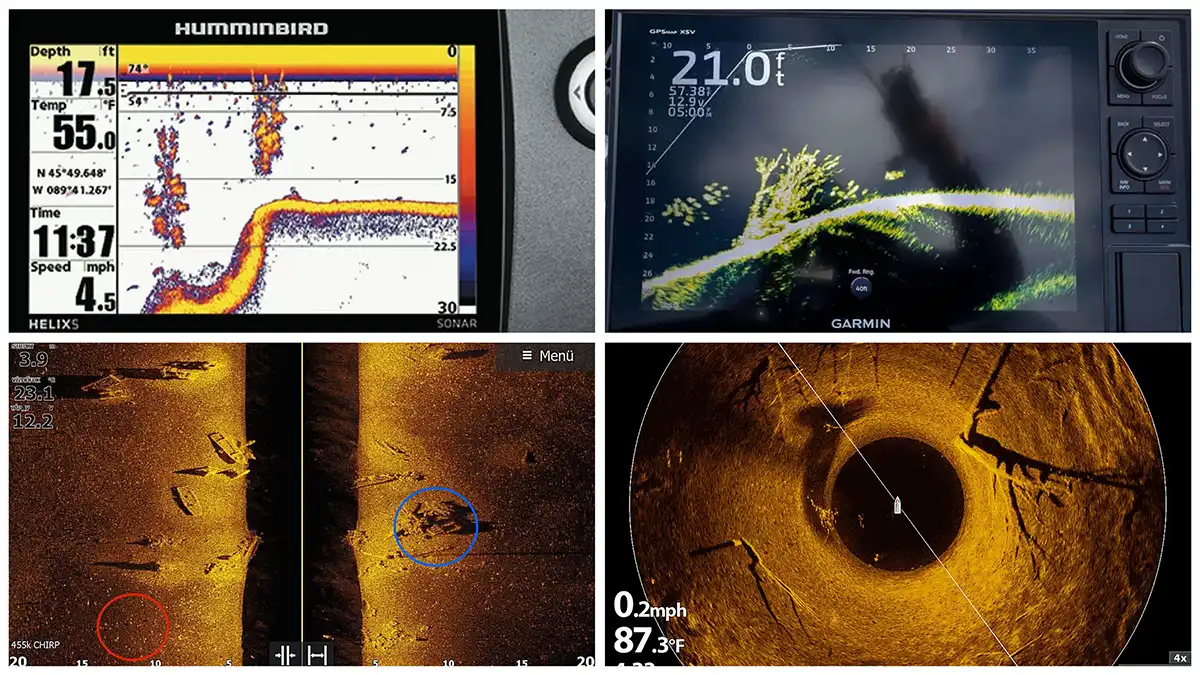
Credit: www.wired2fish.com
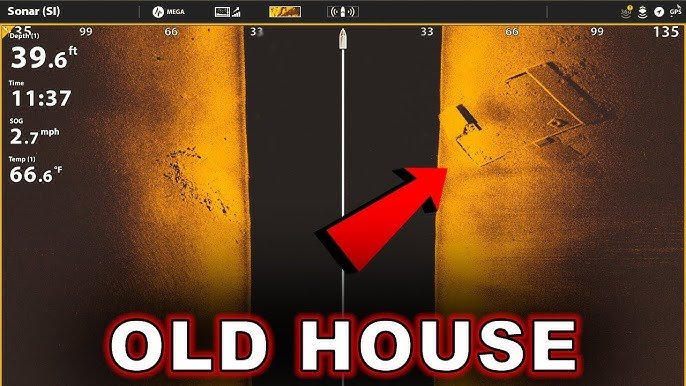
Credit: www.youtube.com
Tips to Improve Side Imaging for Ice Fishing
To get the best results, try these tips:
| Tip | Why It Helps |
|---|---|
| Use a good quality transducer | Better signals and clearer images |
| Keep water on top of the ice hole | Sound travels better through water than ice |
| Rotate the transducer slowly | See a full 180-degree view around your hole |
| Adjust the sensitivity settings | Clearer image and less clutter on screen |
| Use side imaging with down imaging | Get more complete info about fish and bottom |
| Practice reading images | Better at spotting fish and structures |
Common Questions About Side Imaging and Ice Fishing
Does the ice block the transducer signal?
The ice can block sound waves if it is thick. But if you have water between the transducer and ice, the signal works well.
Can I use side imaging without moving the transducer?
It is best to rotate the transducer slowly. If you leave it still, you get a narrow view and might miss fish.
Is side imaging better than down imaging for ice fishing?
Side imaging shows a wider view sideways. Down imaging shows only below the transducer. Both work well together for ice fishing.
Can I use side imaging on all ice fishing spots?
You can try side imaging on most frozen lakes. But very thick ice or shallow water might give less clear images.
Summary
Yes, you can use side imaging for ice fishing. It helps you see fish and underwater structures around your fishing hole. The key is to rotate the transducer slowly under the ice. Side imaging shows a wide view of the water on both sides. This helps you find fish more easily and choose better spots.
There are some challenges, like ice thickness and image differences. But with good equipment and practice, side imaging can be a useful tool. Many ice anglers use it to get more information and catch more fish.
If you want to try side imaging ice fishing, start with a simple setup. Drill a hole, lower your transducer, and slowly turn it. Watch your screen carefully and learn to read the images. Over time, you will get better at spotting fish and underwater shapes.
Side imaging is a smart way to explore the world under the ice. It can make your ice fishing trips more fun and successful.