When you step onto the volleyball court, one key detail shapes every serve, spike, and block: the net height. For men’s volleyball, knowing the exact net height isn’t just a rule to follow—it’s the foundation of your entire game strategy.
Whether you’re a player aiming to improve your skills, a coach planning drills, or just curious about the sport, understanding the regulation net height gives you a real edge. Ready to discover why this measurement matters and how it affects your performance?
Keep reading to get the full scoop on men’s volleyball net height and take your game to the next level.
Men’s Net Height Standards
The height of the volleyball net is a key factor in the sport’s play and rules. For men’s volleyball, the net height follows strict standards set by official sports organizations. These standards help keep the competition fair and consistent across all levels. Understanding these measurements provides clarity for players, coaches, and fans alike.
Official Height Measurements
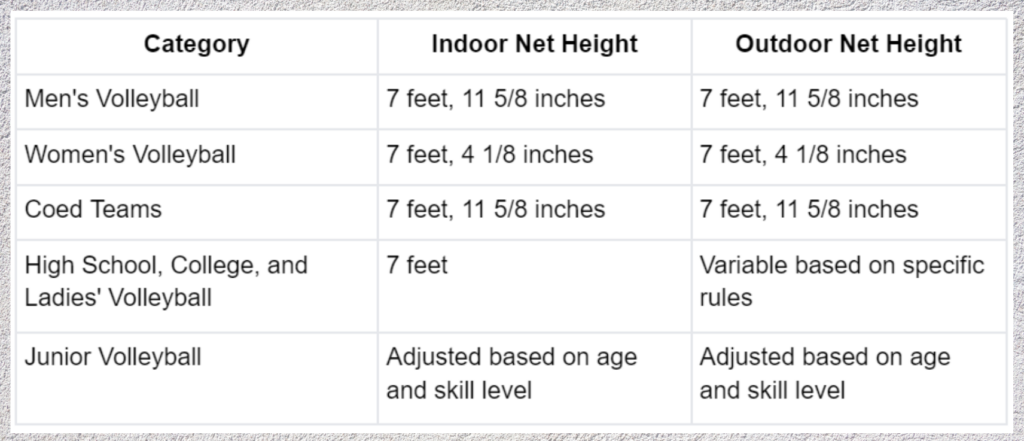
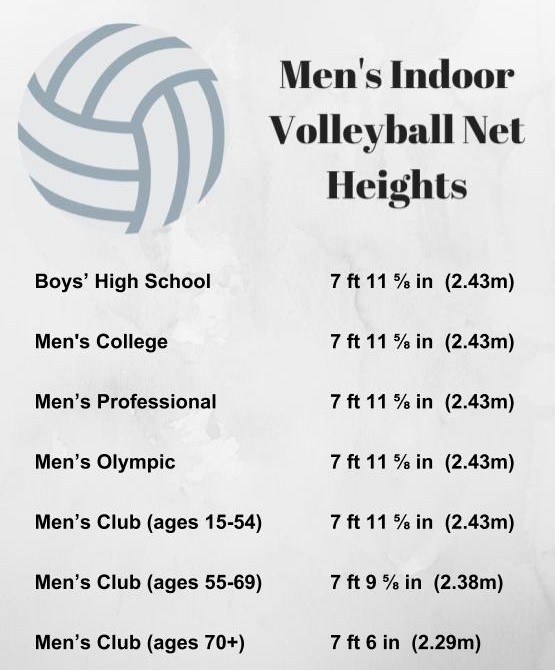
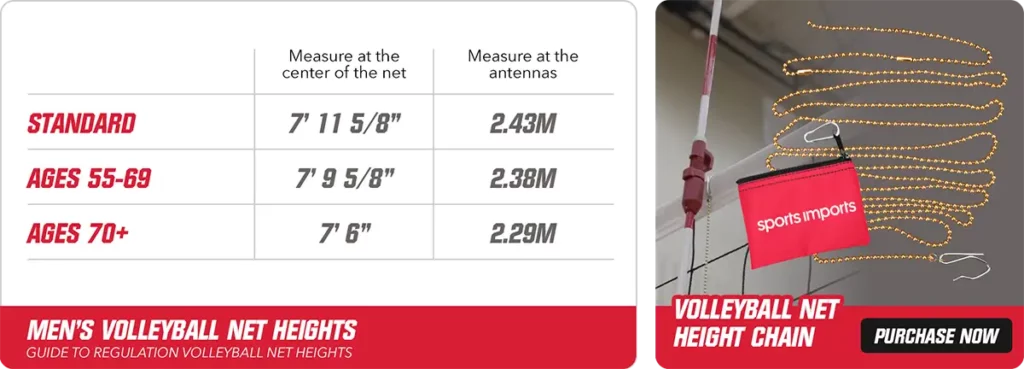
The official net height for men’s volleyball is 2.43 meters, or 7 feet 11 5/8 inches. This measurement is used in all major competitions worldwide, including the Olympics and professional leagues. The net is measured from the top edge to the playing surface. This height ensures a challenging and balanced game for male players.
Comparison With Women’s Net Height
The net height for women’s volleyball is set lower than men’s. It measures 2.24 meters, or 7 feet 4 1/8 inches. The difference of 19 centimeters reflects average differences in height and jumping ability. Both heights are designed to suit the physical capabilities of the players.
Variations By Age And Level
Youth and amateur leagues often use different net heights. For example, boys under 14 may use a net set at 2.24 meters. This helps younger players develop skills before moving to full adult height. Some recreational leagues also adjust net height to match player skill and safety levels.
Measuring The Net Height
Measuring the net height in men’s volleyball is crucial for fair play. The official height must be precise. Even small errors can affect the game. Accurate measurement ensures players compete under the correct rules. This section explains how to measure the net height properly.
Proper Measurement Techniques
Start by placing the net between the two poles. Measure from the floor to the top of the net. The official men’s net height is 2.43 meters or 7 feet 11 5/8 inches. Use a straight measuring tape for accuracy. Check the height at the center of the net. The net may sag at the center, so make sure it is tight. Adjust the tension if needed before measuring.
Tools Needed For Accuracy
Use a tape measure with clear metric and imperial markings. A level or plumb line helps keep the tape straight. A ladder or a step stool may be needed for tall nets. Use a net tension gauge if available. This tool checks if the net is tight enough. Good lighting improves visibility of measurement marks.
Common Measurement Mistakes
Measuring at the sides instead of the center causes errors. Not tightening the net leads to incorrect height readings. Using a worn or stretched tape measure reduces accuracy. Ignoring the floor surface, like uneven ground, affects results. Forgetting to measure both ends and the middle can miss sagging. Always double-check measurements to avoid mistakes.
Impact On Gameplay
The height of the men’s volleyball net significantly influences how players perform during a match. It changes the way athletes serve, attack, and defend. Understanding these effects helps players improve their skills and strategies. The net height tests the players’ strength and timing. It also shapes the flow and excitement of the game.
Effect On Serving And Spiking
The net height forces servers to aim carefully. Powerful serves need precision to clear the net and land inside the court. Spikers must jump higher and hit harder. They try to send the ball past blockers and defenders. The taller net demands more strength and better timing for successful spikes. It makes the game more challenging and thrilling.
Defensive Strategies Near The Net
Defenders adjust their positions to cover the net well. Blocking becomes a key skill to stop spikes. Players jump with arms raised to create a barrier. Quick reactions help them intercept the ball. The net height shapes how close defenders stand and how they time their jumps. It encourages teamwork and sharp instincts near the net.
Adjusting Play For Net Height
Teams change their tactics to match the net height. They focus on strong jumps and fast movements. Players practice hitting the ball at different angles. Setting becomes crucial to place the ball where attackers can score. Coaches teach players to read the opponent’s moves. Adjusting to the net height improves overall game performance.
Credit: sterlingvolleyball.com
Indoor Vs Beach Volleyball Nets
Indoor and beach volleyball use different types of nets. Each net suits its playing environment and rules. The differences affect how players perform and enjoy the sport. Understanding these variations helps players adapt better in each setting.
Height Differences
The official men’s net height indoors is 2.43 meters (7 feet 11 5/8 inches). For beach volleyball, the net height is the same for men. The consistency keeps the game’s challenge equal across both forms. However, some recreational beach leagues may adjust heights slightly.
Environmental Considerations
Indoor volleyball is played in controlled environments with no wind or sun. Beach volleyball faces wind, sun, and uneven sand surfaces. These factors influence net tension and stability. Beach nets must handle outdoor weather and remain firm during play.
Equipment Variations
Indoor nets are usually heavier and more rigid. They have solid poles anchored to the floor. Beach nets are lighter with flexible poles that fit into sand sleeves. Materials differ to resist water, sun damage, and salt air on beaches.
Setting Up The Net
Setting up the volleyball net correctly ensures a fair and enjoyable match. The net height for men’s volleyball is fixed at 2.43 meters (7 feet 11 5/8 inches). Proper installation and tension help maintain this height throughout the game. A well-set net prevents disputes and promotes smooth play.
Installation Guidelines
Begin by placing the net poles firmly on each side of the court. The poles must be vertical and stable. Attach the net at the top and bottom hooks on both poles. Adjust the net so its center aligns with the court’s middle line. Use a tape measure to confirm the net height is exactly 2.43 meters.
Ensuring Stability And Tension
Check the net tension to avoid sagging. Tighten the top cable or rope until the net is firm. The net should not move excessively when hit. Secure the bottom of the net to stop it from swinging. Use guy lines or weights if needed to keep poles steady.
Maintenance Tips
Regularly inspect the net for tears or loose parts. Replace any worn cables or ropes immediately. Clean the net to remove dirt and dust. Store the net in a dry place to prevent damage. Consistent maintenance extends the net’s lifespan and performance.
Credit: volleyball-tips.com
Common Net Height Issues
Maintaining the correct net height is crucial for men’s volleyball. Many players and coaches face common issues that affect gameplay and fairness. These problems can include sagging nets, height differences, and uneven courts. Understanding these issues helps improve the game experience.
Dealing With Sagging Nets
Sagging nets lower the playing height and cause unfair play. Nets may sag due to worn-out cables or loose tension. Tighten the cables regularly to keep the net firm. Replace damaged parts to maintain the correct height. Use a tension meter for accurate adjustments.
Addressing Height Discrepancies
Height discrepancies occur when the net is not set at the official 7 feet 11 5/8 inches. This can happen during setup or due to equipment errors. Measure the net height from the center and the sides. Adjust the poles carefully to match the regulation height. Consistent checks prevent unfair advantages.
Solutions For Uneven Courts
Uneven courts cause the net to be higher on one side. This affects the ball’s trajectory and player performance. Use a level to check the court surface before play. Adjust pole heights to compensate for sloping ground. Consider court repairs for long-term fixes to ensure fairness.
Training Tips For Net Play
Training at the net is key for all volleyball players. The net height for men adds a challenging element. Good net play skills help control the game and score points. Practice and focus improve your performance near the net. Here are some useful tips to train effectively for net play.
Improving Jumping Techniques
Strong jumps help reach higher over the net. Work on your leg strength with squats and lunges. Use plyometric exercises like box jumps to build power. Practice jumping straight up with quick footwork. Keep your arms ready to swing or block. Consistent jumping drills improve height and timing.
Timing Your Attacks
Attack timing beats the opponent’s defense. Watch the setter’s hands closely during the play. Jump just as the ball is set for a clean hit. Avoid jumping too early or too late. Learn to read the ball’s speed and trajectory. Practice hitting with different sets to adjust timing.
Blocking Strategies
Good blocks stop the opponent’s attacks. Position your hands above the net with fingers spread. Move quickly along the net to follow the hitter. Jump with both hands reaching up and over the net. Watch the hitter’s shoulder and arm for clues. Work with teammates to form a strong block wall.
Credit: www.sportsimports.com
Frequently Asked Questions
How Tall Is A Men’s Volleyball Net?
A men’s volleyball net stands 7 feet 11 5/8 inches (2. 43 meters) tall, measured from the court’s center.
Is The Net 8 Feet High In Men’s Volleyball?
The men’s volleyball net height is 7 feet 11 5/8 inches (2. 43 meters). It is not exactly 8 feet high.
Are Men’s And Women’s Volleyball Nets The Same Height?
Men’s volleyball nets are higher than women’s. Men’s net height is 7 feet 11 5/8 inches, women’s is 7 feet 4 1/8 inches.
How Tall Is A Man’s Net?
A men’s volleyball net stands 7 feet 11 5/8 inches (2. 43 meters) tall, measured at the center of the court.
Conclusion
Men’s volleyball net height stands at 7 feet 11 5/8 inches. This height challenges players to jump higher and improves their skills. Different levels and age groups use varied net heights for safety and fairness. Knowing the exact net height helps players train correctly and enjoy the game.
It also ensures fair play in competitions. Remember, the right net height creates a better volleyball experience for all. Keep practicing and have fun playing volleyball!