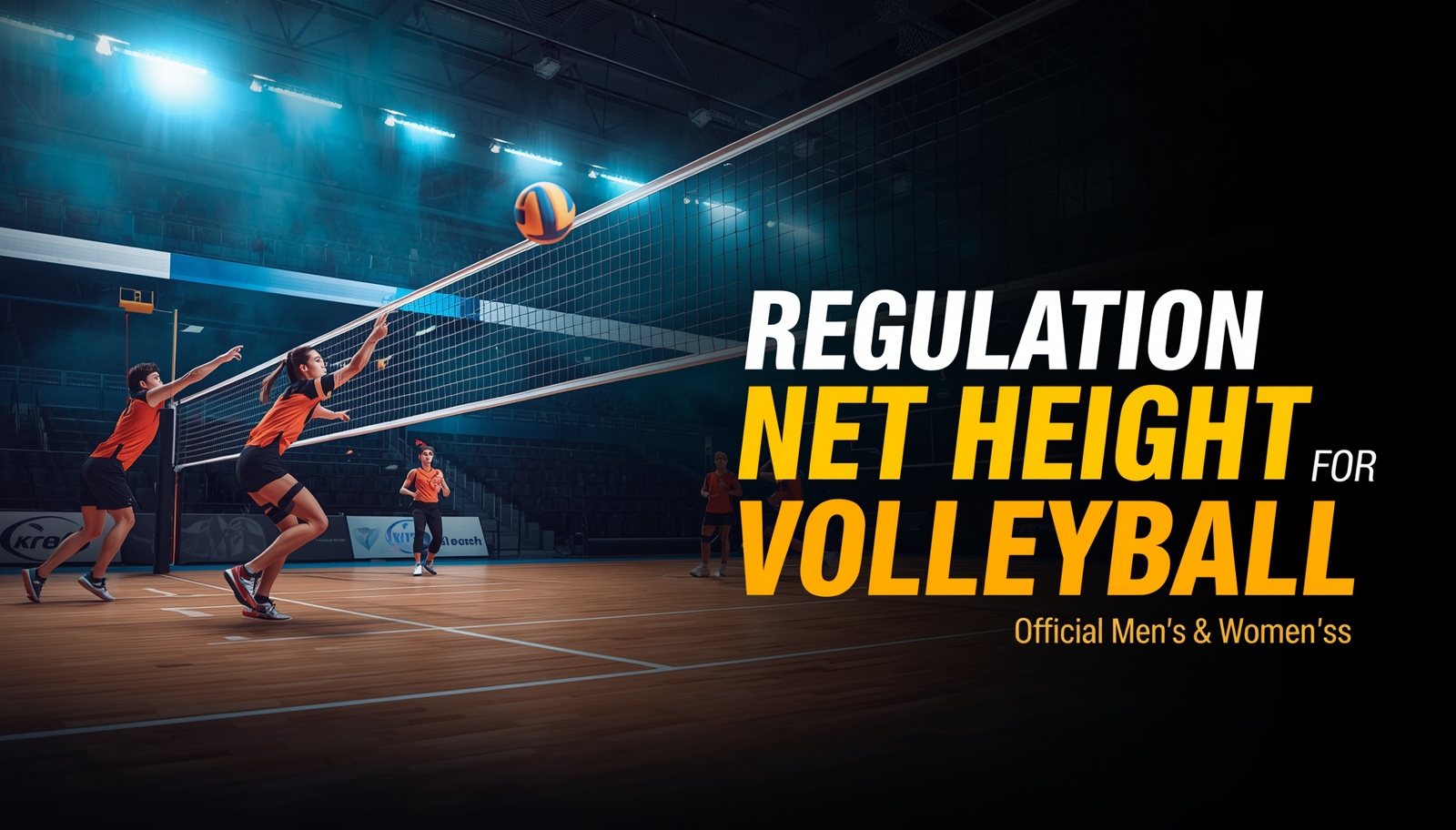
If you play men’s volleyball or are just getting started, knowing the correct net height is key to improving your game. You might wonder why the net height matters so much or if it’s the same for all players.
Getting this detail right can boost your skills, help you follow official rules, and make your matches more exciting. You’ll discover exactly how tall a men’s volleyball net should be, why that height is important, and what it means for your serves, spikes, and blocks.
Keep reading to make sure your game is set up for success!

Credit: www.sportsimports.com
Men’s Volleyball Net Height
The height of the men’s volleyball net plays a crucial role in the sport. It affects player performance and game dynamics. Understanding the correct net height helps players train and compete fairly. The standard height varies based on the level and type of play.
Standard Indoor And Beach Heights
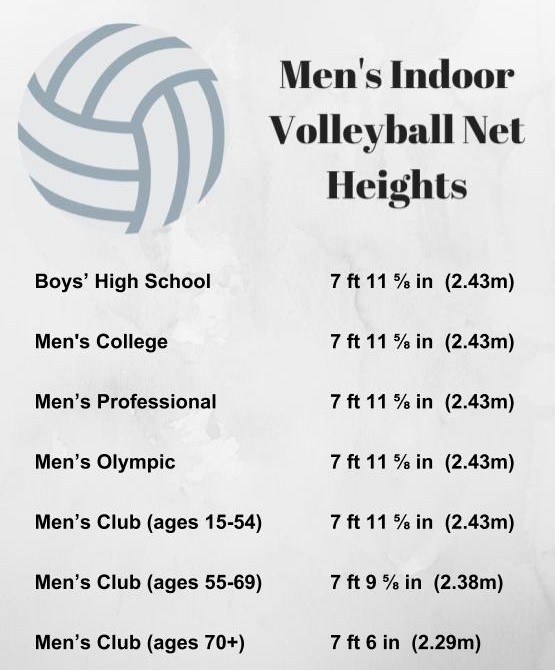
For men, the volleyball net height is 2.43 meters (7 feet 11 5/8 inches) indoors and on the beach. This height stays consistent in both environments. The uniform height ensures that skills transfer easily between indoor and beach volleyball.
High School And College Regulations
High school and college men’s volleyball follow the 2.43 meters net height rule. These levels adopt official standards set by governing bodies. Players compete using the same net height, promoting fairness and skill development.
International Standards
The International Volleyball Federation (FIVB) sets the men’s net height at 2.43 meters worldwide. This standard applies to all international competitions. It creates a level playing field for players from all countries.

Credit: www.networldsports.com
Comparison With Women’s Nets
Men’s and women’s volleyball nets differ in height to suit the players’ physical abilities. These differences affect how each game is played and watched. Understanding these variations helps players and fans appreciate the sport better. Below is a clear comparison of men’s and women’s net heights, reasons behind these differences, and their impact on gameplay.
Height Differences
The official net height for men’s volleyball is 2.43 meters (7 feet 11 5/8 inches). For women’s volleyball, the net height is lower at 2.24 meters (7 feet 4 1/8 inches). This 19-centimeter difference reflects variations in average player height and jumping ability.
Reasons For Variation
Net heights vary to balance the sport’s difficulty for each gender. Men generally have higher jumping ability and reach. The taller net challenges their skills without making the game too easy. For women, the slightly lower net makes the game competitive and enjoyable.
Impact On Gameplay
The different net heights change the style of play. Men’s games often feature powerful spikes and blocks due to the higher net. Women’s games focus more on strategy and quick plays. The net height influences player positioning, attack angles, and defensive moves.
Setting Up The Net
Setting up the men’s volleyball net correctly is key for a fair and fun match. The net height must follow official rules to keep the game balanced. Proper setup also ensures safety and good play quality. This section guides you through measuring, tools, and adjusting the net for any venue.
Measuring The Correct Height
The official men’s volleyball net height is 2.43 meters (7 feet 11 5/8 inches). Use a tape measure to check this height. Measure from the floor to the top edge of the net. Make sure the net is tight and even on both sides. Double-check the height before each game to avoid mistakes.
Tools Needed For Setup
You need a sturdy tape measure for accuracy. A level helps keep the net straight horizontally. Use adjustable poles or a net system that fits the court size. Having clips or straps will keep the net tight. A wrench or screwdriver might be needed for pole adjustments.
Adjusting For Different Venues
Venues vary in floor surface and pole design. Outdoor courts may have sand or grass; indoor courts often have wood or tile floors. Poles may differ in height and stability. Adjust the pole height carefully to match the 2.43-meter standard. Always test the net tension and height before starting play.
Common Mistakes In Net Setup
Setting up a men’s volleyball net correctly is crucial for fair play and safety. Many teams and players make common mistakes that affect the net height and tension. These errors can cause frustration and affect game quality.
Understanding these mistakes helps avoid problems during matches. Proper net setup ensures the game runs smoothly and meets official standards.
Incorrect Height Measurements
The standard men’s volleyball net height is 2.43 meters (7 feet 11 5/8 inches). Sometimes, people measure the net height from the wrong point. Measuring from the court surface unevenly can cause errors.
Using a tape measure that is not straight or level leads to wrong height settings. Always measure at the center of the net. Double-check measurements before starting the game.
Uneven Net Tension
Net tension affects how the ball bounces and player movement. Uneven tension causes the net to sag on one side. This makes the net lower than the correct height in some parts.
Uneven tension also increases the risk of the net collapsing during play. Tighten the net evenly from both ends. Check tension frequently during matches or practice.
Ignoring Court Specifications
Each volleyball court has specific dimensions and setup rules. Ignoring these details can cause the net to be too high or too low. The poles must be placed at the correct court boundary lines.
Failure to follow court specifications leads to unfair play conditions. Confirm all court markings and pole placements before hanging the net. This ensures the net height aligns with official regulations.
Tips For Perfect Net Setup
Setting up a men’s volleyball net at the correct height is crucial for fair play. The official net height is 2.43 meters (7 feet 11 5/8 inches). Follow these tips to set up the net perfectly every time. Proper setup ensures smooth matches and player safety.
Using A Tape Measure Accurately
Use a reliable tape measure to check the net height. Measure from the court surface to the top edge of the net. Take measurements at several points along the net. This helps spot uneven areas. Always measure both sides to confirm consistency. Mark the correct height on the poles before attaching the net.
Checking Net Tension Regularly
Keep the net tight for a proper game. Loose nets can affect ball bounce and player movement. Use the tensioning straps or ropes to adjust the net. Check tension before every match or practice. The net should not sag or flap in the wind. Tighten or loosen as needed for best performance.
Ensuring Stability And Safety
Secure the net poles firmly in the ground or base. The poles must not wobble or lean during play. Use sandbags or weights if needed for extra stability. Clear the area around the poles to prevent accidents. Inspect the net and poles regularly for damage. Replace worn parts to keep the setup safe.
Net Height For Youth And Recreational Play
The net height for youth and recreational volleyball plays a key role in skill development and enjoyment. Setting the right net height helps players learn proper techniques and stay motivated. It also ensures games are fair and fun for all skill levels.
Adjusting the net height based on age and ability supports growth and confidence. Coaches and organizers can tailor the net height to match players’ needs. This approach makes volleyball accessible and encourages long-term participation.
Recommended Heights By Age Group
Youth volleyball nets have specific height recommendations. For ages 8 and under, the net height is 5 feet (1.52 meters). Ages 9 to 10 use a 6-foot 6-inch (1.98 meters) net. Ages 11 to 12 move up to 7 feet 0 inches (2.13 meters). Teens 13 and older often use the adult men’s height at 7 feet 11 5/8 inches (2.43 meters).
Adjustments For Skill Levels
Skill level affects net height choices. Beginners may use a lower net to build confidence and skills. Intermediate players can practice at a mid-level height. Advanced players should train at regulation height. Flexible net settings promote steady improvement and reduce frustration.
Encouraging Proper Technique
Correct net height teaches good volleyball form. It allows players to practice jumping and hitting safely. A net set too high or low can cause bad habits. Proper height helps players develop timing, hand positioning, and footwork. Coaches should focus on technique over power at early stages.
Impact Of Net Height On Performance
The height of the men’s volleyball net greatly affects how players perform on the court. It changes the way players serve, spike, and block. Each action requires adjustments to meet the challenge of the set net height. Training with different net heights can also improve skills and game awareness.
Serving And Spiking Challenges
The net height forces players to hit the ball with more precision and power. Serving over a higher net demands better control to avoid faults. Spiking becomes tougher because players must jump higher and time their hits well. The net height tests strength and technique during these offensive moves.
Blocking Strategies
Blocking at men’s net height requires quick reactions and strong jumps. Defenders must read the attacker’s moves early. A higher net means blockers must reach higher to stop spikes. Positioning and timing are key to effective blocks at this height.
Training With Different Net Heights
Practicing with nets at various heights builds adaptability. Players improve their jumping and hitting skills by adjusting to changes. This type of training prepares them for different opponents and conditions. It also helps develop better timing and coordination.
Credit: volleyball-tips.com
Maintenance And Care For Volleyball Nets
Proper maintenance and care keep volleyball nets in top shape. They ensure the net lasts longer and performs well. Regular attention prevents damage and safety issues. Follow these simple steps to maintain your men’s volleyball net.
Regular Inspections
Check the net often for tears or loose threads. Look at the cables and ropes for signs of wear. Make sure the poles and attachments are secure. Early detection helps avoid bigger problems later.
Cleaning And Storage
Clean the net with mild soap and water after use. Avoid harsh chemicals that can weaken the material. Let the net dry completely to prevent mold and mildew. Store it in a cool, dry place away from sunlight. Proper storage protects the net from damage.
Replacing Worn Components
Replace frayed ropes, broken clips, or damaged cables quickly. Using worn parts can cause the net to sag or fall. Keep spare parts handy for easy repairs. Regular replacement keeps the net safe and functional.
Frequently Asked Questions
How Tall Is A Volleyball Net For Men?
The men’s volleyball net height is 7 feet 11 5/8 inches (2. 43 meters) for both indoor and beach play.
Is The Net 8 Feet High In Men’s Volleyball?
The men’s volleyball net height is 7 feet 11 5/8 inches (2. 43 meters). It is slightly under 8 feet tall.
Are Men’s And Women’s Volleyball Nets The Same Height?
Men’s volleyball nets are taller, set at 7 feet 11 5/8 inches. Women’s nets measure 7 feet 4 1/8 inches. This difference suits average height and jumping ability for each gender.
How Tall Is A Man’s Net?
A men’s volleyball net stands 7 feet 11 5/8 inches (2. 43 meters) tall for both indoor and beach play.
Conclusion
Men’s volleyball net height measures 2. 43 meters (7 feet 11 5/8 inches). This standard applies to both indoor and beach volleyball. The height differs from women’s nets to suit average player height and jumping skills. Knowing the exact net height helps players practice properly and improve skills.
Coaches and players must follow these regulations for official matches. Playing with the right net height ensures fair and competitive games. Understanding this detail makes volleyball more enjoyable and safer. Keep this in mind when setting up courts or training sessions.