Are you curious about how tall men’s volleyball nets really are? Whether you’re a player, coach, or just a fan, knowing the exact net height can change how you understand the game.
The net height affects every serve, spike, and block you see on the court. If you want to improve your skills or simply impress your friends with your volleyball knowledge, understanding the official men’s net height is a must. Keep reading, and you’ll discover the standard measurements, why they matter, and how they compare to women’s and youth volleyball nets.
This simple detail could be the key to unlocking your full volleyball potential!
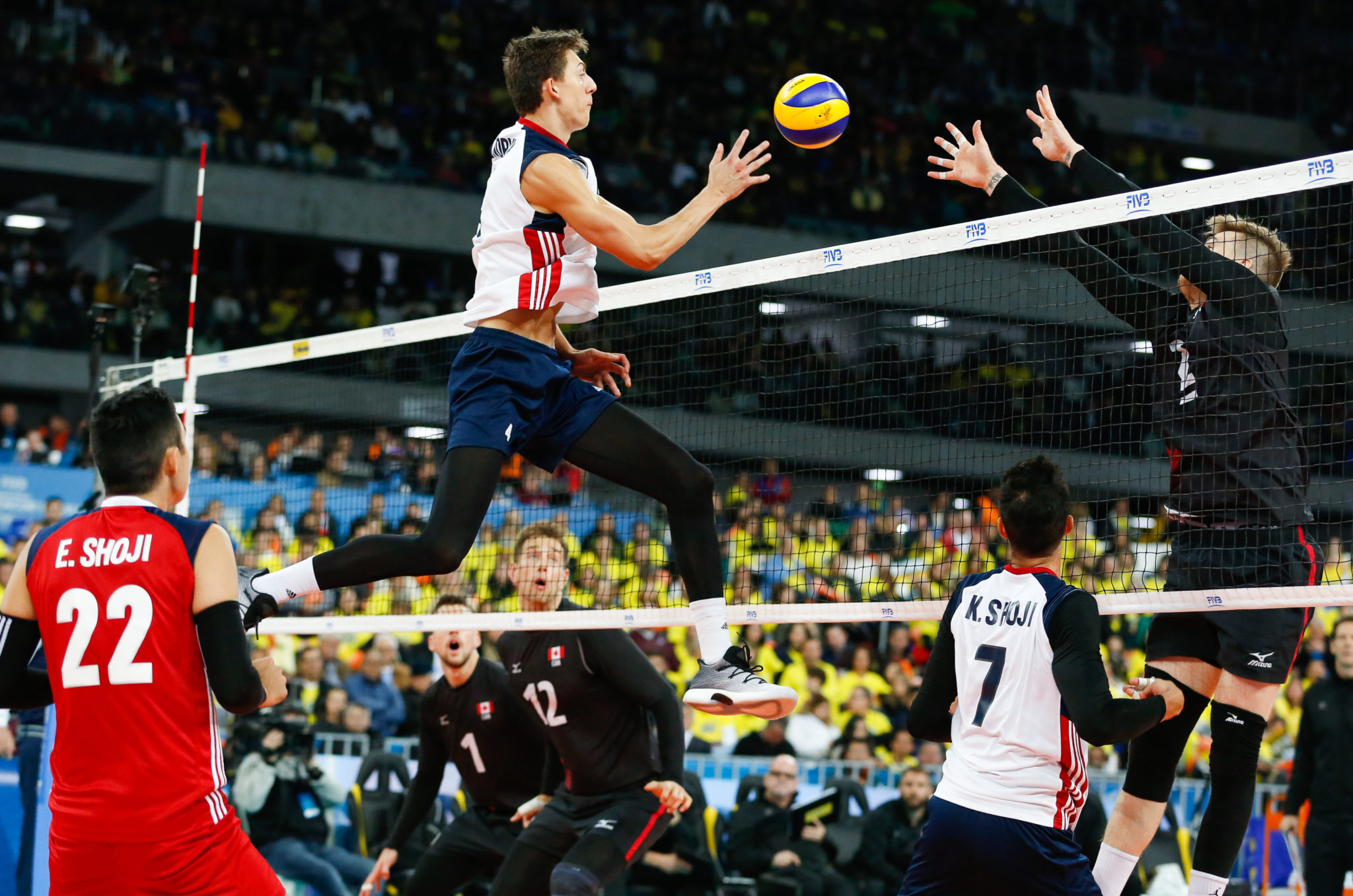
Credit: volleymob.com
Men’s Volleyball Net Height
The height of a men’s volleyball net plays a crucial role in the sport. It affects how players serve, block, and spike the ball. Knowing the exact net height helps players train effectively and compete fairly.
Men’s volleyball nets are set higher than women’s nets. This difference matches the average height and jumping ability of male athletes. The net height is standardized for official games worldwide.
Official Net Height Standards
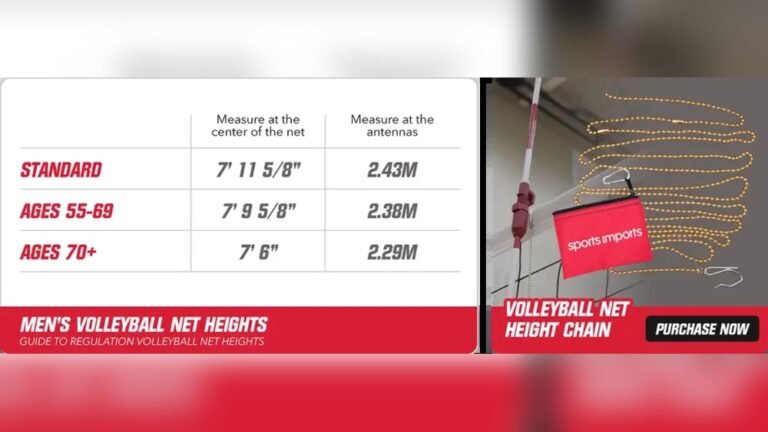
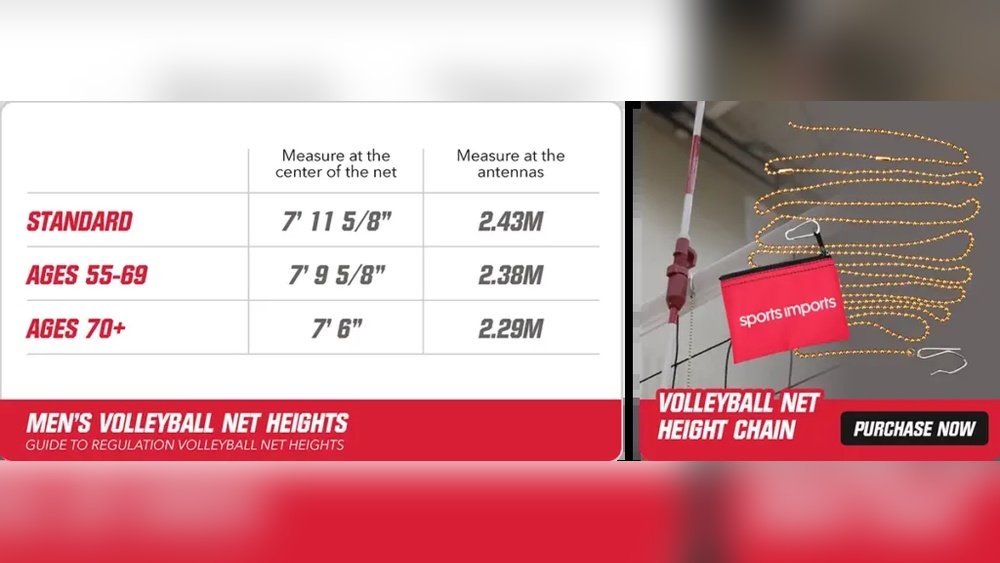
The official height for a men’s volleyball net is 2.43 meters. This equals about 7 feet 11 and 5/8 inches. This standard is set by the International Volleyball Federation (FIVB) and most national leagues follow it.
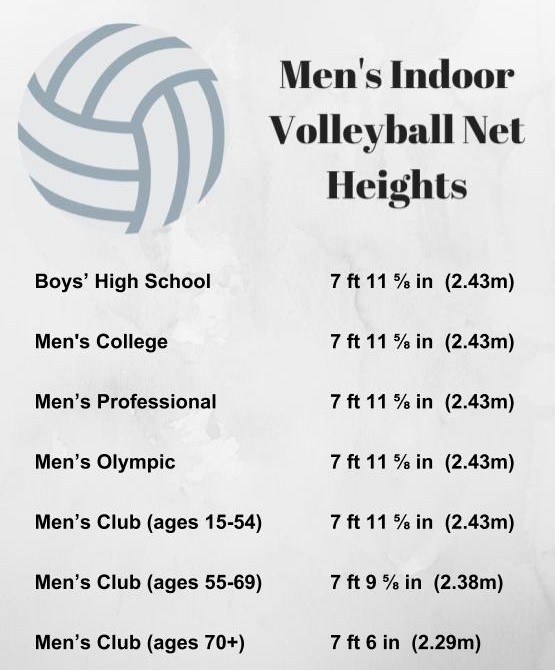
Younger or recreational leagues may use lower nets. Some men’s senior leagues also adjust the height for safety and comfort. However, 2.43 meters remains the rule for professional play.
Measurement Methods
To measure the net height, use a tape measure from the floor to the top of the net. The net should be taut and level across the court. Checking both ends ensures the net is even and meets regulations.
Officials often measure the net before matches. This step confirms that the setup follows competition rules. Accurate measurement keeps the game fair and consistent.
Comparison With Women’s Nets
The women’s volleyball net height is set at 2.24 meters. This is about 7 feet 4 and 1/8 inches. It is 19 centimeters lower than the men’s net.
This difference accounts for physical and competitive variations. Both net heights create balanced and exciting matches for players. Coaches design training around these standards.
🏐 Enhance Your Volleyball Experience
Whether you’re practicing, competing, coaching, or playing recreationally, having the right volleyball equipment can make every game more enjoyable and help you get the most out of your time on the court.
Official-Size Volleyball Net System
A versatile volleyball net system suitable for practice sessions, competitive play, school programs, backyard games, and recreational matches.
A popular choice for volleyball players, coaches, schools, and families.
Net Height Variations
Net height in men’s volleyball varies by age and competition level. These variations help players develop skills suited to their physical abilities. Different leagues set different net heights to match players’ strength and experience. Understanding these differences is important for players, coaches, and fans alike.
Youth Volleyball Nets
Youth volleyball nets are lower than adult nets. This allows younger players to have better control and enjoy the game. For example, boys under 12 often use nets set at about 2.13 meters (7 feet). Older youth players might use nets closer to adult height as they grow. Lower nets help build confidence and improve skill development.
Senior And Recreational Leagues
Senior and recreational leagues sometimes use nets slightly lower than official heights. This adjustment helps players maintain good play quality as they age. For instance, some senior leagues set nets around 2.24 meters (7 feet 4 inches). This height keeps the game fun and competitive without being too demanding physically. Recreational leagues may also modify net height for better inclusivity.
Historical Differences
Men’s volleyball net height has changed over time. Early in the sport, net heights were not standardized. Different regions and leagues had their own rules. The current official height of 2.43 meters (7 feet 11 5/8 inches) was set to create uniformity worldwide. Older players and coaches may remember playing with nets at different heights. These changes reflect volleyball’s growth and evolving standards.
Indoor Vs Beach Volleyball Nets
Volleyball nets differ between indoor and beach settings. Each surface demands unique net heights and rules. Understanding these differences helps players and fans appreciate the sport better.
Indoor Net Height Regulations
Indoor men’s volleyball nets stand at 2.43 meters high. This equals about 7 feet 11 5/8 inches. The International Volleyball Federation (FIVB) sets this standard. It applies to most professional and amateur leagues. Indoor nets are taut and fixed to poles on a hard court.
Beach Volleyball Net Height
Beach volleyball nets for men also measure 2.43 meters tall. The height matches indoor standards for fairness. Nets stretch between two poles on sandy surfaces. The sand adds a challenge, affecting player movement and jump height.
Key Differences Between Surfaces
Indoor courts are hard and flat, offering firm footing. Beach courts have soft sand, which slows players down. Indoor nets stay rigid, while beach nets may sway slightly in the wind. Both use the same height, but the playing conditions change the game’s dynamics.
Volleyball Court Dimensions
The volleyball court dimensions play a crucial role in the sport’s rules and play style. Knowing the exact measurements helps players and officials maintain fair play. The court size and net positioning are standardized for official matches worldwide. These details ensure consistency across different venues and competitions.
Court Size And Lines
The volleyball court measures 18 meters long and 9 meters wide. It is divided into two equal halves by the net. Each half is 9 meters by 9 meters. The court boundary lines are 5 centimeters wide and clearly marked. Attack lines run parallel to the net at 3 meters from the center. These lines separate the front and back zones for players. Service zones lie behind the end lines, allowing players to serve.
Net Positioning On Court
The net stretches across the court’s center line. It divides the court into two equal parts. The official net height for men is 2.43 meters (7 feet 11 5/8 inches). This height suits the average male player’s reach and jumping ability. The net poles must be outside the sidelines, not interfering with play. The top of the net has an antenna on each side, marking the vertical boundary. Net height and position directly affect the game’s pace and tactics.
Adjusting Net Height
Adjusting the net height in men’s volleyball ensures fair play and meets official standards. Proper net height affects the quality of the game and player performance. Setting the net too high or low can disrupt the match flow and player safety. Understanding how to adjust the net correctly is essential for referees, coaches, and facility managers.
Tools And Equipment
Adjusting a volleyball net requires specific tools. A measuring tape or a net height gauge helps check the exact height. Poles with adjustable mechanisms make raising or lowering the net easier. Some nets come with a built-in height adjustment system. A level can ensure the net is perfectly horizontal.
Common Height Adjustments
The standard men’s volleyball net height is 2.43 meters (7 feet 11 5/8 inches). Older men’s leagues might have slightly different heights. Youth leagues often use lower nets to match players’ abilities. Adjustments depend on the competition rules and player age groups. Always confirm the required height before setting the net.
Tips For Accurate Setup
Measure the net height from the center of the court. Check both sides to keep the net level. Use a stable support system to prevent the net from sagging. Adjust slowly and re-measure after each change. Regularly inspect the net height during matches to maintain consistency.
Credit: volleyball-tips.com
Impact Of Net Height On Gameplay
The height of men’s volleyball nets greatly influences how the game is played. A higher net demands more strength and precision from players. It also changes the way teams plan their moves and develop their skills.
Adjusting to the net height is key for effective gameplay. Players must react faster and jump higher to score points. The net height sets the challenge level and shapes the overall dynamics of the match.
Player Performance
Higher nets require players to jump higher to spike or block the ball. This tests their power and timing. Players improve their vertical leap and arm reach to compete well. Mistimed jumps or weak hits often lead to lost points. Strong physical conditioning becomes essential for consistent performance.
Strategy Changes
Teams change their tactics based on net height. A higher net favors quick sets and strong attacks. Players focus more on placement than just power. Defenders adjust their positioning to better block spikes. Coaches plan plays that use the net height to their advantage. This creates a more strategic and fast-paced game.
Skill Development
Players develop specific skills to meet net height challenges. Jumping and timing drills become a priority in training. Improved hand-eye coordination helps in precise ball control. Blocking techniques evolve to cover more net area. Over time, players gain better agility and strength. These skills build confidence and effectiveness on the court.
Future Trends In Net Heights
The height of men’s volleyball nets has stayed mostly the same for decades. Yet, the future may bring changes. These changes focus on making volleyball fairer and more inclusive. They also consider the needs of all players. Innovations in rules and technology will shape these trends. The sport might adapt to new player profiles and abilities. This section explores what lies ahead for net heights in men’s volleyball.
Potential Changes For Smaller Players
Smaller players often face challenges with the current net height. Some leagues consider lowering the net slightly for them. This helps improve their skills and confidence. Adjusting net height can make games more balanced. It may also increase participation among youth and shorter athletes. Such changes encourage more players to enjoy volleyball fully.
Senior Player Considerations
Senior volleyball players need special attention to net height. Lower nets reduce the risk of injury for older athletes. Some senior leagues already use nets a few inches lower. This adjustment allows seniors to play longer and safer. It also keeps the game fun and competitive for them. These trends highlight the importance of age-appropriate net settings.
Technological Innovations
Technology can help manage net heights more easily. Adjustable net systems are becoming more common. These allow quick changes for different age groups and skill levels. Sensors may track ball and player movements to improve fairness. Smart nets could give referees better data during matches. Future tech might make volleyball more flexible and accessible for all players.

Credit: www.networldsports.com
Frequently Asked Questions
Is Men’s Volleyball Net Higher Than Women’s?
Yes, the men’s volleyball net is higher than the women’s. Men’s net height is 2. 43 meters, women’s is 2. 24 meters. This difference reflects official regulations in most leagues.
How Tall Is A Man’s Net?
A men’s volleyball net height measures 2. 43 meters (7 feet 11 5/8 inches) from the center of the court.
How Tall Is A Full-size Volleyball Net?
A full-size volleyball net stands 7 feet 11 5/8 inches (2. 43 meters) tall for men’s play. Women’s nets measure 7 feet 4 1/8 inches (2. 24 meters). Youth and older leagues may use lower net heights. The height is measured at the center of the court.
How High Is A 14u Volleyball Net?
A 14U volleyball net is set at 7 feet 4 inches (2. 24 meters) high. This height suits youth players aged 14 and under.
Conclusion
Men’s volleyball nets stand at 7 feet 11 and 5/8 inches tall. This height challenges players to jump and spike with skill. Women’s nets are slightly lower, set at 7 feet 4 and 1/8 inches. Youth leagues often use shorter nets for easier play.
Knowing net height helps players practice correctly. It also ensures fair competition in matches. Whether playing indoors or on the beach, net height stays consistent. This standard keeps the sport exciting and balanced for all.