Have you ever wondered just how long a cricket game lasts? Whether you’re new to the sport or a casual fan trying to plan your day around a match, understanding the duration of cricket games can be confusing.
Unlike many other sports, cricket doesn’t have a fixed game time—it varies widely depending on the format being played. You’ll discover exactly how long different types of cricket matches take, from quick Twenty20 games to marathon Test matches that stretch over several days.
By the end, you’ll know what to expect next time you watch or attend a cricket game, helping you fully enjoy every thrilling moment without any surprises. Keep reading to unlock the secrets behind cricket’s unique game durations!

Credit: cricketstoreonline.com
Cricket Formats
Cricket is played in different formats. Each format has its own game duration and rules. These formats make cricket exciting and varied. Fans enjoy matches that last from a few hours to several days.
Understanding these formats helps to know how long a cricket game lasts. It also shows how the game changes with each style of play.
Test Matches
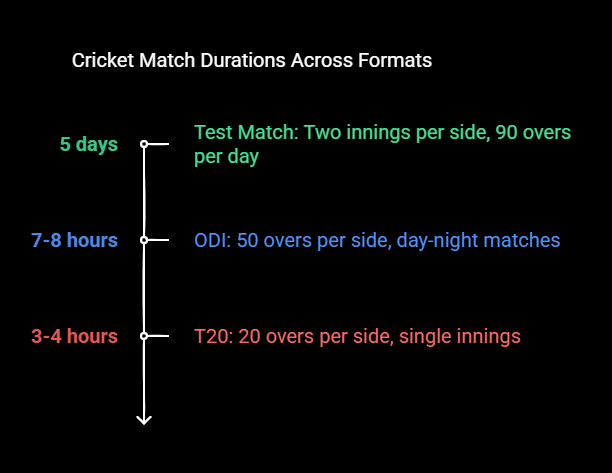
Test matches are the longest format in cricket. They last up to five days. Each day includes about six hours of play. Players have two innings each to score runs. This format tests endurance and skill deeply. Matches can end in a win, loss, draw, or tie.
One Day Internationals
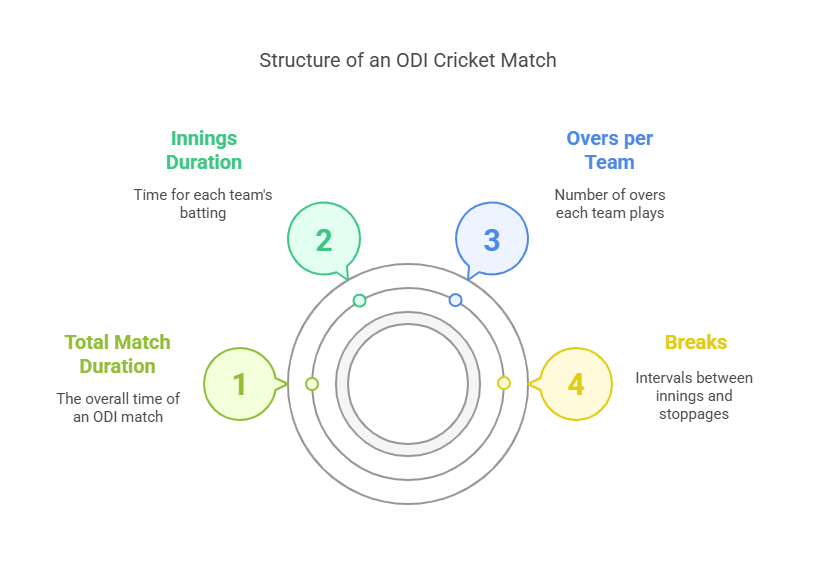
One Day Internationals, or ODIs, last about eight hours. Each team plays 50 overs, with each over having six balls. The game is completed in one day with a break at the halfway point. ODIs focus on faster scoring than Test matches. This format suits fans who want a full match in a single day.
Twenty20 Matches
Twenty20, or T20, is the shortest popular format. Each team plays 20 overs. A match usually lasts around three hours. The fast pace keeps fans on the edge of their seats. T20 games are perfect for those who want quick and exciting cricket action.
Other Formats
Besides the main formats, there are others like T10 and The Hundred. T10 matches last about 90 minutes with 10 overs per side. The Hundred has 100 balls per team and lasts around two and a half hours. These formats aim to attract new audiences with shorter, faster games.
Credit: promaxsports.com.au
Match Lengths By Format
Cricket matches vary widely in length depending on the format. Each format has unique rules that affect how long the game lasts. Understanding match lengths helps fans plan their viewing and enjoy the game fully. Below is a breakdown of typical durations for different cricket formats.
Duration Of Test Matches
Test matches are the longest format in cricket. They last up to five days with six hours of play each day. The game has two innings per team. This format tests players’ skill and endurance over several days.
Time Span Of Odis
One Day Internationals (ODIs) usually last around eight hours. Each team bats for 50 overs. The match includes a break between innings. ODIs are fast-paced but still provide room for strategic play.
Length Of T20 Games
T20 matches are the shortest professional format. Each team plays 20 overs. Games last about three hours in total. This format focuses on quick scoring and exciting moments.
Local And School Matches
Local and school cricket matches vary in length. They often last one or two days. Some matches have limited overs like 20 or 40 per side. These games help players learn and enjoy cricket without long durations.
Daily Schedule And Playtime
Cricket matches have a unique daily schedule and playtime structure. The length varies by the format. Each day of play is carefully planned to balance action and rest. Understanding the daily routine helps fans follow the game better.
Matches like Test cricket can last several days. Shorter formats like One Day Internationals (ODIs) and Twenty20 (T20) have fixed hours. The daily schedule includes starting times, breaks, and over rates that affect playtime.
Starting And Ending Times
Cricket matches usually start in the morning. For Test matches, play often begins around 10 AM. The day ends in the late afternoon or early evening, near 5 or 6 PM. This gives about six hours of play daily.
Shorter formats have tighter schedules. One Day games start around 10 or 11 AM and finish by evening. T20 matches last about three hours, starting in the evening.
Scheduled Breaks And Intervals
Players get breaks to rest and refresh. Test cricket has a lunch break after two hours of play. A tea break comes later in the afternoon. These intervals last about 40 minutes each.
In ODIs, a lunch or dinner break occurs between innings. This break usually lasts 30 to 40 minutes. T20 games have a shorter break of about 15 minutes between innings. These breaks keep players fresh and fans engaged.
Over Rates And Their Impact
Over rate means how fast teams bowl overs. It affects the length of the game. Faster over rates mean more play in less time. Slow over rates can extend the match beyond scheduled hours.
Teams must bowl a set number of overs per hour. In Test cricket, the target is usually 15 overs per hour. In ODIs, it is around 50 overs per day. Poor over rates may lead to penalties for the team.
Factors Affecting Match Duration
Several factors influence how long a cricket match lasts. These elements can extend or shorten the game time. Understanding these helps fans and players set realistic expectations for match duration.
Weather Interruptions
Rain is the most common cause of delays in cricket matches. Matches may stop for rain and resume later. Poor light or extreme heat can also pause the game. These breaks increase the total match time.
Pace Of Play
The speed at which bowlers and batsmen play affects the length of the game. Fast bowlers who take quick overs speed up the match. Slow batting or frequent breaks between overs slow down the game.
Player Strategies
Batsmen may choose to play cautiously to preserve wickets. This can extend the innings and the match. Teams chasing a target might speed up their scoring, shortening the game.
Umpiring Decisions
Umpires control the flow of the match and can cause delays. Checking for decisions using technology takes extra time. Frequent appeals and reviews can add minutes to the game duration.
Notable Long And Short Matches
Cricket matches vary greatly in length, from quick finishes to epic battles. Some games stretch over several days, testing players’ stamina and skill. Others wrap up in just a few hours, packed with fast action. Notable matches showcase the extremes of cricket’s unique game duration.
Historic Marathon Games
Test matches often last up to five days. Some have gone beyond scheduled time due to tight competition. The famous 1939 “Timeless Test” between England and South Africa lasted ten days. It ended in a draw because the English team had to catch a ship. These long matches highlight endurance and strategy over speed.
Fastest Matches Ever
Some cricket matches finish in a single day or less. The 2003 Test match between Australia and South Africa ended in just two hours and 10 minutes. Australia won by an innings and 9 runs. Short games often happen when one team dominates or wickets fall quickly. These matches deliver intense excitement in little time.
Memorable Duration Records
Cricket holds many records for match length extremes. The longest first-class match lasted 12 days in 1939. The shortest Test match finished in under three hours in 1932. One-Day Internationals usually last about eight hours. Twenty20 matches wrap up in around three hours. These varied durations make cricket unique and engaging.
How Matches Can End Early
Cricket matches have set durations depending on the format. Yet, some matches end earlier than expected. Early finishes depend on how the game unfolds on the field. Weather, team performance, and match conditions all play a role. Understanding these factors helps explain why games can finish ahead of time.
Results By Innings
Matches can end early when one team finishes all innings quickly. In limited-overs cricket, a team may chase the target fast. In Test matches, a team may get all out twice before time ends. This leads to a result without using the full scheduled time. Strong bowling or poor batting can cause early innings results.
Draws And Ties
Draws happen when time runs out before a result. Teams may not complete all innings. This is common in long matches like Tests. Ties occur when both teams score the same runs. Ties are rare but can end matches early. Both outcomes stop the game before planned time.
Abandoned Matches
Matches can end early due to weather or other interruptions. Rain is the most common cause of abandonment. When conditions are unsafe, umpires may stop the game. Sometimes, matches cannot restart and get abandoned. These matches have no result and end before time.
Impact Of Duration On Viewership
The duration of a cricket game plays a crucial role in shaping its viewership. The length of the match influences how many people watch and how engaged they stay. Different formats of cricket have varying durations, and these differences affect audience interest and TV ratings. Understanding this impact helps organizers and broadcasters plan better for the sport’s future.
Audience Preferences
Many fans prefer shorter games because they fit into busy schedules. One Day Internationals and Twenty20 matches attract viewers who want quick results. Test matches, lasting up to five days, appeal to traditional fans who enjoy deep strategy. The variety in game length allows cricket to reach diverse groups worldwide. However, longer games may lose casual viewers over time.
Broadcasting Challenges
Long matches create problems for TV networks and streaming services. Scheduling multiple hours or days of live coverage can be costly. Broadcasters must keep viewers engaged through breaks and slow periods. Advertising slots depend on steady viewership, which is harder during long games. These challenges push broadcasters to find new ways to present cricket attractively.
Efforts To Shorten Games
The cricket community has introduced faster formats to retain viewers. Twenty20 cricket, lasting around three hours, became very popular globally. New rules speed up play and reduce downtime during matches. Organizers also experiment with limiting overs and introducing time limits. These efforts aim to make cricket more accessible and exciting for a wider audience.
Credit: promaxsports.com.au
Frequently Asked Questions
How Many Minutes Is A Game Of Cricket?
A cricket game lasts from about 3 hours in T20 matches to 5 days in Test matches. Limited-overs games take 7-8 hours.
How Long Is A 40 Over Cricket Match?
A 40-over cricket match usually lasts about 3 to 3. 5 hours, including a short break between innings.
Is Test Cricket 90 Overs Per Day?
No, Test cricket usually schedules 90 overs per day but can vary due to weather or delays.
How Long Is A 20 Over Cricket Match?
A 20 over cricket match usually lasts about three hours. Each team bats for 20 overs with a short break in between.
Conclusion
Cricket matches vary greatly in length depending on the format. Test matches can last up to five days with multiple sessions each day. One Day Internationals (ODIs) usually take about eight hours including breaks. Twenty20 games are the shortest, lasting around three hours.
Understanding these durations helps fans plan their viewing time better. Each format offers a unique pace and style of play. Whether you enjoy quick excitement or long strategic battles, cricket has something for everyone. This variety makes cricket a fascinating sport worldwide.