Are you curious about the exact net height used in women’s college volleyball? Whether you’re a player, coach, or fan, knowing the right net height can make a big difference in understanding the game better.
The net height affects how you serve, spike, and block, shaping every moment on the court. You’ll discover the official measurements, why they matter, and how they compare to other levels of play. Get ready to elevate your volleyball knowledge and step up your game!
Credit: volleyball-tips.com
Standard Net Height
The standard net height in women’s college volleyball is set to ensure fairness and consistency across all matches. It plays a vital role in the pace and style of the game. Understanding this height helps players, coaches, and fans appreciate the sport better.
Women’s College Volleyball Standards
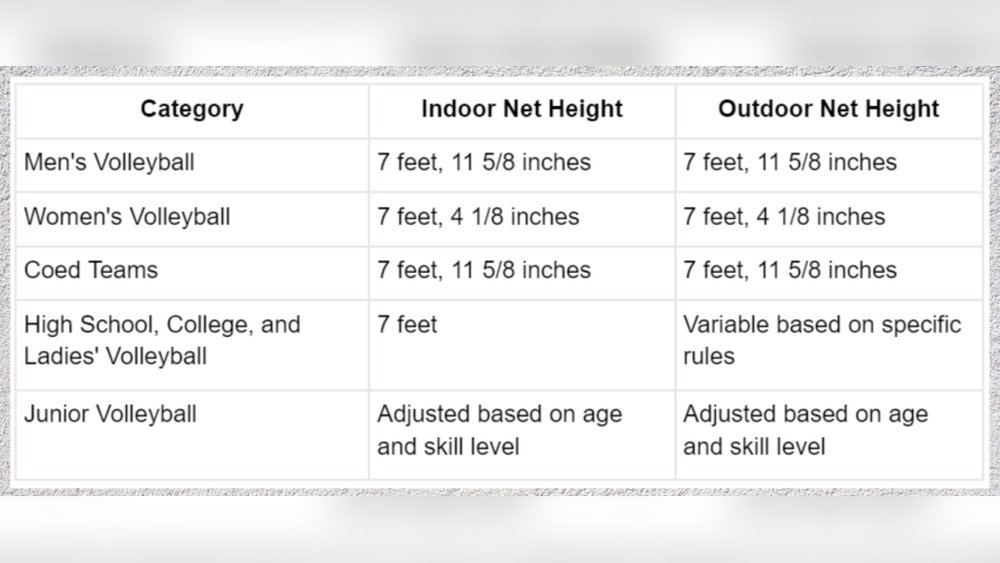
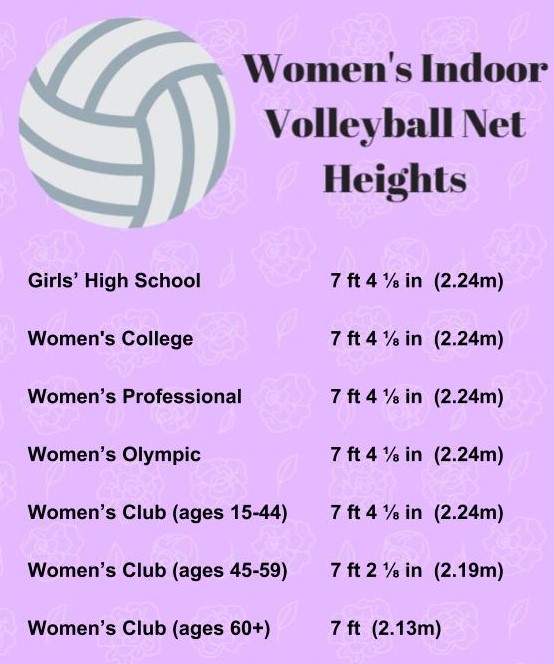
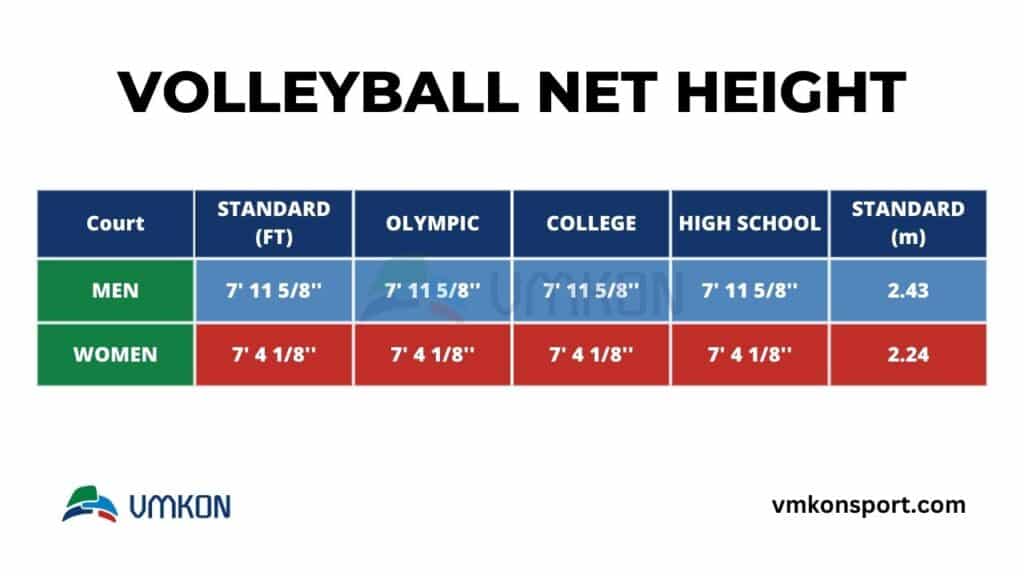
The official net height for women’s college volleyball is 7 feet 4 1/8 inches (2.24 meters). This height is established by the NCAA and follows international rules. It suits the average reach and jump ability of female athletes at this level. The net must be securely fastened and remain taut throughout the match. Any variation can affect gameplay and player safety.
Comparison With Men’s Net Height
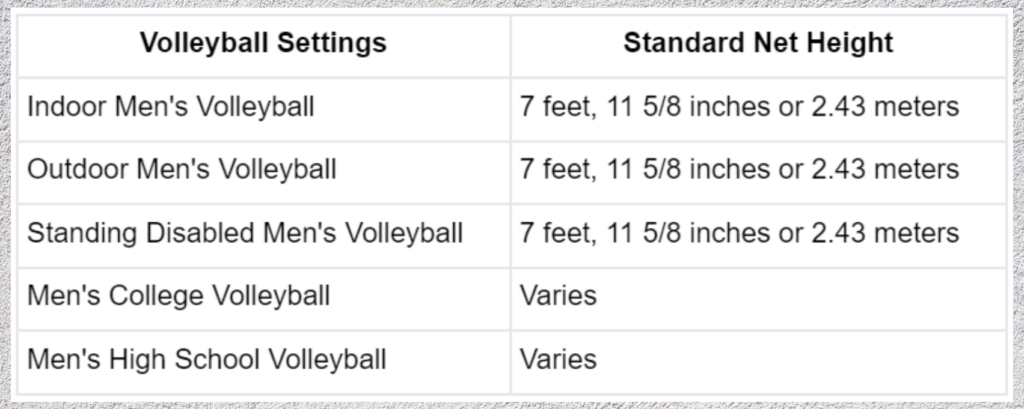
Men’s college volleyball nets stand taller at 7 feet 11 5/8 inches (2.43 meters). This difference reflects physical distinctions between male and female athletes. A higher net demands more power and vertical leap from men. The lower net in women’s volleyball encourages faster rallies and more strategic plays. Both net heights promote exciting and competitive matches in their own ways.
Measurement Details
The net height in women’s college volleyball is a key part of the game setup. This measurement affects how players serve, block, and spike the ball. Accurate net height ensures fair play and consistent competition. Understanding the exact measurement helps players and coaches prepare better for matches.
Net Height In Feet And Inches
The official net height for women’s college volleyball is 7 feet 4 1/8 inches. This height is standard across most college competitions. It is precise to ensure all teams play under the same conditions. The net sits slightly over seven feet tall, making the game challenging and exciting.
Variations In Different Leagues
Some leagues may have slight differences in net height rules. For example, high school volleyball nets are usually set at 7 feet 4 inches. Professional leagues often follow the same height as college volleyball. International competitions might use metric measurements but match closely to this height. These minor variations do not greatly change the game but are important to note.
Impact On Gameplay
The net height in women’s college volleyball plays a crucial role in shaping the gameplay. It sets the physical limit that players must overcome to score points. The standard height of 7 feet 4 1/8 inches creates unique challenges and opportunities for athletes. This height influences how players perform and adjust their strategies during matches.
Effect On Player Performance
The net height demands strong jumping ability from players. It tests their vertical leap and timing for blocks and spikes. Players develop power and precision to send the ball over or around the net. The height affects defensive moves, requiring quick reflexes to respond to attacks. It also impacts stamina, as repeated jumps can be tiring over a match.
Adjustments In Techniques
Players refine their hitting angles to clear the net cleanly. They learn to control the ball’s speed and trajectory to avoid blocks. Serving techniques evolve to create difficult returns for opponents. Defensive players improve their positioning to cover the court effectively. Coaches train teams to exploit the net height with smart plays and teamwork.
Setting Up The Net
Setting up the volleyball net correctly is essential for fair play and an enjoyable match. The net height must meet official college women’s volleyball standards. Proper setup ensures players can perform their best and referees can make accurate calls.
This section explains the necessary equipment and installation tips for setting up the net.
Equipment Requirements
A standard volleyball net for women’s college play measures 7 feet 4 1/8 inches high. The net should be 32 feet long and 3 feet wide. Two sturdy poles hold the net in place on each side of the court. Tension straps or cables help keep the net tight and stable. A measuring tape is needed to check the net height accurately. Make sure all equipment meets official volleyball regulations for college play.
Proper Installation Tips
Start by positioning the poles exactly 32 feet apart. Use a tape measure to confirm the distance. Attach the net to the poles and secure it with straps or cables. Adjust the net height to 7 feet 4 1/8 inches. Use a level or height gauge for accuracy. Tighten the net to avoid sagging. Check the net height again before starting the game. Proper tension and height ensure a fair and safe match for all players.
Common Rules And Regulations
Understanding the common rules and regulations for women’s college volleyball net height is essential. These rules create a fair and consistent playing environment. They ensure all players compete under the same conditions. Net height affects gameplay, strategy, and player performance. Knowing the official standards helps players, coaches, and fans follow the game accurately.
Official Guidelines By Ncaa
The NCAA sets the official net height for women’s college volleyball. The standard height is 7 feet 4 1/8 inches (2.24 meters). This height applies to all NCAA divisions. It remains consistent throughout the entire match. Referees check net height before every game. Adjustments are made if the net is not at the correct height. This rule helps keep the competition fair and balanced.
The NCAA also enforces other net-related rules. The net must be taut and secure during play. The antennae on each side mark the sidelines above the net. Players cannot touch the net while making a play. Violations result in penalties or point losses. These regulations maintain safety and fairness on the court.
International Standards
The International Volleyball Federation (FIVB) governs global volleyball rules. The net height for women’s volleyball is the same as the NCAA standard. It is set at 7 feet 4 1/8 inches (2.24 meters). This consistency allows players to compete internationally without adjusting to new net heights.
International matches also follow strict net rules. The net must be well-maintained and firmly fixed. Officials monitor the net during the entire match. Players touching the net or antennae face penalties. These standards protect the integrity of international competitions.
Credit: titandental.net
Net Height In Other Levels
Net height varies across different volleyball levels to match players’ age and skill. This ensures fair play and safety. Understanding these differences helps players and coaches adjust training and expectations. Below, we explore net height in high school, youth volleyball, and beach volleyball.
High School And Youth Volleyball
In high school girls’ volleyball, the net height is 7 feet 4 1/8 inches. This is the same height used in college women’s volleyball. Youth volleyball nets are lower to suit younger players. For example, ages 12 and under often play with a 6 feet 6 inches net. This lower net helps children develop skills comfortably. The gradual increase in net height builds strength and technique.
Beach Volleyball Comparisons
Beach volleyball net height for women matches indoor volleyball at 7 feet 4 1/8 inches. The main difference is the playing surface, which is sand. Sand makes movement slower and jumping harder. This can affect how players perform at the same net height. Men’s beach volleyball nets are higher, set at 7 feet 11 5/8 inches. This difference aligns with indoor volleyball net standards for men and women.
Training For Net Height
Training for the net height in women’s college volleyball requires focused practice. The net stands at 7 feet 4 1/8 inches, challenging players to improve their skills and reach. Effective training helps players handle this height with confidence and power.
Practice routines must include drills that simulate real match conditions. Players need to develop timing, jumping ability, and hand coordination. These elements combine to make players more effective at the net.
Drills To Adapt To Net Height
Start with simple blocking drills to get used to the net height. Jump and reach exercises enhance timing and positioning. Use a partner to toss the ball for hitting practice over the net.
Shadow blocking drills improve footwork and hand placement. Practice quick jumps to simulate real game spikes. Repetition builds muscle memory for net play.
Incorporate approach jumps with arm swings. This drill mimics attack moves and helps adjust to the net height. Focus on clean contact and reaching above the net.
Improving Vertical Reach
Vertical jump training boosts the ability to reach higher. Plyometric exercises like box jumps and squat jumps build explosive power. Strength training for legs and core supports better jumping.
Stretching and flexibility exercises improve reach and reduce injury risk. Practice jumping with full arm extension for maximum height. Track progress regularly to stay motivated.
Work on balance and landing techniques. Controlled landings help prevent injuries and prepare for the next move. Consistent training leads to noticeable gains in vertical reach.
Credit: sterlingvolleyball.com
Equipment Innovations
Equipment innovations have improved women’s college volleyball net height setup. These advances help players and coaches adjust and maintain the net quickly. They also ensure the net stays in great condition over many games and practices. This section explores two key innovations: adjustable nets and improved materials for durability.
Adjustable Nets
Adjustable nets allow easy changes to net height. Coaches can quickly raise or lower the net for different age groups or skill levels. This flexibility saves time during practice and tournaments. It also ensures the net meets official college volleyball regulations every time. Many nets now include simple mechanisms like crank handles or telescoping poles. These features reduce effort and improve accuracy in setting net height.
Materials And Durability
New materials enhance net durability and performance. High-quality nylon and polyester fibers resist tearing and stretching. UV-resistant coatings protect the net from sun damage outdoors. Stronger poles made of aluminum or fiberglass improve stability without adding weight. These materials allow nets to last longer with less maintenance. Durable equipment keeps play fair and consistent throughout the volleyball season.
Frequently Asked Questions
How Tall Is A College Women’s Volleyball Net?
A college women’s volleyball net stands 7 feet 4 1/8 inches (2. 24 meters) tall. This height follows NCAA regulations.
Are Men’s And Women’s Volleyball Nets The Same Height In The Olympics?
No, men’s volleyball nets are higher than women’s in the Olympics. Men’s net height is 2. 43 meters. Women’s net height is 2. 24 meters.
How Tall Are College Nets?
College volleyball nets stand 7 feet 11 5/8 inches (2. 43 meters) tall for men and 7 feet 4 1/8 inches (2. 24 meters) tall for women.
How Tall Do You Have To Be To Play D1 Women’s Volleyball?
To play D1 women’s volleyball, players typically range from 5’8″ to 6’3″ tall. Height helps but skill matters most.
Conclusion
The standard net height for women’s college volleyball is 7 feet 4 1/8 inches. This height creates a balanced and fair playing field. Players train hard to master their skills around this regulation. Understanding net height helps fans and players appreciate the game better.
Remember, the net height can affect gameplay strategies and player performance. Keeping track of these details supports fair competition. Volleyball remains a dynamic and exciting sport at the college level. The net stands as a key element in every match played.