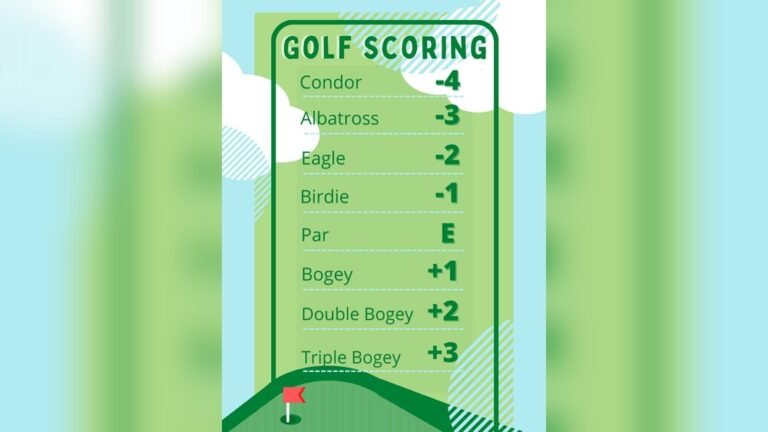

Golf is a sport filled with unique words and traditions. If you are new to golf, you might hear players talk about making an “eagle” and wonder what it means. The term “eagle” is one of the most exciting scores in the game.
Scoring an eagle is rare, and it can change the outcome of a match. Understanding the meaning and importance of an eagle helps you appreciate golf’s scoring system and its culture. In this article, you will learn exactly what an eagle is, how it is achieved, why it matters, and some interesting facts that even many beginners miss.
What Does Eagle Mean In Golf?
An eagle in golf is a score that is two strokes below par on a single hole. “Par” is the expected number of strokes a skilled golfer should need to complete a hole. For example, if a hole is a par-4, the golfer is expected to take four shots to finish it. If a golfer completes that hole in only two shots, they have made an eagle.
Here’s how it works for different holes:
- On a par-3 hole: An eagle means finishing the hole in one stroke.
- On a par-4 hole: An eagle is two strokes.
- On a par-5 hole: An eagle is three strokes.
The eagle is one of the best scores you can achieve, just behind the “albatross” (three under par) and the “hole-in-one” (one shot, usually on a par-3). It’s much better than a “birdie” (one under par) or “par” (expected strokes).
Golf Scoring Terms: Eagle Compared To Other Scores
Golf scoring uses several bird-related terms. Let’s compare the eagle with other common scores using a simple table:
| Score Name | Strokes Relative to Par | Example (Par 4) |
|---|---|---|
| Albatross | -3 | 1 stroke |
| Eagle | -2 | 2 strokes |
| Birdie | -1 | 3 strokes |
| Par | 0 | 4 strokes |
| Bogey | +1 | 5 strokes |
| Double Bogey | +2 | 6 strokes |
Scoring an eagle is always a sign of skill, and it’s celebrated in all levels of golf.
How Do Golfers Score An Eagle?
Achieving an eagle is difficult and usually requires a combination of strong shots, strategic thinking, and sometimes a bit of luck. The most common ways to make an eagle differ depending on the hole’s par.
Making An Eagle On Par-4 And Par-5 Holes
- Par-4 Hole: An eagle happens when a golfer hits their first shot (the tee shot) onto the green, and then sinks their putt. This is called driving the green and making the putt. Sometimes, a golfer might chip in from off the green after their second shot.
- Par-5 Hole: Most eagles are scored on par-5 holes. A golfer hits a strong tee shot, then a powerful second shot to reach the green, and completes the hole with a single putt. This is called reaching the green in two and making the putt.
- Par-3 Hole: An eagle would mean making a hole-in-one, which is extremely rare.
Example: Professional Golf Eagle
Let’s look at a real-world example. In the 2022 PGA Tour, the average number of eagles per round was less than 0. 25, meaning most professionals only made an eagle every four rounds. In the 2023 Masters Tournament, Jon Rahm scored an eagle on the 13th hole by hitting a strong drive and a precise approach shot, then sinking his putt.
| Hole Type | How to Score Eagle | Difficulty Level |
|---|---|---|
| Par-3 | Hole-in-one | Very High |
| Par-4 | Tee shot to green + one putt | High |
| Par-5 | Two shots to green + one putt | Moderate |
Why Is An Eagle Important?
Scoring an eagle is important for several reasons:
- It can greatly improve a golfer’s score in a tournament.
- It boosts confidence and morale during a round.
- It is a sign of skill, especially in professional golf.
- It often gets attention from fans and media.
An eagle can change the momentum of a round. For example, if a golfer is struggling, making an eagle can help them recover and compete better.

Credit: www.youtube.com
The Origin Of “eagle” In Golf
The term “eagle” comes from golf’s tradition of using bird names for scores under par. “Birdie” was first used in the late 19th century, and “eagle” followed as a bigger, more impressive bird to describe an even better score. The bird theme continues with “albatross” (three under par) and “condor” (four under par, almost impossible).
Golf historians trace the first use of “eagle” to American golf in the early 1900s. As golf grew in popularity, these terms became standard all over the world.
How Rare Is An Eagle?
Eagles are rare, even for professionals. Let’s look at some numbers:
- In the 2022 PGA Tour, the average player made an eagle only 2–3 times per tournament.
- For amateurs, the chance of making an eagle is much less than making a birdie. Most amateur golfers will not make an eagle in a year.
The rarity depends on the golfer’s skill and the course difficulty. On easier courses with reachable par-5s, eagles are more common.
Table: Eagle Frequency By Golfer Type
| Golfer Type | Average Eagles Per 100 Rounds |
|---|---|
| Professional | 15–25 |
| Low Handicap Amateur | 2–8 |
| Average Amateur | 0–2 |
Eagle Vs. Birdie: What’s The Difference?
Both eagle and birdie are good scores. The difference is in how many strokes under par:
- Birdie: One under par.
- Eagle: Two under par.
While birdies are more common, eagles require more skill and power. For example, a birdie on a par-5 is finishing in four shots, but an eagle is finishing in three shots. Many professional tournaments are won by players who make eagles at key moments.
Tips For Making An Eagle
Making an eagle needs a mix of distance, accuracy, and smart decisions. Here are some tips:
- Focus on Driving Distance: Reach the fairway with a long, accurate tee shot.
- Practice Approach Shots: Hitting the green in fewer strokes gives more eagle chances.
- Improve Putting Skills: Many eagles are lost because of missed putts.
- Course Management: Play safe when needed, but take risks when eagle chances appear.
- Know Your Strengths: Only go for eagle when your skills match the challenge.
A non-obvious insight: Many beginners try to “go for eagle” on every hole. This can lead to mistakes and higher scores. The best players wait for the right hole and situation.
Famous Eagles In Golf History
Some eagles are remembered for changing tournaments or making history. Here are a few:
- Tiger Woods: At the 2005 Masters, Woods made an eagle on the 15th hole, helping him win the tournament.
- Phil Mickelson: At the 2010 Masters, Mickelson made two eagles in one round, a rare achievement.
- Jack Nicklaus: Known for making clutch eagles during his career, especially in major events.
These moments show how important eagles are in golf.
Common Mistakes Beginners Make When Trying For An Eagle
- Overestimating Distance: Many beginners think they can reach the green in fewer shots, but end up in trouble.
- Ignoring Course Hazards: Water, bunkers, and trees can turn an eagle attempt into a bogey.
- Poor Shot Selection: Choosing the wrong club or taking risky shots without enough skill.
- Skipping Preparation: Not practicing the shots needed for eagle chances.
- Focusing Only on Score: Forgetting that golf is about consistency, not just chasing rare scores.
A second non-obvious insight: Most eagles happen because of solid planning, not just power. Sometimes, laying up and attacking on the next shot is smarter than trying to reach the green in one big shot.
:max_bytes(150000):strip_icc()/celebration-silhouette-5877a2b35f9b584db342b480.jpg)
Credit: www.liveabout.com
How Courses Influence Eagle Chances
Golf courses are designed to challenge players and limit eagle chances. Course designers set up par-5 holes with obstacles to make eagles harder. For example:
- Longer holes: Require power and accuracy.
- Bunkers and water hazards: Protect the green.
- Narrow fairways: Make tee shots risky.
Some courses are famous for offering more eagle chances. The TPC Sawgrass course has several reachable par-5s, while Augusta National (home of the Masters) offers eagle chances on holes 13 and 15.
Eagle Scorecards And Statistics
Tracking eagles is important for golfers and coaches. Scorecards often mark eagles with a circle or special color. Golf apps and websites record eagle statistics to analyze performance.
Professional golfers use stats to plan their strategy. Amateurs can use eagle tracking to set goals and measure improvement.
The Role Of Technology In Making Eagles
Modern golf technology helps players make more eagles. For example:
- Golf clubs: New designs allow longer and more accurate shots.
- Rangefinders: Help measure distance to the green.
- Swing analyzers: Improve shot technique.
Technology has made eagles slightly more common, but skill and strategy are still the main factors.
Frequently Asked Questions
What Is An Eagle In Golf?
An eagle is a score that is two strokes under par on a single hole. For example, on a par-5, finishing the hole in three strokes is an eagle.
How Often Do Professional Golfers Score Eagles?
On the PGA Tour, professionals average about 2–3 eagles per tournament. It depends on the course and player skill.
Is It Possible For Beginners To Score An Eagle?
Yes, but it is rare. Beginners usually need a combination of good shots and luck. Most eagles are made on par-5 holes.
What Is The Difference Between An Eagle And A Birdie?
A birdie is one stroke under par, while an eagle is two strokes under par. Eagles are much less common and more impressive.
Are There Higher Scores Than Eagle?
Yes. The next score is an albatross (three under par) and, even rarer, a condor (four under par). These are extremely rare in golf.
Golf’s scoring terms can be confusing at first, but learning about eagles opens the door to understanding the strategy and excitement of the game. Whether you are new or experienced, chasing an eagle is a thrilling part of golf. For more details about golf scoring, you can visit Wikipedia.
Golf is a sport that rewards patience, skill, and smart choices. Scoring an eagle is a moment of achievement, and it often becomes a highlight for any golfer. By knowing what an eagle is and how it is made, you can enjoy golf even more—whether you are playing or watching the pros.

Credit: www.thediygolfer.com