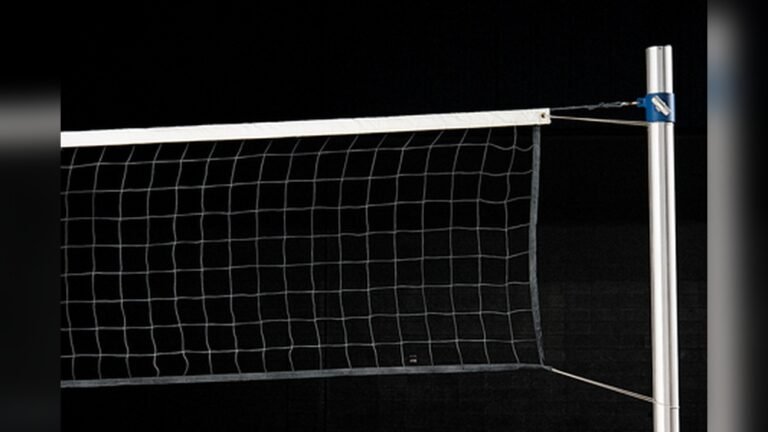
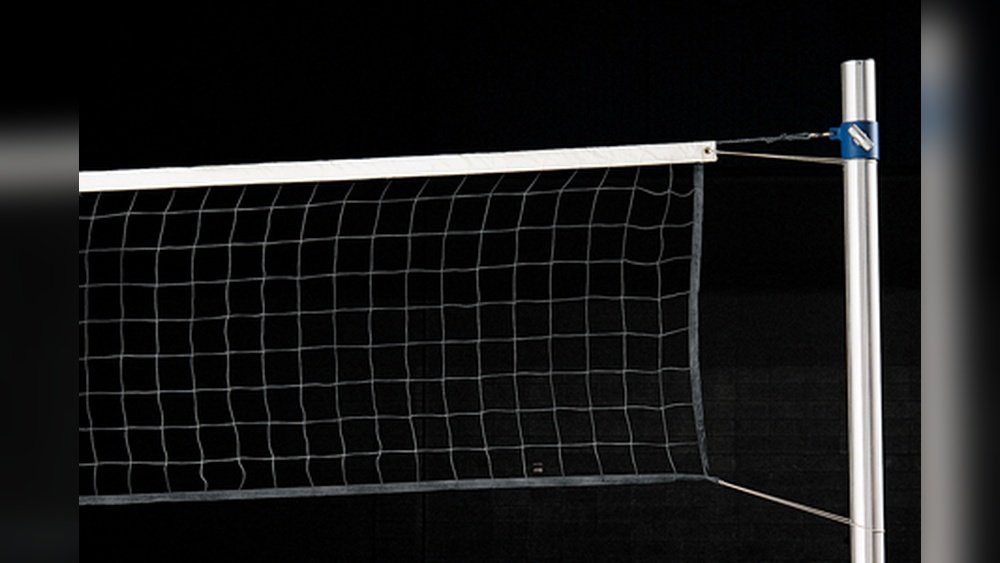
Are you ready to step up your volleyball game or set up the perfect court? Knowing the regulation height for a volleyball net is essential whether you’re playing competitively, coaching, or just enjoying a friendly match.
But what exactly is the official net height, and why does it matter so much for your performance and fairness on the court? You’ll discover the exact measurements for men’s, women’s, and co-ed volleyball nets, plus important variations for youth and recreational play.
Keep reading to learn how getting your net height just right can make all the difference in your volleyball experience.
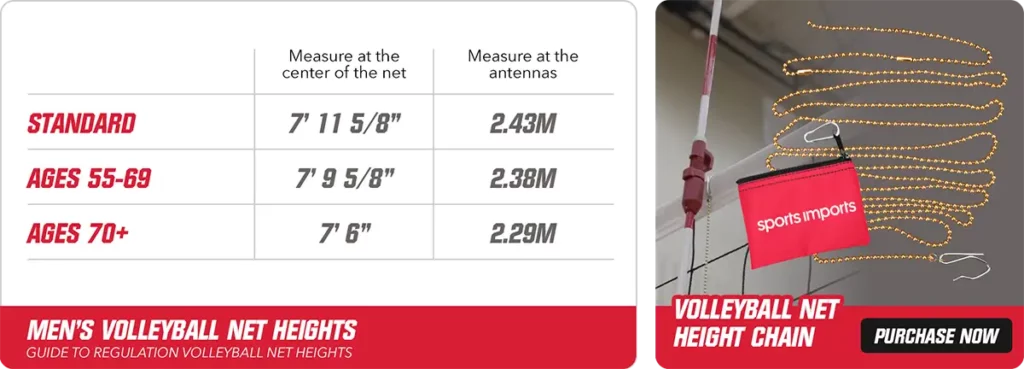
Credit: www.sportsimports.com
Official Net Heights
The official net height in volleyball is set to ensure fair play and consistent competition. Different categories have specific heights to match players’ abilities and game style. These official measurements guide tournaments and recreational play worldwide.
Men’s Net Height
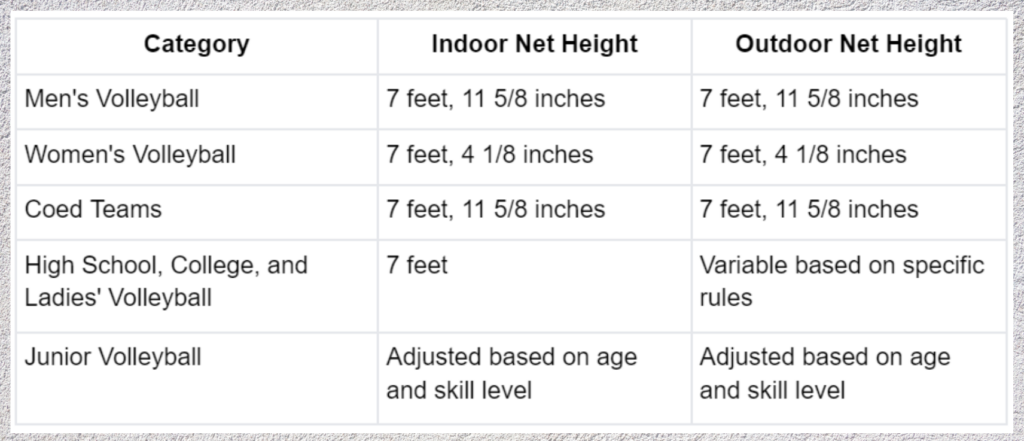
The official net height for men is 2.43 meters, or 7 feet 11 5/8 inches. This height challenges male players to jump higher and use powerful spikes. It is standard in all professional men’s volleyball matches.
Women’s Net Height
The official net height for women is 2.24 meters, or 7 feet 4 1/8 inches. This height suits the average reach and jump ability of female players. It is used in all official women’s volleyball competitions globally.
Co-ed And Recreational Heights
Co-ed and recreational leagues often use a net height of 2.35 meters, or about 7 feet 8 1/2 inches. This height balances play between men and women. Lower heights are also common in youth leagues to fit younger players’ skills.
Variations In Net Height
The regulation height for a volleyball net varies based on the level of play and the players’ age or physical condition. Different leagues and categories adjust the net height to suit their participants. These variations help maintain fair play and encourage skill development. Understanding these differences is essential for coaches, players, and organizers.
Youth And Junior Adjustments
Youth volleyball nets are set lower than adult nets. This helps young players reach and hit the ball more easily. For example, nets for kids under 12 are often around 1.8 meters (5 feet 11 inches). As players grow, net height increases gradually to the adult standard. These adjustments improve learning and enjoyment of the sport.
Older Men’s Leagues
Some older men’s leagues use a slightly lower net height. This change helps reduce strain on joints and muscles. Usually, the net is set about 2.35 meters (7 feet 8 inches) instead of the official 2.43 meters. It allows older players to compete more comfortably while still challenging their skills.
Sitting Volleyball Net Height
Sitting volleyball is designed for players with physical disabilities. The net height is much lower than standing volleyball. It measures about 1.15 meters (3 feet 9 inches) for men and 1.05 meters (3 feet 5 inches) for women. This height keeps the game fast and exciting, while fitting the sitting position.
Measuring Net Height
Measuring the height of a volleyball net is essential for fair play. The net must meet official standards to ensure consistency. Accurate measurement helps players compete on an even level. This section explains how to measure volleyball net height correctly.
Measurement Points
Measure the net height at the center of the court. Use a tape measure or a marked pole for accuracy. Check both ends of the net as well. This ensures the net is the right height across its entire length. The official height is 2.43 meters for men and 2.24 meters for women.
Ensuring Net Tension
The net should be tight and firm without sagging. Loose nets can affect the height and disrupt the game. Adjust the tension using the side straps or ropes. Proper tension keeps the net stable during play. Always recheck the height after tightening the net.
Leveling The Net
Ensure the net is level from one side to the other. Use a level tool or a straight edge to check. Uneven nets give an unfair advantage to one team. Adjust the poles or tension to correct any tilt. A level net creates a fair playing field for all players.
Court Dimensions And Net Setup
Understanding court dimensions and net setup is key to playing volleyball correctly. The size of the court and the position of the net affect gameplay and rules. Different types of volleyball, like indoor and beach, use distinct court sizes. Proper net placement ensures fair play and safety.
Indoor Court Size
The official indoor volleyball court measures 18 meters long and 9 meters wide. It is divided into two equal halves by the net. The boundary lines are clearly marked for players to see. This size allows six players per team to move freely.
Beach Court Size
Beach volleyball courts are smaller than indoor courts. The official size is 16 meters long and 8 meters wide. Sand surface makes movement harder and changes the game’s pace. Each team has two players, making the court size suitable for fewer players.
Net Placement On Court
The net divides the court into two equal halves. It must be centered along the width of the court. The posts holding the net sit outside the boundary lines. This setup keeps the net stable and ensures correct height across the court.
Why Net Heights Differ
Net heights in volleyball vary for several important reasons. Differences exist to suit players’ physical abilities and the style of play. Understanding these reasons helps explain why official heights are not the same for all categories.
These variations ensure fair play and safety across different groups. They also keep the game enjoyable and competitive for everyone involved.
Physiological Differences
Men and women have different average heights and jumping abilities. Setting the net height according to these differences helps balance the game. Youth players have lower net heights to match their developing skills and size. This adjustment prevents frustration and encourages skill growth.
Game Dynamics
Net height affects how players attack and defend. A higher net makes spiking and blocking more challenging. Lower nets allow younger or less experienced players to participate fully. Changing the net height changes the speed and style of the game. It keeps the game fair and fun for all skill levels.
Competition Standards
Official organizations set net heights for different leagues and events. The International Volleyball Federation sets the men’s net at 2.43 meters and the women’s at 2.24 meters. Youth leagues follow age-based standards to protect players and promote learning. These rules ensure consistency in competition worldwide.
Credit: sterlingvolleyball.com
Equipment For Net Installation
Setting up a volleyball net requires the right equipment to ensure it stays secure and at the correct regulation height. Proper installation tools make the game fair and safe for all players. Understanding each component helps achieve the perfect setup for any volleyball court.
Poles And Supports
Sturdy poles hold the net upright. They must be strong enough to resist wind and player impact. Poles are usually made from steel or aluminum for durability. Supports anchor the poles firmly into the ground or floor. Proper anchoring prevents the net from sagging or falling.
Net Materials
Volleyball nets are made from durable nylon or polyethylene fibers. These materials resist weather and heavy use. The mesh size must be consistent to meet official rules. Net edges are reinforced with thick tape for strength and better grip.
Adjusting Mechanisms
Adjusting mechanisms allow easy changes to net height. Common systems include ratchets, pulleys, or tension straps. These tools keep the net tight and at the correct regulation height. Quick adjustments help switch between men’s and women’s net heights smoothly.
Common Mistakes In Setting Net Height
Setting the correct net height is essential for fair and safe volleyball play. Many errors happen during this process. These mistakes affect player performance and game quality. Understanding common errors helps avoid problems during matches.
Incorrect Measurement Techniques
Using the wrong tools can cause net height errors. Measuring from the floor unevenly or without a level will give false results. Always use a reliable tape measure and check from the court’s surface. Measuring at the wrong points on the poles also leads to mistakes. The net must be measured at the center, where players interact most.
Ignoring Age Group Standards
Net height varies by age and gender. Using adult net heights for youth games causes unfair play. Younger players need lower nets to develop skills properly. Coaches and referees must know the correct height for each group. This ensures safety and helps players enjoy the game more.
Improper Net Tension
Too loose or too tight nets cause issues in play. A loose net sags and changes height during the game. A tight net can damage poles or tear the net. Proper tension keeps the net stable and at the right height. Regular checks before matches keep the net in good condition.

Credit: www.networldsports.com
Tips For Maintaining Regulation Height
Maintaining the regulation height of a volleyball net is crucial for fair play and proper game flow. It ensures that matches follow official standards and players compete on an even field. Simple habits and the right tools can help keep the net at the correct height at all times.
Regular attention to the net height prevents issues during games. Coaches, referees, and players share the responsibility of checking the net. Consistent care helps avoid delays and confusion during matches.
Regular Checks
Check the net height before every match. Use a measuring tape or a net height gauge for accuracy. Inspect the net tension as well. Loose nets can sag and affect the height. Mark the correct height on the poles for quick reference. Make adjustments if the net shifts during play.
Using Proper Tools
Use tools designed for volleyball nets. A net height gauge is a simple device that measures the net height precisely. Measuring tapes are helpful but less reliable if not used carefully. Some nets have built-in height markers on the poles. Use these tools every time you set up or adjust the net to maintain consistency.
Training For Setters
Train setters and players to respect net height rules. Teach them how to check and adjust the net quickly. Encourage teamwork to fix the net during breaks. Educate about the importance of regulation height for fair play. Well-informed players help maintain standards without needing constant supervision.
Frequently Asked Questions
What Is The Regulation Volleyball Net Height?
The official volleyball net height is 2. 43 meters (7 feet 11 5/8 inches) for men and 2. 24 meters (7 feet 4 1/8 inches) for women. Co-ed and recreational nets often measure 2. 35 meters. Youth net heights vary by age group.
Measurement is from the court surface to the net top.
Is The Volleyball Net 3 Feet High?
No, a regulation volleyball net is not 3 feet high. Men’s net height is 7 feet 11 5/8 inches (2. 43 meters), and women’s is 7 feet 4 1/8 inches (2. 24 meters). Youth nets are lower based on age.
At What Height Should The Volleyball Net Be Supported?
The official volleyball net height is 2. 43 meters (7 feet 11 5/8 inches) for men and 2. 24 meters (7 feet 4 1/8 inches) for women. Measure net height from the court surface to the net’s top at the center.
Youth nets vary by age and skill level.
What Is A Full-size Volleyball Net?
A full-size volleyball net measures 32 feet wide and 3 feet high. The official net height is 7 feet 11 5/8 inches for men and 7 feet 4 1/8 inches for women. It suits standard indoor and beach volleyball courts.
Conclusion
The regulation height for a volleyball net varies by category. Men’s official net height is 2. 43 meters (7 feet 11 5/8 inches). Women’s net height stands at 2. 24 meters (7 feet 4 1/8 inches). Co-ed and recreational nets are often set at 2.
35 meters. Youth leagues usually use lower heights based on age. Knowing these heights helps players and organizers set up the court correctly. Proper net height ensures fair play and better game experience. Always check the rules for your specific league or event.